Top

Piggycell raises $10M from Animoca Brands, ICP and others to expand its decentralized infrastructure and ecosystem

Web3 & Enterprise·February 17, 2025, 2:40 AM

Piggycell, a blockchain decentralized physical infrastructure network (DePIN) startup, recently announced that it has successfully closed its seed investment round for $10 million. Piggycell will mainly use the funds raised from the investment round to expand its charging infrastructure and ecosystem further.
https://asset.coinness.com/en/news/c36c3e0959ba2c318dcc25eb97d70b1b.webp

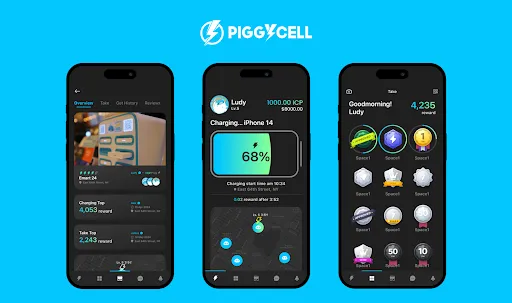
Piggycell is improving the ownership and management of charging infrastructures through DePINs and real-world assets (RWAs). By integrating blockchain technology with physical assets, Piggycell aims to empower users through decentralized ownership, transparent profit-sharing models and enhanced community engagement.


Since its establishment in 2020, Piggycell has made advancements in developing its infrastructure. It currently has over 13,000 charging hubs with over 100,000 batteries across all cities in South Korea. As a key player in the country's portable battery rental industry, Piggycell boasts nearly four million users and commands over 90% of the market share.


One of the notable investors in the round is Animoca Brands, a Web3 company that uses blockchain technology to provide digital property rights to consumers worldwide, supporting the development of the open metaverse. Animoca Brands is one of the most active investors in Web3, with a portfolio of over 540 investments.


Another key investor in this round is Internet Computer (ICP), a third-generation blockchain developed by the DFINITY Foundation that enables full end-to-end decentralization without the use of cloud computing. With its cryptographic methods, ICP supports fully on-chain applications, including complex web services.


The investment from Animoca Brands, ICP and other investors further endorses Piggycell as a DePIN platform that bridges traditional Web2 services with the Web3 ecosystem.


Having received backing from Web3 investors, Piggycell is now working to accelerate its decentralized infrastructure network with next-generation blockchain capabilities. Piggycell plans to launch its DePIN platform in the first half of 2025. 


About Piggycell

Piggycell is an RWA and DeFIN project that merges blockchain with real-world utility, offering a Charge-to-Earn experience. Its power bank-sharing infrastructure rewards users for charging their devices, bridging digital incentives with real-world convenience.


By combining hub-based charging stations with blockchain technology, the project seeks to enhance transparency and efficiency through a digital twin strategy. Beyond charging, Piggycell integrates a social app-tech gaming platform, fostering interaction, gamification and community-driven growth.


More to Read
View All
Web3 & Enterprise·

Jun 23, 2023

BitMEX CEO Calls for an End to Internal Market Makers

BitMEX CEO Calls for an End to Internal Market MakersIn a recent interview, Stephan Lutz, the acting CEO and group CFO of 100x Group, the parent company of Seychelles-headquartered global crypto exchange BitMEX, expressed his belief that crypto exchanges should phase out their internal market-making teams.Photo by Joe Roberts on UnsplashProp trading desks unnecessarySpeaking with The Block, Lutz argued that with the growth of institutional liquidity providers and high-frequency traders (HFTs) in the market, proprietary trading desks are becoming unnecessary.Lutz stated: “You have enough HFTs out there and prop shops that can perform that function.” He was referring to the role of liquidity providers in filling gaps in the market. He made these comments in response to the emergence of information earlier this week that raised questions about internal trading practices at Crypto.com, a Singapore-based exchange.BitMEX, once the world’s largest crypto derivatives exchange, also used to employ internal traders who acted as market makers. However, Lutz explained that BitMEX’s internal trading team, named Arrakis Capital, now functions primarily as a “treasury desk.” He sees this transition as a natural evolution for crypto exchanges in a market that has matured and attracted more institutional liquidity providers.Arrakis Capital currently performs limited functions, including converting commission fees earned in Bitcoin into fiat currency for operational purposes, hedging BitMEX’s exposure to tokens held as inventory, and making markets for BitMEX’s token $BMEX. Lutz clarified that Arrakis’s market-making activities are limited because external market makers find the token’s liquidity insufficient.Regarding profitability, Lutz stated that Arrakis earns “very minor returns” of up to $100,000 per month from holding T-Bills, but it incurred losses last year. He noted that Arrakis used to play a more significant market-making role when BitMEX dominated the crypto futures market. However, he assured that the trading desk was always segregated, despite accusations in the past.Fee structuresLutz acknowledged that exchanges with internal trading teams have faced increased scrutiny since the controversies surrounding Alameda Research and FTX. To differentiate between benign internal trading teams and hedge fund-like operations, Lutz highlighted several factors, including the separation of client funds and house funds, access to sensitive data, and the ability to move markets on their own exchange. Fee structures also play a role, with low or no transaction fees potentially signaling a market-making motive rather than serving as a counterparty.Lutz’s perspective suggests that crypto exchanges should rely on external liquidity providers and HFTs rather than maintaining internal market-making teams. He argues that the market has evolved. At this point he feels that these teams are no longer necessary, due to the presence of established players within the digital assets space.As regulatory scrutiny grows, ensuring transparency and avoiding conflicts of interest become crucial for maintaining trust within the crypto exchange ecosystem. The digital assets industry is far from arriving at a mature stage in its development. While many in the industry have found the stance taken by regulators to be unhelpful, the industry itself must also demonstrate its ability to iteratively move towards best practice, without that being a knee-jerk response to regulatory enforcement.

news
Web3 & Enterprise·

Jan 31, 2024

OKX adds token support for atomicals, runes, doginals and stamps

Leading crypto exchange platform OKX has recently unveiled its plans to enhance its marketplace by incorporating Atomicals (ARC-20), Runes, Stamps (SRC-20) and Dogecoin’s Doginals (DRC-20) into its Web3 wallet. ‘First-to-market’ initiativeTaking to social media on Monday, the firm provided further details regarding the additions, outlining that it is part of a "first-to-market" initiative, solidifying OKX's commitment to the expanding realm of Bitcoin NFTs. The integration of these token standards is aimed at positioning OKX as a leading one-stop NFT ecosystem within Web3. Starting with the integration of Stamps on Feb. 5, OKX Wallet users will gain the ability to view and transfer Bitcoin token standards. Subsequently, in late February, OKX Wallet will extend its support to Atomicals, Doginals and Runes, enabling millions of users to engage in buying and selling these NFTs without incurring any trading fees. OKX Marketplace will also follow suit, integrating DRC-20, ARC-20 and Runes standards in late February, thus broadening the scope for users to participate in zero-fee trading.Photo by Shubham's Web3 on UnsplashDriving mainstream adoption of Web3Jason Lau, chief innovation officer at OKX, underscored the platform's dedication to driving mainstream adoption of Web3 technologies, making the exploration and realization of NFT potential more accessible for users. Despite concerns about potential blockchain congestion due to NFTs, Lau characterized these challenges as "growing pains," expressing confidence that they will be addressed over time. Lau told CoinDesk that “these things will last forever, as long as the chain lasts.” Emphasizing the surge in activity and user growth since the launch of their product, Lau positioned OKX as an evolving platform at the forefront of developing tools for users to access all of Web3. OKX Wallet's inscriptions tool presently supports minting on 23 networks, including Bitcoin, Dogecoin, Ethereum, Polygon, BNB Chain, Avalanche-C and Arbitrum One, among others. Boosting OKX MarketplaceThe move aims to establish OKX Marketplace as the largest NFT marketplace in the industry, boasting zero-fee trading across an expanding range of token standards. The platform's advanced NFT offering includes features such as hex error checking, liquidity across multiple standards, bulk minting capabilities and automatic error detection. Despite OKX's open embrace of Ordinals and other Bitcoin protocols, some members of the Bitcoin ecosystem express discontent, labeling Ordinals as digital spam. Jason Lau vehemently disagrees, asserting that in open and permissionless networks like Bitcoin, "there is no such thing as spam." He contends that as long as fees are paid and transactions adhere to consensus rules, they are valid. Lau emphasizes OKX's historical support for the Bitcoin ecosystem, including upgrades like SegWit, Taproot and Lightning. As debates surrounding the role of Ordinals and NFTs within the Bitcoin ecosystem persist, OKX's proactive stance signals a belief in the potential of Bitcoin-based NFTs to introduce innovative use cases and design possibilities. The disruptions experienced by various blockchains in December, attributed to increased transaction activity related to inscriptions, underscore the growing impact of these developments within the Bitcoin ecosystem and the broader crypto landscape. 

news
Web3 & Enterprise·

Jul 28, 2023

Com2uS Integrates Summoners War: Chronicles into Blockchain Mainnet XPLA

Com2uS Integrates Summoners War: Chronicles into Blockchain Mainnet XPLASouth Korean game developer Com2uS announced today the onboarding of its massively multiplayer online role-playing game (MMORPG) called Summoners War: Chronicles on Com2uS’ blockchain mainnet XPLA.Photo by Muha Ajjan on UnsplashOwnership and rewardsWhat sets Chronicles apart is its play-to-own (P2O) service, allowing players to own in-game assets and be rewarded for their time and efforts. This is made possible through a system of tokenomics, enhancing the overall gaming experience.Since its global launch in March of this year, Chronicles has garnered significant recognition and popularity due to its sophisticated strategy gameplay and abundant content. Now, with its integration into the XPLA blockchain, the game aims to establish itself as an AAA title within the blockchain gaming market.Three in-game currenciesThe game’s P2O system is pillared by three in-game currencies: Rahild, Mileage, and Xlium. Players can earn Rahild by trading items, participating in events, and accomplishing challenging tasks. Rahild can then be exchanged for Mileage and other valuable items. Mileage, on the other hand, can be traded for Xlium, which can be further converted to XPLA, the native token of the blockchain, through XPLA GAMES Wallet.A Com2uS official said that the introduction of Chronicles on the XPLA mainnet opens up a world of exciting gaming experiences for both existing players and newcomers exploring the Web3 gaming realm. Players will not only be able to explore multiple ways to grow their characters but also have the chance to earn rewards for their gameplay. The game’s improved economic system will ensure that all users can make progress. Com2uS looks forward to taking this opportunity to help its flagship game succeed in the global blockchain game market.

news
Loading