Top

HashKey & Bosera launch world’s first tokenized money market ETFs

Web3 & Enterprise·March 31, 2025, 3:18 AM

HashKey Group, a Hong Kong-headquartered digital asset financial services firm, has partnered with Bosera Asset Management (International) Co., the Hong Kong subsidiary of Chinese asset management firm Bosera Asset Management, to launch the world’s first tokenized money market exchange-traded funds (ETFs).


In a press release published by PR Newswire on behalf of HashKey Group on March 28, HashKey outlined that the two funds are titled “Bosera HKD Money Market ETF (Tokenised Class)” and ”Bosera USD Money Market ETF (Tokenised Class).”

While the products were launched last Friday, they won’t officially go live until April. Both products have been approved by Hong Kong’s Securities and Futures Commission (SFC). 

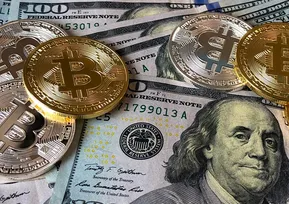
https://asset.coinness.com/en/news/58ecb1db0985873e38772a9059f9a359.webp
Photo by Vighnesh Dudani on Unsplash

Arising out of Project Ensemble

This latest product offering has its origins in Project Ensemble, an initiative launched by the Hong Kong Monetary Authority (HKMA) back in March 2024. The original aim of Project Ensemble was to support the development of the tokenization market in Hong Kong.

The SFC got involved later that year, collaborating with the HKMA in the launch of a regulatory sandbox aimed at advancing the tokenization of assets in various financial sectors. In October 2024 it emerged that HashKey was participating within that sandbox, with these new products arising from those efforts.


The company claims that these tokenized products improve upon what’s currently on offer via traditional finance, providing greater transparency and operational efficiency, thanks to the use of blockchain technology. 


HashKey Tokenisation, the tokenization arm of the firm, takes care of full-process design and execution for tokenized issuance. Subsequently, these products will be deployed on HashKey Chain, a regulatory-compliant, institutional-grade layer-2 network geared towards bridging the gap between traditional finance and Web3. On that subject, HashKey Group Chairman and CEO Dr. Xiao Feng stated:

"Bringing money market ETFs on-chain through blockchain technology is a crucial step for traditional finance to embrace Web3.” Looking towards the future, Feng added that the company expects “more traditional financial institutions to actively enter the crypto finance sector through innovative tokenisation products.”

Anna Liu, CEO of HashKey Tokenisation, told the South China Morning Post (SCMP) that “the biggest advantages of this product are that the underlying assets are mature and high-quality, and it fully considers security and regulatory compliance while reducing investor costs and improving overall liquidity.”


Liu added that the firm hopes that this product offering is the first of many, paving the way for subsequent tokenized real-world asset (RWA) offerings.


Last month, Hong Kong-based digital asset platform OSL launched a tokenized mutual fund, the ChinaAMC HKD Digital Money Market Fund. The retail tokenized fund has been issued by China Asset Management (Hong Kong), with Standard Chartered Bank (Hong Kong) acting as tokenization agent, digital platform operator and administrator.


In the U.S., financial services company Fidelity Investments recently filed documents with the intention of rolling out a tokenized U.S. money market fund. BlackRock, the world’s largest asset manager, launched its tokenized money market fund, BUIDL, last year. The fund is expected to surpass a market cap of $2 billion in the coming weeks.

More to Read
View All
Policy & Regulation·

Mar 05, 2024

Indonesia mulls crypto tax policy review

Indonesia's cryptocurrency regulatory body is urging the government to reconsider its tax policies concerning digital assets. Officials from Indonesia’s Commodity Futures Trading Supervisory Agency (Bappebti) argued last week that the imposition of double taxation on crypto transactions warrants a reevaluation. That’s according to a report which appeared in local news source, Bisnis Indonesia, a Jakarta-based daily newspaper. Currently, cryptocurrencies in Indonesia are classified as commodities, subjecting them to a value-added tax (VAT) of 0.11% and an income tax of 0.1%.Photo by Bisma Mahendra on UnsplashProposed changes in 2025Tirta Karma Senjaya, the head of Bappebti, the Indonesian Commodities and Futures Trading Regulatory Authority, highlighted that the classification of cryptocurrencies as commodities might undergo changes in 2025. This potential shift is due to the planned transfer of crypto oversight from Bappebti to the Southeast Asian country’s financial services authority, OJK.It had been speculated that the switch of oversight would potentially reclassify digital assets as securities. With that change would come a necessary adjustment to the applicable tax policy. Tirta suggested that given that cryptocurrencies are expected to be integrated into the financial sector by January 2025, he urged the Tax Director General to reconsider these tax rates. The regulatory body head added that it’s been over a year since the implementation of these rules. With that, tax policies typically undergo annual reviews. Accommodating crypto’s developmental stateAddressing an event in Jakarta, the regulatory body head emphasized the nascent stage of the crypto industry and its regulatory framework. Consequently, he advocated for providing the industry with leeway to mature until it becomes a substantial contributor to national revenue. In response to Bappebti's call for a reassessment of crypto taxes, Dwi Astuti, a spokesperson for the Ministry of Finance, assured that the Ministry would consider input from both industry stakeholders and the public. "We welcome input from Bappebti and the public. It will certainly be discussed internally," remarked Astuti during a media interaction last week. 2023 crypto tax take slumpThe existing tax structure for cryptocurrencies has been in effect since April 2022, generating approximately $2.49 million in revenue in January 2024. In contrast, Indonesia recorded $41.2 million in crypto tax revenue in the previous year. However in 2023, the country witnessed a decline of 63% in crypto tax revenue compared to the previous year, despite Bitcoin's remarkable surge of approximately 160% during that period. Local crypto exchanges such as INDODAX had attributed the significant drop in trading volume throughout 2023 directly to hefty taxes, expressing concerns that it would drive users towards foreign exchanges. Hasan Fawzi from the Ministry of Finance highlighted the trend of decreasing crypto asset transaction values in 2023. Nonetheless, he noted that the number of crypto asset customers continued to rise, reaching 18.06 million users throughout the year. The crypto sector is seen as having a lot of potential in Indonesia. Last October data released by Bappebti suggested robust growth of the crypto investment landscape within the country. Over the space of a year, Indonesia had seen a 10.1% growth in the number of crypto investors. That data may not have been lost on the country’s politicians as in December, crypto featured as an election campaign issue.

news
Policy & Regulation·

Sep 13, 2023

Korean National Assembly Members’ Crypto Holdings to Undergo Investigation

Korean National Assembly Members’ Crypto Holdings to Undergo InvestigationThe Anti-Corruption and Civil Rights Commission of Korea (ACRC) has announced that it has convened a special investigative team to conduct an investigation into the virtual asset dealings of members of the 21st National Assembly, particularly details on acquisition, trading, and losses.Photo by Mediamodifier on UnsplashComing under scrutinyThe National Assembly passed a resolution back in May titled “The Resolution on Voluntary Reporting and Investigation of Virtual Assets of National Assembly Members,” requesting that all members of the Assembly should voluntarily report the status and changes in their holdings of virtual assets for a thorough investigation by the ACRC amid public concern about conflicts of interest and illegal transactions.As a result, individual consent forms for the collection, use, and third-party provision of personal information were submitted to the ACRC last Monday by Assembly members of the ruling and opposition parties.Other minor political parties like the Justice Party, Basic Income Party, and Transition Korea Party that had previously submitted their personal information consent forms have resubmitted their forms in accordance with the format of those submitted by the ruling and opposition parties. Independent lawmakers and some non-negotiation bodies have also voluntarily submitted forms of their own.Extensive legal probeThe scope of the investigation includes the domestic acquisition, trading, and losses of virtual assets by Assembly members starting from the beginning of their term on May 30, 2020, to May 31, 2023, when their personal information consent forms were submitted. The ACRC will compare this information with reports formerly filed by the members themselves.The ACRC appointed Vice Chairman and Secretary General Jung Seung-yoon as the head of the team and assigned some 30 investigators to carry out a census for 90 days starting on September 18. It will be executed under the Act On The Prevention Of Corruption And The Establishment And Management Of The Anti-Corruption and Civil Rights Commission and the Personal Information Protection Act.“As this is an important matter of public interest, we will conduct the investigation promptly and fairly in accordance with the law and guidelines,” said Jung. “We will also strictly protect the data acquired during the investigation process, including the personal information consent forms.”

news
Policy & Regulation·

Jun 06, 2025

Hong Kong gearing up to give crypto derivatives the go-ahead

Hong Kong regulator, the Securities and Futures Commission (SFC), which oversees Hong Kong’s securities and futures markets, is understood to be planning to give the go-ahead for crypto derivative products to be offered to professional investors within the Chinese autonomous territory. Chinese English-language newspaper China Daily reported on June 4 that the proposed move forms part of Hong Kong’s efforts to expand its digital assets-related product offering in order to further bolster its position as a leading regional hub for the sector. Christopher Hui, Hong Kong’s Secretary for Financial Services and the Treasury, told the publication that the SFC will open up crypto derivatives trading to professional investors in the city “in an orderly, transparent and secure manner.”Photo by Florian Wehde on UnsplashBoosting liquidity to spot marketsChina Daily claimed that the SFC outlined that the crypto derivatives product will enable efficient risk transfers, while boosting the liquidity of the underlying spot markets. TokenInsight data suggests that the global crypto derivatives market has reached $21 trillion in trading volume over the course of Q1 2025. By comparison, derivatives trading dwarfs spot trading, given that spot trading weighed in at just $4.6 trillion over the same period. Liquidity in the underlying spot markets can be enhanced by a broadening of crypto derivatives product offerings in instances where digital assets are traded for immediate payment and delivery. Their availability will also appeal to professional traders and investors who need access to derivatives as part of their overall strategies in order to hedge positions and add leverage when required. Industry interestReaction to news of the Hong Kong SFC’s plans has largely been positive. Back in February, Jean-David Péquignot, chief commercial officer (CCO) with the world’s largest crypto derivatives exchange Deribit, told the South China Morning Post that opening up availability of crypto derivatives products was the one item missing from Hong Kong’s push towards development as a hub for the digital assets sector. At the time, he stated:“Hong Kong is this central financial hub in the world and a big one in Asia. If regulators can solve the derivatives piece, it is a place where we love to be.” On that basis, Péquignot suggested that Deribit, headquartered in Dubai, would be interested in establishing itself in Hong Kong, suggesting that “Asia is a big market for derivatives.” He added:“We want to be in Asia. We just need to find the right place and time to engage with regulators and get a regulatory framework to work with.” The company’s acquisition by Coinbase was announced last month for $2.9 billion. Regulatory approach questionedWhile many see the move towards the approval of crypto derivatives in Hong Kong as bullish, not everyone perceives the regulator’s approach in this instance to be positive. Pseudonymous crypto trader “Pickle Cat” outlined on X that “opening crypto derivatives only to 'professional investors' isn’t progress.”  The trader points out that good regulation would concentrate on controlling issuance and not circulation. Suggesting that the SFC has missed the point in its approach, the trader claims that the regulator would serve the crypto derivatives market best by verifying what backs such products while not restricting how such tokens move. 

news
Loading