Top

Tether eyes South Korean market as stablecoins gain momentum

Policy & Regulation·May 14, 2025, 2:43 AM

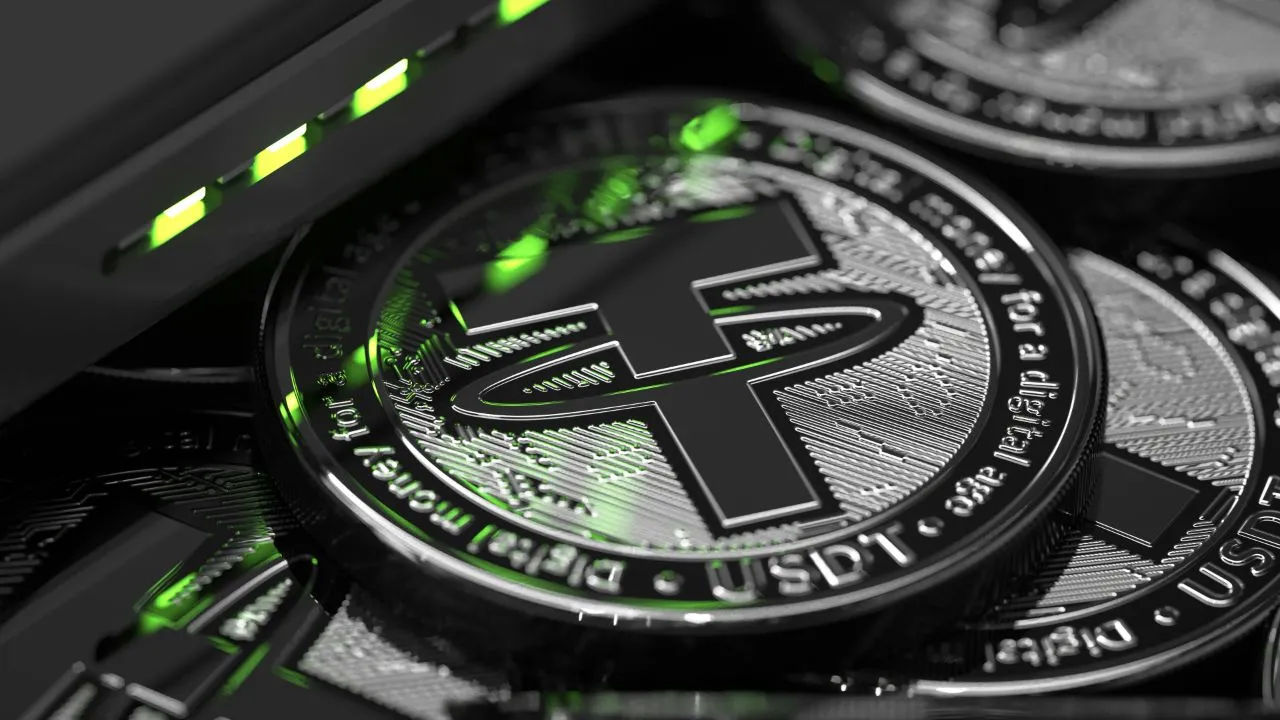
Tether, the company behind USDT, the popular dollar-backed stablecoin, is seeking to establish a presence in South Korea through remote hiring, according to a report from Maeil Business Newspaper citing industry sources.
https://asset.coinness.com/en/news/f9eb29e5cce05a746fb3edbb93f61e5d.webp
Photo by DrawKit Illustrations on Unsplash

Rather than opening a physical office, Tether is looking for a remote employee who will focus on increasing USDT adoption in Korea, exploring business opportunities, building partnerships and navigating the local regulatory landscape.


The expansion comes as stablecoins gain significant traction in South Korea. Data provided to lawmaker Min Byeong-dug from the country's five largest cryptocurrency exchanges via the Financial Supervisory Service (FSS) shows that dollar-pegged stablecoins accounted for 47% of crypto assets withdrawn from these platforms between January and March.


Central bank pushes for regulation

Meanwhile, South Korean officials are increasingly focused on regulating the stablecoin sector. Bank of Korea (BOK) Governor Rhee Chang-yong recently called for the swift implementation of stablecoin oversight, warning that they could bypass the country’s financial rules. During a press conference in Italy, Rhee argued that stablecoins pegged to either the Korean won or the U.S. dollar effectively function as alternative currencies and should be examined under existing money transfer laws.


Rhee has emphasized that authorities must first determine whether won-backed digital tokens should be permitted at all. Last October, during a national audit, he expressed concerns about stablecoins' dependence on fiat currencies and advocated for implementing a central bank digital currency (CBDC) instead.


These concerns were echoed by Ko Kyeong-cheol, head of BOK's electronic finance team, who recently highlighted at a financial law conference that stablecoins could profoundly impact the central bank's ability to carry out monetary policy, maintain financial stability and oversee payment settlements. Ko emphasized that if South Korea were to permit won-pegged stablecoins, the BOK should be involved early in the approval process to minimize potential risks to its policy objectives.


On the regulatory front, Financial Services Commission (FSC) Chairman Kim Byoung-hwan has indicated that discussions on developing a stablecoin regulatory framework are likely to begin in June as part of a broader initiative.


Presidential candidates weigh in on stablecoin future

The issue has also entered the political arena ahead of South Korea's June 3 presidential election. Lee Jae-myung, the Democratic Party of Korea's presidential candidate, has advocated for a market featuring won-based stablecoins. Lee argues that quickly adopting stablecoins would help South Korea keep pace with global trends and prevent capital outflows. His platform includes introducing spot crypto ETFs and reducing digital asset trading fees. 


Another candidate, Hong Joon-pyo of the People Power Party, also previously announced plans to explore the issuance of a won-pegged stablecoin before being eliminated in the party's primary election.


More to Read
View All
Markets·

Mar 13, 2024

Korean banks see over $1.5B outflow in funds to crypto market

Recently, the top five Korean banks have seen a significant outflow of funds in their demand deposits – worth about KRW 2 trillion ($1.52 billion) – to crypto markets as local investors are rushing to withdraw their money from banks to invest in the crypto and stock markets. The recent surge of Bitcoin to KRW 100 million prompted the funds’ outflow, local media Etoday reported. This is a substantial turn from just a week ago, when these banks saw a KRW 23.5 trillion increase in their demand deposits just in a month.  The previous rise in demand deposits at banks, however, was also driven by local investors who used these accounts as a “station” to temporarily store their money for future crypto investments. These accounts are highly liquid, since users can deposit or withdraw funds at any time without incurring penalties from banks.Photo by Emile-Victor Portenart on UnsplashBank deposits flowing into crypto Data from the five banks –  KB Kookmin Bank, Shinhan Bank, Hana Bank, Woori Bank and NH Nonghyup Bank – show that their combined demand deposits totaled KRW 612.4 trillion on Friday, down KRW 2.2 trillion from late last month.  The crypto investing trend has prompted investors to withdraw their funds not only from demand deposit accounts, but also from fixed deposit and installment savings accounts. During the same period, the five banks’ fixed deposits saw a KRW 5.1 trillion decline from KRW 886.2 trillion to KRW 881 trillion, with installment savings decreasing by KRW 2.5 trillion, from KRW 33.2 trillion to KRW 30.6 trillion.  In particular, NH Nonghyup Bank, which offers real-name accounts to the crypto exchange Bithumb, has witnessed a decline of over KRW 2 trillion in its demand deposits over the past week. Shinhan Bank also reported an increase in dealing with more crypto assets.  Bullish crypto and stock market With Bitcoin prices hitting a new high, the U.K. bank Standard Chartered forecasts that Bitcoin could eventually reach $200,000 by 2025. The excitement around crypto has boosted the amount of cryptocurrencies traded against the Korean won across the top five crypto exchanges in Korea, reaching KRW 78 trillion.  Korean stock markets are also signaling a bullish sentiment, with the amount of investor deposits exceeding KRW 53 trillion this month. Investor deposits refer to customer deposits at securities companies saved for investment purposes or those left unclaimed after selling stocks.  Declining interest rates Meanwhile, local savings products with over 4% interest rates are no longer to be seen. According to the Korea Federation of Banks, a one-year savings product with the highest interest rate among the top five local banks offers an annual rate of 3.55%.  Online-only banks, which typically offer relatively higher rates than other traditional banks, are rapidly lowering rates on their saving products. The highest annual rate for Kakao Bank’s fixed deposits products stands at 3.5%, down by 0.1 to 0.2 percentage points depending on their maturity.  Kbank has also decreased rates for fixed deposits by 0.05 percentage points, lowering the rate for its flagship fixed deposits product from 3.7% to 3.65%. 

news
Web3 & Enterprise·

Aug 12, 2023

Boyaa Interactive Greenlights $5 Million Investment in Bitcoin and Ether

Boyaa Interactive Greenlights $5 Million Investment in Bitcoin and EtherBoyaa Interactive International Limited, a Hong Kong-based investment holding company with a track record in developing online chess, card, and puzzle games, has made a strategic move with a proposed investment in digital assets.The company’s board of directors has recently given the green light for the allocation of a substantial budget amounting to $5 million for the purpose of acquiring cryptocurrencies.Photo by Traxer on UnsplashWeb3 positioningThe Chinese company, incorporated in the Cayman Islands, announced the move as Boyaa Interactive seeks to position itself for a dynamic shift into the realm of Web3.While the exact allocation breakdown was not detailed in the disclosure, the company outlined that its primary focus would be on procuring established cryptocurrencies, specifically Bitcoin (BTC) and Ether (ETH). Boyaa Interactive intends to execute these purchases through regulated and licensed trading platforms within the upcoming year.In a letter addressed to its shareholders and potential investors, the company emphasized the strategic nature of this decision:“The purchases of cryptocurrencies are for the consideration of the Group’s future business layout into the field of Web3. The Board is of the view that the purchases of cryptocurrencies (including mainly Bitcoin (BTC) and Ether (ETH)) by the Group are in the interests of the Company and its shareholders as a whole.”A challenging recent historyThe move towards cryptocurrencies is a significant pivot for Boyaa Interactive, a company that has navigated a series of challenges in recent years. In 2018, the company’s Chairman and CEO, Zhang Wei, faced legal troubles and was sentenced to 12 months in prison for bribery, which led to his resignation from all executive and management positions.Subsequent restructuring saw Dai Zhikang stepping in as the new Chairman of the board, while Tao Ying assumed the role of an Executive Director and Chairman of the Nomination Committee.Financially, Boyaa Interactive experienced a tough period marked by revenue contraction. The company reported revenue declines over the course of 2018, largely attributed to a governmental crackdown on online poker applications and the discontinuation of poker as a recognized competitive sport. Regulatory risks stemming from the Chinese government’s stance on Texas Hold’em poker games resulted in a substantial falloff in revenue by comparison with past performance.Funds seizureThese challenges cascaded into the following year, when the company encountered a substantial freeze on its funds. In 2019, a Chinese court ordered the freezing of RMB 635 million (approximately $88.6 million) belonging to Boyaa Interactive, following the legal actions against Zhang Wei and his associated entities.One of the company’s subsidiaries, Boyaa Shenzhen, was found guilty of offering bribes. The company responded by clarifying that the frozen funds could potentially be confiscated if linked to Zhang’s misconduct. However, Boyaa Interactive also stressed that it had not been directly implicated in the case, thus mitigating the legal risks to the broader organization.Amidst these adversities, Boyaa Interactive’s decision to invest in cryptocurrencies demonstrates its openness to adapting to changing technological landscapes and exploring new opportunities in Web3.

news
Web3 & Enterprise·

Mar 12, 2024

Korean crypto exchange Upbit launches BTC-ETH Duo Index

Dunamu, the operator of South Korea’s leading crypto exchange Upbit, announced today that it launched a new crypto price tracking service, Bitcoin-Ethereum Duo Index (Duo Index). The news was reported by the local media outlet Etoday.  The service tracks the two most prominent tokens, Bitcoin and Ethereum, each being the top performer and the runner-up in terms of market capitalization in the crypto asset market. It is a strategy index that equally weights Bitcoin and Ethereum, with their holding ratio updated to 1:1 every month. The weightings of the two cryptocurrencies in the index are subject to an adjustment factor, which is based on their prices. The BTC-ETC Duo Index is currently available on the Upbit Cryptocurrency Index (UBCI) website. Photo by Markus Winkler on UnsplashThe Federal Reserve’s approval of spot Bitcoin ETFs in January has drawn significant attention from many investors, driving up the prices not only of Bitcoin but also Ethereum. Dunamu explained that this heightened interest surrounding Bitcoin and Ethereum is the reason behind its launch of the Duo Index. New tool to boost crypto portfolio’s performance Referencing the Duo Index can help investors estimate their own crypto assets portfolios and boost their performances based on the indicators it offers, including the winning rate of the two coins combined.   The current winning rate of the Duo Index stands at over 58%, which is three percentage points higher than that of the Upbit Market Index (UBMI), which tracks not only Bitcoin and Ethereum but also other altcoins. The high winning rate of the Duo Index demonstrates the bullish sentiment surrounding the two top coins. A Dunamu official stated that the company will continue to keep up with the crypto market trend and further release other strategy indices that would serve the emerging needs of the investors.  

news
Loading