Top

Chinese food company adds Bitcoin to balance sheet

Web3 & Enterprise·May 27, 2025, 1:20 AM

DDC Enterprise, a Chinese company headquartered in Hong Kong and listed on the New York Stock Exchange (NYSE), has become the latest corporation to add Bitcoin (BTC) to its balance sheet.
https://asset.coinness.com/en/news/fec0eb9dbc898b03122415d41d8d14f9.webp
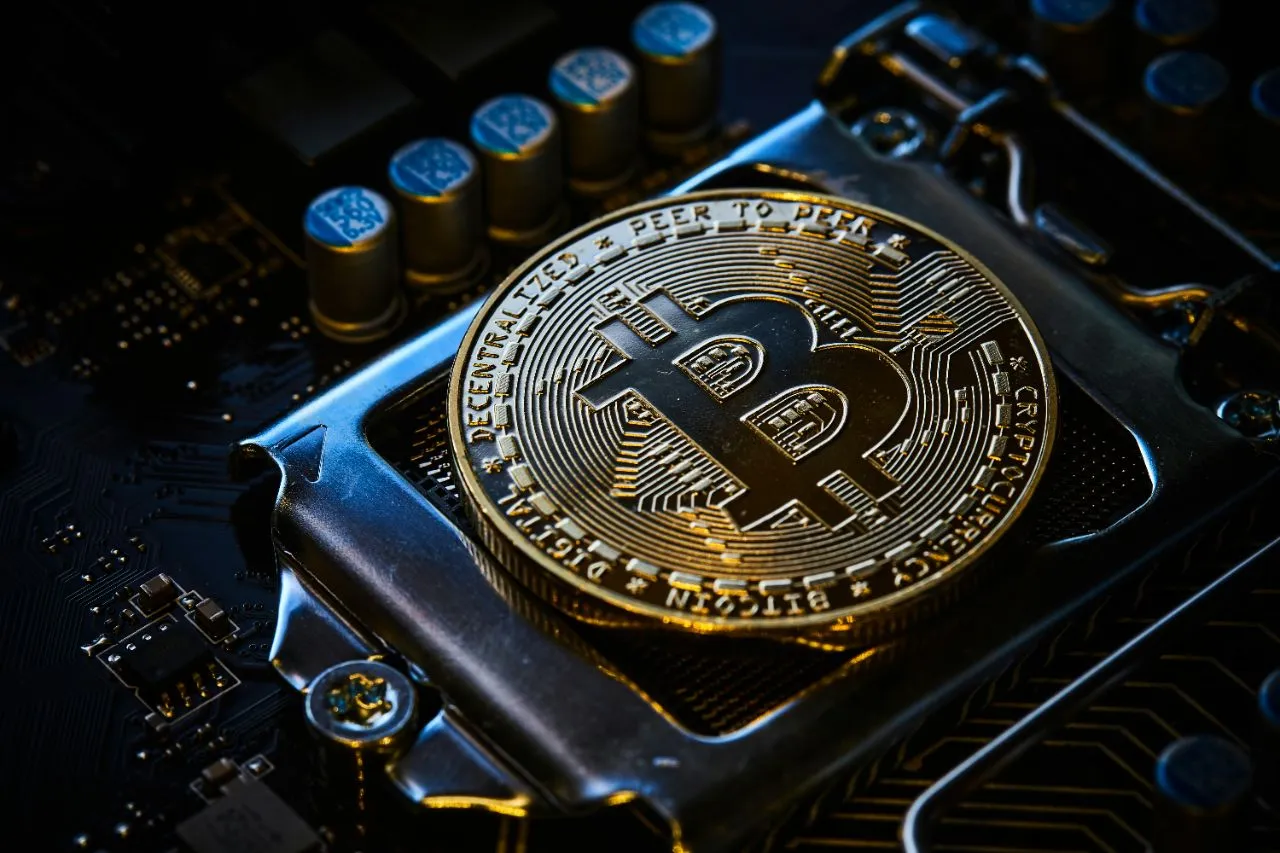
Photo by Michael Förtsch on Unsplash

Initial 21 BTC purchase

The plant-based food products company which operates under the “DayDayCook” brand published a press release via Business Wire last Friday announcing its first Bitcoin purchase. It’s likely that there was a symbolic element to the firm’s first Bitcoin purchase, given that it bought 21 BTC while Bitcoin has a supply cap of 21 million BTC.


The company completed the transaction via share exchange with an investor group, issuing 254,333 class A ordinary shares while acquiring the 21 BTC at a market price of $2,283,667. DDC outlined that it plans to make two further purchases over the coming days of 79 BTC, at which point the firm’s corporate treasury will hold 100 BTC.


Targeting 5,000 BTC

The company has a much more ambitious Bitcoin accumulation plan, however. Over the course of the next three years, it is targeting the establishment of a Bitcoin treasury holding 5,000 BTC. At current market pricing, that would amount to a Bitcoin treasury of around half a billion dollars in value. In the near term, the firm is targeting the acquisition of 500 BTC by the end of this year.


DDC Founder and CEO Norma Chu described the development as a “pivotal moment” in the company’s evolution. She said that this plan reflects DDC’s “confidence in Bitcoin as a store of value,” while demonstrating the firm’s interest in pursuing innovation. “We are fully committed to ensuring the success of this strategy, which aligns with our vision to drive long-term value for our shareholders,” she added.


Web3 innovation

According to a DDC website, the company has innovative plans that go beyond just a Bitcoin treasury. It plans to deepen community engagement through the use of NFT loyalty programs and immersive Web3 experiences. It also plans to leverage blockchain transparency in its efforts to build greater community engagement. The website sets out a vision whereby DDC can blend its culinary heritage with next-generation technologies. 


The company suggests that real-world asset (RWA) tokenization has the potential to revolutionize consumer engagement, while offering the possibility of enabling fractional ownership of product lines. It has set out a roadmap where it outlines having established a digital platform in 2012, going on to engage in content creation and content commerce over the course of a decade. 


The firm carried out an initial public offering (IPO) in 2023 and from 2025 onwards, aside from its Bitcoin treasury strategy, it plans to integrate RWA tokenization and Web3 technology into its business, while also adopting AI technologies to enhance supply chain efficiency.


DDC is one of a growing list of corporations to adopt Bitcoin as a strategic asset over the course of the past 18 months. Earlier this month, another Chinese company, Nasdaq-listed Jiuzi Holdings, an electric vehicle (EV) retailer, announced that it had adopted a plan to acquire 1,000 BTC. Hong Kong-listed game developer Boyaa Interactive holds 3,350 BTC.


More to Read
View All
Web3 & Enterprise·

Jul 25, 2023

Midas Investments Founder Launches Locus Finance

Midas Investments Founder Launches Locus FinanceIakov Levin, the founder of the recently failed Dubai-headquartered custodial crypto investment platform Midas Investments, has unveiled his latest project, Locus Finance, a DeFi platform.Photo by Shubham’s Web3 on UnsplashStarting overThat’s according to a recent report published by The Block. Locus Finance’s main focus lies in providing connectivity with high-yield tokenized vaults. In its initial stages, the company will introduce three yield-generating products, centered around Ethereum staking, DeFi expansion, and Arbitrum trading.Levin believes that investors are not interested in the intricacies of blockchains, protocols, or daily portfolio management. This is where vaults play a crucial role, catering to the retail yield market and generating profits for retail investors. In a statement Levin said:“Investors don’t want to worry about blockchains, protocols, transaction costs, and daily portfolio management. They need specific exposure in a set-and-forget style. Vaults represent a unique approach necessary for maturing the retail yield market, allowing for optimal wealth generation for retail investors.”With Locus Finance, Levin aims to learn from past experiences and provide a platform that meets the demands of retail investors seeking a more simplified and profitable DeFi experience. The company’s approach centers around yield generation and a seamless user experience, allowing users to focus on their investments without being bogged down by complex technicalities.Midas downfallMidas Investments, established in 2018, had seen significant success as a custodial crypto investment platform which offered yields on a range of digital assets. It managed assets worth over $250 million at its peak in 2021. However, the volatile market conditions in 2022 led to losses exceeding $50 million, forcing the company to close its doors in December 2022.The loss incurred accounted for 20% of the $250 million assets under management (AUM). The platform’s demise followed the collapse of prominent projects like Terra, FTX, and Celsius earlier in 2022. Those collapses prompted Midas Investments users to withdraw over 60% of their assets. That run on the platform rendered its fixed yield model unsustainable.Midas faced total liabilities of $115 million in Bitcoin, ETH, and stablecoins, with assets valued at $51.7 million. At the time of the platform’s collapse, Levin expressed his optimism about future plans. He disclosed plans to introduce an offering that would feature new investment strategies. Fast forward seven months and it appears that those plans have taken shape in the form of this newly-launched Locus Finance platform.However, Locus Finance’s success will be closely monitored in light of the challenges faced by its predecessor. A former Midas Investments customer took to Reddit three months ago to warn people to stay away from the new platform once launched.At that time, Midas Investments management had advised customers of its intention to start over via Lotus Finance. “Users lost tons of money and Midas got away with the bags. . . . I’d recommend staying as far away from them as possible,” the former customer warned.

news
Web3 & Enterprise·

Apr 24, 2023

Dunamu Collaborates with Credit Institutions to Aid Young Debtors

Dunamu Collaborates with Credit Institutions to Aid Young DebtorsDunamu, the operator of Korea’s leading cryptocurrency exchange Upbit, has announced its collaboration with the Credit Counseling and Recovery Service (CCRS) and the Social Solidarity Bank (SSB) to aid young debtors.©PexelfauxelsLUNC transaction fee revenueOn Thursday, Dunamu signed a memorandum of understanding with CCRS and SSB to propel the Dunamu Next Dream project. This initiative aims to return Luna Classic (LUNC) transaction fee revenue to the community.In September last year, Dunamu expressed its plan to allocate the LUNC transaction fee profits of 239.13025970 BTC for investor protection. The exchange operator, following the recommendations of an external advisory committee, decided to donate approximately 3 billion KRW (~$2.3 million) of these assets to public organizations and use the remaining funds for financial and credit support.Young debtorsThe project targets young individuals facing financial difficulties and debt repayment challenges in the wake of the extended COVID-19 pandemic and escalating interest rates. This reflects the pressing need for effective relief systems and preemptive measures in response to the recent increase in youth debt.A joint survey conducted jointly by Statistics Korea, the Bank of Korea, and the Financial Supervisory Service last year revealed that household debt for those aged 29 or under increased by 41.2% as of the end of March 2022 compared to the same period in 2021.This effort aims to address the economic instability among youths, which could potentially lead to a financial crisis. Through this agreement, the involved parties will offer various measures, such as emergency loans, financial consultations, and follow-up support, to alleviate the financial strain on young debtors and assist them to cultivate improved financial habits.Starting this year, the Dunamu Next Dream project will span three years and will gradually broaden its scope and beneficiaries.

news
Web3 & Enterprise·

Jun 09, 2023

Animoca Brands Expands Focus to Non-US Markets

Animoca Brands Expands Focus to Non-US MarketsHong Kong-based Web3 and blockchain unicorn, Animoca Brands, is shifting its attention to markets outside the United States following the Securities and Exchange Commission’s (SEC) classification of its $SAND token as an unregistered security.This move comes after the SEC named $SAND, along with other tokens like Solana and Polygon, in lawsuits against major exchanges Binance and Coinbase Global. The labeling of these tokens as securities by the SEC poses legal risks for companies involved in their sale.Photo by Zulian Firmansyah on UnsplashNavigating regulatory challengesAnimoca Brands, led by Co-Founder and Chairman Yat Siu, has long embraced a global approach rather than focusing solely on one territory. Siu clarified the firm’s response to the latest regulatory development to the South China Morning Post (SCMP) via email on Thursday.He emphasized that while the SEC concentrates on the US, Animoca Brands operates in more progressive jurisdictions such as Hong Kong and Japan, where $SAND is widely available and accepted. In response to the recent blockchain-hostile climate in the US, the company has proactively started emphasizing other markets, reducing its reliance on the US market and mitigating potential risks associated with regulatory actions.Exchange business impactWhile Coinbase CEO Brian Armstrong has declared that his company has no intentions of delisting tokens labeled as securities by the SEC, this decision poses challenges for other exchanges less committed to selling these tokens. Dan Gallagher, Chief Legal Compliance and Corporate Affairs Officer of Robinhood Markets, expressed concerns about listing tokens due to regulatory rules and the uncertainty surrounding tokens created by organizations outside the US.These developments could have a chilling effect on exchanges, prompting crypto firms to consider moving away from the US market due to perceived uncertainty and the associated legal risks. As a demonstration of that, in a bankruptcy court hearing on Thursday, it emerged that the FTX Debtor is talking with bidders with a view to restarting the international business but restarting the US-based business is less certain.Animoca’s Middle East ventureIn a further display of its commitment to expanding outside the US, Animoca Brands announced plans in March to make significant investments, worth tens of millions of dollars, in the Middle East. This move reflects the company’s proactive strategy to tap into non-US markets and leverage the growth potential offered by progressive jurisdictions.Animoca Brands’ decision to prioritize non-US markets and reduce its reliance on the US market aligns with its global operating approach. The SEC’s classification of $SAND as a security has prompted the company to shift its attention to more progressive jurisdictions where $SAND remains widely accessible.As other firms, including Ripple, also explore growth opportunities outside the US, the global landscape of the crypto industry is evolving. By navigating regulatory challenges and expanding into promising markets, Animoca Brands aims to position itself for continued success and mitigate potential risks associated with the SEC’s actions in the US market.

news
Loading