Top

UAE deepens its crypto push as Bybit wins full license and institutions move in

Policy & Regulation·October 13, 2025, 3:32 AM

The United Arab Emirates (UAE) advanced its push to become a leading digital asset hub as crypto exchange Bybit received a full virtual asset platform operator license from the Securities and Commodities Authority (SCA). The permit enables Bybit to provide its entire range of products to UAE residents, the company said in an Oct. 9 press release.


The clearance marks the culmination of a process that began when Bybit received preliminary approval from the SCA in February. The exchange says it is the first to complete the full licensing journey and notes that 2025 has been a year of major compliance wins, including new credentials in Europe and a return to the Indian market.
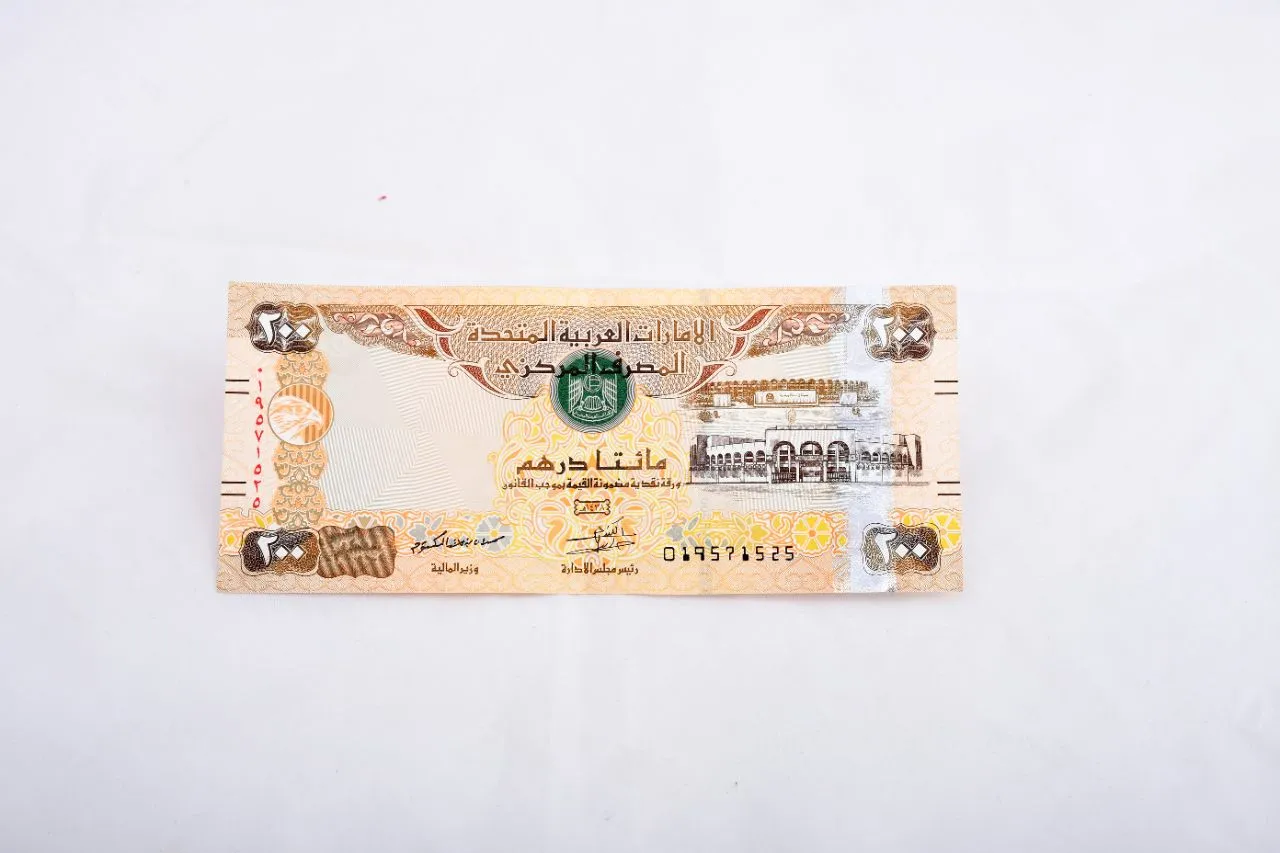
https://asset.coinness.com/en/news/b538930c9b8d9c9f15329b004d01b838.webp
Photo by Atikah Akhtar on Unsplash

BitGo broadens institutional reach in Dubai

Institutional infrastructure is expanding alongside retail access. Crypto custody firm BitGo secured a broker-dealer license from Dubai’s Virtual Assets Regulatory Authority (VARA). The new authorization allows BitGo MENA to deliver regulated trading and intermediation services across the region through an integrated OTC desk and a digital platform supporting spot crypto trading in both dirhams and U.S. dollars.


The UAE’s welcoming attitude toward digital assets is changing how major investors think about wealth. The Bitcoin Historian said on X that The Kanoo Group, which oversees about $20 billion in assets, intends to invest in Bitcoin. Bloomberg has reported that affluent families across the region are gradually diversifying beyond real estate and private enterprises. With around $1 trillion expected to shift to younger generations soon, many heirs are looking to allocate more toward cryptocurrencies, tokenized funds, and tokenized real-world assets (RWAs).


New fund marks progress in tokenized finance

That growing appetite for digital exposure is now being met with new products. Last month Qatar National Bank (QNB) Group joined forces with Standard Chartered and DMZ Finance to launch the first regulated tokenized money market fund in the Dubai International Financial Centre. Using blockchain technology, the QCD Money Market Fund brings traditional financial assets on-chain, creating new yield opportunities for investors within the digital economy. The fund is managed by QNB Group, uses infrastructure provided solely by DMZ Finance, and has Standard Chartered serving as custodian of its assets.


As the UAE deepens its role in global finance, regulators are also working to align with international standards. By 2027, it expects to adopt the OECD’s Crypto-Asset Reporting Framework (CARF), with cross-border data exchanges to begin in 2028. The Ministry of Finance has already signed the Multilateral Competent Authority Agreement to make this happen. The framework promotes automatic sharing of crypto-related tax information among member countries, underscoring the UAE’s commitment to global transparency as it expands its financial footprint.


Recent developments show the jurisdiction striving for growth while strengthening oversight. Exchanges are gaining clarity on what they can offer, institutions are building trading rails, and investors are embracing tokenized products. They signal a market finding its balance between innovation and regulation. The coming years will reveal how well that balance can hold.
 

More to Read
View All
Markets·

Jan 15, 2024

Spot bitcoin ETF approval triggers surge and shift in Korean crypto exchange performances

The U.S. Securities and Exchange Commission (SEC) approved the spot bitcoin exchange-traded fund (ETF) last Tuesday, prompting South Korean investors to flock to cryptocurrency exchanges to make transactions. However, the revenues recorded by these exchanges showed a mixed performance in response to this development due to their differing transaction fee policies, according to local news outlet DealSite on Monday.Photo by Maxim Hopman on UnsplashTrading volumes surge and retreatAccording to crypto analytics platform CoinGecko, as of 9 a.m. on Jan. 12 (KST), Upbit's trading volume on Dec. 11 and 12 was approximately $5.1 billion and $6.1 billion, respectively, for a total of about $11 billion. During the same period, Bithumb recorded $2.6 billion and $2.4 billion, respectively, totaling nearly $5 billion. However, as of this writing at 11 a.m. on Jan. 15, Upbit’s 24-hour trading volume has dropped back down to $2.1 billion and Bithumb to $874 million. "After the SEC's approval, crypto exchanges were simultaneously flooded with transactions," an anonymous industry employee commented. "Bitcoin and Ethereum were mainly traded." Fee divergenceAlthough the ETF approval caused a general uptick in trading volumes, the amount of revenue that the exchanges earned from transaction fees varied. Upbit charges a fee of 0.05% for both buying and selling crypto, meaning the exchange made an estimated KRW 14.8 billion in revenue from the fees from Dec. 11 to 12. Bithumb, on the other hand, hasn't earned any revenue from trading fees since its zero-fee policy was implemented in October last year.  Bithumb had previously charged 0.25% for transactions and 0.04% with coupons. By implementing the former, the exchange lost about KRW 15.8 billion ($12 million) in revenue, and with the latter, it lost about KRW 2.5 billion. For crypto investors, Bithumb's zero-fee policy has made investing more accessible, but the exchange is unlikely to reap its own rewards. Significant investor interestMoreover, with trading for the spot bitcoin ETF beginning on the 11th, the influx of funds is expected to boost trading. "All told there were 700,000 individual trades today in and out of the 11 spot ETFs," Bloomberg ETF analyst Eric Balchunas told X (formerly Twitter). "For context, that is double the number of trades for $QQQ." $QQQ refers to the Invesco QQQ ETF. According to an image that accompanied Balchunas’ post, the total trading volume across all 11 spot ETFs was reportedly $4.3 billion. Grayscale's GBTC had the highest volume at $2.1 billion, followed by BlackRock’s IBIT at $1 billion and Fidelity’s FBTC at $673 million.

news
Web3 & Enterprise·

Jul 07, 2025

Bitstamp awarded MPI license in Singapore

Singaporean regulator, the Monetary Authority of Singapore (MAS), has awarded cryptocurrency exchange Bitstamp a Major Payment Institution (MPI) trading license.Photo by Julien de Salaberry on UnsplashExpanding into APACIn a blog post published on July 3, Bitstamp proclaimed that it is “globally trusted & now licensed in Singapore.” The company described the acquisition of the license as a milestone that “marks the start of [its] expansion into the APAC region.” It emerged in June 2024 that Bitstamp had been acquired by American trading platform Robinhood. The $200 million acquisition was finally completed last month. Bitstamp signaled last September that it planned to expand its institutional business across Australia and Asia. Earlier this year, parent company Robinhood outlined that it would use Bitstamp to crypto offerings in Singapore in 2025.Acquiring licensesAt that time, Johann Kerbrat, vice-president and general manager of Robinhood Crypto, said that “part of the reason why Bitstamp was attractive was because of their licenses with Singapore, in addition to its institutional business.” This latest license award strengthens the company’s efforts in gaining more traction in Asia. Licensing is all the more relevant given the recent actions of the Singaporean regulator. Last month, MAS set a June 30 deadline for unlicensed crypto firms operating out of the city-state and serving overseas customers to cease offering such services. Over recent years, Singapore has been striving towards establishing itself as a global hub for crypto startups. It has been successful in that endeavor insofar as a whole host of international crypto businesses have established a presence there.  However, its recent move to curb unlicensed firms working out of Singapore in providing services internationally has been interpreted as a much more cautious approach being taken by the Singaporean authorities. The regulator clarified its concerns recently:”MAS has set the bar high for licensing and will generally not issue a licence. The money laundering risks are higher in such business models and if their substantive regulated activity is outside of Singapore, MAS is unable to effectively supervise such persons. Without a licence, such DTSPs [Digital Token Service Providers] will have to cease their regulated activities.”Caution in Singapore to benefit Hong KongSingapore has been competing with cities like Hong Kong to develop and maintain that crypto hub status. Some commentators have expressed the view that Hong Kong will benefit from this latest move in Singapore.  Joshua Chu, a lawyer who co-chairs the Hong Kong Web3 Association, told the South China Morning Post (SCMP) recently that “this is likely to attract quality projects [to Hong Kong] looking for a compliant, liquid, and globally connected base.” In addition to licensing achieved in Asia, Bitstamp has acquired licensing in a number of European countries such as Italy, Spain, France and the Netherlands. Last month, Robinhood launched the trading of tokenized stocks and exchange-traded funds (ETFs) for users resident within the European Union (EU). It also revealed that it is in the process of building out a layer-2 network on top of the Arbitrum blockchain with a view towards using it to host tokenized real-world assets (RWAs).

news
Web3 & Enterprise·

May 31, 2023

Japanese Expansion Sees XDC Network Pair Up with SBI Subsidiary

Japanese Expansion Sees XDC Network Pair Up with SBI SubsidiaryThe XDC Network, a leading carbon-neutral, enterprise-grade hybrid blockchain solution formerly known as XinFin, is gearing up to make inroads into the Japanese market through a partnership with SBI VC Trade, a cryptocurrency exchange subsidiary of Tokyo-based financial holding company SBI.On May 31, the Singapore-based team behind XDC Network announced its addition to SBI’s crypto exchange subsidiary, marking an important milestone in their expansion efforts. Fumiki Ozaki, CEO of SBI VC Trade, expressed his excitement about the partnership, stating, “We are delighted to expand our cryptocurrency offerings by adding XDC to our exchange. XDC Network brings a unique value proposition to the trade finance market, and we believe its addition will enhance our customers’ trading experience.”Photo by Denys Nevozhai on UnsplashToken gainsThe XDC token has been gaining significant traction recently, becoming one of the top 5 altcoin gainers in March 2023 with a 54% rise in just 30 days. The network supports Ethereum Virtual Machine-compatible smart contracts, protocols, and atomic cross-chain token transfers. It also complies with the ISO-20022 message standard, which is widely accepted for electronic data interchange between financial institutions.This particular announcement on Wednesday has resulted in XDC token appreciation of 10% over the past 24 hours alone. At the time of publication, the project’s native token stood at a unit price of $0.03456.Ecosystem development decentralizationIn a move towards decentralization, the XDC Network recently established a decentralized autonomous organization to govern the blockchain. With its deployment in May, the community will have a say in the distribution of ecosystem funds to foster further development.While the project team behind the blockchain network believes the network itself to be decentralized, many projects in crypto have grappled with the difficult issue of governance. XDC Network’s DaoFin project exemplifies its efforts to achieve a more equitable and decentralized form of network governance.SBI delving deeper into cryptoAtul Khekade, Co-founder of XDC Network, expressed enthusiasm about expanding into Japan, stating: “Japan serves as a crucial hub for international trade, and our blockchain platform aims to streamline this sector by improving transparency, traceability, and reducing costs.”SBI is also making strides to strengthen its presence in key cryptocurrency markets. In September 2022, it obtained a license to operate in Singapore, expanding its reach beyond Japan. Additionally, one of SBI’s portfolio companies, digital asset trading technology firm Clear Markets, received approval from the United States Commodity Futures Trading Commission (CFTC) to offer over-the-counter crypto derivatives products with physical settlement.In 2018, SBI partnered with crypto lender Amber in forming a joint venture company in order to take on the Japanese market. It pursued a similar strategy with crypto custody service provider Zodia Custody, forming a joint venture subsidiary to assist it in gaining exposure to the Japanese market.The partnership between XDC Network and SBI VC Trade signifies the growing interest in blockchain technology and cryptocurrency in Japan. By joining forces, XDC Network and SBI VC Trade aim to revolutionize the trade finance market by leveraging the transparency and efficiency of blockchain, ultimately benefiting businesses and consumers alike.With the shared vision of advancing the adoption of blockchain technology, both parties are poised to make a significant impact on the future of trade finance and digital asset trading.

news
Loading