Top

UAE signs on to OECD crypto-tax reporting pact, sets 2027 launch

Policy & Regulation·September 25, 2025, 6:42 AM

The United Arab Emirates (UAE) has taken a step toward global tax transparency in digital assets, opening a public consultation on how it will implement the Organisation for Economic Co-operation and Development’s (OECD) Crypto-Asset Reporting Framework (CARF) and confirming a formal commitment to the regime.


The UAE Ministry of Finance said it has joined the Multilateral Competent Authority Agreement, enabling the automatic exchange of information under CARF, following its intention announced last November. Implementation is slated to begin in 2027, with the first cross-border exchanges of data expected in 2028.
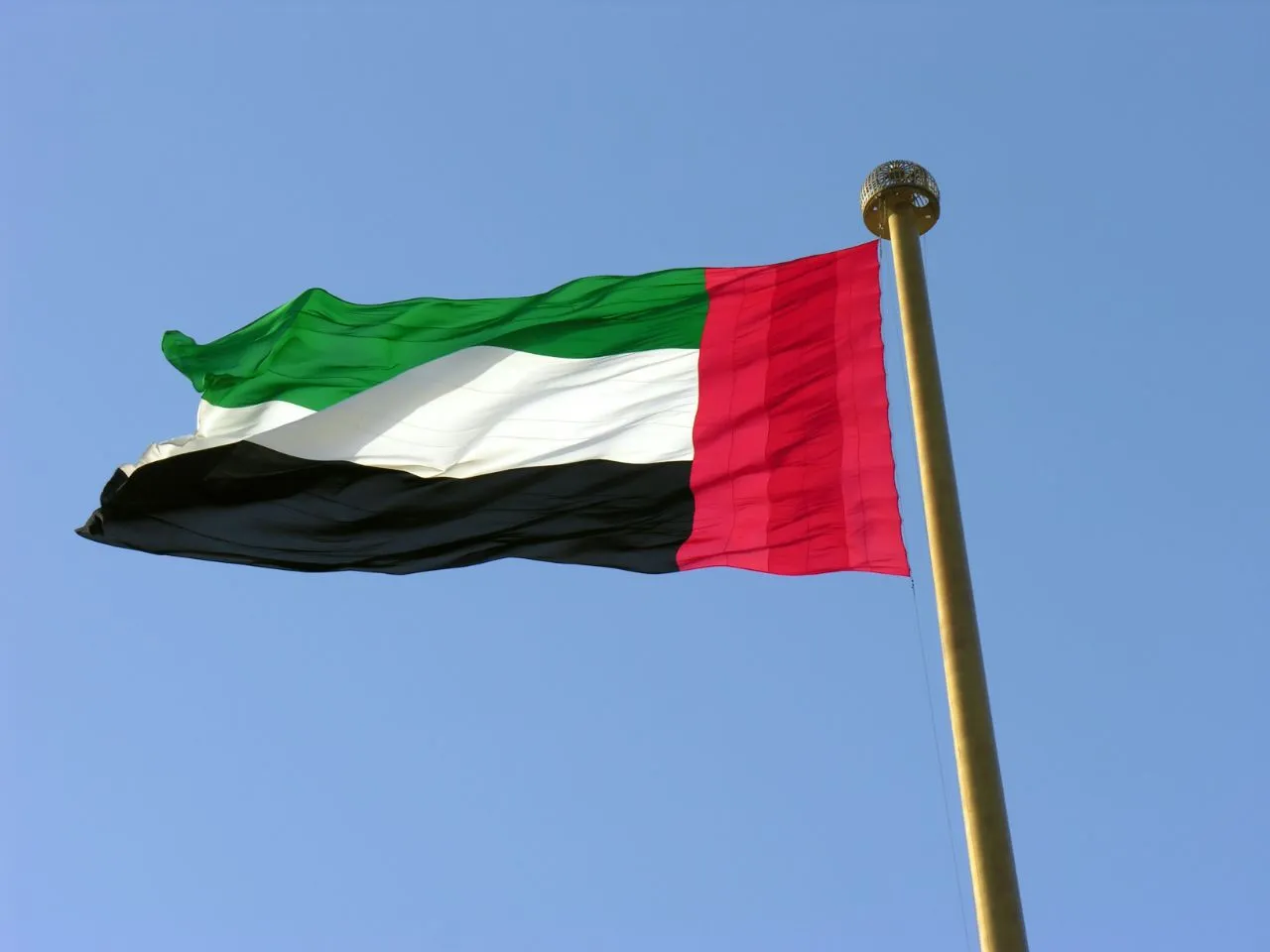
https://asset.coinness.com/en/news/4a5871b60e8c5b77a9f5d3852dc7e71e.webp
Photo by Saj Shafique on Unsplash

Global rules for crypto tax reporting

Designed by the OECD, CARF establishes standardized rules for collecting and sharing tax-relevant information on crypto activity. UAE officials say the framework will provide greater certainty for industry participants while aligning the country with international tax transparency standards.


As part of the rollout, the ministry is seeking input from across the market. Advisory firms, intermediaries, traders, custodians, exchanges, and other stakeholders are invited to weigh in on potential impacts and areas needing clarification. The consultation began on Sept. 15 and runs until Nov. 8, with the aim of shaping clear, effective rules that reflect expert insight and market realities.


Solana treasury company

The policy moves come amid brisk momentum in the UAE’s digital asset ecosystem. A recent announcement outlined the planned launch of Solmate, a Solana (SOL)-based digital asset treasury firm that will emerge from the rebranding of Nasdaq-listed, Ireland-based holding company Brera Holdings. The venture is supported through a $300 million private investment in public equity (PIPE) sponsored by UAE-based Pulsar Group.


Brera, known for its multi-club football ownership strategy across three continents, will have that business carried forward under Solmate, which counts the Solana Foundation, RockawayX, and ARK Invest among its investors. Former Kraken chief legal officer (CLO) Marco Santori is also set to become CEO.


Tokenization and real estate

Real-world asset (RWA) tokenization is another area gaining traction in the UAE. Mavryk, a layer-1 network, has raised $10 million in a round led by financial derivatives provider MultiBank Group. The investment builds on a partnership targeting the tokenization of more than $10 billion in UAE real estate via MultiBank’s RWA platform. Fireblocks will provide multiparty computation wallets to secure tokenized assets on Mavryk’s network.


Beyond tokenization, RAK Properties has signed a strategic deal with Hubpay to let foreign buyers acquire homes in the UAE, most notably in Ras Al Khaimah, the country’s sixth most populous city, using cryptocurrencies such as USDT, Bitcoin (BTC), and Ethereum (ETH).


Taken together, the UAE’s alignment with CARF and the burst of private sector initiatives point to a market moving toward clearer rules and broader institutional participation, even as the details of implementation are refined through the current consultation.


 

More to Read
View All
Web3 & Enterprise·

Apr 17, 2025

OKX relaunches in the United States

Global crypto exchange platform OKX has announced that it has relaunched its exchange services and Web3 wallet within the U.S. market. In a press release published on April 15, the company said that customers can now access the platform in the United States, “with existing customers migrating seamlessly and new customers gradually gaining access ahead of a full nationwide launch.”Photo by Danny Burke on UnsplashOnboarding OKCoin usersIn terms of existing customers, the company is referring to users of OKCoin, the former name of OKX, who will now be onboarded onto the newly launched OKX exchange service. The Seychelles-based company, which was originally founded and operated in China, has established its U.S. headquarters in San Jose, California. The company has appointed Roshan Robert, formerly an executive at Morgan Stanley and Barclays, as its U.S. CEO. Commenting on the U.S. market relaunch, Robert stated: "With the US advancing crypto regulatory clarity, we see tremendous opportunities to build trust and deliver secure, compliant digital asset solutions.” Inflection pointIn a blog post published to the firm’s website, Robert said that he had been watching the development of the industry since its earliest days, but that he thinks that the crypto sector has now reached “a critical inflection point.” He added that more so than ever before, the crypto sector is currently interacting more directly with traditional finance and capital markets.  Referring directly to what platform users can expect from the relaunched service in the U.S., the OKX U.S. CEO said that the firm plans on rolling out new features throughout the year as part of its vision to build a crypto super app. Rollout of the platform’s services in the U.S. will be carried out on a phased basis. The firm also intends to offer integrations with local banks, together with full support for major assets such as Bitcoin, Ethereum, USDC and USDT.The OKX Wallet will be made available to U.S. users, supporting a range of digital assets across 130 blockchain networks. The wallet will enable users to access a number of Web3 dApps, facilitate the movement of digital assets between blockchain networks and include a number of tools to assist platform users with their trading activities. Entering a ‘new era’It’s likely that a change towards a more positive outlook where the crypto sector is concerned at government and regulatory levels in the U.S., together with a settlement reached with the U.S. Department of Justice (DOJ), has influenced OKX in relaunching its service stateside.  The DOJ had opened an investigation into the company on the basis of allegations that it was operating a money-transmitting business on an unlicensed basis. In its settlement, the company paid fines and penalties totaling $500 million. With that settlement behind it and a more enlightened climate for digital assets having emerged in the U.S., OKX described the service relaunch as “a new era for OKX in the U.S.”Yves La Rose, CEO of Web3 banking project, the Vaulta Foundation, said that OKX’s U.S. expansion is a signal, indicating that “a new era of compliant, wallet-led Web3 innovation is underway.” Diana Pires, an executive at crypto payments firm Beam, expressed a similar take, stating on X that OKX was relaunching “because the world’s largest economy is finally ready for crypto,” adding that “the floodgates are now open for international crypto companies.”

news
Policy & Regulation·

Sep 13, 2023

Compliance and Cooperation — A Necessary Formula for Combatting Crypto Crimes

Compliance and Cooperation — A Necessary Formula for Combatting Crypto CrimesFrom common scams like voice phishing to threats of violence, the involvement of cryptocurrencies in crimes against the general public is steadily on the rise both in South Korea and abroad.Photo by Bermix Studio on UnsplashAccording to blockchain data analysis firm Chainalysis, the scale of cryptocurrency-related crimes and hacking on a global scale has decreased by 45.2% and 23.5%, respectively, compared to last year. However, financial losses resulting from smaller ransomware attacks, including phishing scams, are showing an upward trend.Authorities and industry figures alike are increasingly emphasizing the need for close cooperation to combat this growing issue, as existing regulations and legal frameworks remain insufficient to do so.Chainalysis and crypto exchange Binance co-hosted a policy summit in Seoul on Tuesday called “Securing the Future of Crypto,” where experts gathered at the Courtyard Marriott hotel to discuss compliance and cooperation between the public and private sectors in fighting crypto crimes.Challenges and complexities in crypto investigations“The Korean National Police Agency receives dozens of reports of financial losses and urgent requests for account freezes every day, with 80% of them pertaining to Binance,” said Kim Min-jae, an investigator at the National Police Agency’s International Cyber Cooperation Division.Citing a recent case of a voice phishing scam targeting a woman in her 60s, Kim said that authorities were able to proceed with the investigation within 30 minutes after receiving information from the exchange. However, addressing crimes beyond large cryptocurrency exchanges like Binance, such as those involving decentralized finance (DeFi) systems or foreign exchanges, poses a more difficult challenge due to the lack of proper measures to deal with them.Lee Soo-pyeong, a cybercrime investigator at the Korean National Police Agency’s Cyber Investigation Division, also noted that although domestic cases are relatively easier to investigate, there have been many cases — such as the appalling Nth Room case that caused an uproar throughout Korea in 2020 — that involved overseas accounts and exchanges.Steps for effective crime controlWhat measures, then, should authorities and corporations take in order to deal with such issues? Lee stressed the importance of cooperation among international judicial bodies and adherence from businesses to enhance the response to increasingly sophisticated crypto crimes.Know Your Customer (KYC) standards — the guidelines used in investment and financial services to verify customers’ identities and assess their risk and financial profiles — play an important role in this regard. However, “There are no platforms yet, including major exchanges like Binance, that provide us with personal information through KYC measures when funds are laundered,” Kim explained. He expressed hopes for a system jointly established by relevant entities, including local exchanges, that will enable swift criminal investigation.Lee also highlighted the importance of compliance from foreign companies, stating, “While it’s possible to request mutual legal assistance in criminal matters from the International Criminal Police Organization (Interpol), active cooperation from foreign companies is essential.”From an international point of view, Jarek Jakubcek, Head of Intelligence and Investigations APAC at Binance, pointed out that upholding international standards and standardized processes is important, given the fact that crypto crimes transcend borders. While some countries excel in compliance and enforcing anti-money laundering (AML) policies, others fall short, leading criminals to exploit these disparities.Recently, there have been criminals who move their funds through blockchain networks. The development of bridge technology, which facilitates cross-chain asset transfers, has led to laundering techniques becoming more and more sophisticated. However, he assured that tracing funds is still possible, although doing so has become harder than before.The amalgamation of these circumstances has thereby ushered in the era of Know Your Transaction (KYT). While exchanges have traditionally been obligated to perform Know Your Customer (KYC) procedures to prevent money laundering, they must now go beyond verifying user information and analyze customer transaction data in order to understand where money is coming from and how it flows, Jakubcek said. To achieve this, he argued, they must request information from users and work with on-chain data analysis solution companies like Chainalysis to secure real transaction data. Alec Zebrick, Manager of Investigations in the Asia-Pacific region at Chainalysis, added that leveraging on-chain data allows the verification of most transactions.In the rapidly evolving crypto landscape where crimes are still a force to deal with, experts agree that reinforcing compliance and cooperation between exchanges and authorities is imperative.

news
Policy & Regulation·

Mar 14, 2024

Busan City embarks on forging blockchain-specialized cluster

The South Korean port city of Busan yesterday convened a meeting to reaffirm the city’s commitment to establishing a blockchain-specialized cluster in the region.  The meeting took place at the Busan Technology Innovation Center located in Busan International Financial Center (BIFC), attended by Busan Vice Mayor for Economic Affairs Kim Kwang-hee, the Korea Internet & Security Agency Director Lee Sang-joong, Busan Technopark Chairman Kim Hyung-gyun and representatives of companies stationed at the BIFC. Photo by Dane Kim on Unsplash$15 million investment by 2026In a bid to foster blockchain technology companies in the region, the local government has outlined plans to invest a total of KRW 20 billion, or over $15 million, in the blockchain cluster project for the next three years until 2026. The Busan government and the central government are each responsible for providing half of the project’s investment fund. Starting off, KRW 6.2 billion will be allocated this year. Among the project’s main objectives are identifying local startups with high potential for blockchain technology integration, facilitating their connections with VCs for fundraising and promoting the project’s achievements. Participating companies are set to share their annual performances this upcoming December.  Most importantly, the city aims to attract blockchain companies to the region, lay business foundations for them and transform the city into a blockchain industry hub.  Ambition to become a global blockchain hub Vice Mayor Kim said the city will keep supporting local blockchain startups so that these entrepreneurs can settle down in Busan, with the aim of turning the city into a global blockchain hub. 

news
Loading