Top

Hodlnaut to proceed to liquidation

Web3 & Enterprise·November 11, 2023, 1:42 AM

Cryptocurrency lender Hodlnaut, based in Singapore, is set to undergo liquidation, according to former interim judicial managers, Aaron Lee and Angela Ee.

The High Court of Singapore has lifted the protection order it had put in place in respect of the business and efforts to restructure it in August 2022. The decision, formalized with a winding-up order filed on Friday in the High Court, follows a period of trading in 2022 when the company incurred losses of approximately $189 million due to the collapse of the Terra ecosystem in May 2022.

The liquidators, tasked with providing regular updates to the more than 17,000 creditors, will oversee the process. Hodlnaut’s crypto assets, amounting to $13.3 million, were locked on FTX before the exchange froze withdrawals and declared bankruptcy last November. Despite a rejected restructuring plan earlier this year, the creditors opted for liquidation, deeming it more favorable to their interests. Aaron Lee and Angela Ee will now act as the appointed liquidators, overseeing the winding-up process under the Insolvency, Restructuring and Dissolution Act of 2018.
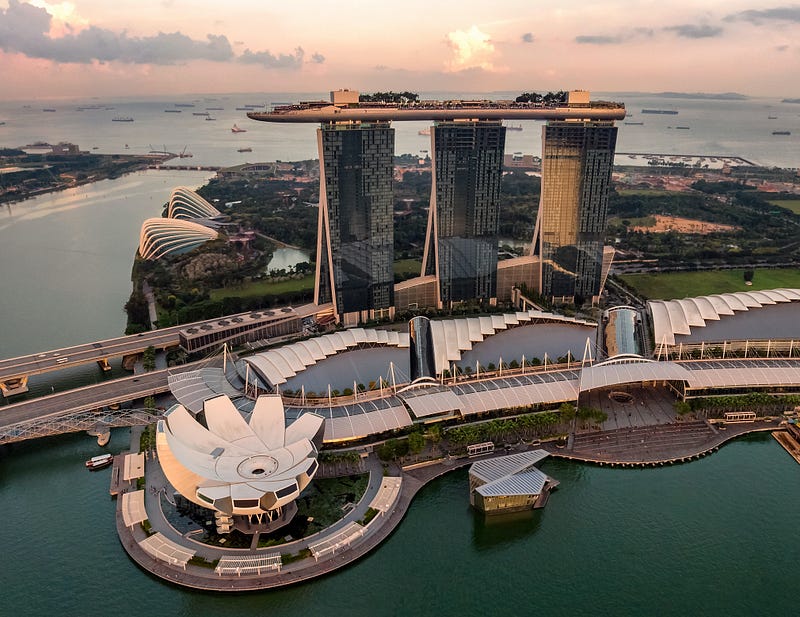
Photo by Hu Chen on Unsplash


Creditors favored liquidation

At an early stage, Hodlnaut founders Simon Lee and Zhu Juntao were in favor of a business sale as a preferable alternative to liquidation. Back in February, there appeared to be some potential of a sale, with several buyers having indicated an interest in the business. The identity of these interested parties was never revealed and the interim judicial managers of the restructuring process later confirmed that no “white knight” had emerged to buy out the business.

It became clear in April of this year that creditors preferred liquidation as opposed to attempting to restructure the business. The Algorand Foundation is a leading creditor, with a $35 million exposure to Hodlnaut. In a court filing in April, the Algorand Foundation, alongside other leading creditors Samtrade Custodian Limited and S.A.M. Fintech Pte Ltd., were noted as being opposed to a restructuring.


OPNX bid

In August it emerged that controversial crypto claims trading platform OPNX, owned by Three Arrows Capital’s (3AC) Kyle Davies and Su Zhu alongside Mark and Leslie Lamb from CoinFLEX, was mounting a bid for Hodlnaut.

OPNX had proposed to provide a capital injection of $30 million. The proposal outlined that this investment would be made in the form of FLEX tokens, the native token of the CoinFLEX platform.

Following consideration by the interim judicial managers overseeing Hodlnaut’s restructuring process, it decided not to take up the offer. It was decided that the FLEX tokens had a speculative value and that they were highly illiquid.

Additionally, no clear timeline had been provided by OPNX in respect of the repayment of creditors’ debts. Furthermore, the proposal was found to be scant on detail, particularly with regard to payments which were limited to 30% of liabilities. In August the FLEX token experienced a large drop, falling 90% in value.

More to Read
View All
Policy & Regulation·

Nov 02, 2023

Turkey crafts new crypto regulations with FATF grey list removal objective

Turkey crafts new crypto regulations with FATF grey list removal objectiveIn an effort to secure removal from the Financial Action Task Force’s (FATF) “grey list,” Turkey is in the process of crafting new regulations governing crypto assets.The FATF, established by the Group of Seven (G7) advanced economies, serves as a guardian of the international financial system. It’s an international organization dedicated to combating financial crimes, which added Turkey to its “grey list” in 2021. In 2019, it cautioned Turkey about significant deficiencies in procedures for freezing assets linked to terrorism and the proliferation of weapons of mass destruction.Photo by Michael Jerrard on UnsplashCrypto compliance for FATF upgradeTurkish Finance Minister Mehmet Simsek recently discussed this matter with a parliamentary commission, according to a report published by Reuters. Simsek highlighted the FATF’s evaluation of Turkey’s adherence to 39 out of the 40 standards set by the organization. The single outstanding issue pertains to crypto assets, and Simsek revealed plans to introduce a crypto assets law in parliament to address this concern. However, he did not delve into specific legal changes.The Turkish government is taking action to align with international standards and remove the shadow of the “grey list.” The Turkish Presidential Annual Program for 2024, as published in the Official Gazette of the Republic of Turkey on October 25, outlines a commitment to establish comprehensive cryptocurrency regulations in the country by the end of 2024. Within the extensive 500-page document, Article 400.5 sets the goal of providing clear definitions for crypto assets, potentially subjecting them to taxation in the future.Additionally, the document seeks to establish legal definitions for crypto asset providers, including cryptocurrency exchanges. However, it refrains from specifying the finer details of the upcoming regulatory framework.Crypto popularityTurkey has been an outlier in terms of cryptocurrency use by comparison with many of its international peers. A report by KuCoin earlier this year validated that reality, indicating a significant increase in the number of crypto investors in Turkey over the course of the previous 18 months. In the aftermath of a devastating earthquake which hit the country on Feb. 6, crypto was reported to have been used as a means to get aid to those affected quickly and easily.However, developments in the crypto space have also included difficulties. It was reported in July that the use of crypto for the earthquake relief effort in Turkey was also being used as a cover by an affiliate of the terrorist group ISIS to launder money and receive funding. Turkish users of the Thodex crypto exchange platform were the victims of fraud in 2021, with the founders of that business having been sentenced for that fraud in September. In 2021 the country moved to ban crypto payments against a background that has seen the Turkish lira experience hyper-inflation.CBDC developmentTurkey’s central bank has been making strides in the digital currency arena, successfully conducting the initial trial of its central bank digital currency (CBDC), the digital lira, by December 2022. The central bank has expressed its intention to continue testing and exploring digital currency development throughout 2024.The move to enhance regulation and compliance in the crypto sector in Turkey aligns with global efforts to ensure transparency and accountability in financial systems.

news
Web3 & Enterprise·

Jan 24, 2024

NEOPIN, Futureverse and Catalyze Research team up to bolster global blockchain ecosystem

In an official announcement on Wednesday (KST), CeDeFi protocol NEOPIN revealed that it has signed a business agreement with Web3 consulting firm Catalyze Research and metaverse and AI tech company Futureverse to expand the global blockchain industry and discover promising Web3 projects. Strategic allianceThrough this business agreement, the three enterprises plan on working towards two main objectives: expanding the global blockchain business industry and Futureverse’s open metaverse ecosystem. To do so, they have vowed to onboard NEOPIN’s gaming business partners to the Futureverse ecosystem and create decentralized finance (DeFi) products for NEOPIN based on The Root Network. They will also host hackathons and joint campaigns in efforts to incubate and accelerate Web3 projects in South Korea. “South Korea is an intellectual property (IP) and blockchain powerhouse that serves as the backbone of the open metaverse that Futureverse is striving for. We look forward to bringing together various IPs such as games and content – including DeFi collaborations – with Futureverse’s powerful infrastructure to bring us one step closer to the open metaverse,” said Ben Ko, Co-Founder and CEO of Catalyze Research. Based in Seoul, Catalyze Research offers insights into the Web3 industry as well as consulting services like mapping and implementation of business strategies, marketing, research, due diligence and more.Photo by Shubham's Web3 on Unsplash“By working with NEOPIN, a leading DeFi company with an extensive network in South Korea, we will expand the Futureverse and The Root Network ecosystems and create an environment where users and developers can create an open metaverse together. This partnership will bring Futureverse to the forefront of the South Korean blockchain industry with NEOPIN and Catalyze’s experience, expertise, vision and insights into the Korean market,” added Futureverse CEO Aaron McDonald. Redefining gaming, blockchain and DeFiFutureverse is a developer of AI and metaverse technologies that elevate gaming experiences and enable open, scalable and interoperable applications. It is also home to one of the largest global NFT-based metaverse communities, which is being expanded through the layer 1 blockchain The Root Network. The company’s partners include globally renowned brands like FIFA, Warner Bros., Mastercard and Reebok. NEOPIN, on the other hand, has been a trustworthy node validator for multiple blockchains since 2018 with a 0% accident and slashing rate and a 99.99999% block generation rate. It has also been bringing new faces to the industry by securing, investing in and incubating numerous domestic and foreign firms. Backed by this experience, NEOPIN plans to introduce innovative DeFi products through the newest three-way partnership. “We will actively help various game and content service companies that have partnered with us to operate in the Futureverse ecosystem. Based on our trustworthiness and stability, we will contribute to leading the decentralized exchange (DEX) and DeFi services in Futureverse,” said Kim Yong-ki, CEO of NEOPIN.

news
Web3 & Enterprise·

Jul 01, 2023

China Mobile Establishes Metaverse Industry Alliance

China Mobile Establishes Metaverse Industry AllianceChina Mobile, one of the leading telecommunications companies in China, has taken a significant step forward in the development of the metaverse by announcing the establishment of an industry alliance during the 2023 Mobile World Congress in Shanghai.News of the development broke via a state-backed media outlet, the Shanghai Securities Journal, in its reporting from the event on Wednesday.Photo by julien Tromeur on UnsplashA trillion yuan marketAt the forefront of this endeavor is Zhao Dachun, Deputy General Manager of China Mobile. Dachun emphasized the metaverse’s potential as a trillion-yuan level market. Recognizing its significance, China Mobile has unveiled the first batch of 24 members of the metaverse industry alliance. Among them are renowned companies such as iFlytek, a leading AI company, HTC, a prominent manufacturer of VR goggles, and MGTV, a popular video streaming platform.The establishment of the alliance serves multiple purposes. It provides a platform for industry partners to engage in discussions and collaboratively shape the future of the metaverse industry. This cooperative effort will contribute to the development of industry standards, facilitating a shared vision for the metaverse ecosystem.More effective metaverse collaborationAdditionally, the alliance aims to foster resource sharing, encouraging deeper integration and collaboration among its members. By adopting a win-win mindset, the alliance members seek to collectively benefit from the new opportunities that arise within the digital economy.Further supporting the metaverse vision, Migu, the digital content unit of China Mobile, has taken significant steps by establishing its metaverse headquarters in Xiamen, a city located in the Fujian province of China.Regional government partnershipIn a promising partnership, Migu has entered into a strategic cooperation agreement with the Xiamen government to spearhead the development of a metaverse within the city. The metaverse, a digital world created through advanced technologies such as virtual reality and augmented reality, holds great potential for transforming Xiamen into a “high-quality, high-value, modern, and international” city that thrives on digital intelligence.Migu’s plans extend beyond theoretical concepts, as they outline concrete steps to realize the metaverse vision. Key application scenarios, such as the development of a metaverse version of Gulangyu Island, a renowned tourist destination celebrated for its natural beauty and historical significance, will be a primary focus. By bringing this iconic location to the metaverse, visitors will have the opportunity to experience its charm in a new digital dimension.Moreover, Migu is dedicated to accelerating research on digital governance within the metaverse. With the metaverse expected to have a profound impact on society, understanding how to effectively manage and regulate this emerging digital landscape becomes paramount. Migu aims to lead the way in establishing best practices and frameworks for responsible and inclusive digital governance.Through collaborative efforts, the promotion of industry standards, and strategic investments in key application scenarios, China Mobile is likely to play an important role in unlocking the vast potential of the metaverse. In turn, the initiative is likely to fuel the growth and transformation of the digital economy.

news
Loading