Top

Korean Crypto Market Outpaces Stock Exchange Amid Bitcoin ETF Optimism

Markets·October 25, 2023, 7:59 AM

The anticipation is building around the potential approval of BlackRock’s Bitcoin exchange-traded fund (ETF) in the United States. As the world’s largest asset manager is anticipated to obtain a green light, Bitcoin’s price has surged by more than 17% just this week, capturing the keen interest of investors.
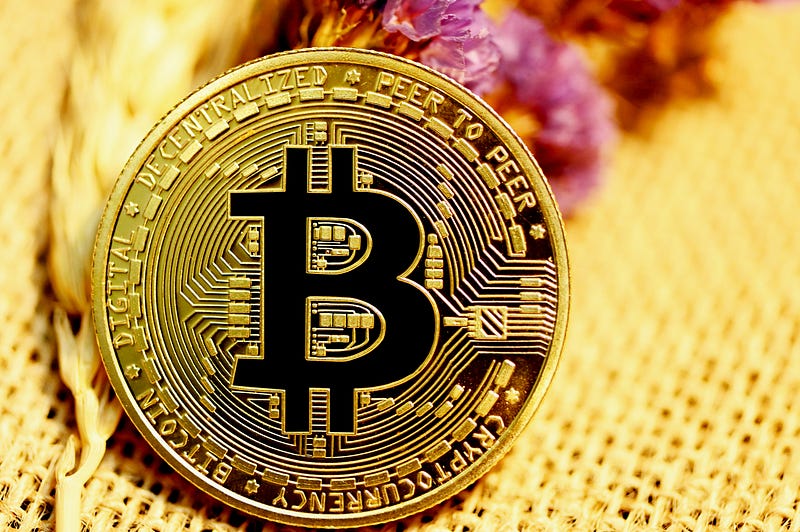
Photo by Kanchanara on Unsplash


Crypto surpassing stocks in daily trading volume

It’s worth highlighting the surge in the Korean cryptocurrency market, where the daily trading volume has recently eclipsed that of the Korean Composite Stock Price Index (KOSPI).

According to local news outlet Maeil Business Newspaper, on October 24, KOSPI recorded a trading volume of KRW 7.83 trillion ($5.8 billion). Yet, in a 24-hour span from 9 a.m. (KST) on October 23 to 9 a.m. on October 24, the combined trading volume of the top five Korean cryptocurrency exchanges reached KRW 8.44 trillion.

Breaking it down by exchange, Upbit had a 24-hour trading volume of KRW 6.97 trillion, followed by Bithumb with KRW 1.36 trillion, Coinone with KRW 87.6 billion, Korbit with KRW 18.8 billion, and Gopax with KRW 2.2 billion.


Retail investors leaving the stock market

The surge in the Korean crypto market is largely due to retail investors shifting their focus away from the Korean stock market. This move comes in response to challenges the stock market has been grappling with, such as monetary tightening in the US and increased volatility stemming from the Israel-Hamas war.

More to Read
View All
Web3 & Enterprise·

Dec 27, 2023

Blade Entertainment partners with Cardo to venture into tokenized securities industry

South Korean entertainment production company Blade Entertainment has signed a memorandum of understanding (MOU) with Cardo, a firm specializing in custodial services for digital assets, to start a tokenized securities business, according to local news outlet Newspim on Wednesday. Blade Entertainment revealed plans to leverage its IP and content distribution rights to issue fractional investment-based tokenized securities based on underlying assets like waste landfills, electroceuticals and digital therapeutics.Photo by Verne Ho on UnsplashForging the future to tokenized securities"We will do our best to become a leader in tokenized securities by securing various underlying assets and building technology to facilitate valuation modeling for those assets," said Choi Young-in, head of the STO (security token offering) department at Blade Entertainment. "Through this agreement, we will cooperate in multiple ways with Cardo, who has expertise in blockchain and an understanding of financial products, to list our tokenized securities on the Korea Exchange’s (KRX) new securities market."  This market refers to an on-exchange market for new securities based on fractional investments that was recently designated by the South Korean Financial Services Commission (FSC) as a service under the financial regulatory sandbox system, according to a press release on Dec. 13.  The regulatory sandbox is a system run by the Korean government that exempts or suspends existing regulations for a designated amount of time for companies releasing new products and services and regulates them post-mortem if there is a problem.  Strategic collaborationBlade Entertainment said that it sought out Cardo – whose investors include one of South Korea’s major banks Nonghyup Bank – as a business partner to carry out this endeavor due to its accumulated knowledge and expertise in the blockchain sector. Cardo has also previously demonstrated its capabilities in the security token business by providing fintech solutions to financial service firm Galaxia Moneytree. "Currently, due to issues with the valuation of token securities, it is not easy for businesses in this area to operate smoothly, but we plan to issue and distribute tokenized securities of various assets soon," said Sohn Kyung-hwan, CEO of Cardo. "Based on the know-how we’ve accumulated from the two contracts we signed this year agreeing to supply security tokens platforms, we will actively help Blade Entertainment with the planning, design and platform construction of their security token venture to help establish a successful service."

news
Policy & Regulation·

Oct 17, 2023

Bhutan Launches Blockchain-Based National ID System

Bhutan Launches Blockchain-Based National ID SystemBhutan, the Buddhist kingdom nestled along the eastern edge of the Himalayas, has introduced a blockchain-based National Digital Identity (NDI) system.Photo by Aaron Santelices on UnsplashDisrupting the delivery of government servicesThe blockchain-based cryptographic identity platform has the potential to revolutionize the way Bhutanese citizens access government services and conduct digital transactions. According to local Bhutanese media source BBS, the system was launched last week, giving Bhutanese citizens the opportunity to download the Bhutan NDI application directly to their mobile devices.The user-friendly application promises a seamless experience, marked by a straightforward login process. Once registered, citizens will gain access to an array of government services. These will include construction approvals, land taxes, passport services, birth and death registration certificates, as well as Royal University of Bhutan degree certificates and various business-related services, all within the confines of their digital wallets.Digital wallet alongside digital identityNotably, the development could have major implications where the future use of digital currency in Bhutan is concerned. The NDI is not just a digital identity but a digital wallet.That means that users have the option to link their bank accounts to the NDI app, facilitating financial transactions without the need to switch between multiple apps. As of now, the Bank of Bhutan is the first financial institution to integrate with the NDI app.The Royal Monetary Authority of Bhutan (RMA) entered into a collaboration with enterprise blockchain firm Ripple Labs in September 2021 to develop and trial central bank digital currency (CBDC).Streamlining service deliveryThe GovTech Agency, the driving force behind the NDI project, envisions that this digital innovation will streamline and simplify the often arduous process of interacting with government agencies. Jigme Tenzing, the Acting Secretary of the GovTech Agency, explained the transformative potential, stating:“So, essentially what this enables for Bhutan is the ability to take almost all services and make them available online. This can virtually transform how services are provided in Bhutan. This is regarded as not only services that the government provides to citizens, but it can extend to even the private sector.”Some concerns have been raised with regard to this consolidation of personal information within a single platform. The GovTech Agency has responded by emphasizing the incorporation of biometric data, including fingerprint and facial recognition, to enhance identity verification and authentication. It feels that these measures are sufficient to safeguard data privacy.Crypto investmentThere had been little in the way of news emerging from the South Asian country where decentralized technology was concerned until earlier this year when it became known that the kingdom had been an investor on the failed crypto lender platforms of Celsius and BlockFi.It had done so through Druk Holdings and Investments (DHI), the commercial arm of the Royal Government of Bhutan. In May it emerged that DHI had entered into a partnership with Singapore-based Bitcoin mining firm Bitdeer, with the intention of developing green digital asset mining operations within the country.The National Digital Identity Act of Bhutan 2023 received Royal Assent in July, solidifying Bhutan’s status as the first sovereign nation to implement a comprehensive decentralized identity framework.

news
Policy & Regulation·

May 14, 2025

Tether eyes South Korean market as stablecoins gain momentum

Tether, the company behind USDT, the popular dollar-backed stablecoin, is seeking to establish a presence in South Korea through remote hiring, according to a report from Maeil Business Newspaper citing industry sources.Photo by DrawKit Illustrations on UnsplashRather than opening a physical office, Tether is looking for a remote employee who will focus on increasing USDT adoption in Korea, exploring business opportunities, building partnerships and navigating the local regulatory landscape. The expansion comes as stablecoins gain significant traction in South Korea. Data provided to lawmaker Min Byeong-dug from the country's five largest cryptocurrency exchanges via the Financial Supervisory Service (FSS) shows that dollar-pegged stablecoins accounted for 47% of crypto assets withdrawn from these platforms between January and March. Central bank pushes for regulationMeanwhile, South Korean officials are increasingly focused on regulating the stablecoin sector. Bank of Korea (BOK) Governor Rhee Chang-yong recently called for the swift implementation of stablecoin oversight, warning that they could bypass the country’s financial rules. During a press conference in Italy, Rhee argued that stablecoins pegged to either the Korean won or the U.S. dollar effectively function as alternative currencies and should be examined under existing money transfer laws. Rhee has emphasized that authorities must first determine whether won-backed digital tokens should be permitted at all. Last October, during a national audit, he expressed concerns about stablecoins' dependence on fiat currencies and advocated for implementing a central bank digital currency (CBDC) instead. These concerns were echoed by Ko Kyeong-cheol, head of BOK's electronic finance team, who recently highlighted at a financial law conference that stablecoins could profoundly impact the central bank's ability to carry out monetary policy, maintain financial stability and oversee payment settlements. Ko emphasized that if South Korea were to permit won-pegged stablecoins, the BOK should be involved early in the approval process to minimize potential risks to its policy objectives. On the regulatory front, Financial Services Commission (FSC) Chairman Kim Byoung-hwan has indicated that discussions on developing a stablecoin regulatory framework are likely to begin in June as part of a broader initiative. Presidential candidates weigh in on stablecoin futureThe issue has also entered the political arena ahead of South Korea's June 3 presidential election. Lee Jae-myung, the Democratic Party of Korea's presidential candidate, has advocated for a market featuring won-based stablecoins. Lee argues that quickly adopting stablecoins would help South Korea keep pace with global trends and prevent capital outflows. His platform includes introducing spot crypto ETFs and reducing digital asset trading fees.  Another candidate, Hong Joon-pyo of the People Power Party, also previously announced plans to explore the issuance of a won-pegged stablecoin before being eliminated in the party's primary election.

news
Loading