Top

Japan’s GMO Coin Announces Special SGB Airdrop for XRP Holders

Web3 & Enterprise·September 23, 2023, 12:05 AM

GMO Coin, a prominent cryptocurrency exchange operating as part of the Japanese IT conglomerate GMO Internet Group, has unveiled a unique opportunity for XRP holders. Eligible GMO Coin clients who have previously invested in XRP will receive an exclusive airdrop of Songbird (SGB) tokens.
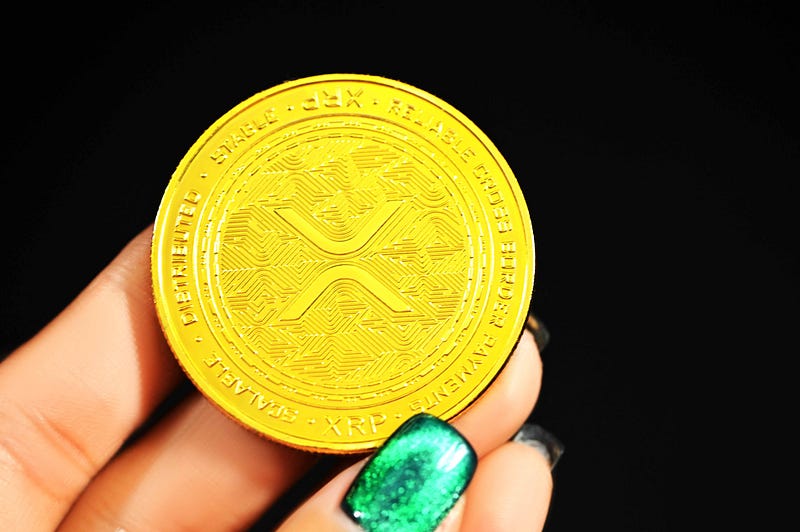
Photo by Kanchanara on Unsplash


SGB token distribution

The distribution of these SGB tokens is slated for completion by September 29, offering a promising opportunity for XRP enthusiasts. To qualify for this airdrop, customers must have held XRP in their GMO Coin accounts at 09:00 on December 12, 2020. The airdrop is also being extended to those utilizing crypto asset lending services on the platform.

To take advantage of the opportunity, eligible clients will need to provide a snapshot of their XRP holdings. While the exact pricing mechanism for the distribution remains undisclosed, it will be revealed at a later date. Presently, SGB is trading at approximately $0.0045, according to Malaysian cryptocurrency data aggregator CoinGecko.

GMO Coin has assured its clients that they are free to manage their XRP holdings as they see fit after submitting the necessary proof. The distributions will ultimately be converted into Japanese yen and made available to clients by the end of the month.


Ripple’s mixed fortunes

This development comes in the wake of a roller-coaster year for XRP holders. Ripple’s native token experienced substantial price fluctuations in response to various developments and events.

One noteworthy instance occurred in mid-July when XRP surged by more than 70%. This surge followed a favorable ruling in a legal dispute between Ripple and the United States Securities and Exchange Commission (SEC).

While regulatory pushback has featured strongly in the US, Ripple has sought to expand its business elsewhere with the Asian region featuring within that strategy. In June, the blockchain-based payments firm obtained in-principle approval from the Monetary Authority of Singapore (MAS) to offer its services within the city-state.

Earlier this month, Ripple struck a deal with SBI Remit Co., a subsidiary of Japanese financial services conglomerate SBI Group, to enable the remittance company to utilize Ripple’s XRP cryptocurrency as a bridge currency, connecting bank accounts in the Philippines, Vietnam, and Indonesia.


Songbird network

The Songbird network serves as a canary blockchain on the Flare layer one network. Essentially, the blockchain plays a crucial role in allowing the facility to enable network architecture testing on the Flare network, including the Flare Time Series Oracle, F-Asset systems, and StateConnector.

GMO Financial Holdings, the parent company behind GMO Coin, bought a 10% stake in AWR Capital, a multi-strategy crypto hedge fund, in April. Following that investment, AWR became a market maker at GMO Coin. The Japanese exchange business is ranked ninth on Forbes Digital Assets’ list of the world’s largest crypto exchanges.

As GMO Coin prepares to distribute SGB tokens to eligible XRP holders, this airdrop marks a great opportunity for relevant stakeholders. It showcases the platform’s willingness to reward its customers and foster engagement within the crypto community.

More to Read
View All
Policy & Regulation·

Jul 04, 2023

Singapore Looks to Prohibit Crypto Lending and Staking

Singapore Looks to Prohibit Crypto Lending and StakingIn a move to bolster investor protection and maintain financial stability, the Monetary Authority of Singapore (MAS) is introducing new guidelines for cryptocurrency platforms operating in the country.Details of the measures were published by MAS on Monday. According to its statement, the measures “will mitigate the risk of loss or misuse of customers’ assets, and facilitate the recovery of customers’ assets in the event of a DPT [Digital Payment Token] service provider’s insolvency.”The proposed guidelines outline several key measures. One such measure is the daily reconciliation of customer assets, which will help prevent discrepancies and safeguard against potential losses.Photo by Hu Chen on UnsplashHolding assets in trustAdditionally, the custody function, responsible for holding and safeguarding client assets, will be operationally separated from other business divisions to minimize the risk of mismanagement or unauthorized use. By the end of this year, it’s understood that crypto platforms will be required to store client assets in trust accounts, ensuring enhanced security and accountability.DisclosuresFurthermore, licensed cryptocurrency service providers will be mandated to provide explicit disclosures to customers, clearly outlining the risks associated with holding and trading digital payment tokens (DPTs). Recognizing the speculative nature of digital token trading, the MAS acknowledges that regulations alone cannot fully protect consumers from potential losses.To further protect retail investors, the MAS intends to prohibit cryptocurrency service providers from facilitating lending or staking activities. Lending and staking, where digital tokens are loaned or pledged to earn profits, are considered unsuitable for the general public due to their complex and high-risk nature.These measures come as part of Singapore’s efforts to strengthen its regulatory environment for digital assets. The consultation process began last year, following the collapse of FTX, a cryptocurrency exchange.Singaporeans suffered disproportionately with the collapse of FTX as previously, MAS had banned global crypto exchange Binance from operating within the city-state. That led to Singapore having more FTX customers than many other world regions. To compound matters, state-owned global investment firm Temasek, was an investor in the fraudulent crypto exchange.MAS had called for feedback and proposals, with a focus on enhancing investor safeguards and promoting responsible trading practices. While the regulations aim to provide a safer environment for investors, the MAS also emphasizes the importance of individuals exercising caution when engaging in digital token trading.Contrasting approachesWhile Singapore is taking steps to tighten regulations, other cities like Hong Kong are adopting a more inclusive approach to the crypto industry. Hong Kong Legislative Council member Johnny Ng has voiced support for the local crypto business and has encouraged prominent exchanges like Coinbase to establish operations in the territory, aiming to foster greater engagement and growth within the sector.As the crypto industry continues to evolve, regulatory frameworks play a crucial role in ensuring investor protection and maintaining market integrity. Singapore’s proactive approach to strengthening its regulatory environment reflects its commitment to striking a balance between fostering innovation and safeguarding the interests of investors.

news
Markets·

Jan 20, 2024

Hong Kong financial services platform plans spot Bitcoin ETF launch for Q1

Venture Smart Financial Holdings Ltd. (VSFG), a Hong Kong-based financial services company, is gearing up to initiate an exchange-traded fund (ETF) directly investing in bitcoin in the first quarter of this year.Photo by Kanchanara on UnsplashThat’s according to a report by Bloomberg on Friday. The move aligns with Hong Kong's strategic efforts to establish itself as a digital asset hub, and with that, the company plans to submit an application to the Securities and Futures Commission (SFC) for ETF approval. Brian Chan, the group head of investment and product at VSFG, expressed optimism about the potential of this market, setting a goal of achieving $500 million in assets under management by the end of the year. Long-term objectiveWhile the firm has taken the decision to focus on spot crypto ETFs amid a backdrop of spot bitcoin ETF approval in the United States earlier this month, it’s an objective the firm has been working on for some time. In June of last year, crypto media reported that VSFG were planning the launch of such a product. Notwithstanding that intention, the recent launch of several high-profile bitcoin funds in the United States, including offerings from BlackRock and Fidelity Investments, will likely assist the company in getting product approval in Hong Kong. Immediately following U.S. approval, a Hong Kong lawmaker suggested that the Chinese autonomous territory should respond proactively. Johnny Ng outlined that Hong Kong had to respond to secure its global position in developing the digital assets space in Hong Kong. Positive soundingsTowards the end of December, there appeared to be positive soundings on the possibility of spot bitcoin ETF approval in Hong Kong emerging from the local regulator. SFC CEO Julia Leung stated that the regulator was open to the notion of retail participation in spot crypto ETF products. Her comment was followed shortly afterwards by a joint announcement from the SFC alongside the Hong Kong Monetary Authority (HKMA) that they were prepared to accept applications for such funds. The approval process for such products typically takes weeks to months, following the precedent of traditional ETFs. Hong Kong presently permits futures-based crypto ETFs, with three already listed: CSOP Bitcoin Futures, CSOP Ether Futures and Samsung Bitcoin Futures. However, these funds have a combined asset value of around $50 million. Samsung Asset Management has not ruled out exploring the launch of a spot ETF, while CSOP Asset Management remains silent on the matter. VSFG is one of Hong Kong's first SFC-approved virtual asset managers, offering both traditional and digital wealth management services. Aegis Custody, a digital asset custodian, is in discussions with four asset managers about listing spot crypto products in Hong Kong. The regulatory requirements in the city may lead issuers to impose higher fees compared to the low management levies seen in many new U.S. spot bitcoin ETFs. Although bitcoin experienced substantial growth in anticipation of these U.S. products, it has seen a 10% decline since their trading commenced on Jan. 11. Nevertheless, many industry commentators expect a stronger bitcoin unit price in the medium to long term as a direct consequence of these products. 

news
Web3 & Enterprise·

Jun 19, 2023

150 Web3 Firms Emerge via Cyberport Within 12 Months

150 Web3 Firms Emerge via Cyberport Within 12 MonthsHong Kong’s Cyberport, the flagship technology hub of the Chinese autonomous territory, has experienced exceptional growth over the past year, attracting more than 150 companies operating in the Web3 space.Photo by Ruslan Bardash on UnsplashA hotbed of innovationThe latest blog post by Hong Kong Financial Secretary Paul Chan, published on Sunday, sheds light on the remarkable success of Cyberport. It currently houses over 1,900 community enterprises, with a cumulative financing figure surpassing 35.7 billion yuan ($4.98 billion).One of the notable achievements of Cyberport is its portfolio of over 480 intellectual property projects, showcasing its commitment to fostering innovation. Moreover, Cyberport has played a pivotal role in nurturing the growth of several successful ventures, including six “unicorns” that have emerged from within its vibrant community.The Web3 space at Cyberport boasts prominent firms such as Hashkey Group, a licensed cryptocurrency exchange; Animoca Brands, a Web3 venture capital and game developer; and Consensys, the renowned Ethereum software company responsible for the widely-used crypto wallet MetaMask. The presence of these industry leaders further cements Cyberport’s status as a hub for cutting-edge technologies and groundbreaking ideas.Funding allocationRecognizing the immense potential of Web3 technologies, the Hong Kong government has allocated 50 million yuan ($6.9 million) from its financial budget to support Cyberport’s initiatives. This funding injection aims to expedite research and development efforts and foster the creation of innovative applications within the third-generation internet powered by blockchain technology.In addition to its achievements in the Web3 space, Cyberport has made significant strides in virtual asset trading and other sectors. Notably, in 2022, one of Cyberport’s companies became the second licensed virtual asset trading platform approved by the Securities and Futures Commission (SFC) in Hong Kong. This milestone solidifies Cyberport’s position as a driving force in the advancement of the digital asset ecosystem within the city.Emerging start-up successFurthermore, several technology-driven startups incubated by Cyberport have successfully launched initial public offerings (IPOs), showcasing the hub’s effectiveness in propelling ventures towards public market success. Notable examples include a smart logistics company and a travel platform.Hong Kong’s Web3 industry is witnessing a surge in blockchain-based security products, signaling a growing interest among investors. UBS and the Bank of China’s Hong Kong-based investment arm recently unveiled a groundbreaking blockchain-based structured note, marking the city’s first private security product on a public blockchain.The development team behind layer one blockchain, the Internet Computer Protocol (ICP), indicated in April that it planned to develop a hub within Cyberport, following its participation at Hong Kong’s Web3 Festival that month. The event was a success, attracting over 10,000 attendees.This achievement follows the successful launch of a government-backed green bond in February, which utilized a private blockchain platform provided by Goldman Sachs. These developments showcase Hong Kong’s commitment to developing its Web3 industry beyond cryptocurrencies, expanding into new realms of finance and technology.To ensure a regulated and secure environment for investors to participate in the growing sector, Hong Kong introduced licensing regulations on June 1 for cryptocurrency trading platforms catering to retail investors. These regulations demonstrate the city’s proactive approach to embracing innovation while prioritizing investor protection.

news
Loading