Top

Experts Offer Insights into Bitcoin ETFs, Stablecoins, and On-Chain Data Analysis

Policy & Regulation·September 15, 2023, 8:17 AM

During Korea Investment Week 2023, hosted by local newspaper Korea Economic Daily, experts in the field of virtual assets gathered at the Korea Exchange (KRX) PR Hall on Thursday. They came together to share their expertise on the cryptocurrency market and discuss various investment strategies.

Key topics covered at the event ranged from the global outlook for virtual asset exchange-traded funds (ETFs) to the prospects of the US approving Bitcoin spot ETFs. Strategies based on on-chain data analysis were also on the agenda.
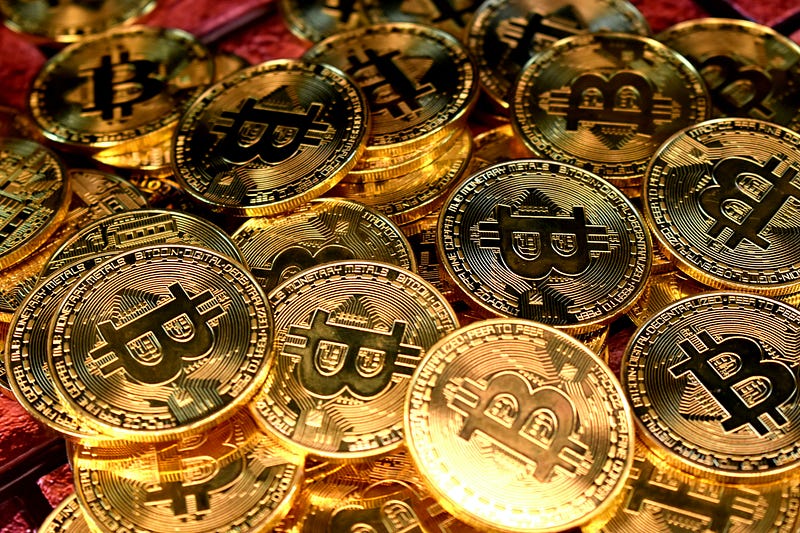
Photo by Kanchanara on Unsplash


The potential of Bitcoin spot ETFs

One of the notable speakers, Lee Tae-yong, the Chief Global Strategy Officer at Wavebridge, a cryptocurrency market index provider, argued that the potential approval of Bitcoin spot ETFs could attract global investors to the market. He opined that this could subsequently improve market liquidity and contribute to stabilizing the Bitcoin market.

Lee has made a prediction that Bitcoin spot ETFs will likely receive approval in the United States. He cited examples from Europe, Australia, and Brazil, where such financial products are already being managed effectively. He also suggested that the US Securities and Exchange Commission (SEC) would likely take note of this global trend and may find it challenging to go against it.

Experts believe that among the various Bitcoin spot ETF applications submitted to the US SEC, Grayscale Investments’ proposal to convert the Grayscale Bitcoin Trust (GBTC) into an ETF stands the best chance of receiving approval first. Data from The Block indicates that the Grayscale Bitcoin Trust manages crypto assets totaling $16.13 billion as of September 7.

Lee predicts that the approval of Bitcoin spot ETFs will serve as a pivotal milestone for the cryptocurrency market, potentially triggering a significant uptick in the price of Bitcoin. To support this assertion, Lee pointed to the historical precedent set by the introduction of a gold-backed ETF in 2004. Since its inception, the gold-backed ETF has swelled in value to exceed $45 billion. Importantly, gold does not have a fixed supply, yet the availability of an ETF mechanism boosted its value considerably. Lee argues that the impact on Bitcoin could be even more pronounced given its fixed supply cap.

There was also a projection that virtual assets are set to play a crucial role in expanding the size of the ETF market, potentially more than doubling it. Lee pointed out that conventional ETFs typically charge fees of around 0.15%, whereas virtual asset ETFs tend to charge over 1%. This underscores that virtual assets are seen as a new revenue source among asset managers.


Stablecoins and regulations

Some viewed that stablecoins would emerge as a focal point among the innovations taking place within the cryptocurrency industry. Kim Yong-beom, the CEO of Hashed Open Research and a former vice minister of the Ministry of Strategy and Finance, noted that Asia has been actively advancing regulations related to stablecoins. Stablecoins are a category of cryptocurrencies that are pegged to traditional fiat currencies like the US dollar.

Highlighting the efforts of many countries to develop a comprehensive regulatory framework for cryptocurrencies, Kim noted the importance of establishing regulations that accommodate stablecoins. In his view, the introduction of such regulations will amplify the impact of stablecoins within the market.

Kim mentioned that Asian countries are leading in blockchain research and digital competitiveness. He said that Asian universities, particularly those in China, are among the world’s best in producing blockchain research papers and offering related lectures. Kim also pointed out that while the leadership in the blockchain industry has shifted towards Asia, South Korea is now emerging as a prominent hub for virtual assets in the region. He emphasized the need for South Korea to position itself as a more influential nation in this context.


On-chain data and investment

During the event, a cryptocurrency investment strategy based on on-chain data was also presented. On-chain data refers to publicly accessible information about transactions conducted on a blockchain network. This data can be utilized as an investment indicator that is not available within the traditional financial sector.

Ju Ki-young, the CEO of on-chain analytics resource CryptoQuant, underlined that virtual asset investors are particularly interested in tracking who is selling which tokens at any given moment. He stressed that examining on-chain data, such as deposit and withdrawal information from major cryptocurrency exchanges, can be a valuable tool for risk mitigation.


More to Read
View All
Policy & Regulation·

Jun 02, 2023

Crypto.com Scores MPI License in Singapore

Crypto.com Scores MPI License in SingaporeIn a significant move for the Web3 industry, the Monetary Authority of Singapore (MAS) has granted online crypto trading platform, Crypto.com, a Major Payment Institution (MPI) license. This regulatory development showcases Singapore’s commitment to welcoming innovation and embracing the potential of the Web3 sector.Photo by Timo Volz on PexelsLicensing milestoneCrypto.com made the exciting announcement on Thursday, revealing that it has received the MPI license from the MAS, the country’s central bank and financial regulator. With this license in hand, Crypto.com can now provide its Digital Payment Token (DPT) services to residents of Singapore.This achievement follows the in-principle approvals granted to Crypto.com by the MAS in June of the previous year, further highlighting the company’s adherence to regulatory standards and its dedication to operating within the guidelines set by financial authorities.Community reactionThe news of the license has garnered positive reactions within the crypto community. Many members see the Singaporean government’s decision as a significant endorsement of the Web3 industry. ‘Aravind,’ a Twitter user, expressed this sentiment, stating, “Singapore government giving out a license is itself a massive plus for the Web3 Industry,” adding that it's probable the process to obtain the license has been hard fought, and likely two years in the making.Interestingly, another community member drew comparisons between Crypto.com’s successes and the challenges faced by global crypto exchange, Binance. While Binance has encountered difficulties in various jurisdictions, Crypto.com has been praised for its steady progress and forward-looking approach.Yet another Twitter user chimed in along similar lines, stating: “Whilst Binance seems to be losing ground, Crypto.com seems to be slowly doing things right and building for the future.”Binance has recently faced setbacks, such as its diminishing presence in the Australian and Canadian markets and trading restrictions imposed in certain European countries. Reports have even surfaced suggesting that Binance plans to lay off 20% of its staff in June.However, it’s important to note that Binance has not given up, as evidenced by its recent expansion into Thailand, where it established a regulatory-compliant platform. The exchange has also taken steps to ensure compliance in Japan through the creation of another regulatory-compliant platform.Additional licensesCrypto.com has set up its headquarters in Singapore, and it is in good company there with leading crypto firms Kraken and Coinbase also maintaining offices in the city state. The company has taken a truly global strategy, having marketed heavily in recent years. It maintains offices in nine other locations, including Miami, Dublin, London, Seoul, Malta, Sofia, Hong Kong and Shenzhen, as well as Kadıköy in Turkey.The crypto trading platform has received a Minimal Viable Product (MVP) preparatory license from the Virtual Assets Regulatory Authority (VARA) in Dubai, alongside firms like Komainu, Hex Trust, and GC Exchange. The company has also successfully pursued digital asset licensing in France, Australia, and the United Kingdom.Crypto.com’s acquisition of the MPI license in Singapore marks a significant milestone for the company and the broader Web3 industry. With Singapore embracing innovation and offering a favorable regulatory environment, Crypto.com is well-positioned to continue its growth and contribute to the advancement of the digital payment token ecosystem.

news
Web3 & Enterprise·

Jun 19, 2023

Korean Crypto Wallet Joins Forces with Kick Scooter Sharing Platform

Korean Crypto Wallet Joins Forces with Kick Scooter Sharing PlatformRotonda, a subsidiary of Korean cryptocurrency exchange Bithumb and the operator of the virtual asset wallet platform Burrito Wallet, announced today a collaboration with the Seoul-based kick scooter sharing service Xingxing, as reported by local media outlet Etoday.Photo by Ranurte on UnsplashToken reward promotionUnder this partnership, the two companies will launch a promotion that will run until July 31. The first 4,800 new users who click on the promotion banner on the Xingxing app, install the wallet app, and set up a crypto wallet will receive 10 WEBI tokens through airdrop. Furthermore, ten of these users will also be given an NFT that represents Xingxing’s monthly subscription “mini,” which is worth 18,900 KRW ($15). WEBI serves as the ecosystem token for the blockchain-based Web3 sharing economy service called Webility.Additionally, 200 monthly subscribers of Xingxing who install the Burrito Wallet app will have the opportunity to win 100 WEBI tokens and 100 Xingxing in-app points. The winners will be announced on the official websites of both companies.Bridging Web2 and Web3Having already forged partnerships with various blockchain projects, including Pala, Casper Labs, 1inch Network, and KLAYswap, Burrito Wallet will seize this opportunity to position itself as a digital wallet that bridges the gap between Web2 and Web3.A representative from Burrito Wallet expressed optimism that the partnership with Xingxing will provide more people with the opportunity to experience its distinguished Web3 services. The representative also emphasized the company’s commitment to strengthening partnerships with companies from various fields, with the goal of building a highly practical virtual asset ecosystem.

news
Web3 & Enterprise·

Jan 31, 2024

OKX adds token support for atomicals, runes, doginals and stamps

Leading crypto exchange platform OKX has recently unveiled its plans to enhance its marketplace by incorporating Atomicals (ARC-20), Runes, Stamps (SRC-20) and Dogecoin’s Doginals (DRC-20) into its Web3 wallet. ‘First-to-market’ initiativeTaking to social media on Monday, the firm provided further details regarding the additions, outlining that it is part of a "first-to-market" initiative, solidifying OKX's commitment to the expanding realm of Bitcoin NFTs. The integration of these token standards is aimed at positioning OKX as a leading one-stop NFT ecosystem within Web3. Starting with the integration of Stamps on Feb. 5, OKX Wallet users will gain the ability to view and transfer Bitcoin token standards. Subsequently, in late February, OKX Wallet will extend its support to Atomicals, Doginals and Runes, enabling millions of users to engage in buying and selling these NFTs without incurring any trading fees. OKX Marketplace will also follow suit, integrating DRC-20, ARC-20 and Runes standards in late February, thus broadening the scope for users to participate in zero-fee trading.Photo by Shubham's Web3 on UnsplashDriving mainstream adoption of Web3Jason Lau, chief innovation officer at OKX, underscored the platform's dedication to driving mainstream adoption of Web3 technologies, making the exploration and realization of NFT potential more accessible for users. Despite concerns about potential blockchain congestion due to NFTs, Lau characterized these challenges as "growing pains," expressing confidence that they will be addressed over time. Lau told CoinDesk that “these things will last forever, as long as the chain lasts.” Emphasizing the surge in activity and user growth since the launch of their product, Lau positioned OKX as an evolving platform at the forefront of developing tools for users to access all of Web3. OKX Wallet's inscriptions tool presently supports minting on 23 networks, including Bitcoin, Dogecoin, Ethereum, Polygon, BNB Chain, Avalanche-C and Arbitrum One, among others. Boosting OKX MarketplaceThe move aims to establish OKX Marketplace as the largest NFT marketplace in the industry, boasting zero-fee trading across an expanding range of token standards. The platform's advanced NFT offering includes features such as hex error checking, liquidity across multiple standards, bulk minting capabilities and automatic error detection. Despite OKX's open embrace of Ordinals and other Bitcoin protocols, some members of the Bitcoin ecosystem express discontent, labeling Ordinals as digital spam. Jason Lau vehemently disagrees, asserting that in open and permissionless networks like Bitcoin, "there is no such thing as spam." He contends that as long as fees are paid and transactions adhere to consensus rules, they are valid. Lau emphasizes OKX's historical support for the Bitcoin ecosystem, including upgrades like SegWit, Taproot and Lightning. As debates surrounding the role of Ordinals and NFTs within the Bitcoin ecosystem persist, OKX's proactive stance signals a belief in the potential of Bitcoin-based NFTs to introduce innovative use cases and design possibilities. The disruptions experienced by various blockchains in December, attributed to increased transaction activity related to inscriptions, underscore the growing impact of these developments within the Bitcoin ecosystem and the broader crypto landscape. 

news
Loading