Top

Incheon Joins Hands with The Sandbox to Promote City in the Metaverse

Web3 & Enterprise·August 31, 2023, 9:16 AM

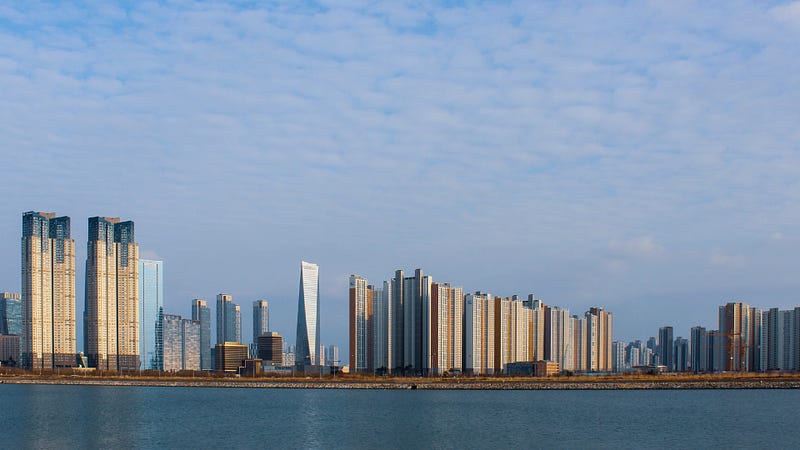
Incheon Metropolitan City is partnering with global metaverse platform The Sandbox to create innovative marketing content aimed at promoting its urban landscape within the virtual realm and establishing an overseas promotional network. This move makes it the first South Korean public institution to work with a metaverse platform.

Photo by Jiho Choi on Unsplash


The Sandbox’s virtual world

Built on the Ethereum blockchain, The Sandbox enables users to employ non-fungible tokens (NFTs) for creating play-to-earn (P2E) games that can be monetized. The ecosystem’s utility token, SAND, facilitates this mechanism as it is used for in-game purchases. Currently, the platform boasts one of the highest cumulative NFT collection volumes among virtual world projects on the world’s largest NFT marketplace, OpenSea. It has also formed partnerships with over 400 entities around the world.


City marketing strategy

Through this collaboration, Incheon plans to develop and introduce engaging content for users to experience the city virtually, such as a variety of events. Furthermore, the city also intends to utilize its intellectual property (IP) for activities such as NFT donation campaigns and metaverse creator training programs to implement extensive NFT content within The Sandbox’s virtual world.

“We plan to continually develop content that enables people around the world to experience Incheon through our collaboration with the global metaverse platform,” said Lee Se-woong, Head of Incheon’s City Branding Division.

More to Read
View All
Web3 & Enterprise·

Aug 22, 2023

Dunamu Pushes for Biodiversity Conservation Through NFT Project

Dunamu Pushes for Biodiversity Conservation Through NFT ProjectDunamu, the fintech company operating South Korea’s leading crypto exchange Upbit, said Monday that it signed a memorandum of understanding (MOU) with the Korea Arboreta and Gardens Institute (KoAGI) and the Korea Green Foundation (KFG) to drive a non-fungible token (NFT) biodiversity project over the course of three years. This comes as part of efforts to ramp up biodiversity conservation efforts.Photo by Eelco Böhtlingk on UnsplashThe MOU was signed at Dunamu’s headquarters in Gangnam, southern Seoul, with Dunamu CEO Lee Sirgoo, Director Ryu Kwang-soo of the KoAGI, and Lee Mi-kyung, Head of the KFG, in attendance.“This partnership serves as a starting point for Dunamu to actively utilize our technology to conserve biological resources — especially trees — and collaborate with various communities,” said Lee Sirgoo, CEO of Dunamu.Conservation meets NFTsThe project will involve creating NFTs from images of plant seeds stored in the Seed Vault — a conservation facility managed by KoAGI — which will then be issued through Upbit NFT, the exchange’s NFT trading platform. Owners of these NFTs will have the opportunity to engage in various events such as quizzes, Dunamu said, thereby promoting biodiversity conservation and fostering awareness about the importance of forests.Additionally, certain plant species that have been issued as NFTs will be selected to be placed in plant conservation facilities built in collaboration with botanical gardens located near the plants’ natural habitats.“Given the irreplaceability of both NFTs and flora and fauna, we will continue to do our utmost to fulfill our environmental responsibilities,” CEO Lee emphasized.The involved parties are also looking to establish an online community where they could directly gather the NFT owners’ opinions through methods such as polling to help plan for more upcoming projects. This integration of online projects with offline conservation activities is expected to contribute to local development and biodiversity.Boosting ESG effortsAs a key part of its ESG strategy, Dunamu has been focusing on trees while leading efforts for environmental protection and forest restoration. Earlier this year, the company teamed up with KoAGI to issue NFTs and contributed its entire sum of sales proceeds and transaction fees of around KRW 20 million (approximately $14,800) to establish an endangered plant protection fund.The company also held a campaign back in March with the Korea Forest Service and the Korea Forest Welfare Institute called “2nd foRest,” dedicated to restoring forests affected by fires. For every virtual tree planted in Dunamu’s metaverse, 2ndblock, two real trees were planted.The following month, Dunamu donated KRW 500 million in aid for the recovery of areas hit by the large-scale forest fires in Gangneung, Gangwon Province. The company also established virtual reality healing gardens at the Geumcheon Fire Station and Seoul Rehabilitation Hospital.

news
Policy & Regulation·

Apr 13, 2023

Hong Kong Bank to Act as Settlement Bank for Crypto Firms

Hong Kong Bank to Act as Settlement Bank for Crypto FirmsZA Bank, Hong Kong’s largest virtual bank, is looking to become the go-to bank for crypto startups. The online bank has been given permission to serve as the settlement bank for regulated Web3 companies in the city. This development was announced at Hong Kong’s Web3 Festival, an event supported by the local government and attended by crypto startups and institutions from across Asia.©Pexels/Frank BarningHashKey and OSL collaborationZA Bank is expected to facilitate crypto-fiat conversions with two licensed exchanges in Hong Kong, HashKey and OSL, where customers can swap crypto into fiat currencies. ZA Bank will also offer basic banking services to local Web3 startups, a category that is currently underserved by traditional financial institutions.ZA Bank is focusing on assisting local Web3 startups and small-medium enterprises (SMEs).The bank linked up to the city’s company registry data, allowing for minimal information input and cross-checking. According to Devon Sin, alternate chief executive of ZA Bank, the bank currently conducts AML scrutiny against the usual checklists to satisfy the regulatory requirements. No AML issues have emerged during the recent months of work.Competing for global crypto businessHong Kong is trying to establish itself as a crypto-friendly alternative to other hubs, such as the US and Singapore, and a sandbox for Web3 businesses from China, where crypto trading is illegal. The city is revamping its digital assets regulatory framework, with plans to legalize retail trading of major cryptocurrencies like Bitcoin and Ether. Ronald Lu, CEO of ZA Bank, said that ZA Bank’s online account opening for Web3 startups is a major step forward in integrating traditional banking services with the Web3 world.According to Lu, ZA Bank will act as a settlement bank for clients to allow withdrawals in Hong Kong, China, and US currencies after they deposit crypto tokens with exchanges. The business model is already operational through HashKey and OSL, the only two licensed crypto exchanges in Hong Kong. The bank will provide the same service for other exchanges as they become licensed.HK China’s crypto “trial run”Hong Kong is opening up to the beleaguered sector in a move that aims to revive its status as a financial center following years of COVID restrictions and political upheaval. However, access to banking has been a major hurdle for the city’s ambitions. The city’s banking and securities regulators are hosting a round-table for crypto players and bankers to share experiences and perspectives on banking services later this month.Many have speculated about a softening stance on cryptocurrency by the Chinese authorities. However, it’s more likely that they continue with strict regulation and control relative to crypto in mainland China while happy to monitor a more open approach to it within Hong Kong. Crypto analyst Myles Deutscher likens the approach to a “trial run” that is being monitored by China.Launched in March 2020, ZA Bank is one of Hong Kong’s eight licensed virtual banks and had the most net assets as of last year, despite remaining unprofitable. The virtual lender doesn’t expect it will need to boost its headcount to handle the crypto client push. Although the revenue model is still unclear, Lu said that more clients, more deposits, and more business opportunities are always great for the bank. The lender doesn’t offer services for clients from mainland China, given the restrictions in place there.

news
Policy & Regulation·

Oct 10, 2024

Hong Kong regulator set to grant additional crypto exchange licenses

Hong Kong’s Securities and Futures Commission (SFC) is gearing up to issue additional crypto exchange licenses before year’s end.  11 applicants under considerationThat’s according to SFC CEO Julia Leung. Leung commented on the matter while speaking with Hong Kong-based online news portal, HK01, on Oct. 7. She stated that 11 companies are considered as applicants for licensing and new progress is expected before the end of the year. Overall, 16 firms have applied for licenses and of these, the regulator is indicating that 11 will likely be awarded licenses at this stage. The 11 firms underwent reviews carried out by the SFC in August to determine and ensure their compliance with the current regulatory framework. The virtual asset service providers (VASPs) inspected included HKbitEX, PantherTrade, Accumulus, DFX Labs, Bixin.com, EX.IO, YAX, WhaleFin and Matrixport HK. Overseas applicants inspected included Crypto.com and Bullish. The regulator’s intention is to work towards an SFC objective of drafting these VASPs into the regulated environment established by the SFC. Leung explained that the SFC intends to award licenses in batches. Those applicants who have already had SFC on-site reviews carried out have been asked by the regulator to rectify issues identified based on the regulators findings. "Applicants who do not meet the requirements will lose their qualifications for licensing, while applicants who meet the requirements will be granted a license conditionally,” Leung told HK01.Photo by Bowen Chin on UnsplashSFC roadmapLeung also told the media outlet that relative to over-the-counter (OTC) crypto services, a new licensing system has been put in place to regulate OTC custody provision. The SFC CEO outlined that the organization’s roadmap for the period 2024 to 2026 incorporates plans to promote the tokenization of real-world assets (RWAs), further advance regulations relative to virtual asset platforms and gain further understanding of Web3 technologies and regional blockchains. Last week the regulator awarded a license to HKVAX, allowing it to join OSL and HashKey as the only fully licensed VASPs in Hong Kong thus far. While Hong Kong has made great strides over the course of the past two years to work towards becoming a regional hub for crypto businesses, it has faced criticism recently for having an overly restrictive regulatory framework.  Regulators felt the need to tighten up regulations in the aftermath of the collapse of the JPEX crypto exchange which implicated fraud and resulted in around 2,600 Hong Kong residents experiencing financial losses in the region of $200 million. The regulatory requirements have resulted in some platforms turning away from attempts to acquire licensing. In May, Gate.io’s local platform Gate.HK ceased operations in Hong Kong, while withdrawing its licensing application.In July HKX followed suit, advising its users to withdraw their funds from the platform, while notifying them that it had withdrawn its application for Type 1 and Type 7 licensing, as well as VASP licensing.

news
Loading