Top

NFT Seoul Conference 2023 to Picture the Future of Digital Innovation

Web3 & Enterprise·August 25, 2023, 6:27 AM

Art Token, a South Korean company that operates non-fungible token (NFT) marketplace 2R2, has made an announcement regarding the upcoming NFT Seoul Conference 2023, scheduled to take place at COEX on September 1. This conference is poised to provide insights into the future trajectory of the ever-evolving digital landscape.

According to a local news outlet, the event is co-hosted by Art Token, along with The Korea Herald, an English-language newspaper in Korea, and Soongsil University. Noteworthy support is also coming from Crypto.com, a crypto exchange headquartered in Singapore.
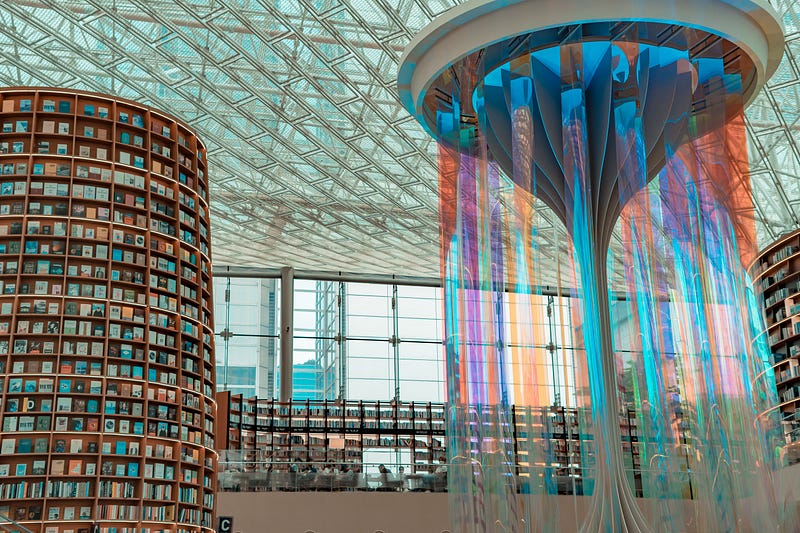
Photo by Riza Gabriela on Unsplash


NFTs as economic vehicles

Hong Ji-sook, CEO of Art Token, shared the motivation behind orchestrating this NFT-focused conference. According to her, the event focuses on the future of NFTs, which are anticipated to serve as economic vehicles in the emerging Web3 digital ecosystem. Hong added that the conference is designed to provide strategic responses to the burgeoning concepts in the expansive digital realm such as decentralization, decentralized autonomous organizations (DAOs), and crypto rewards.

Highlighting the pivotal role of NFTs in embracing necessary digital innovations across the domains of art and finance, she emphasized that the conference agenda will showcase sessions and programs that foster a dynamic exchange of ideas. This collaborative environment is anticipated to pave the way for novel opportunities and solutions that hold relevance across blockchain technology, the tech industry, and the artistic landscape.


Web3, NFT art, and security tokens

The in-person conference will be structured around three main themes: Web3, NFT art, and security token offerings (STOs). The keynote speakers will delve into the future trends of NFTs and their potential in the Web3 era. They will also analyze the utilization and significance of NFTs in the realm of art. Lastly, the presenters will assess the current state of the Korean security token market and discuss the diverse industrial applications of security tokens. Meanwhile, visitors will have a chance to glean insights from other separate sessions that shed light on the evolving global landscape.

More to Read
View All
Policy & Regulation·

Apr 27, 2023

Terraform Money Trail Leads to Swiss Bank

Terraform Money Trail Leads to Swiss BankAuthorities in both South Korea and the United States continue to advance their investigations into Terraform Labs, the Singapore-based company behind collapsed algorithmic stablecoin Terra USD (TUSD) and its South Korean CEO, Do Kwon, with the latest developments involving transfers made to a Swiss bank.©Pexels/Robert StokoeFollowing the moneyIn a lawsuit filed by the Securities and Exchange Commission (SEC) in the United States in February, the Commission claimed that Do Kwon and his company Terraform Labs transferred 10,000 Bitcoin to a Swiss bank. It now appears that the bank in question is digital asset banking specialist, Sygnum Bank.It’s understood that Do Kwon converted a large proportion of that Bitcoin into cash. According to Finbold, the Financial Securities Crime Joint Investigation Division at the Seoul Southern District Prosecutor’s Office has disclosed that it is following the digital asset trail to Switzerland in an effort to secure associated funds.LFG fundsThe funds are believed to have belonged to the LUNA Foundation Guard (LFG), an entity that was established with the objective of building reserves and safeguarding the USD peg of the Terra USD algorithmic stablecoin during volatile market conditions.Roughly 130 billion won, or $100 million, is being pursued, between digital assets and cash held within various Sygnum accounts. South Korean authorities had previously indicated that they were investigating transfers made by Do Kwon to a prominent Korean law firm. Earlier this week, they charged ten individuals connected to Terraform Labs with various offenses.During the press conference in which those charges were brought, the Seoul Southern District Prosecutor’s Office stated:”We have also confirmed that $100 million has been used in several places, not left in the Sygnum account as it is, and some transfers have been made to the Kim & Chang law firm account (at the attorney’s expense) and the remaining amount is about billions of won.”International complexityThis recent phase in the investigation is revealing the international nature of the case and the complexity that brings with it. Authorities in the United States and South Korea have submitted requests to have certain Sygnum Bank accounts frozen. Do Kwon and Terraform Labs are trying through the courts to have the SECs involvement dismissed on the basis that Terraform was a Singaporean company and Do Kwon a South Korean national, and on that basis they claim that the SEC lacks jurisdiction.Sygnum, being a Swiss entity will have to abide by what Swiss authorities instruct it to do relative to the Terraform-related funds held in accounts with the bank. Sygnum told Finbold that it couldn’t comment on whether it had received requests to freeze assets.The bank stated: “We can communicate that after the collapse of Terra in May 2022, on the basis of an official court order, Sygnum transferred more than 70% of the Bitcoin-sale FIAT proceeds into the escrow account of an international and to other reputable law firms.” It added that no Swiss or foreign authority has accused Sygnum of any wrongdoing.

news
Policy & Regulation·

Jul 26, 2023

Korea’s Intragovernment Group Launched to Thwart Crypto-Related Crimes

Korea’s Intragovernment Group Launched to Thwart Crypto-Related CrimesThe South Korean government has taken a significant step today in combating cryptocurrency crimes with the launch of a dedicated intragovernmental division. The newly established joint crypto-crime investigation division operates under the Seoul Southern District Prosecutors’ Office and comprises 30 skilled investigators from seven different government agencies.Photo by Daniel Bernard on UnsplashMulti-agency collaborationThese agencies are the Public Prosecutors’ Office, the Financial Supervisory Service (FSS), the Korea Financial Intelligence Unit (FIU) of the Financial Services Commission (FSC), the National Tax Service (NTS), the Korea Customs Service (KCS), Korea Deposit Insurance Corporation (KDIC), and Korea Exchange (KRX).The growth of the domestic crypto market in South Korea has been remarkable since the advent of cryptocurrency exchanges in 2014, attracting approximately 6.27 million individuals and reaching a valuation of 19 trillion KRW ($14.9 billion). Daily average trading volumes have surged to three trillion KRW, involving participants from various age groups, with individuals in their 30s and 40s constituting the largest share.Regulatory absenceHowever, the absence of adequate regulations has exposed customers to unfair practices in virtual asset trading. Although the recent passage of the Virtual Asset User Protection Bill at the National Assembly is encouraging, implementing comprehensive policies to safeguard crypto investors will take a significant amount of time.The risks associated with virtual asset investments are highlighted by the frequent delisting of cryptocurrencies from the nation’s top five exchanges. In the past two years, 1,053 cryptos have been delisted, and an additional 1,010 have been flagged as risky. The prevalence of unstable cryptocurrencies has resulted in high price volatility, incurring losses for investors. This volatile environment has also given rise to various crypto-related crimes, including unlawful listings, market manipulation, illegal foreign exchange trading, and pyramid schemes.Two teamsTo address these challenges, the joint crypto-crime investigation division is structured with two teams. The research and analysis team will study virtual asset issuers and distributors, identifying suspicious transactions. Virtual assets found to be fraudulent will be reported to the investigation team, which will then conduct thorough investigations and pursue legal action against problematic projects, while also recommending regulatory enhancements. Profits obtained through illegal means will be confiscated by the Seoul Southern District Prosecutors’ Office.The division’s main focus lies on virtual assets that have been rapidly delisted, those marked as risky, and those exhibiting significant price volatility. Committed to upholding fairness and transparency in the crypto industry, the joint crypto-crime investigation division will strive to protect market participants and make valuable contributions to the Korean economy.

news
Policy & Regulation·

Aug 17, 2023

DeFiance Capital Secures Interim Victory in Dispute With 3AC

DeFiance Capital Secures Interim Victory in Dispute With 3ACSingapore’s DeFiance Capital, a Web3 and crypto investment firm, has notched up a small triumph in its ongoing $140 million legal clash with failed Singaporean crypto hedge fund, Three Arrows Capital (3AC).Photo by Sasun Bughdaryan on UnsplashFavorable rulingAccording to a statement provided via a Medium blog post by DeFiance Capital Founder and CEO Arthur Cheong on Tuesday, the High Court of Singapore has delivered a favorable ruling for the firm, endorsing its preference for jurisdiction in Singapore, rather than the British Virgin Islands, which had been advocated by 3AC.The tussle between 3AC and DeFiance Capital centers around the ownership of certain assets. The liquidators appointed by the British Virgin Islands Court, from Teneo, assert that these assets essentially belong to 3AC’s creditors. However, DeFiance Capital argues vehemently that these assets must be partitioned and returned to its stakeholders.Struggle over assets and jurisdictionAt the heart of the matter are assets totaling $115 million, encompassing digital currencies and non-fungible tokens (NFTs), which currently remain under the control of DeFiance Capital. Additionally, there are 69 SAFE (simple agreement for future equity)/SAFT (simple agreement for future tokens) agreements linked to 3AC. Although Teneo places the collective worth of these assets at roughly $141 million, DeFiance Capital’s estimation is more conservative, pegging it at around $120 million.Beyond asset ownership, jurisdiction has become a pivotal point of contention in the legal discourse. DeFiance Capital has steadfastly advocated for legal proceedings to take place in Singapore, where it operates, as opposed to the British Virgin Islands. The recent ruling from the High Court of Singapore lends support to this stance, challenging Teneo’s argument.DeFiance articulated its position, asserting: “Our position was that all the important witnesses and documents are in Singapore and the dispute ought to be heard by the Singapore Courts to ensure all relevant evidence would be available.”With the court’s decision aligning with DeFiance’s jurisdictional preference, the firm hopes that this development will pave the way for more substantive engagement between the parties, rather than being embroiled in procedural wrangling. The firm believes that this will allow the focus to shift towards addressing the core issues at hand.Business riftThe genesis of this legal saga dates back to 2020 when DeFiance was established as part of the 3AC group, operating autonomously under the stewardship of its founder, Arthur Cheong. The rift escalated in February 2022, when Cheong declined 3AC’s proposal to relocate to Dubai, eventually leading to the formation of two Singapore-based firms in May of that year.Furthermore, in the same month, DeFiance extended a loan of $35 million worth of USDC to 3AC, effectively becoming a creditor. Complications arose when 3AC’s founders transferred legal rights related to DeFiance Capital, a transaction that remained incomplete as 3AC filed for bankruptcy.In light of the ongoing dispute, 3AC asserted that DeFiance’s assets should be harnessed to settle its debts. However, DeFiance firmly stood its ground, upholding its ownership claims over the assets.With liquidators advocating for resolution in the British Virgin Islands — a move that DeFiance rejected due to its Singaporean management ties with 3AC — the stage was set for the legal clash that has now taken a notable turn with this recent court ruling.

news
Loading