Top

Dunamu Helps Adolescents Tell the Difference between Blockchain and Bitcoin

Web3 & Enterprise·August 04, 2023, 1:40 AM

Dunamu, the fintech company operating South Korea’s leading crypto exchange Upbit, announced on Thursday that its digital finance education program designed to help foster talent in digital finance amidst the current era of digitization and fintech has come to an end.

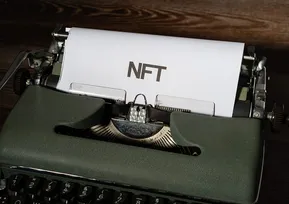
Photo by Element5 Digital on Unsplash


Empowering digital finance literacy for the future generation

Dubbed “Duniverse” — a portmanteau of Dunamu and universe — the program was held from May to July for 4,100 middle school students throughout Seoul, Gyeonggi Province, and Incheon. The curriculum proved to enhance their understanding and literacy in digital finance.

“Digital finance education for adolescents is essential in addressing various social issues, such as preventing financial accidents and income polarization,” said Lee Sirgoo, CEO of Dunamu.

The first Duniverse program was held last year, hosting some 4,800 middle school students in vulnerable areas of Gyeonggi Province. Owing to the positive response, this year’s pool has been expanded to over 7,000 first-year middle school students in Seoul, Gyeonggi Province, and Incheon. In the first half of this year alone, a total of 4,120 students from 17 middle schools participated.

The program featured lessons on the technologies of the Fourth Industrial Revolution, such as blockchain, NFTs, and metaverse, as well as basic financial knowledge. A total of eight sessions were led by a team of qualified instructors with years of experience in economic education. Dunamu employees also directly contributed to the review process of educational materials, the company said.


Success recognized by students and teachers alike

In a survey conducted by Dunamu targeting 435 participants, 93.1 percent of them expressed high satisfaction, stating that their understanding of digital finance improved. This portrays a meaningful upgrade from the answers of a previous survey conducted before the start of the program, where six out of ten respondents said that they had little knowledge about digital finance.

They also reported that they now understand the difference between digital asset ownership and copyrights as well as blockchain and Bitcoin, and show interest when coming across digital finance-related content in the media.

School teachers also praised the program for addressing blind spots in financial education and taking a proactive learning approach. “The students were able to learn about big data, ChatGPT, and more, which is especially valuable since such education for teenagers is still lacking. I believe it will help boost their competitiveness in the future job market,” said a teacher from Goam Middle School in Yangju, Gyeonggi Province.

The teachers also approved of other topics that were covered, such as financial fraud prevention, to help teenagers avoid falling victim to financial scams. Suggestions were also made to expand teacher training courses.


Upcoming program

This year’s second Duniverse program will be held from August to December for 2,712 middle school students in Seoul, Gyeonggi Province, and Incheon.

Dunamu has continually devoted efforts to boosting social welfare and nurturing young talent. This includes “Dunamu Next Steppers,” a hope fund for young people with multiple debts, along with supporting emerging talents and artists with developmental disabilities in their participation in NFT projects.
More to Read
View All
Web3 & Enterprise·

Oct 18, 2023

Scroll’s zkEVM Launches on Ethereum Mainnet

Scroll’s zkEVM Launches on Ethereum MainnetScroll, the Seychelles-headquartered project behind the Ethereum layer-2 network of the same name, has officially made its debut on the Ethereum mainnet.Photo by Zoltan Tasi on UnsplashAttempting to solve for scalabilityThe project team announced the development via a press release which was published on Tuesday. The network launch signifies the latest in a series of attempts by various layer-2 projects, including Polygon and StarkWare, to address the persistent challenges of high transaction fees and network congestion that have hindered Ethereum’s usability in recent times. Speaking to layer-2 development, co-founder Sandy Peng stated:“We see a future where the vast majority of value transfer takes place on Layer 2s on Ethereum. What will drive that adoption is improved user and developer experience.”After testing and refinement on its testnet, Scroll believes that it is in a good position to play an active role within the Ethereum ecosystem by providing a general-purpose, zero-knowledge Ethereum virtual machine (zkEVM) roll-up.The project has 900,000 wallet addresses in active use on its testnet, having executed seven million transactions since August. The testnet has seen over 55 million transactions during its year-long operation.At its core, Scroll’s mission is to combine Ethereum’s network security with reduced fees and lower latency, making it an attractive proposition for existing Ethereum projects. According to Peng, Ethereum developers can seamlessly deploy their projects on Scroll and harness the groundbreaking zkEVM technology.Incorporating bytecodePeng emphasized the significance of zkEVM’s ability to batch proofs efficiently, resulting in faster transaction speeds and cost reductions, thanks to its bytecode-level compatibility.Bytecode, in the realm of computer programming, simplifies intricate machine cryptography, making code more accessible for computer hardware. Scroll allows deployed smart contracts to store the bytecode of their transactions, which is then sent to a centralized zkEVM node. This node verifies the transaction’s accuracy without revealing its content. Once verified, the transaction’s status is updated on the Ethereum network, eliminating the need for re-execution. Peng pointed out:“Thanks to this feature, Ethereum devs can leverage all the same tools they are familiar with, ensuring that everything operates seamlessly right from the start.”Scroll’s mainnet code was subject to audits conducted by four major auditing firms, namely Zellic, Trail of Bits, OpenZeppelin, and KALOS, in an effort to ensure robust security and reliability.Efforts towards greater decentralizationWhile Scroll’s current implementation offers compelling features, the team is actively researching ways to further enhance the network’s decentralization. Currently, if the sequencer goes offline, the protocol halts, creating a potential vulnerability. To address this, the Scroll team is working on a protocol upgrade that will enable “forced batches.” This update will allow permissionless publication of batches through the base layer, even in the event of a sequencer halt.Peng elaborated on the team’s vision, stating: “Mid-term, the goal is to minimize the probability of a sequencer halt through decentralization.” This approach aims to bolster the network’s resilience and ensure a smoother user experience.While headquartered in the Seychelles, the project has its origins in China through its Chinese founders, Ye Zhang and Haichen Shen, alongside Peng, with many of its 60-strong project team based in mainland China and Hong Kong.

news
Markets·

Jan 16, 2024

Hong Kong’s HKVAC drops XRP from top 5 crypto index

The Hong Kong Virtual Asset Consortium (HKVAC), a digital asset group in China's special administrative region, has announced modifications to its core cryptocurrency index, reshuffling the top contenders to the detriment of XRP, the payment solution token developed by Ripple Labs.Photo by Kanchanara on UnsplashSolana takes top 5 slotEffective as of this Friday, HKVAC will replace XRP with Solana (SOL) in its Top 5 Large Cryptocurrency Index, signaling a shift in the composition of its benchmark index. HKVAC is a collaborative effort between Hong Kong-based industry participants such as crypto exchanges and licensed ratings agencies. Its aim is to optimize the risk management capabilities of the crypto sector and in that way, assisting market participants including local regulatory bodies. Crypto exchange platform HTX, previously known as Huobi, became the first member of HKVAC in 2023. It was joined by iPollo, KuCoin, LK Venture, Nano Labs, Purise, Wealthking Investment, G-Rocket Global Accelerator, Hong Kong Data Infinity Technology and others in making up the organization’s membership. The HKVAC's Top 5 index reflects the global cryptocurrency ranking based on market capitalization, maintaining a pulse on the ever-evolving crypto landscape. However, beyond market cap, the digital asset group considers additional factors such as market valuation, investability and liquidity in its index rebalancing decisions. Solana’s growth and progressionSolana, currently ranked as the fifth-largest cryptocurrency, has been making substantial strides in the market. Despite the 2022 collapse of the FTX crypto exchange, which significantly impacted SOL's price, the cryptocurrency has made an impressive recovery. Over the past year Solana has surged by 315%. Presently, SOL boasts a market cap of $41 billion, securing its position in the top echelons of the cryptocurrency market. In contrast, XRP, the ousted cryptocurrency, has experienced a more modest price growth during the same period. As of the latest data, XRP holds the sixth position in the cryptocurrency ranking, with a valuation of $31 billion. The decision to remove XRP from the Top 5 index was met with a 3.9% decline in its value, settling at $0.57. XRP had moved within the Top 5 index in October of last year. It was added to the index alongside SHIB in 2023. At the time of its formation, HKVAC emphasized that market capitalization was one of the primary criteria incorporated within the evaluation, which extends to 30 cryptocurrencies. A re-evaluation is carried out each quarter on the basis of that market cap criterion. Crypto rating reshuffleThe HKVAC's reshuffling extends beyond the Top 5 index, impacting other leading cryptocurrencies. Notable changes include the removal of Filecoin (FIL), Binance USD (BUSD), Maker (MKR), Hedera (HBAR) and TrueUSD (TUSD) from the Global Large Cryptocurrency Index. These have been replaced by Near Protocol (NEAR), Internet Computer (ICP), Immutable (IMX), Optimism (OP) and Injective (INJ). Additionally, Avalanche (AVAX) is set to replace Tron (TRX) on the HKVAC Top 10 Global Large Cryptocurrency Index, effective this Friday. These adjustments come amid Hong Kong's ongoing efforts to bolster the cryptocurrency industry within the region. In December, the financial regulator in Hong Kong signaled its readiness to accept spot crypto exchange-traded funds (ETFs). This move aligns with the United States Securities and Exchange Commission's review of 11 spot bitcoin ETF applications, ultimately approved on Jan. 10.   

news
Policy & Regulation·

Sep 27, 2023

Upcoming Regulatory Framework in Taiwan Sees Crypto Exchanges Unite

Upcoming Regulatory Framework in Taiwan Sees Crypto Exchanges UniteIn preparation for the impending arrival of a regulatory framework for cryptocurrencies in Taiwan, nine prominent cryptocurrency firms have announced their collective efforts to establish an industry association.The nine exchange businesses announced the development via a press release which was published on Tuesday. The move comes in anticipation of Taiwan’s Financial Supervisory Commission (FSC) releasing comprehensive guidelines on cryptocurrency trading and payments by the end of September.Photo by Timo Volz on UnsplashDeveloping regulatory environmentThe industry body will include participation from native exchanges such as MaiCoin, BitoGroup, and ACE. While Taiwan has been behind the regulatory curve until now where crypto is concerned, the one measure that the FSC had already taken steps to mandate was that virtual asset services providers (VASPs) in Taiwan must adhere to the country’s anti-money laundering (AML) regulations. However, numerous other intricacies unique to the cryptocurrency industry still require careful consideration and regulation.Authorities in Taiwan have also put forward ten guiding principles for VASPs, designed to protect Taiwanese consumers.The forthcoming guidelines aim to address these concerns by introducing a comprehensive set of rules inspired by the VASP licensing framework in Hong Kong. One of the primary focuses of these proposed guidelines is consumer protection. They advocate for specific hot and cold wallet ratios for customer deposits with cryptocurrency exchanges, a measure designed to safeguard customer funds. Additionally, the guidelines suggest mandatory insurance against user losses to further enhance consumer confidence.Moreover, the FSC’s guidelines intend to prevent offshore cryptocurrency exchanges from operating onshore in Taiwan without proper compliance registration. This step aims to ensure that all participants in Taiwan’s cryptocurrency market adhere to uniform standards.In a bid to stabilize the Taiwanese financial system and prevent deceptive advertising practices, the guidelines also propose a ban on stablecoins linked to the Taiwanese dollar and impose restrictions on foreign exchange advertising within the country.Enabling self-regulationRegulators have also proposed the classification of crypto regulations within their own novel business category. As part of that initiative, officials expressed an interest in fostering self-regulation. The formation of this industry group could be deemed to be an encouraging sign relative to that aspiration.The nine cryptocurrency firms forming the industry association have established a working group led by Winston Hsiao, Co-Founder of XREX. This group aims to expedite the development of self-regulatory rules based on the forthcoming FSC guidelines.Wayne Huang, another Co-Founder of XREX, expressed his hope that the new FSC guidelines will provide the cryptocurrency industry with legitimacy, oversight, a clear growth trajectory, and an accelerated path to earn public trust.The formation of this industry association, coupled with the impending release of the FSC’s comprehensive regulatory guidelines, marks a significant milestone for Taiwan’s cryptocurrency sector. As the industry evolves, these proactive measures seek to ensure its stability, security, and compliance with international standards.

news
Loading