Top

Gulf Binance Secures Thai Digital Asset License

Policy & Regulation·May 27, 2023, 1:18 AM

Binance, one of the world’s leading cryptocurrency exchanges, has secured a digital asset operator license in Thailand, paving the way for the launch of a new crypto exchange and broker. The license, granted by the Ministry of Finance of Thailand and overseen by the Southeast Asian country’s Securities and Exchange Commission (SEC), ensures that the upcoming platform will operate in compliance with regulatory requirements.
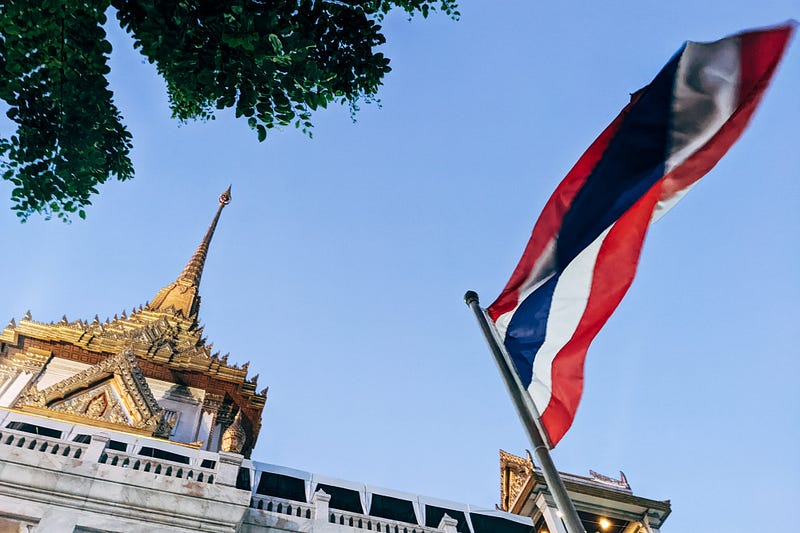
Photo by Markus Winkler on Unsplash


License award

The license was awarded to Gulf Binance, a joint venture between Binance and Gulf Innova Co., Ltd., a subsidiary of Gulf Energy Development PCL. It marks a significant milestone in Binance’s expansion efforts. The partnership was initiated through a memorandum of understanding signed in January 2022, as both parties recognized the potential of establishing a digital asset exchange in Thailand.

Richard Teng, the head of Asia, Europe, and MENA at Binance commented on the development: “By harnessing Binance’s expertise together with Gulf’s established local presence and network, Gulf Binance aims to showcase the full potential of blockchain technology to meet the needs of Thai users. Local users can expect access to a trusted and regulated service that prioritizes user security alongside compliance with local regulations.”


Combined expertise

Gulf Innova, as a prominent player in the Thai business landscape, brings extensive expertise and experience in the digital asset trading sector to the joint venture. The conglomerate, headed by billionaire Sarath Ratanavadi, operates in various industries, including energy production, telecommunications, and digital businesses.

By combining Binance’s unparalleled growth and expertise in the digital asset space with Gulf’s established presence and knowledge in Thailand, the partnership aims to create a powerful synergy that drives innovation, fosters growth, and provides exceptional value to users in the digital asset ecosystem.


Q4 launch

The new crypto exchange is expected to commence operations in the fourth quarter of 2023, although further details about the platform will be disclosed closer to the launch.

Often criticized for its opaque structure, Binance is showing renewed commitment to transparency and regulatory compliance. As regulatory frameworks are put in place in varying jurisdictions, global crypto businesses are having to change corporate structures in order to meet these changing requirements. That’s evidenced by Binance’s Thai joint venture, its launch of a separate corporate entity in the form of Binance Japan and a similar move by crypto exchange BitMEX in Hong Kong.

Thailand has emerged as a significant cryptocurrency hub in Southeast Asia, with its capital city, Bangkok, ranked 10th globally in The Crypto Readiness Index published by Recap, a cryptocurrency tax software company. Despite the ban on cryptocurrencies as a payment method, Thailand continues to flourish as a hub for trading and investment activities in the crypto space.

That ban on cryptocurrency payments, implemented by the SEC in April 2022, aimed to safeguard the stability of the financial system and mitigate potential risks to the economy. The SEC identified price volatility, cyber theft, and personal data leakage as concerns associated with cryptocurrencies. However, the regulatory measures did not impede trading or investment activities, allowing the crypto industry to thrive.

Chainalysis, a leading blockchain analysis company, ranked Thailand 8th in its Global Crypto Adoption Index for 2022, surpassing countries like Russia, China, Nigeria, Turkey, Argentina, and the UK. This recognition highlights Thailand’s progressive stance toward digital assets and its growing adoption within the country.


More to Read
View All
Policy & Regulation·

May 16, 2024

China busts underground bank conducting illegal currency exchanges via crypto

China's authorities have dismantled an underground bank that illicitly utilized cryptocurrency for currency exchange operations between the Chinese yuan and the South Korean won, involving approximately 2.14 billion yuan ($295.8 million). China has a history of imposing strict capital control policies, prompting some individuals and entities to resort to cryptocurrency as a means of bypassing these regulations. According to a report published by local police in Northeast China’s Jilin province, six suspects were apprehended for their alleged involvement in facilitating the illegal operations spanning China and South Korea.Photo by Hyory Liu on UnsplashExploiting cryptocurrency featuresThe suspects purportedly took advantage of cryptocurrency features like transaction anonymity and decentralization to execute foreign currency exchange activities unlawfully. Investigations revealed that the criminal group utilized domestic accounts for fund receipt and transfer, alongside over-the-counter cryptocurrency transactions. Supporting illicit transactionsThe arrested individuals allegedly aided various entities, including South Korean purchasing agents, cross-border e-commerce platforms and import-export trade firms, in circumventing currency exchange regulations between the Chinese yuan and the South Korean won. 

news
Policy & Regulation·

Jun 06, 2025

Hong Kong gearing up to give crypto derivatives the go-ahead

Hong Kong regulator, the Securities and Futures Commission (SFC), which oversees Hong Kong’s securities and futures markets, is understood to be planning to give the go-ahead for crypto derivative products to be offered to professional investors within the Chinese autonomous territory. Chinese English-language newspaper China Daily reported on June 4 that the proposed move forms part of Hong Kong’s efforts to expand its digital assets-related product offering in order to further bolster its position as a leading regional hub for the sector. Christopher Hui, Hong Kong’s Secretary for Financial Services and the Treasury, told the publication that the SFC will open up crypto derivatives trading to professional investors in the city “in an orderly, transparent and secure manner.”Photo by Florian Wehde on UnsplashBoosting liquidity to spot marketsChina Daily claimed that the SFC outlined that the crypto derivatives product will enable efficient risk transfers, while boosting the liquidity of the underlying spot markets. TokenInsight data suggests that the global crypto derivatives market has reached $21 trillion in trading volume over the course of Q1 2025. By comparison, derivatives trading dwarfs spot trading, given that spot trading weighed in at just $4.6 trillion over the same period. Liquidity in the underlying spot markets can be enhanced by a broadening of crypto derivatives product offerings in instances where digital assets are traded for immediate payment and delivery. Their availability will also appeal to professional traders and investors who need access to derivatives as part of their overall strategies in order to hedge positions and add leverage when required. Industry interestReaction to news of the Hong Kong SFC’s plans has largely been positive. Back in February, Jean-David Péquignot, chief commercial officer (CCO) with the world’s largest crypto derivatives exchange Deribit, told the South China Morning Post that opening up availability of crypto derivatives products was the one item missing from Hong Kong’s push towards development as a hub for the digital assets sector. At the time, he stated:“Hong Kong is this central financial hub in the world and a big one in Asia. If regulators can solve the derivatives piece, it is a place where we love to be.” On that basis, Péquignot suggested that Deribit, headquartered in Dubai, would be interested in establishing itself in Hong Kong, suggesting that “Asia is a big market for derivatives.” He added:“We want to be in Asia. We just need to find the right place and time to engage with regulators and get a regulatory framework to work with.” The company’s acquisition by Coinbase was announced last month for $2.9 billion. Regulatory approach questionedWhile many see the move towards the approval of crypto derivatives in Hong Kong as bullish, not everyone perceives the regulator’s approach in this instance to be positive. Pseudonymous crypto trader “Pickle Cat” outlined on X that “opening crypto derivatives only to 'professional investors' isn’t progress.”  The trader points out that good regulation would concentrate on controlling issuance and not circulation. Suggesting that the SFC has missed the point in its approach, the trader claims that the regulator would serve the crypto derivatives market best by verifying what backs such products while not restricting how such tokens move. 

news
Web3 & Enterprise·

Jan 10, 2025

Backpack acquires FTX EU

Backpack Exchange, a crypto exchange that joined the Japan Virtual Currency Exchange Association (JVCEA) last December, has recently acquired FTX EU, the European arm of the failed crypto exchange business FTX. According to a press release, the business comes with a European MiFID II license, with the acquisition having been approved by the Cypriot regulator, the Cyprus Securities and Exchange Commission (CySEC). Furthermore, a Delaware bankruptcy court in the United States, which is dealing with the FTX bankruptcy, has also rubber-stamped the acquisition. Backpack Exchange was co-founded by CEO Armani Ferrante, alongside other former FTX executives. According to the firm’s LinkedIn page, it has established its headquarters in Japan. The company also has links to Dubai, having acquired a Virtual Asset Service Provider (VASP) license for its Backpack Wallet product from  Dubai’s Virtual Assets Regulatory Authority (VARA) in 2023.Photo by Christian Lue on UnsplashRebuilding trust As a consequence of having acquired FTX’s European arm, Backpack Exchange will now assume responsibility for the distribution of court-approved FTX bankruptcy claims to FTX EU users. In the company’s press release, Ferrante spoke of the importance of the distribution process in rebuilding trust. He stated: "Customer restitution is a crucial step to rebuild trust and confidence in the industry, and Backpack is committed to returning FTX EU customers’ funds as fast and as safely as possible." In response to a query from FTX creditor activist Sunil Kavuri on X, Ferrante outlined that FTX EU users “will only be able to claim their euro claims funds directly from Backpack EU.” Ferrante clarified that FTX EU customers who had pending crypto withdrawals at the time of the bankruptcy will have their crypto claims dealt with via the FTX bankruptcy estate. In a Series A financing round early last year, Backpack was valued at $120 million. Through FTX EU, it now acquires a MiFID II license, further facilitating the global expansion of the company. With FTX EU now forming Backpack’s EU arm, the company will offer crypto-derivative products, including perpetual futures. This product offering is scheduled to go live in Q1 2025. Bankruptcy process controversy The bankruptcy of FTX EU has been controversial, starting off with the European entity being illegally filed into a U.S. bankruptcy process. In early 2024, the FTX Debtors suggested that the entity was worthless. It later wanted to buy out the entity itself, outbidding a third-party bidder. A short time afterwards, the FTX Debtors reached a settlement with the former FTX EU team. It’s understood that Backpack has acquired FTX EU for $32 million.  The FTX Debtors’ attempt to buy the business itself has cast a cloud over the bankruptcy process. When it first emerged that the business had been sold, there was some speculation as to if this would mean a rebooted FTX within the European market, but Backpack’s acquisition confirms that this was not to be the outcome.  Japan could have offered another opportunity to reboot the business, but instead, FTX Japan was acquired by bitFlyer and absorbed into its existing business. With regard to the main FTX business entity, the FTX Debtors told the bankruptcy court that there was no interest in the business from buyers. 

news
Loading