Top

Pakistan Implements Ban on Cryptocurrency

Policy & Regulation·May 21, 2023, 11:57 PM

Pakistan has moved to ban cryptocurrency once more, with the country’s Minister of State for Finance and Revenue, Aisha Ghaus Pasha disclosing the move last week.

According to multiple local media reports within Pakistan, on May 16 Ghaus Pasha stated at a session of the Senate Standing Committee on Finance and Revenue, that cryptocurrencies are banned and “will never be legalized in Pakistan.”

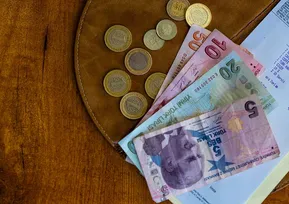
Photo by Hamid Roshaan on Unsplash


FATF Grey List

Ghaus Pasha supported this position by outlining that the Financial Action Task Force (FATF) had set the banning of crypto as a condition for Pakistan’s removal from its “Grey List.”

FATF is an initiative of the G7 group of countries, first established in 1989. Its mandate is to develop policies geared towards combating money laundering, and most especially, terrorist financing. The FATF grey list includes those jurisdictions who are deemed to require increased monitoring relative to their efforts to keep money laundering and terrorist financing to an absolute minimum.

Pakistan had found itself on the FATF grey list over the course of a number of years. That meant reputational damage on an international basis, together with loss of investor confidence. It also signals the likelihood of weaknesses in a country’s financial system and in its financial controls. The categorization would have had an impact on the country’s ability to access international finance, impacted trade relations, and involved increased compliance costs.

Against that background, there may be a certain logic to the Finance Minister’s stance, despite it naturally being distasteful to those of us that support the development of decentralized systems, blockchain, and cryptocurrency. After an extended period on that Grey List, Pakistan was only removed from it in October of last year.


Currency devaluation

Notwithstanding that, governments in the developing world may have added incentives in banning cryptocurrencies. Their currencies are oftentimes unstable, and the Pakistani rupee is no exception. Cryptocurrencies like bitcoin find their greatest use case in countries that have their currencies devalued or economies that fall into the trap of hyperinflation relative to the sovereign currency.

In Pakistan’s case, the rupee plummeted to a record low against the US dollar in January. Naturally, that hurts ordinary citizens and provides the conditions under which people are more likely to investigate decentralized cryptocurrencies. On that basis, we shouldn’t be surprised to learn that the Pakistani government’s decision to ban crypto was publicly supported by Sohail Jawad, Director of the State Bank of Pakistan (SBP).

Pakistani banks are naturally following the government and the central bank’s lead, in implementing the ban. One circular obtained by CoinDesk stated: “As per regulatory instructions from the State Bank of Pakistan (SBP), any remittance of foreign exchange directly/indirectly outside Pakistan to overseas foreign exchange trading, margin trading, and CFD trading apps/websites/platforms through any payment channel is not allowed/permitted by SBP and such payments are inherently risky and illegal.”


Community reaction

Naturally enough, the crypto community internationally and locally, is not enamored by the move. However, people who have been in the space over the last few years are accustomed to ever-changing stances taken by governments as a reaction to a technology that they simply don’t know how to deal with.

Waqar Zaka, a Pakistani who works within the Web3 space commented previously on a ban that was implemented in Pakistan in 2017, only later to be found to be unconstitutional. Another Pakistani community member took to Twitter in taking a stand against the decision. Others still immediately considered how they could circumvent the ban.

Crypto has always benefited from jurisdictional arbitrage, and while bans are not in any way helpful, in the longer run, they will never stop the roll out and further development of this innovation.

More to Read
View All
Web3 & Enterprise·

Dec 29, 2023

Worldcoin launches in Singapore post India hiatus

Digital identity and financial network Worldcoin, the cryptocurrency project co-founded by OpenAI CEO Sam Altman, has revealed its expansion into Singapore.Photo by Meriç Dağlı on UnsplashFive Orb-scanning locationsFollowing the successful launch of World ID 2.0 and the open-sourcing of the Worldcoin iris recognition pipeline in mid-December, the project now offers World ID verifications in Singapore through the Orb, its custom hardware device. The product launch in the Southeast Asian city-state comes hot on the heels of Worldcoin pausing its activities in India. According to a blog post published by the project on Wednesday, Singaporeans can now avail themselves of World ID verifications at five locations through the Orb, the iris-scanning device that forms a crucial part of the project's identity verification process. Adding to its presence in Singapore, Tools for Humanity (TFH), a Berlin-headquartered project contributor and the lead developer behind Worldcoin, has become a member of two prestigious startup and tech associations in Singapore: ACCESS and the Singapore Fintech Association (SFA). Through these associations the project’s developers are seeking to further embed Worldcoin within the region's technology ecosystem. Expanding global footprintExpanding its global footprint, World ID verifications are not limited to Singapore alone. The project has also extended its services to Seville and Bilbao in Spain. Moreover, in South America, World ID verifications in Chile have expanded to Concepcion, Curico and Viña del Mar, joining Santiago. Meanwhile, Argentina achieved a notable milestone, setting a national record with over 10,000 verifications in a single day. In Japan, Fukuoka on Kyushu Island now joins new locations in Tokyo for proof of personhood verification via World ID. Earlier in December, Worldcoin introduced World ID 2.0, an upgrade that builds upon its existing "proof of personhood" protocol. This upgrade introduces "Apps, Levels, and a series of core improvements" to the protocol launched earlier in the year. The accompanying apps enable World ID integration with various services, including Reddit, Discord and Shopify. Market challengesIt's worth noting that despite these positive steps being taken to expand the Worldcoin global footprint, the company has faced challenges in certain markets also. It emerged in recent days that it has temporarily halted its services in India, France and Brazil. Despite the temporary pause, World App continues to gain popularity in India, where thousands download the app each week. The Worldcoin Foundation explained that Orb-verified proof of personhood services has been scaled back temporarily as they work on developing a safe and orderly process to meet the increasing demand for World ID in India. Sources close to Worldcoin suggest a relaunch in India is anticipated in 2024. Despite its expansion, Worldcoin has faced criticism since its launch. Reports from August indicated that German regulators had been scrutinizing the project since 2022, while French officials raised concerns about the legality of collecting biometric data. The authorities in Kenya suspended the activities of Worldcoin within the country a few months ago, pending a review by public agencies in respect of security and data protection. Earlier this month, Tiago Sada, head of product for Tools for Humanity, tried to allay privacy concerns on the basis of the product’s anonymity. Sada stated:“You can use it completely anonymously; the only thing you’re doing is proving you’re unique.”

news
Policy & Regulation·

Jun 20, 2023

Hong Kong Analyzes Web3 Approach of Regional Peers

Hong Kong Analyzes Web3 Approach of Regional PeersHong Kong’s ambitions in Web3 are on the rise as it strives to establish itself as a global hub for digital assets. The Research Unit of the Legislative Council Secretariat of Hong Kong has recently released a summary of a document titled “Development of Selected Regional Web3 Technologies,” shedding light on the city’s involvement in Web3.According to the report summary which was published on June 14, the Hong Kong government is actively promoting the development and utilization of Web3. In the fiscal budget for 2023–2024, the Financial Secretary announced accelerated efforts to build Hong Kong’s Web3 ecosystem, along with the establishment of a dedicated development task force focused on virtual assets.Photo by Jimmy Chan on PexelsPace of developmentHowever, concerns have emerged about Hong Kong’s comparatively slower pace of development in contrast to other regions. Various regions across the globe, particularly in Asia and the Gulf region, have implemented measures to expedite the progress of Web3 and its associated technologies and applications.To address these concerns, the report suggests that Hong Kong should broaden its focus beyond financial services and virtual assets. Instead, it should actively promote innovation in other areas of Web3 technology, such as blockchain and metaverse technology.Scrutinizing regional Web3 developmentIn response to a request from Councilor Wu Kit Ching, the research group has conducted a study on leading regions in Web3 technology and application development, examining their strategies.The study primarily highlights Japan, Singapore, South Korea, and the United Arab Emirates (UAE) as these regions have demonstrated proactive approaches in developing Web3 technologies, and they have become global or regional innovation hubs. Japan, for instance, has established high-level policy guidance and dedicated offices to coordinate Web3 policies across various government departments.Other regions covered in the study have focused on specific areas of Web3. Singapore and the UAE, for example, are exploring blockchain technology through industry collaborations and the establishment of incubation centers. Meanwhile, South Korea is actively launching metaverse strategies to foster innovation across multiple sectors.The summary also provides an overview of the key characteristics, foundational technologies, and applications of Web3. It outlines recent developments in Web3 within Hong Kong and analyzes the development scenarios of selected regions, including Japan’s comprehensive approach and the application-focused initiatives of other regions.The document emphasizes that Web3 represents a decentralized network that empowers users with greater autonomy and control over their digital lives. While the Hong Kong government has introduced measures to support the development of the Web3 ecosystem, particularly in the virtual asset market and related financial services, concerns persist regarding Hong Kong’s slower progress in other areas of Web3 technology compared to its counterparts in Asia and the Gulf region. These regions are capitalizing on their strengths and exploring broader applications of Web3.Hong Kong’s engagement in Web3 and its ambition to thrive in this domain is becoming more evident with each passing day. The summary of the document sheds light on the Chinese autonomous territory’s efforts, while also highlighting the need to expand its focus and foster innovation in various areas of Web3 technology. By doing so, Hong Kong can position itself as a prominent global center for Web3 and leverage the advantages it offers for digital asset development and beyond.

news
Web3 & Enterprise·

Aug 08, 2023

Upbit Seeks Recruits for Program to Foster Digital Asset Investment Culture

Upbit Seeks Recruits for Program to Foster Digital Asset Investment CultureUpbit, South Korea’s largest cryptocurrency exchange, announced Monday that it is recruiting participants for its second Up!To program, aimed at cultivating a robust digital asset investment culture and leading the era of Web3.Empowering students in the Web3 eraTouting the slogan “Build Your Own Block,” the program will involve various activities, including creating content related to digital assets and investor protection, producing and uploading promotional materials, generating ideas for Upbit’s services, and attending Upbit’s offline events.Photo by Mimi Thian on Unsplash“Through Up!To, university students will gain a comprehensive understanding of digital assets and blockchain,” said Lee Hae-bung, head of the Upbit Investor Protection Center.Program detailsThe program will kick off with the inauguration ceremony on September 18, to be followed by three months of participation and activities. Along with a welcome kit and a designated stipend, participants will also get the chance to be educated and trained in the field of digital assets.Teams that show the most outstanding performance will be awarded a prize of 5 million KRW (approximately $3,800), and runner-up participants will receive a prize of 3 million KRW. A select few will also get the opportunity to intern at Upbit. The total quota for the program has been expanded to 30 — an increase from 20 participants last year.Any university students — excluding those set to graduate in February next year — who are interested in digital assets are eligible to apply. Applications can be submitted from August 7 to August 25 on the Upbit Investor Protection Center website. Final acceptance notifications will be sent via email on September 11.

news
Loading