Top

Coinbase Signals Interest in UAE Base

Web3 & Enterprise·May 09, 2023, 12:07 AM

In further evidence of a contrast in progression relative to the approach taken to digital assets in the United States versus other world regions, US crypto exchange Coinbase is understood to be considering the United Arab Emirates (UAE) as a potential strategic hub for the company.
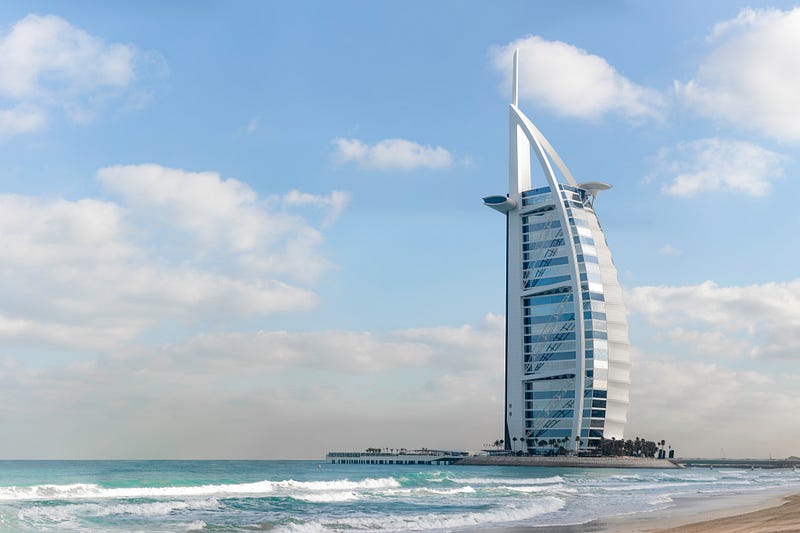
Photo by Aleksandar Pasaric on Pexels


Cause and effect

A number of weeks ago, while Gary Gensler of the Securities of Exchange Commission (SEC) was facing a grilling in a House Financial Services Committee hearing on Capitol Hill in Washington, Brian Armstrong of Coinbase put out a statement saying that if the regulatory approach to crypto in the United States didn’t change, then the company would choose to locate itself elsewhere.

It hasn’t taken Armstrong long to act on that intention. Late last month, the digital assets platform took its first step outside the United States by securing a license to operate in Bermuda. In line with Armstrong’s earlier comments, the move was seen as a strategic action taken by the company to expand its operations on a global basis.

Armstrong had warned that unless regulators in the US provided complete regulatory clarity in relation to the activities of cryptocurrency firms, then the innovation would quickly develop in offshore havens. Alongside the announcement of the license to trade in Bermuda, a blog article was published which indicated that the company was also in discussion with regulators in Abu Dhabi in the UAE with a view towards potentially obtaining a license to operate there.


Blog article

Fast forward to Sunday, with the publication of yet another blog article by the company, and it seems that the company is hinting at a much stronger likelihood of establishing a UAE base. The article outlines that over the course of the next week, the Coinbase founder and CEO and the company’s executive team are in the UAE to participate in a round of meetings with regulators, industry partners, policymakers, clients and web3/crypto founders.

The article outlines that Armstrong would give a keynote at the Dubai Fintech Summit, while elaborating that “the region has the potential to be a strategic hub for Coinbase, amplifying our efforts across the world.” In a recent interview with Bloomberg TV, the Coinbase CEO said that “we are looking for a home to set up an international hub that could serve the long tail of countries in the world.”

At the Dubai Fintech Summit on Monday, Armstrong stated that the UAE “is leading the way regionally in crypto” and that it could be a potential international hub. He added: “I would say that the UAE’s approach has been more forward thinking than the US.”


UAE crypto aspirations

There’s no doubt that the UAE is trying to develop itself as a center for crypto and digital asset innovation. The country’s Prime Minister has said as much, declaring his intention to establish the Middle Eastern nation as a key player in the future of crypto. Both the Emirates of Dubai and Abu Dhabi have been proactive in working towards a digital asset regulatory framework, complete with a crypto licensing program in recent months.

More to Read
View All
Policy & Regulation·

May 22, 2023

Cebu Meeting of FSB Highlights Crypto Risks

Cebu Meeting of FSB Highlights Crypto RisksThe Regional Consultative Group for Asia of the Financial Stability Board (FSB) has highlighted the risks implicated by crypto assets in a series of meetings held on Thursday and Friday in Cebu, the Philippines.The FSB is an international body with a mandate to monitor the global financial system, as well as make recommendations in respect of that system. The agency was established by the G20 group of countries in April 2009, replacing its forerunner, the Financial Stability Forum.Photo by John Alvin Merin on UnsplashA regulatory framework for cryptoThe two-day event focused on non-bank financial intermediation (NBFI) in Asia and the development of an effective global regulatory framework for crypto-assets. It discussed recent developments in financial markets, together with their regional impact.In opening remarks, Philippine Central Bank Governor, Felipe Medalla, stated: “Crypto, the biggest issue there is, whether we like it or not is quite a lot, especially younger people who are actually gambling. They have huge losses, our view right now. Well, you’re there, it’s your problem and the regulation becomes strict the moment crypto meets banking.”International participants highlighted the need for the development of an effective global regulatory framework for crypto-assets. Particular concern exists with regard to the potential for systemic risk in relation to crypto and a potential overflow into the traditional financial system.Earlier this year, the FSB proposed a complete regulatory framework for cryptocurrencies, with the report having been originally submitted in October of last year. Among its key components is the imposition of tighter controls. It proposed the guiding principle of “same activity, same risk, same regulation” for crypto assets, mirroring the approach taken for traditional financial assets.Global approach to taming cryptoThis approach has proven to be problematic for people working within the digital assets space. Many of the core facets of cryptocurrencies are entirely different to anything we see in traditional finance. Trying to frame crypto within an existing approach and standard has been perceived by many to be akin to trying to fit a square peg in a round hole.It’s not the FSB's role or place to affect policy directly. That responsibility lies with policymakers and regulators in each individual country. However, the organization is seeking to influence those individuals and entities in the hope that they will employ its suggested regulatory framework.Klaas Knot, Chair of the FSB and President of the Dutch Central Bank, provided this view on crypto: “We will come up with a global regulatory framework. It also only makes sense to regulate this from a global perspective. Because, nowadays you can take a server and put it anywhere in the world and start issuing these digital assets.”From Knot’s take, it’s clear that governments and central bankers are cottoning on to the fact that individual nation-state regulation is futile to an extent where decentralized innovations like cryptocurrency are concerned. Others such as European Central Bank (ECB) President Christine Lagarde and Mark Branson, President of German financial markets regulator BaFin, similarly have called for a globally enforced regulatory approach over the course of the past year.Ongoing struggleWhile regulation can be helpful, particularly when it comes to the points at which crypto meets the traditional system, there’s no doubt that this emerging innovation will disrupt the conventional system to some degree or other. That may place an incentive before central bankers and governments to try and stymie the further development of digital assets.While a truly global approach to regulating digital assets could retard development of the sector, there is rarely total consensus among world governments on a single issue. Therefore, by its very nature, crypto, and the digital assets sector will likely continue to develop regardless. It’s more a question of how long that process takes.

news
Policy & Regulation·

Dec 30, 2025

China’s digital yuan set for deposit-based role in banks next year

The People’s Bank of China (PBOC) plans to roll out a new structure for its central bank digital currency (CBDC) operations, moving the digital yuan into a deposit-based role within the commercial banking system beginning Jan. 1, 2026. Lu Lei, a deputy governor of the PBOC, announced the update, marking a new direction after nearly a decade of pilot programs. According to a report by FTChinese, the move fits into Beijing’s broader economic planning, as authorities seek to reinforce China’s role in global finance while containing risks tied to loosely regulated digital activity. The deputy governor said China will continue to run the digital yuan under a two-tier system, with the central bank responsible for rules and infrastructure, while commercial banks manage wallets, payments, and compliance. He added that the arrangement is designed to prevent banks from being sidelined and to limit shadow banking risks associated with digital payment platforms outside the regulated system.Photo by Eric Prouzet on UnsplashDigital yuan transactions top $2.3TThe announcement comes as use of the digital yuan, known as the e-CNY, continues to rise. By late November 2025, the system had handled 3.48 billion transactions with a total value of 16.7 trillion yuan ($2.3 trillion). There are about 230 million personal wallets and 18.84 million corporate wallets. Beyond domestic use, the e-CNY is being positioned for international trade. Lu pointed to progress on mBridge, a cross-border payments project involving multiple central banks. The platform has processed 4,047 transactions worth the equivalent of 387.2 billion yuan ($55.3 billion), with the digital yuan accounting for about 95.3% of the settlement value. The deputy governor also sounded a note of caution on private-sector innovation, saying the rapid growth of digital assets and stablecoins could complicate the conduct of monetary policy. He said central banks need to ensure that new payment tools do not undermine macroeconomic stability or allow money to circulate beyond regulated channels. Hong Kong to license crypto dealers, custodiansAs Beijing moves to strengthen its state-backed currency framework, Hong Kong is also tightening oversight of the crypto market. On Dec. 24, the city’s Financial Services and the Treasury Bureau (FSTB) and the Securities and Futures Commission (SFC) released their conclusions on proposed legislation to regulate virtual asset dealing and custodial services. Following the implementation of the Stablecoins Ordinance in August, regulators are now moving to require firms offering crypto dealing or custody services in Hong Kong to obtain licenses and operate under regulatory supervision. They also began seeking feedback on whether to extend oversight to virtual asset advisory and management providers, with the proposed framework modeled on existing securities market rules. In a separate development underscoring the contrast between state-backed and decentralized digital currencies in the region, reports this month pointed to a sharp drop in Bitcoin network activity linked to mainland China. BTC hashrate drop seen amid China mining changesKong Jianping, CEO of Nasdaq-listed Web3 infrastructure firm Nano Labs, said on the social media platform X that the global Bitcoin network’s hashrate fell by about 100 exahashes per second, or roughly 8%, around Dec. 15. He attributed the decline to the shutdown of an estimated 400,000 mining rigs, mainly in Xinjiang. A lower hashrate means less computing power is securing the network, reducing competition among miners that validate transactions. China has maintained a broad ban on crypto trading and mining since 2021. Industry outlet Wu Blockchain said the reasons for the latest shutdowns were unclear. 

news
Web3 & Enterprise·

Oct 31, 2023

Saudi Arabia’s NEOM Forms $50M Animoca Brands Partnership

Saudi Arabia’s NEOM Forms $50M Animoca Brands PartnershipHong Kong’s Animoca brands, a gaming and metaverse venture capital firm, is embarking on a partnership with Saudi Arabia’s NEOM Investment Fund, focusing on pioneering Web3 initiatives.Animoca announced the initiative via a statement published to its website on Monday. NEOM is an ambitious project aiming to create a futuristic urban oasis in northwest Saudi Arabia, serving as a nexus for technology, commerce, entertainment, and tourism. It is planning to invest $50 million in Animoca.Photo by Hala AlGhanim on UnsplashDeveloping Web3 service capabilitiesThis collaboration will see Animoca harness its expertise to develop Web3 service capabilities with broad global applications in tandem with NEOM, aligning with NEOM’s vision of becoming a cutting-edge tech hub of the future.Animoca Brands has been a prominent player in the Web3 investment arena for several years. In July 2022, the company’s valuation soared to $6 billion, with backing from notable entities such as Singapore’s state investment fund, Temasek. Despite its ambitious goal to secure $2 billion for its metaverse fund in November of the same year, those expectations were significantly tempered following the FTX collapse. Consequently, in March, Animoca revised its target to a more modest $800 million.In-house market makingA report by The Block on Friday revealed that Animoca has been making efforts to pitch an in-house market making service to fledgling Web3 businesses within its portfolio. That service has been presented by the company to more than 400 startup projects in which it has been an investor over recent months.The key market makers in the crypto space include Wintermute, Keyrock, and GSR. This move by Animoca potentially puts Animoca in direct competition with these primary crypto-sector market makers. An in-house digital asset team has been tasked with offering the service. An Animoca spokesperson stated:“Its primary role, much like the treasury teams in many large corporations, is to optimize the utilization of the company’s balance sheet. The team does conduct market-making to ensure there is enough buy/sell liquidity for certain tokens, which is similar to the function that third-party market makers conduct, except that we choose to perform this in-house for scale and efficiency.”Saudi diversificationAs part of its Vision 2030 initiative, Saudi Arabia has been looking to diversify away from its predominantly oil-based economy. In an interview last month, Animoca Brands Founder Yat Siu outlined that the Middle Eastern country is embracing new technologies such as artificial intelligence (AI) and blockchain, encompassing blockchain-based gaming and Web3.In July it emerged that the Saudi Central Bank (SAMA) and the Hong Kong Monetary Authority (HKMA) were looking to extend the level of collaboration between the two territories relative to international payments and tokenization.This renewed interest from state-backed funds in Animoca suggests a potential shift in the Web3 venture capital landscape, coinciding with broader indications of a thaw in the crypto winter. The collaboration with NEOM and the injection of $50 million underscore the growing recognition of Web3’s potential, cementing Animoca Brands’ position as a key player in the ever-developing Web3 space.

news
Loading