Top

Bitget works towards goal of Bitcoin ecosystem support

Web3 & Enterprise·December 26, 2023, 1:19 AM

Bitget Wallet, a Web3 trading wallet offered by the Bitget Seychelles-based crypto derivatives platform, has unveiled a plan designed to bolster its support for and development within the Bitcoin ecosystem.
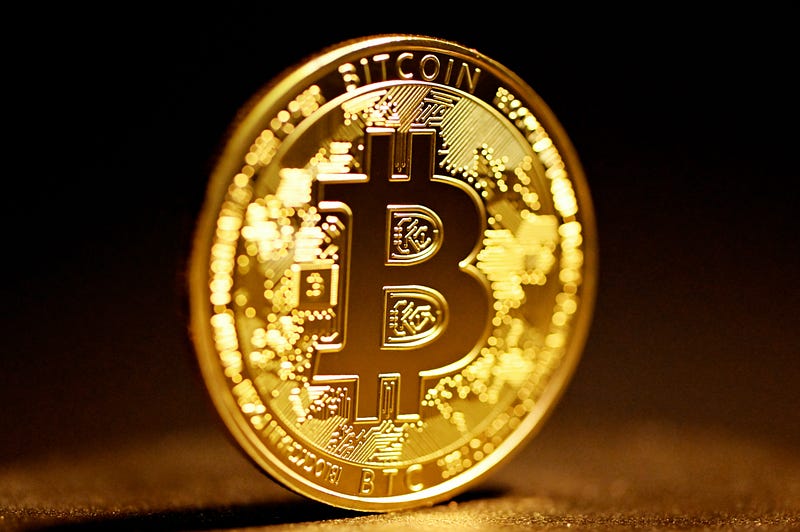
Photo by Kanchanara on Unsplash


Enhancing user experience

In an effort to elevate user experience and expand trading options, Bitget Wallet is committing to extensive product research, development initiatives and increased investments. The company plans on offering a wide array of services tailored to the Bitcoin ecosystem.

This includes robust support for BTC asset management, cross-chain swaps, on-ramping for externally owned account (EOA)-based wallets, multi-party computation (MPC) wallets, Taproot compatibility and streamlined asset transfers for both BRC-20 tokens and NFTs. In October, Bitget announced that it was taking the route of enhanced security by embarking on integrating MPC.


Integrated dApp browser

The platform also provides users with insights into macro and micro market trends through Bitget Swap, enabling interaction with popular projects via its dApp browser.

Bitget Wallet’s move has already garnered support from several Bitcoin ecosystem projects, with integrations on official websites such as Unisat, ALEX Lab, LifeRestart and Bitmap Explorer. The integrated dApp browser ensures convenient user access to these projects, fostering increased engagement and accessibility.

Looking forward, Bitget Wallet aims to capitalize on the medium to long-term market prospects within the Bitcoin ecosystem. The company is directing its efforts towards enhancing both technological infrastructure and product features, with a specific focus on critical areas such as Lightning Network, Nostr, Taproot Assets, BRC-20 and ARC-20 inscriptions.


Facilitating cross-chain transactions

An important facet of Bitget Wallet’s approach involves supporting multiple address formats, particularly within the Lightning Network. By doing so, the platform aims to improve asset transfer efficiency and introduce asset swaps between the Bitcoin mainnet and the Lightning Network. This move is geared towards facilitating cross-chain transactions between BTC and Ethereum Virtual Machine (EVM) assets on Bitget Swap, providing users with increased opportunities for portfolio diversification.

Alvin Kan, the Chief Operating Officer of Bitget Wallet, underscored the significance of Bitcoin as the foundational cornerstone of the crypto industry. He emphasized the platform’s commitment to becoming a key player in the growing Bitcoin ecosystem, providing users with robust and seamless ways to manage and grow their assets.

Formerly known as BitKeep, Bitget Wallet stands as Asia’s largest all-in-one Web3 trading wallet, boasting a five-year legacy and over 12 million users worldwide. On a global basis, the non-custodial wallet recently ranked fourth overall in terms of the number of wallet downloads.

Bitget acquired the Singaporean startup wallet project in June. Its addition helped the broader Bitget platform to achieve the milestone of 20 million users. The product was rebranded as Bitget Wallet shortly afterwards.

The company is keen to support other blockchain networks and ecosystems also. Earlier this month, the company announced an investment into Morph, a layer-2 blockchain that uses zero knowledge roll-up technology in an effort to focus on enhanced consumer experience.

Last week, the platform added support for ZKFair, a zero knowledge layer-2 network which is based on the Polygon CDK.


More to Read
View All
Web3 & Enterprise·

Oct 02, 2024

Ripple scores DFSA license approval in Dubai

Blockchain-based digital payment network enterprise Ripple has announced that it has acquired in-principle approval of a financial services license from the Dubai Financial Services Authority (DFSA) in the United Arab Emirates (UAE). In a press release published on the firm’s website on Oct. 1, Ripple claimed that the approval “unlocks Ripple’s end-to-end payment services in the UAE, boosting Middle East operations.” The in-principle approval is a first step on the company’s path towards full approval. That eventuality will enable Ripple to offer cross-border payment services relative to fiat and digital assets, within the Dubai International Financial Center (DIFC) special economic zone.Photo by Moose Photos on PexelsExpanding Middle Eastern presenceThe company claims that pursuing the license is part of a broader strategy to expand its Middle Eastern presence. It follows on from the firm’s move in 2020 to establish its Middle Eastern headquarters in Dubai. Ripple claims that the licensing “significantly strengthens Ripple’s global footprint as a regulated entity and enables the introduction of seamless cross-border payment services, including Ripple Payments Direct (RPD), in the United Arab Emirates (UAE).” In moving from in-principle approval to full approval, Ripple will have further obligations to accomplish, such as securing office space within the DIFC special economic zone. The company had previously indicated its intention of establishing an office within the DIFC. Back in August, it emerged that Ripple had partnered with the DIFC Innovation Hub with a view towards promoting blockchain and digital asset innovation within the UAE. Regulatory clarity in the UAERipple is striving to become the first blockchain-enabled payment services provider licensed by the DFSA. Once licensed, the company plans to roll out its enterprise-grade digital asset infrastructure. Ripple’s XRP has been one of five digital assets approved by the DFSA such that investment funds are allowed to invest in it, although the regulator did indicate in June that it is moving towards expanding the list of recognized tokens. Mired in legal difficulties with local regulator the Securities and Exchange Commission (SEC) in its home market of the United States in recent years, the company signaled a change of strategy in 2023, indicating its interest in focusing more on international expansion. While speaking at an event in Dubai at the time, Ripple CEO Brad Garlinghouse said that Ripple was expanding in Dubai. Taking to X in relation to this latest milestone, Garlinghouse wrote that “regulatory clarity is what businesses want, and what consumers need,” adding that “the UAE understands that.” In the company’s press release, Garlinghouse referred to the “forward-thinking regulatory approach” being pursued in the UAE, which he believes is positioning the country “as a global leader in this new era of financial technology.” The UAE isn’t the only focus for the company’s international expansion. Ripple has established an office in Singapore which handles over 50% of the firm’s payment flows. On Oct. 1, U.S. investment bank Houlihan Lokey published a report in which it highlighted Ripple as an emerging competitor to the SWIFT cross-border payments system.  Although the company has had some success in navigating its way through litigation with the SEC in the U.S., it’s thought that the dispute may be prolonged further as some commentators have suggested that the SEC plans to appeal a recent court decision. 

news
Policy & Regulation·

Oct 05, 2023

KCS Says Illegal Forex Transactions for Crypto Purchases Amount to $7.7B

KCS Says Illegal Forex Transactions for Crypto Purchases Amount to $7.7BOver the past five years, the total value of illegal foreign exchange transactions associated with virtual asset purchases has amounted to approximately KRW 10.4 trillion ($7.7 billion), according to the Korea Customs Service’s report received on Thursday by Go Yong-jin, a member of the Democratic Party of Korea on the National Assembly’s Strategy and Finance Committee.Photo by Sasun Bughdaryan on Unsplash“Illegal transactions on foreign exchanges for the purchase of virtual assets are occurring due to the higher prices of virtual assets in Korea compared to prices abroad,” Go explained.Crimes incited by crypto waveThe data showed that the number of violations subject to fines was 6,066, involving forex transactions of KRW 2.3 trillion. In particular, violations made in 2020 and 2022 accounted for the majority, making up 78.7% with 4,775 cases and a value of KRW 1.9 trillion, or 83.7% of the cumulative total. This indicates a substantial increase in illegal activities during the periods when the crypto investment frenzy in Korea was at its peak.Uncovering key patternsWhile foreign exchange transactions were primarily intended for acquiring virtual assets, they were often disguised as trade payments. There were also cases where individuals withdrew foreign currency from overseas ATMs to buy cryptocurrencies. These two scenarios were the most prevalent cases for which fines were imposed. More specifically, among the 6,066 violations, there were 4,518 instances of the former and 1,486 cases of the latter. The transferred funds amounted to KRW 1.9 trillion and KRW 407 billion, respectively.During the five-year period, individuals involved in 93 cases of these forex activities — collectively valued at KRW 8.1 trillion — were penalized following the referral of their cases to prosecutors. In particular, the violations in 2022 accounted for 70.3% (KRW 5.7 trillion). This could be accredited to the breakout of suspicious large-scale forex transactions last year, which prompted local authorities such as the Korea Customs Service and the Financial Supervisory Service (FSS) to initiate planned investigations.The most common type of illegal foreign exchange transaction cases referred to prosecutors was similar to those that incurred fines: overseas remittances disguised as trade payments, constituting 49.9% (KRW 4 trillion) of all cases. Transferring foreign currency via unregistered entities was the second most common violation, making up 47.2% (KRW 3.8 trillion). These transfers breach the Foreign Exchange Transactions Act and are always reported to prosecutors.Go thereby called on authorities to intensify crackdowns on illegal forex transactions aimed at trading virtual assets and to revise foreign exchange regulations accordingly.

news
Markets·

Nov 15, 2024

Sygnum survey reveals greater crypto allocation appetite in Singapore

Sygnum Bank, a digital asset bank based in Switzerland and Singapore, has conducted a survey which has identified that investors in Singapore are more interested in increasing their allocation to crypto than their international peers. The bank’s 2024 Future Finance survey states that while a global average of institutional investors of 47% plan to increase their exposure to crypto next year, in the case of Singapore-based institutional investors, 57% of them expressed the view that they would increase their crypto holdings in 2025.Photo by Precondo CA on UnsplashThe report states:  "Singapore investors exhibit a higher risk appetite and motivation to invest on average than respondents from other countries.” The annual survey, which was published on Nov. 14, collated insights garnered from more than 400 institutional and professional investors, distributed across 27 countries, with average investor experience of in excess of 10 years. 121 of the survey’s participants were based in Singapore, with the survey having been conducted during Q3 2024. Long-term confidenceSingaporean respondents suggested that they were confident in the long-term potential and outlook where cryptocurrencies are concerned. While the main reason for investing in crypto was to gain exposure to digital assets in line with a global trend (56%), 41% of respondents from the city-state cited portfolio diversification as their reason for investing in the emerging asset class.  75% of investors expressed the belief that regulatory clarity has improved recently. Growing confidence among institutional investors generally is likely to be developing due to increasing certainty relative to digital asset regulation. While Donald Trump had not been elected in the United States at the time that survey participants responded, it was looking increasingly likely that he would win the election.  That’s likely to have had a bearing on investor outlook, not just within the United States but internationally, given the implications in terms of positive regulation and an overall positive approach to crypto. 39% of Singaporean respondents cited yield-generation opportunities as their motivation in investing in digital assets. The recent advent of spot crypto exchange-traded funds (ETFs) stood out as another motivation for investors.  Breaking down specific areas of interest within the crypto sector, 71% of Singaporean respondents were interested in investment in layer-1 blockchain networks. Meanwhile, 56% expressed an interest in Web3 infrastructure investment options, with 41% showing an interest in layer-2 blockchain networks. Interest in asset tokenizationIn relation to tokenization, 47% of those surveyed in Singapore indicated an interest in tokenizing mutual funds and corporate bonds over and above other financial assets and products. When first proposed, real estate was considered the most obvious asset primed for tokenization but mutual funds and corporate bonds now appear to be gaining more traction. Asset tokenization has been garnering considerable attention in mainstream finance but especially so in Singapore. Local regulator, the Monetary Authority of Singapore, (MAS) has been running Project Guardian, a collaboration between MAS and the financial services industry with an emphasis on asset tokenization. The project recently brought in the German central bank, the World Bank, HSBC and markets infrastructure firm Euroclear as participants. 

news
Loading