Top

OKX NFT Marketplace hits the front on trading volume

Web3 & Enterprise·December 19, 2023, 2:19 AM

In the non-fungible token (NFT) space, OKX’s NFT marketplace has emerged as the leader in daily trading volume, surpassing long-standing frontrunners such as OpenSea, Blur and Magic Eden.

According to data from decentralized applications (DApp) tracker DappRadar, on Dec. 18, the OKX NFT Marketplace had recorded a 24-hour trading volume of $50 million. In more recent trading, that has reduced to around $35 million. Nevertheless, it maintains its lead over its main competitors, whose combined 24-hour trading volume stands at approximately $24 million.
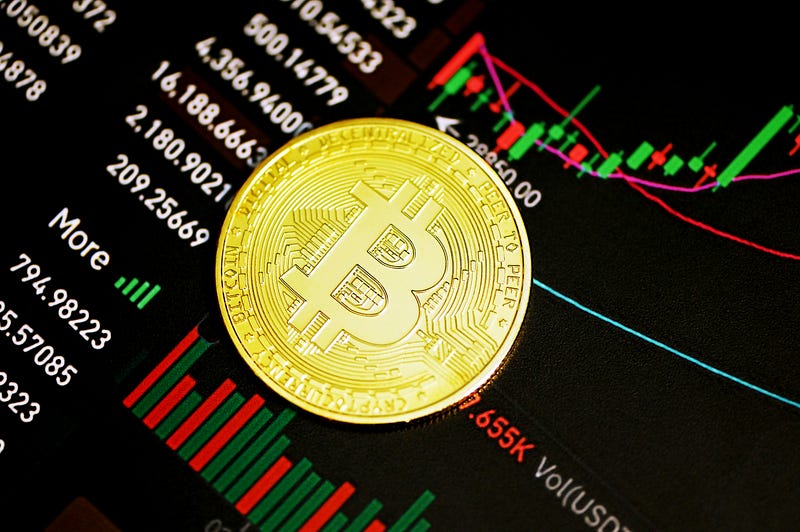
Photo by Kanchanara on Unsplash


Ordinals driving volume uptick

The surge in trading volume can be attributed to OKX’s support for Bitcoin Ordinals NFTs and BRC-20 tokens. Notably, the NFT transaction volume on Bitcoin experienced a substantial increase, reaching $121.8 million between Dec. 10 and Dec. 17.

Unlike traditional NFTs, Ordinals do not rely on smart contracts pointing to a digital asset. Described as digital artifacts by developer Casey Rodarmor, they lack smart contract features, making their trading reliant on decentralized exchanges and wallets.

The Ordinals protocol has been made possible by the Bitcoin Taproot upgrade, which was implemented in November 2021. The upgrade allows digital files to be inscribed on satoshis, the smallest monetary denomination on the Bitcoin network, each with a unique number or ordinal.


Strategic focus on BRC-20

The OKX NFT Marketplace’s strategic focus on the BRC-20 token standard has also played a role in its success. Collaborating with UniSat, a developer of Ordinals wallets, OKX created an indexing mechanism for BRC-20 transactions built on ordinal inscriptions, further solidifying its position in the market.

The Ordinals protocol has not been without controversy, with some, including Adam Back, CEO of Blockstream, criticizing it as a misuse of Bitcoin transaction blockspace. Despite the controversy, Ordinals have gained momentum, contributing to $367 million in sales volume on the Bitcoin network, surpassing Ethereum and Solana.

Ordinals and the BRC-20 standard have generally been a boon for Bitcoin miners, boosting their revenues through increased fees. This incentivizes miners to secure the network. Over 49 million transactions have resulted in over 2,250 BTC in transaction fees. Around 6 p.m. UTC on Monday, bitcoin fees are averaging out at $38.43 per transaction.

Beyond Bitcoin Ordinals, the broader NFT space has seen a resurgence, with the collective volume nearing $1 billion in November. During that month, the average value of NFT transactions experienced a notable 114% increase, rising from $126 to $270. This suggests a willingness among users to engage in higher-value trades compared to previous months.

Speaking with The Block, Nick Ruck, COO of ContentFi Labs, a community-owned Web3 tool suite, had this to say on the development:

“OKX has become the number one NFT marketplace after enabling trading of BTC Ordinals NFTs. Blur and OpenSea have not yet allowed trading of these Bitcoin-based NFTs, so they’ve started to fall behind in terms of volume due to the huge demand of Ordinals.”


More to Read
View All
Web3 & Enterprise·

Sep 21, 2023

Gala Music’s First K-pop NFT Drop Sells Out in Seconds

Gala Music’s First K-pop NFT Drop Sells Out in SecondsWeb3 music streaming platform Gala Music announced on Wednesday that the NFT drop for its first K-pop artist Ferry Blue’s latest single, “Breaking the Rules”, has sold out in just 3.4 seconds.Photo by C D-X on UnsplashFerry Blue’s journey to NFT successFerry Blue is an independent girl group that debuted in September 2021 with their album “Call My Name.” The members — Dozin, Xiho, Hyeyoung, Seul, Seona, and Hyunji — are unaffiliated with any entertainment agency, often working part-time jobs. Their new single, “Breaking The Rules,” which was composed using generative artificial intelligence (AI), was released on Gala Music last Tuesday where it is currently available for streaming. The NFT drop opened for public sale the following day at 5 AM KST, during which a total of 90 NFTs were minted and sold for $99 each.The drop garnered significant attention as it was Gala Music’s first collaboration with a K-pop artist. “Ferry Blue has made a mark not only on our platform but also in the global Web3 market,” Gala Music said. “We look forward to more K-pop artists expanding their presence worldwide through our platform in the future.”Gala Music’s innovative approach to enjoying musicEstablished in February last year, Gala Music has released over 350 songs from 86 artists, including rapper Snoop Dogg and DJ Steve Aoki. The decentralized music platform operates under a Learn-to-Earn (L2E) system, where listeners can stream and collect music tracks and then pair them to a node to share with others. Node operators and track owners can receive tokens for their contribution to the platform.

news
Policy & Regulation·

Oct 11, 2023

Hong Kong Police Issue Warning as Binance Users Lose Funds to Phishing Scam

Hong Kong Police Issue Warning as Binance Users Lose Funds to Phishing ScamHong Kong has witnessed a surge in phishing scams targeting Binance users, prompting local law enforcement to issue a cautionary advisory.Photo by Serey Kim on UnsplashCyberDefender warningThe warning was issued by Hong Kong police via its CyberDefender Facebook page on Monday. Over the past two weeks, at least 11 Binance customers in Hong Kong fell victim to phishing scams, collectively losing over $446,000 (equivalent to HKD 3.5 million). These scams primarily involve fraudulent text messages.According to Hong Kong police, these fraudulent text messages claim to be from Binance and ask users to verify their accounts by clicking on a link provided within the message. On Facebook, the warning stated:“Recently, fraudsters posing as Binance sent text messages claiming that users must click the link in the message to verify their identity details before a deadline, otherwise their account would be deactivated.”Upon clicking the phishing link and entering their login credentials to “verify” their accounts, victims unwittingly grant fraudsters full access to their Binance accounts. This modus operandi mirrors the tactics commonly employed in phishing scams.CZ chimes inBinance CEO Changpeng Zhao (CZ) also joined in the cautionary chorus, issuing a warning to customers on his X account.The crypto sector in Hong Kong has been facing challenges recently, largely related to the recent JPEX fraud case. The losses incurred from the JPEX exchange scandal have swelled to an estimated $180 million, with over 2,300 victims filing complaints with local authorities.The JPEX scandal led to multiple arrests in Hong Kong and prompted authorities to intensify their efforts against illegal crypto activities. The Securities and Futures Commission (SFC) of Hong Kong introduced regulations mandating the licensing of all crypto exchanges operating within its jurisdiction earlier this year.To date, only two exchanges, HashKey and OSL, have secured licenses under this regulatory framework. Numerous other crypto exchanges in Hong Kong have submitted license applications, but Dubai-headquartered JPEX, despite heavily promoting its application for a Hong Kong license, failed to submit an application to the local regulator. In the wake of the JPEX scandal, the SFC published a comprehensive list of companies seeking crypto licenses and expanded its list of suspicious platforms.Cyber security firm Kaspersky found earlier this year that phishing related to crypto trading is on the rise in Asia, particularly in the Philippines. Binance’s CZ has had to issue warnings where phishing is concerned on previous occasions. He did so in July when the founder of decentralized crypto exchange (DEX) Uniswap was hacked.In February of last year, CZ came out again to warn users of a massive SMS-related crypto phishing scam. Back in 2018 a serious attempt was made to compromise the credentials of Binance platform users via phishing techniques.As phishing scams continue to pose a significant threat to crypto users in Hong Kong, and with the aftermath of the JPEX debacle still reverberating through the industry, vigilance and caution remain paramount for participants in the region’s crypto ecosystem.

news
Web3 & Enterprise·

Jul 29, 2025

Grab extends crypto payment options to the Philippines

Grab Holdings, the Singapore-based operator of the Grab super app, has extended its facility for crypto payments to its customer base in the Philippines. The company, which offers ride-hailing, food and grocery delivery and digital payments within a range of services to customers throughout Southeast Asia, introduced the option of crypto payments to service users within its home market of Singapore last year. Photo by Kiko Ferranco on UnsplashAt the time, the company expressed the view that enabling crypto payments “added flexibility and convenience” for platform users, providing them with “a seamless and efficient way to access the company’s wide range of services.” Philippine online news portal Philstar.com reported that Filipino users of the platform can now top up their GrabPay digital wallets with a range of cryptocurrencies, including Bitcoin (BTC) and Ethereum (ETH), as well as U.S. dollar stablecoins USDC and USDT. In Singapore, Grab rolled out the offering in partnership with Triple-A, a company that enables businesses to pay and get paid in digital currencies. Singapore-based Crypto.com also partnered with the firm last year to enable direct crypto payments. Financial inclusionIn extending the service to the Philippines, Grab has again partnered with Triple-A, alongside Philippine crypto exchange platform PDAX. CJ Lacsican, Grab Philippines’ vice president for cities, said that “integrating cryptocurrency as a cash-in option for GrabPay reflects [Grab’s] commitment to advancing financial inclusion in the Philippines.”  She added that the move aims to empower a broader spectrum of Filipinos, particularly those who prefer the convenience of digital currencies and others who have limited access to traditional banking. Triple-A CEO Eric Barbier said that the launch of GrabPay crypto top-ups went well in Singapore, with a fantastic response from Singaporean platform users. Following that rollout, Barbier believes that the Philippines is a market that’s ready for digital currencies. “This is a big step in making digital currencies easier to use in everyday life across Southeast Asia,” he added. Driving crypto adoptionPDAX CEO Nichel Gaba suggested that the Philippines “has one of the largest crypto user bases globally,” adding that through this partnership, accessible use cases are being offered “that will both support the existing crypto community and drive greater adoption of cryptocurrency.”  Grab first pivoted to Web3 with the integration of a Polygon-based crypto wallet in September 2023, with a view towards making crypto more accessible and usable for ordinary people. The super app, which is considered by many to be the “Uber of Southeast Asia,” has 42 million monthly transacting users (MTUs) across Cambodia, Indonesia, Malaysia, Myanmar, the Philippines, Singapore, Thailand and Vietnam.  The development of the Grab Web3 Wallet came about as a consequence of a collaboration with USDC stablecoin issuer Circle. As part of a strategic partnership, Circle’s Web3 services platform was integrated into the Grab app. More recently, Grab partnered with NATIX Network, a Solana ecosystem decentralized physical infrastructure network (DePIN) project, in an effort to collaborate on autonomous driving technology and mapping. 

news
Loading