Top

Bit Origin makes first purchase following DOGE treasury announcement

Markets·July 22, 2025, 11:46 PM

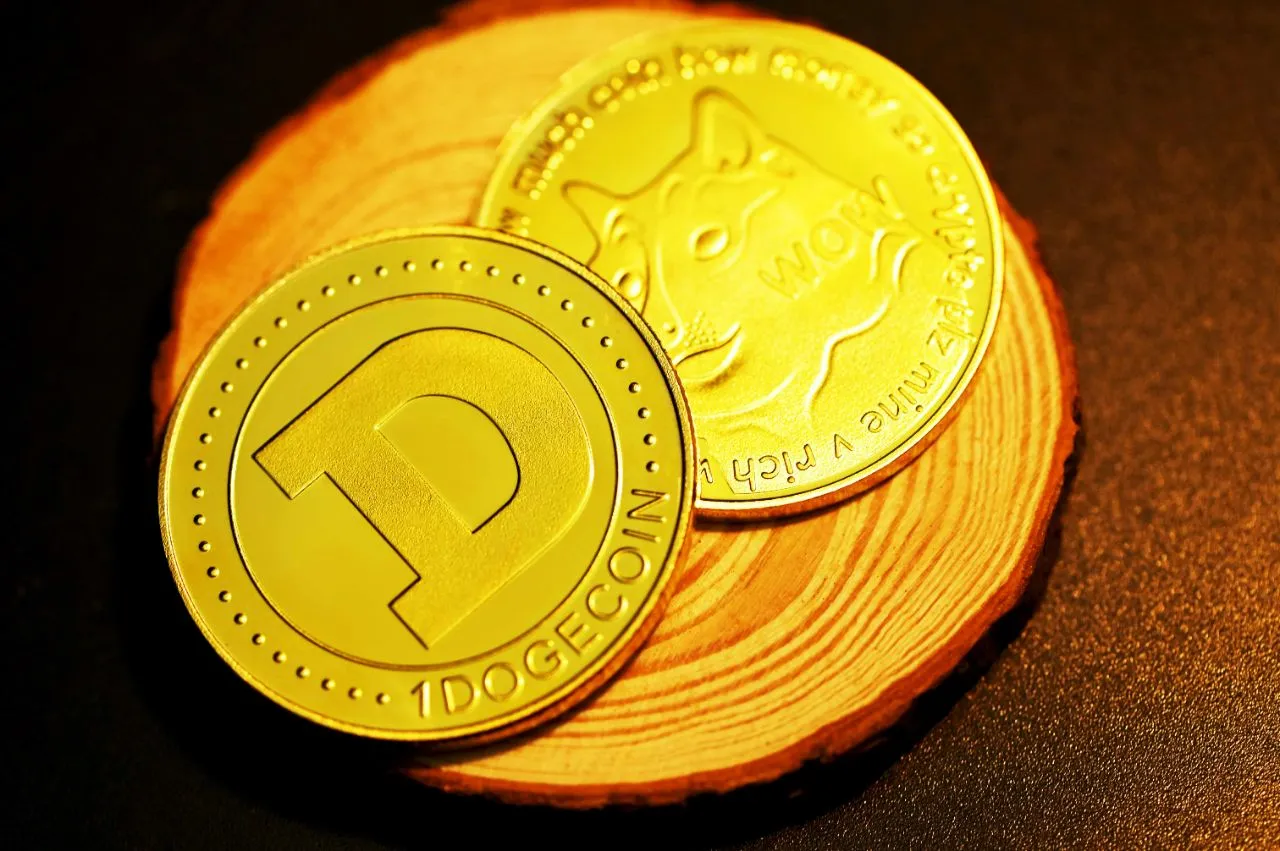
Bit Origin, the Nasdaq-listed (BTOG) pork processor turned crypto mining infrastructure firm, has acquired 40.5 million Dogecoin (DOGE), the company’s first purchase of the world’s largest memecoin by market cap since it announced that it was establishing a Dogecoin treasury.


In a press release published on July 17, the Singapore-headquartered company with operations in the United States, Canada and China, set out that it would become the “first publicly listed company on a major US exchange to accumulate Dogecoin as a core asset.”
https://asset.coinness.com/en/news/b52ff0c12870ae865a754515c4927a2b.webp
Photo by Kanchanara on Unsplash

$500 million treasury funding

The firm outlined that it had entered into agreements with accredited investors, implicating the sale of $400 million in Class A ordinary shares in the company. An additional $100 million unlocked via convertible debt brought funding for its Dogecoin treasury to $500 million.


Jinghai Jiang, Bit Origin’s CEO and Chairman, asserted that “what started as a joke has evolved into a globally liquid asset with a payments utility.” Jiang asserted that very few digital assets match the settlement speed and scale of community that Dogecoin offers.


X Money potential

In particular, he singled out the potential use of DOGE for X Money, a new payment system that is in the process of being established by Elon Musk’s X social media platform. Alongside many proponents of the cryptocurrency, Bit Origin is hoping that Musk will implement the use of DOGE to power X money. Jiang added:

“In an age of broken institutions, Doge embodies a shared culture of optimism and resilience that transcends existing political and financial systems.”


On social media, the company outlined that it believes in “Dogecoin not just as a meme, but as a future payments backbone.”


Having utilized the services of Chardan Capital Markets as a placement agent, the company has already completed an initial closing of $15 million under the convertible debt facility that has been established. 


On July 21, Bit Origin published another press release, detailing the acquisition of 40,543,745 DOGE with the memecoin holding having been purchased at an average acquisition cost of $0.2466 per DOGE. 


Nearing inflection point for payments

Commenting on the development, Jiang stated:

“From our experience in mining, we understand the tradeoffs that define proof-of-work systems. We see Dogecoin’s utility potential for micropayments nearing an inflection point, driven by renewed developer activity and broader institutional interest in tokenization.”


Dogecoin emerged in December 2013 having been developed by Jackson Palmer and Billy Markus as a joke. The project borrowed much of its code from Bitcoin. Despite having originated as a joke, the project has developed a sizeable community. The digital asset currently holds a market capitalization of $40.5 billion, according to CoinMarketCap data. 


Bit Origin rebranded from China Xiangtai Food Co., Ltd. in April 2022. Up until that point, it had been involved in the pork processing business. The company pivoted to crypto mining, partnering with MineOne on a Wyoming mining facility in the United States. The facility was ordered to be shut down by the former Biden administration on the basis of it being a national security risk to have a Chinese project located within a mile of a U.S. Air Force base that houses nuclear intercontinental ballistic missiles.


More to Read
View All
Policy & Regulation·

Oct 17, 2023

Former PBOC Governor: CBDC Development Must Focus on Security

Former PBOC Governor: CBDC Development Must Focus on SecurityZhou Xiaochuan, a former governor of the People’s Bank of China (PBOC), has issued a call for China to prioritize security and vigilance against potential misuse as it advances the development of its central bank digital currency (CBDC), known as the e-CNY.Photo by FLY:D on UnsplashSafeguarding the CBDC ecosystemXiaochuan made this appeal during the Digital Finance Forum, which was held in Beijing last week. He emphasized the necessity of safeguarding the CBDC ecosystem.The PBOC has been actively engaged in trials and innovations related to the e-CNY, even rolling out a pilot application in January 2022. The digital yuan’s journey, however, comes with significant responsibilities, particularly in terms of security and prevention of misuse.Thwarting potential abuseZhou acknowledged that in the realm of finance, security has always been a paramount concern, and this sentiment couldn’t be more accurate when applied to the realm of digital currency. He stressed that, as technology costs continue to decline and systems become more user-friendly, the risks associated with misuse also decrease. In this context, it becomes imperative for China to adopt stringent security measures and robust regulatory frameworks to thwart any potential abuse.Zhou underscored the illicit utilization of cryptocurrencies and stablecoins in facilitating various activities, including arms trafficking and drug trade. He pointed out that addressing these issues necessitates a concentrated effort, making it clear that a proactive approach to prevention is essential.The development of the e-CNY has seen impressive progress, with pilot projects initiated in 2019 and later expanded to 26 locations across 17 provincial-level cities and regions, including major metropolitan areas like Beijing, Shanghai, Shenzhen, and Suzhou.Last month another official from the PBOC spoke to the need to make the e-CNY accessible in all retail payment scenarios within China at a trade forum in Beijing. Digital yuan use is also being broadened to facilitate its availability in the special Chinese administrative area of Hong Kong.Proposing two-tier systemZhou advocated for a two-tier system in the operation of e-CNY, a structure already in place. The People’s Bank of China presides over the first tier, responsible for issuance and regulation, while the second tier comprises commercial institutions such as commercial banks, internet platforms, and telecommunications operators.This dual-layered design promotes dynamic evolution within the digital currency landscape, enhancing service quality and fostering innovation through healthy competition. Zhou stressed the importance of exploring cross-border transactions, an area that entails both technological advancements and policy orientation.Hong Kong has actively embraced e-CNY for cross-border payments, advancing into the second phase of technical testing and preparing to incorporate it into its predominantly local payment system.On a related note, Lu Lei, the deputy administrator of the State Administration of Foreign Exchange (SAFE), highlighted the programmable features of CBDCs as tools for enhancing monetary policy effectiveness.While current CBDCs are positioned as M0 currencies, strictly currency in circulation plus commercial bank reserve balances, he proposed that central banks could evolve them into M2 currencies. M2 is a measure of money supply that incorporates checking deposits and other forms of deposits that are readily convertible to cash, alongside cash itself.

news
Markets·

Aug 13, 2024

OSL Executive: Crypto ETFs have challenge to overcome in Hong Kong

At the Foresight 2024 Hong Kong Summit on Aug. 11, Gary Tiu, director and head of regulatory affairs for OSL, a crypto market custodian, exchange and prime brokerage, outlined in a panel discussion that the crypto exchange-traded fund (ETF) market in the Chinese autonomous territory is challenged insofar as it lacks market incentives.Photo by Cecelia Chang on UnsplashThe intermediary problemTiu’s company hosted the event, alongside Foresight News and crypto publication The Block, who reported on Tiu’s comments. The OSL executive said that when it comes to funds and structured products in Hong Kong, there’s a “very rich layer of intermediaries— brokers, banks, private banks, retail banks, etc.” involved. Tiu explained that they make a lot of money from the distribution of such products, resulting in unlisted products being marketed far more effectively by comparison with listed products. It’s against that backdrop of misaligned incentives that Tiu identifies challenges for crypto ETFs on the public markets in Hong Kong. He stated: “So I think the incentive system in Hong Kong is one of the reasons why ETFs do have a bit of a hard time growing as a financial instrument.” In the case of ETFs, the OSL executive explained that equity brokers take just a few basis points in commission, only about 1-2% of what they make on the sale of structured products. Bias against Bitcoin and EtherTiu is also of the belief that cryptocurrencies like Bitcoin and Ether have a reputational problem among Hong Kong’s investment community, stating: “I think there is still a bit of a bias in the eyes of the regulators and also in the eyes of the financial institutions, that somehow bitcoin ETF is just this unique class of risk that you need to be extra cautious about.” Chen Zhao, who heads up the digital assets section of Hong Kong-based independent financial advisory firm Fosun Wealth, chimed in with his own concerns. According to Zhao, the crypto ETF products currently marketed in Hong Kong are lacking in terms of the depth of dealers and brokers offering the products. Zhao explained that there are three main types of market participant active on the Hong Kong markets, namely western institutions, Hong Kong-based institutions and their counterparts from mainland China.  Zhao stated: “Chinese brokers and dealers, they’re not allowed or they choose not to deal with the product, and for the western financial institutions, they don’t have the necessity of dealing the products because they acquire more fees and incentives, and have easier access to the U.S. ETFs.” While progress is far more modest by comparison with the U.S. market, the Hong Kong crypto ETF market continues to develop, with spot Bitcoin and Ethereum ETFs setting a record trading volume last week. In the same week, Mox Bank, a subsidiary of British banking multinational Standard Chartered, launched trading services relative to spot Bitcoin and Ethereum ETF products in Hong Kong. Last month, OSL CEO Patrick Pan, anticipated that an Ethereum ETF product that incorporated staking would launch in Hong Kong within six months. Many commentators have suggested that institutional interest in Ethereum ETFs will begin in earnest once a yield-producing staking product hits the market.

news
Policy & Regulation·

Apr 13, 2023

Hong Kong Bank to Act as Settlement Bank for Crypto Firms

Hong Kong Bank to Act as Settlement Bank for Crypto FirmsZA Bank, Hong Kong’s largest virtual bank, is looking to become the go-to bank for crypto startups. The online bank has been given permission to serve as the settlement bank for regulated Web3 companies in the city. This development was announced at Hong Kong’s Web3 Festival, an event supported by the local government and attended by crypto startups and institutions from across Asia.©Pexels/Frank BarningHashKey and OSL collaborationZA Bank is expected to facilitate crypto-fiat conversions with two licensed exchanges in Hong Kong, HashKey and OSL, where customers can swap crypto into fiat currencies. ZA Bank will also offer basic banking services to local Web3 startups, a category that is currently underserved by traditional financial institutions.ZA Bank is focusing on assisting local Web3 startups and small-medium enterprises (SMEs).The bank linked up to the city’s company registry data, allowing for minimal information input and cross-checking. According to Devon Sin, alternate chief executive of ZA Bank, the bank currently conducts AML scrutiny against the usual checklists to satisfy the regulatory requirements. No AML issues have emerged during the recent months of work.Competing for global crypto businessHong Kong is trying to establish itself as a crypto-friendly alternative to other hubs, such as the US and Singapore, and a sandbox for Web3 businesses from China, where crypto trading is illegal. The city is revamping its digital assets regulatory framework, with plans to legalize retail trading of major cryptocurrencies like Bitcoin and Ether. Ronald Lu, CEO of ZA Bank, said that ZA Bank’s online account opening for Web3 startups is a major step forward in integrating traditional banking services with the Web3 world.According to Lu, ZA Bank will act as a settlement bank for clients to allow withdrawals in Hong Kong, China, and US currencies after they deposit crypto tokens with exchanges. The business model is already operational through HashKey and OSL, the only two licensed crypto exchanges in Hong Kong. The bank will provide the same service for other exchanges as they become licensed.HK China’s crypto “trial run”Hong Kong is opening up to the beleaguered sector in a move that aims to revive its status as a financial center following years of COVID restrictions and political upheaval. However, access to banking has been a major hurdle for the city’s ambitions. The city’s banking and securities regulators are hosting a round-table for crypto players and bankers to share experiences and perspectives on banking services later this month.Many have speculated about a softening stance on cryptocurrency by the Chinese authorities. However, it’s more likely that they continue with strict regulation and control relative to crypto in mainland China while happy to monitor a more open approach to it within Hong Kong. Crypto analyst Myles Deutscher likens the approach to a “trial run” that is being monitored by China.Launched in March 2020, ZA Bank is one of Hong Kong’s eight licensed virtual banks and had the most net assets as of last year, despite remaining unprofitable. The virtual lender doesn’t expect it will need to boost its headcount to handle the crypto client push. Although the revenue model is still unclear, Lu said that more clients, more deposits, and more business opportunities are always great for the bank. The lender doesn’t offer services for clients from mainland China, given the restrictions in place there.

news
Loading