Top

Startale Group secures another $13M from Sony Innovation Fund

Policy & Regulation·January 30, 2026, 7:56 AM

Startale Group, a Japan-based Web3 solutions provider, has secured an additional $13 million investment from the Sony Innovation Fund, which is financed by Sony Group and focuses on backing venture companies.


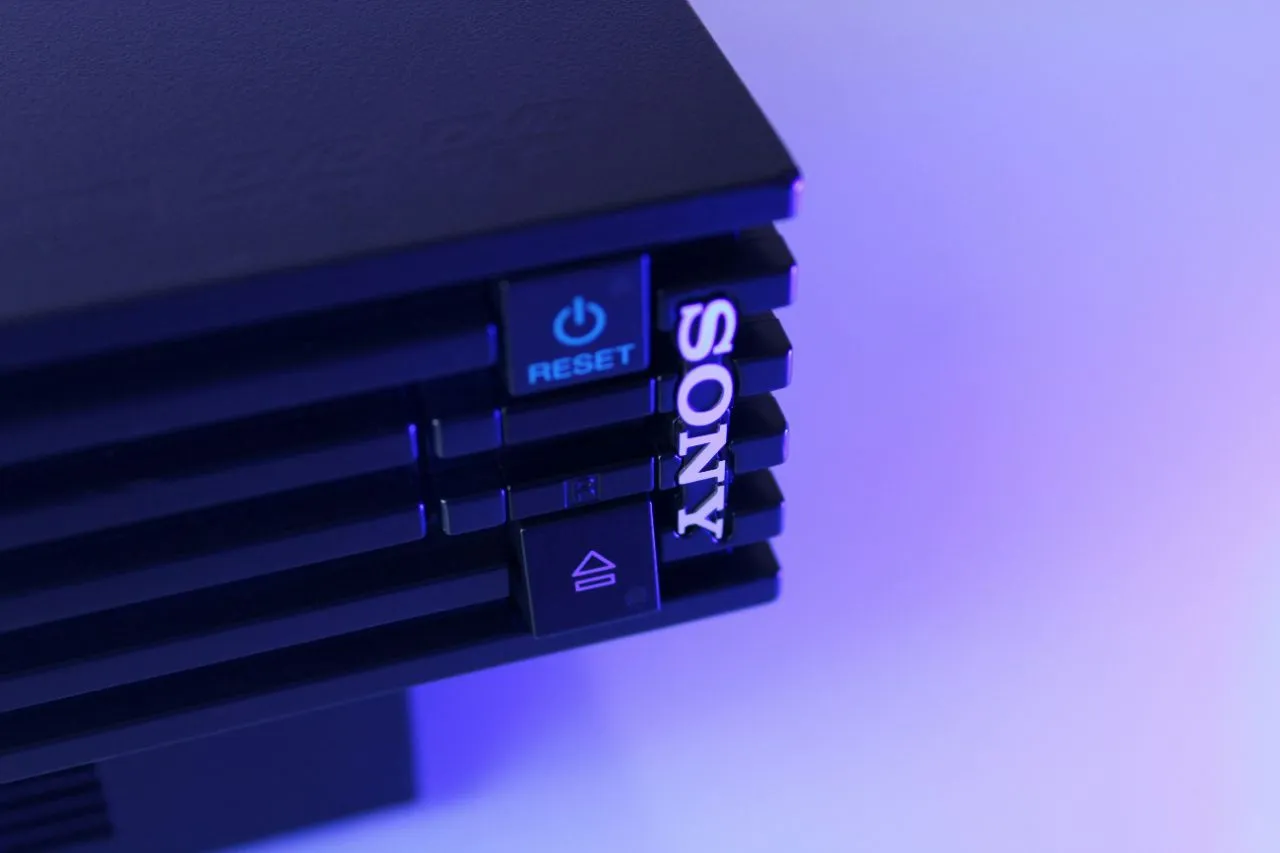
In a press release, Startale said the new funding would deepen its ongoing collaboration with Sony, with a focus on Soneium—an Ethereum layer-2 blockchain built using Optimism’s Superchain technology. Soneium is positioned as the flagship project of Sony Block Solutions Labs, a joint venture between Startale and Sony Group.
https://asset.coinness.com/en/news/3d987933f526c01b94d33605b86e2c65.webp
Photo by Nikita Kostrykin on Unsplash

Since launching in January 2025, Soneium has gained traction in the Web3 sector, according to figures cited by the company. Startale said the network has processed more than 500 million transactions over the past year, supports 5.4 million active wallets, and hosts over 250 decentralized applications. 


The collaboration is intended to explore how blockchain technology could be applied to intellectual property management, creator monetization, and fan engagement, areas where Sony has an established global presence.


Startale launches stablecoin on Soneium

The ecosystem expanded further this month with the integration of Startale USD (USDSC), a stablecoin built on infrastructure provider M0 and backed by short-term U.S. Treasuries, according to Startale. The token is now live on Soneium, whose ecosystem includes partners such as Aave, Uniswap, and Chainlink. 


Users can purchase USDSC through the Startale App, the company said, and use it for in-app trading, yield generation through deposits, and liquidity provision in the Startale USD pool on Uniswap in exchange for STAR Points.


Startale’s push comes as more established Japanese companies explore blockchain-based initiatives at home and abroad. Matsumoto, a Fukuoka-headquartered printing company founded in 1932, has outlined a long-term concept to create a digital asset treasury for students, under which student activities would be recorded on the Solana blockchain. The company has said the records would not be used for ranking or evaluation, but instead to encourage learning and support future career opportunities.


The company has also described a broader ecosystem in which business profits could be returned to children and their families through a portfolio of cryptocurrencies, positioning the concept as both an educational incentive and a potential source of financial support.


Nomura’s crypto arm seeks U.S. bank charter

Japanese firms are also seeking to expand their crypto operations overseas. Laser Digital, the crypto arm of Nomura, has applied to the U.S. Office of the Comptroller of the Currency for a national trust bank charter, according to The Block


If approved, the charter would allow the firm to operate nationwide without obtaining custody licenses on a state-by-state basis, though it would not permit the acceptance of retail deposits. The company is also expected to offer spot crypto trading.


Approval would place Nomura alongside firms such as Circle, Ripple, and BitGo, which have received conditional approval from the OCC to operate as federally regulated trust banks, subject to final requirements.

 

More to Read
View All
Policy & Regulation·

Aug 07, 2023

The Need to Distinguish Between Security and Non-Security Virtual Assets

The Need to Distinguish Between Security and Non-Security Virtual AssetsWith the recent enactment of the Virtual Asset User Protection Bill in South Korea, there is a need to lay out criteria for determining whether virtual assets qualify as securities, says Kim Ja-bong, a senior research fellow at the Korea Institute of Finance, in his report titled “The Implications of Determining Which Virtual Assets Constitute Securities and Investor Protection” released on Saturday.Photo by Shubham Dhage on UnsplashThe implications of the Virtual Asset User Protection ActThe Virtual Asset User Protection Act — which will take effect in July of next year — aims to protect customer assets, establish regulations against unfair trading practices, and enforce penalties. Notably, it will target virtual assets that are not securities, deeming it necessary for regulators to determine if virtual assets qualify as securities or not in order to enforce the bill. Assets with characteristics of securities will fall under the jurisdiction of the Capital Markets Act.Therefore, if the Virtual Asset User Protection Act does not provide sufficient investor protection, issuers may be incentivized to issue non-security assets rather than security assets to avoid the regulations of the Capital Markets Act. This further necessitates the act of distinguishing between virtual assets that are securities versus those that are not.Determining if a virtual asset is a security or notThere are two approaches to do this, according to Kim: the passive approach, which avoids considering a virtual asset as a security whenever possible, and the active approach, which treats a virtual asset as a security whenever applicable.He argues that it is better to focus on whether an investment contract qualifies as a security if it is considered an investment contract, rather than simply selecting a specific approach.Furthermore, the nature of virtual assets renders them unbound by national borders, so it is necessary to establish assessment criteria that correspond with international standards, such as those used in the US and Europe.This is especially important because if the criteria differ from international standards, there is a risk of domestic investors suffering damages due to an issuer’s pursuit of regulatory arbitrage between countries.Equitable recognition and potential for security tokensAccording to Kim, the importance of determining whether virtual assets are securities lies in ensuring that security tokens receive the same recognition and trading treatment as traditional securities such as stocks. With such a measure, security token offerings can serve as an efficient and reliable method for raising funds. Although there may be concerns that such a regulation may hinder the development of virtual assets, it may well be an opportunity for security tokens to be qualified and trusted as high-quality financial instruments just like existing securities, Kim claims.Even for virtual assets that are not considered securities, there are many types of assets that are financial in nature, such as e-money tokens — therefore, it is necessary to actively protect investors in non-security virtual assets through financial regulations such as reinforcing disclosure obligations, which is being done in the EU through the Markets in Crypto-Assets Regulation (MiCA).Empowering regulators for enhanced investor protection and market integrityKim underscored that investor protection and healthy growth of the virtual asset market are made possible mainly through expanding regulators’ authority to protect economic interests and prevent damages. The author also suggested institutional reforms that grant regulators substantial authority, which would enhance their ability to protect investors effectively and provide compensation for damages.He added that regulators should also have the authority to enforce liability for damages or impose civil penalties for unfair trading practices conducted using classified information.

news
Web3 & Enterprise·

Sep 14, 2023

Emurgo Looks to Fill in Missing Cardano Ecosystem Components

Emurgo Looks to Fill in Missing Cardano Ecosystem ComponentsEmurgo, the Singapore-based commercial arm and a founding entity of the Cardano blockchain network, plans on working towards filling in the gaps relative to needed Cardano ecosystem components.So said Emurgo Founder and CEO Ken Kodama, in a recent discussion with Andrew Fenton, the Editor of Cointelegraph’s magazine. Emurgo is one of the three entities governing Cardano and has taken on the task of addressing what it perceives as “missing” components in the Cardano blockchain when compared to other leading blockchains.Photo by Traxer on UnsplashAddressing 21 categoriesKodama outlined a strategic shift in Emurgo’s approach, describing it as a transition to a venture studio model to address 21 specific categories that he and his team believe require attention. According to Kodama, the solutions to these gaps will either be built by Emurgo themselves or sourced through investments, hackathons, or grants to incentivize developers within the Cardano community. Kodama stated: “So, that’s what we need to focus on, shifting from where we are today into a venture studio model.”One area that the Emurgo CEO is looking to address is the need to introduce layer 2 solutions to enhance Cardano’s scalability. While other blockchains have seen significant development in this area, Kodama feels that Cardano needs to catch up. Therefore, it’s a priority for Emurgo to cultivate a similar environment within the Cardano network.Along those lines, Emurgo is exploring zero-knowledge rollups and optimistic rollups, indicating the firm’s commitment to exploring and investing in what is the latest cutting-edge blockchain technology. To this end, they’ve already organized hackathons centered around these themes.Developer proficiency issueThe Emurgo boss feels that one of these 21 shortfalls is more pressing than the rest. Kodama acknowledged that the barrier of having developers proficient in more obscure programming languages like Haskell and Plutus is a difficulty. He believes the current pool of developers with expertise in these languages is insufficient. To address this, Emurgo is keen to promote Aiken, a toolkit and a new programming language designed to facilitate the development of smart contracts on the Cardano blockchain.Another one of the highlighted gaps is the absence of a robust decentralized identity (DID) system for enterprise adoption within the Cardano ecosystem. Kodama voiced his concern in this respect, stating: “We don’t see that much DID application being built on Cardano. So, that’s the first gap, or primary gap that we need to fill in.”“Aiken and other programming language applicability are quite important to broaden the number of builders able to build on top of Cardano. We have been educating builders to code in Haskell and Plutus. We had more than 2,000 graduates. However, that’s not really enough,” Kodama added.Emurgo has high hopes for Aiken and similar programming languages that can be integrated into Cardano, with the aim of diversifying the pool of developers capable of creating smart contracts on the platform, using a variety of programming languages.

news
Web3 & Enterprise·

Aug 28, 2023

BC Card Accelerates Launch of NFT Guarantees for Secondhand Luxury Goods Trades

BC Card Accelerates Launch of NFT Guarantees for Secondhand Luxury Goods TradesSouth Korean credit card issuer BC Card announced on Sunday that it has applied for two domestic patents for blockchain technology that will be used to issue digital guarantees for purchases of luxury goods, such as bags, watches, and more. These guarantees will be minted as non-fungible tokens (NFTs) that can later be accessed by buyers or sellers during secondhand trades, which often pose risks and uncertainty regarding product quality or authenticity.Enhancing trust and securityThese NFTs will be based on paper or digital payment receipts — which contain detailed information on purchase receipts, such as product names, payment amounts, purchase dates, and shop information — that a customer receives after purchasing goods at stores that accept BC cards.Photo by Towfiqu barbhuiya on UnsplashBecause the guarantees are stored on a blockchain, they are almost impossible to tamper with. BC Card anticipates that this service will offer advantages like boosted safety, convenience, and security for both buyers and sellers who wish to partake in transactions of secondhand luxury goods.In addition, the data distributed across servers eliminates concerns about data loss. To achieve this, BC Card plans to collaborate with telecommunications provider KT and BC’s subsidiary, VP, which specializes in electronic payment services.“Through this patent application, we expect to significantly enhance the trustworthiness of secondhand luxury goods transactions in Korea,” said Kwon Sun-moo, Director of the New Financial Research division at BC Card. “After the patents are registered, we plan to collaborate with companies under KT Group like KT Alpha as well as other distribution companies in a business-to-business-to-consumer (B2B2C) system.”Access through a digital walletCustomers can take a photo of a receipt with their phones or download it, then upload it to BC Card’s financial platform, Paybook. The photo is then converted into an image that is automatically stored as an NFT on the blockchain network.Once a seller registers a payment receipt for a product that they bought, then the subsequent NFT guarantee can be accessed or sent through their BC Card digital wallet — a feature that the company plans to launch soon — at any time during future transactions. This offers a convenient solution to the possibility of losing receipts, which traditionally requires manually downloading them again from the card company’s website or app.Revolutionizing secondhand tradeThis new technology could play a significant role in the booming resell and secondhand goods trading market, the company said. According to data from the Korea Internet & Security Agency last year, the domestic secondhand market has grown from a scale of KRW 4 trillion in 2008 to KRW 24 trillion in 2021 and is projected to exceed KRW 30 trillion this year.“Through the registration of payment receipts, we can analyze consumption patterns and even suggest improvements in spending habits to our customers,” Director Kwon highlighted.BC Card is also considering offering luxury appraisal and authentication services along with the future launch of the NFT service.

news
Loading