Live Feed
Today, March 2, 2026
11:07
Arthur Hayes has argued that a prolonged military intervention in Iran by the U.S. and Israel would likely compel the Fed to ease its monetary policy, potentially serving as a strong bullish catalyst for Bitcoin (BTC), DL News reported. He stated that U.S. military involvement in the Middle East has historically led to fiscal expansion and an increased money supply. Citing the rate cuts that followed the Gulf War and the Sept. 11 attacks, Hayes stressed that the solution to war has historically been cheaper and more abundant money. He added that the right time to buy BTC is when the Fed either cuts interest rates or expands liquidity. Currently, BTC is trading at around $66,000, a level approximately 50% below its high from October of last year.
11:00
U.S. stock futures are trading lower in the pre-market on March 2, according to CoinDesk. Futures for the S&P 500, Nasdaq 100, and Dow Jones are all showing weakness, while recently surging oil and gold prices have retreated from their highs. The outlet reported that commodity prices, which had jumped amid geopolitical tensions, are now undergoing a correction as traders take profits. Despite this, stock futures remain under pressure as investors maintain a wait-and-see approach.
10:33
Cointelegraph has outlined five key points to watch in the Bitcoin market this week.
- BTC avoids panic selling amid Iran conflict, defends mid-$60,000s.
- A bearish target of $45,000 for BTC has re-emerged.
- Analysis spreads that the Iran situation is not a 'World War III' scenario, with a low probability of all-out war.
- Oil price volatility and U.S. inflation are highlighted as variables creating headwinds for risk assets.
- BTC ETF flows show signs of reversal, with recent signals indicating a shift to net inflows.
10:09
Concerns are mounting over macroeconomic pressure on Bitcoin (BTC) as rising tensions in the Strait of Hormuz could lead to oil price instability over the next four weeks, BeInCrypto reported. Market observers believe a surge in oil prices could fuel inflation expectations, potentially delaying the Federal Reserve's interest rate cuts and weighing on risk assets. This could create a chain reaction: rising oil prices lead to renewed inflationary pressure, which dampens rate cut expectations, pushes up government bond yields, and ultimately reduces market liquidity. In such a scenario, Bitcoin's volatility could increase due to its nature as a high-beta liquidity asset. Analysts also note that given Bitcoin's recent high correlation with risk assets, a sharp rise in bond yields could accelerate the liquidation of leveraged positions.
09:53
The Hong Kong Monetary Authority (HKMA) has signed a Memorandum of Understanding (MoU) with Shanghai authorities to build a blockchain-based platform connecting cross-border cargo data with trade finance, CoinDesk reported. The collaboration, part of the HKMA's 'Project Ensemble' framework, will explore linking electronic bills of lading (e-B/L) and trade data, and integrating with Hong Kong's Commercial Data Interchange (CDI) and the CargoX system. Authorities aim to reduce paper-based procedures and improve efficiency in the cargo trade finance market, estimated to be worth $1.5 trillion annually.
09:46
An analysis from CryptoQuant contributor Moreno suggests that short-term Bitcoin holders are not panic selling, despite escalating geopolitical risks related to Iran. Moreno pointed out that event-sensitive short-term holders have shown little reaction to the recent tensions. While BTC saw a decline in mid-February, temporarily testing the $63,000-$64,000 range, there have been no clear signs of sharp stop-loss liquidations or fear-driven selling. According to Moreno, this behavior contrasts with previous risk scenarios where short-term holders typically reacted with immediate sell-offs. He suggested that the delayed response may be due to market fatigue rather than an absence of panic. However, Moreno cautioned that this is not an all-clear signal and that a sharp directional shift could occur if new risk factors emerge.
09:37
A consortium of 12 major European banks, including ING, UniCredit, and BBVA, is preparing to launch a euro-pegged stablecoin in the second half of 2026, CoinDesk reported, citing Spanish media outlet Cinco Días. The consortium, known as Qivalis, is reportedly in discussions with cryptocurrency exchanges and liquidity providers regarding the listing and distribution of the new asset. Qivalis is continuing talks with both European and global exchanges, and participating banks will also be able to distribute the stablecoin through their own channels. The stablecoin is designed to be 100% backed by reserves, with at least 40% held in bank deposits and the remainder in short-term eurozone government bonds. It will also support 24-hour redemptions. The initiative aims to provide a European alternative to dollar-based stablecoins that complies with the EU's Markets in Crypto-Assets (MiCA) regulation.
09:12
Aave Labs' "Aave Will Win" governance proposal has passed its initial Temp Check snapshot vote with 52.58% in favor and 42% against.
The proposal introduces a structure to direct 100% of the revenue from products developed by Aave Labs to the DAO treasury. It also includes a provision for up to $42.5 million in stablecoins and 75,000 AAVE tokens to support the development team.
Following the vote, the proposal will advance to the ARFC (Request for Final Comments) stage for further discussion and potential amendments before a final on-chain vote (AIP).
According to CoinMarketCap, AAVE is currently trading at $114.36, down 0.63%.
08:12
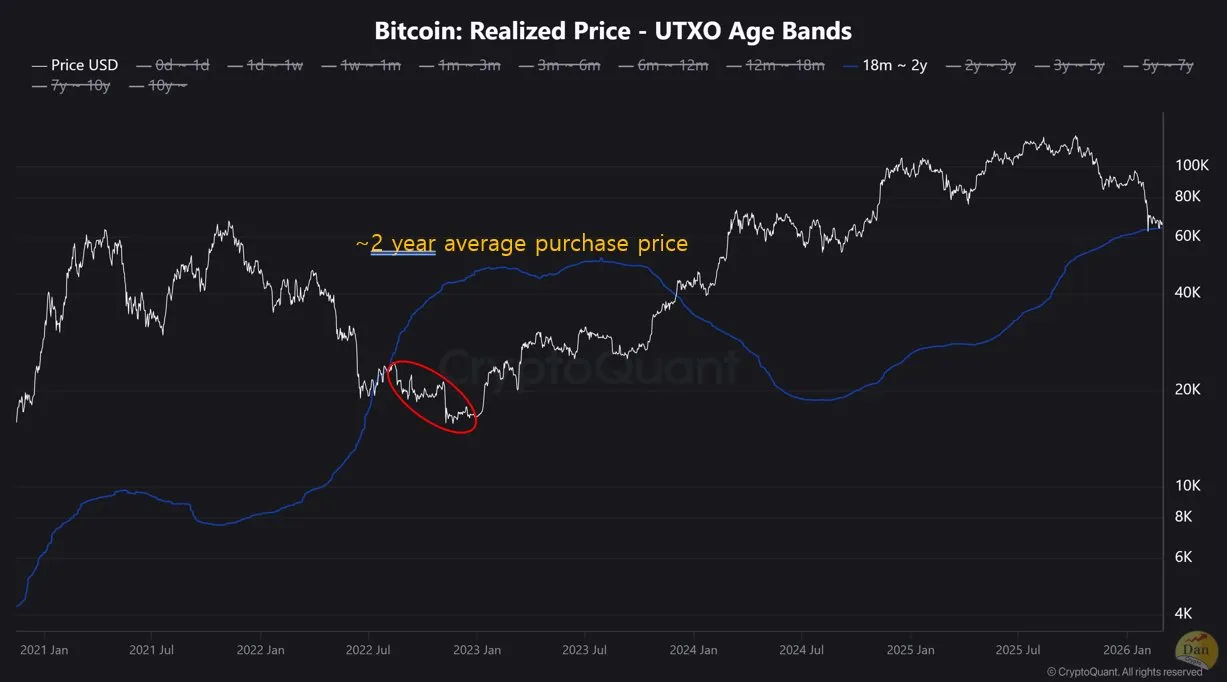
According to on-chain data, the majority of investors who purchased Bitcoin within the last two years are currently at a loss. On-chain analyst Crypto Dan noted that in investment markets, a sharp decline often follows when most people see significant profits, while a bull market frequently starts in the opposite scenario. He added that if the price of Bitcoin falls below $60,000, most investors will be at a loss. However, Dan suggested that this could be an opportunity for investors to be aggressive, concluding that it is crucial for individuals to establish their own clear criteria in such a market, as those without a defined strategy will hesitate to act.
07:38
The spot price of gold has once again hit a new all-time high, surpassing $5,400 per ounce. According to GoldPrice, the precious metal is currently trading at $5,406.2 per ounce, up 2.43% from yesterday.
07:33
South Korea's National Tax Service (NTS) had 6.9 billion won (about $5.2 million) in seized crypto assets stolen on two separate occasions, the Chosun Ilbo reported. The initial thief reportedly returned the assets after a self-confession, claiming the act was driven by curiosity. However, just two hours after the funds were restored, they were drained again. The second theft was carried out by a different individual who used a mnemonic code exposed in a press release the NTS itself had distributed on March 1. In that statement, the agency admitted the initial incident was "inexcusably the NTS's fault" and pledged to strengthen security. The second breach, occurring on the same day as the apology, has drawn criticism over the agency's apparent lack of security awareness.
07:28
BitMEX co-founder Arthur Hayes has an estimated net worth of at least $200 million, according to an analysis by blockchain platform Arkham (ARKM). Hayes, who co-founded the crypto derivatives exchange in November 2014, was instrumental in designing the perpetual swap contract, now an industry standard. Arkham noted that while his confirmed on-chain assets total around $42 million, his total net worth is likely between $200 million and $350 million when factoring in his stakes in BitMEX, his family office Maelstrom, and his Ethena (ENA) holdings. The platform added that Hayes is also known to hold significant amounts of Bitcoin and Ethereum, noting the possibility of additional undiscovered wallets.
07:19
Cardano (ADA) founder Charles Hoskinson said in a recent interview that the best days for the cryptocurrency market are yet to come. According to The Crypto Basic, he stated on a podcast hosted by Wendy O that the market's long-term growth trajectory remains intact. Hoskinson added that while recent price declines and geopolitical uncertainty have dampened investor sentiment, he remains optimistic about the crypto market. He also noted that Cardano's upcoming Ouroboros Leios upgrade will help solve the blockchain trilemma.
07:05
According to CoinNess market monitoring, BTC has fallen below $66,000. BTC is trading at $65,968.22 on the Binance USDT market.
06:42
The advancement of artificial intelligence could be a positive catalyst for Bitcoin's price if it disrupts the labor market and prompts central banks to ease monetary policy, according to a new analysis. In a recent report, Greg Cipolaro, Head of Research at cryptocurrency services firm NYDIG, explained that AI is likely to become a general-purpose technology similar to electricity, Cointelegraph reported. He argued that the macroeconomic effects of AI on employment, economic growth, and risk appetite will consequently influence Bitcoin. Cipolaro added that if AI's growth is coupled with expanded liquidity and stable real interest rates, it could foster a favorable market environment for the cryptocurrency.
06:05
BTC perp long/short ratios on top exchanges by open interest
The following are the 24-hour long/short ratios for BTC perpetual futures on the world’s three largest crypto futures exchanges by open interest:
Overall: 49.59% long, 50.41% short
- Binance: 49.71% long, 50.29% short
- OKX: 48.43% long, 51.57% short
- Bybit: 48.82% long, 51.18% short
06:02
U.S.-listed spot Bitcoin and Ethereum (ETH) exchange-traded funds (ETFs) have experienced their fourth consecutive month of net outflows, CoinDesk reported. Citing data from SoSoValue, the report noted that spot Bitcoin ETFs saw $6.39 billion in outflows over the past four months, marking the longest streak of monthly net outflows since their launch in January 2024. During the same period, spot ETH ETFs recorded $2.76 billion in outflows. CoinDesk added that these outflows suggest a sharp decline in institutional investor interest in digital assets, a sentiment reflected in the price drops of both tokens.
05:40
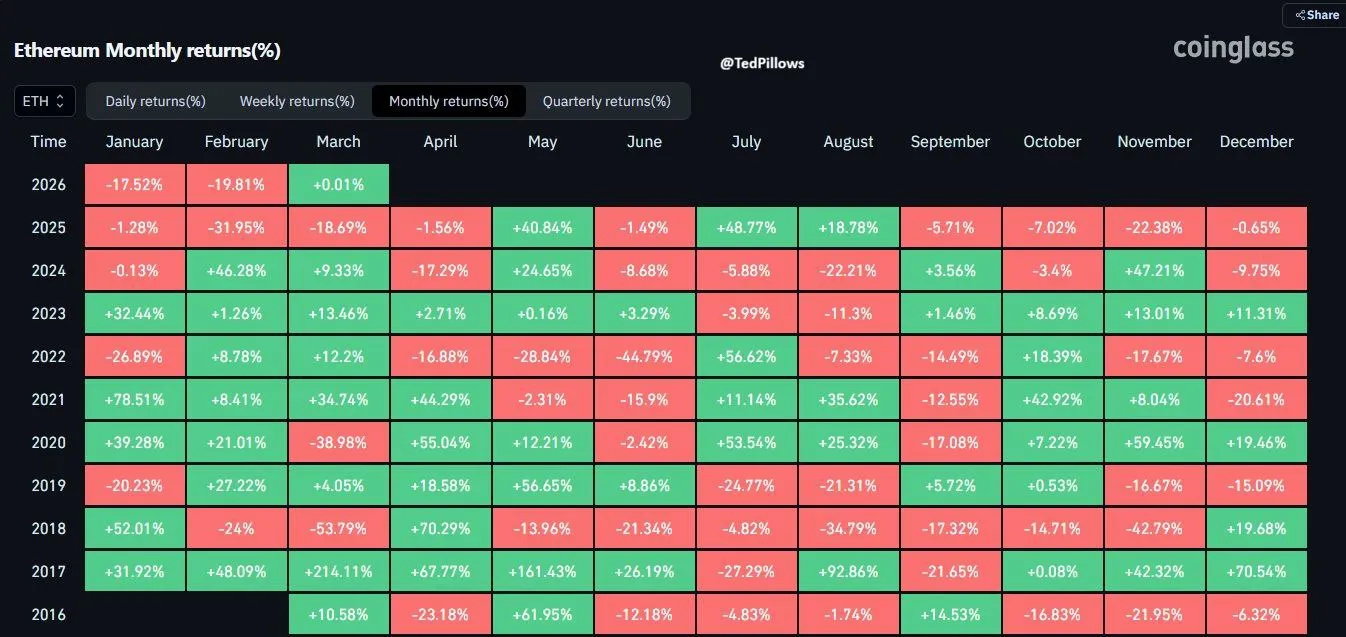
Ethereum (ETH) has fallen for six consecutive months, marking its longest monthly losing streak since 2018, according to Coinglass data. Crypto YouTuber CryptoJack, who has around 252,000 subscribers, added that ETH has closed lower in 12 of the last 15 months. The longest consecutive decline observed since Coinglass began collecting data was a seven-month streak recorded in 2018. Meanwhile, ETH is currently trading at $1,970.74, down 2.34%, according to CoinMarketCap.
04:52
The following shows estimated liquidation volumes and position ratios for major crypto perpetual futures over the past 24 hours:
- BTC: $166.87 million liquidated (70.85% longs)
- ETH: $78.97 million liquidated (58.98% longs)
- SOL: $26.36 million liquidated (75.74% longs)
04:45
The cryptocurrency industry suffered approximately $26.5 million in losses from 15 hacking incidents in February 2026, according to a recent report from blockchain security firm PeckShield. This figure represents a 98.2% decrease from the same month last year and a 69.2% drop from January's $86.01 million.
Cointelegraph reported that the analysis highlighted last February's staggering $1.5 billion in losses, which were dominated by a $1.4 billion theft from Bybit. The report suggests that this year's significant decline in losses, even when accounting for the absence of a single massive incident like the Bybit hack, indicates that the industry's overall security systems are strengthening.
04:38
NFT marketplace Magic Eden is scaling down its NFT business to shift resources and personnel to its casino platform, Dicey, Cointelegraph reported. CoinNess previously reported that Magic Eden planned to halt operations for its Bitcoin and EVM-based NFT marketplaces, Bitcoin API, and crypto wallet services.
In connection with the move, Magic Eden CEO Jack Lu said the company is discontinuing its NFT buyback program to invest heavily in Dicey. He noted there is a huge opportunity in the online gambling market, stressing that 80% of the company's expenses are currently dedicated to its NFT business, which generates only 20% of its revenue. Lu added that these products will be phased out to maintain the more profitable ones.
04:32
Ethereum founder Vitalik Buterin said on X that people should be open to the possibility that AI-assisted "vibe coding" could complete the Ethereum roadmap to 2030 much faster and with greater security than anticipated. His comments follow a claim by an anonymous developer, YQ, who asserted that they could implement the Ethereum roadmap in just two weeks using this method. Buterin acknowledged that a system built without EIPs would have limitations and numerous critical bugs. However, he noted that such an experiment was impossible even six months ago. He explained that AI is tremendously accelerating coding speed and that "vibe coding" is becoming a significant trend.
04:22
Binance has announced the listing of Katana Network (KAT) pre-market perpetual futures, scheduled for 5:00 a.m. UTC on March 2. The exchange will offer up to 5x leverage on the new product.
04:18
Cryptocurrency exchange Bybit is individually checking the status and safety of its employees in the UAE and has designated backup managers for key roles, Wu Blockchain reported today. The measures are part of a cross-regional support system designed to prevent work interruptions.
According to the report, Bybit has also equipped its office with a power backup system to ensure at least eight hours of continuous operation during emergencies and has postponed all employee relocations to the UAE until further notice.
The move comes as Iran launched retaliatory missile strikes against the U.S. and Israel, prompting neighboring countries like the UAE to take emergency measures, including temporarily closing stock markets and halting air travel.
04:09
Hayden Adams, founder of the decentralized exchange (DEX) Uniswap (UNI), has argued that exchanges must remain operational amid growing geopolitical uncertainty in the Middle East following U.S. and Israeli airstrikes on Iran. He stated that blocking trades only takes away consumer choice and that people need access to liquidity, especially during such times of tension. Adams stressed that financial systems should always be running and accessible. His comments follow an announcement from the Dubai stock exchange that it was suspending operations until further notice in response to Iran's retaliatory attacks.
