Top

KOMSCO and KEPCO Cooperate on Blockchain Technology

Policy & Regulation·April 12, 2023, 3:13 AM

Korea Minting and Security Printing Corporation (KOMSCO) and Korea Electric Power Corporation (KEPCO) have recently agreed to cooperate on blockchain technology, as well as other information and communication technology, according to a press release by KOMSCO.

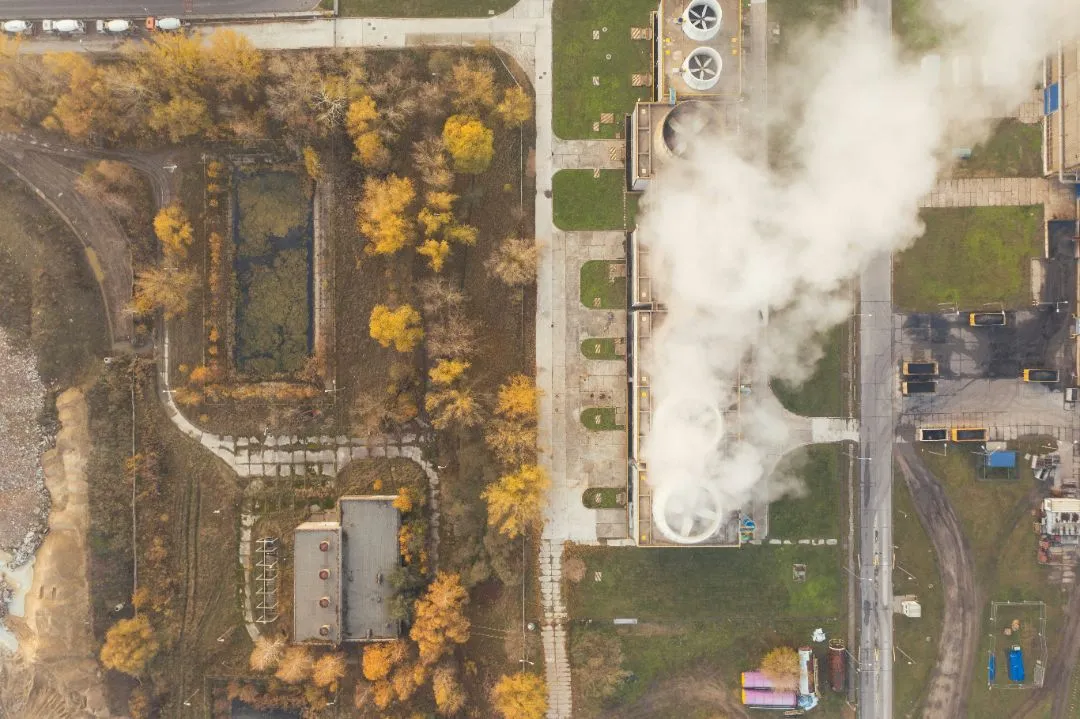
©Pexels/Savvas Stavrinos


Connect and develop model

Last Thursday, KOMSCO held a seminar on tech cooperation with KEPCO in Daejeon, home to many Korean government agencies. At the seminar, both sides decided to embrace a connect and develop model, which is more advantageous than closed research and development models in terms of agility and cost-effectiveness.


Digital transformation

The two agencies possess a wealth of advanced technologies: KOMSCO excels in NFT authentication and blockchain-based payments systems, while KEPCO holds a competitive edge in blockchain platforms. Both parties will explore various ways to collaborate in these areas to promote Korea’s digital transformation.


More stable electricity grid

Furthermore, KOMSCO is continuously expanding infrastructure for information technology, and deploying its security solutions to KEPCO is expected to bolster the stability of the country’s electricity grid.

More to Read
View All
Policy & Regulation·

Mar 06, 2024

Korea Exchange to conduct CBDC pilot test in H2

Amid the heightened excitement about the potential incorporation of virtual assets into the traditional financial system, the Korea Exchange (KRX), the country’s only securities exchange operator, plans to run a pilot test on central bank digital currency (CBDC) transactions using distributed ledger technology (DLT). The pilot test is scheduled in the second half of this year, as part of KRX’s effort to respond to rapidly evolving financial technologies, Yonhap Infomax reported.  The KRX is targeting the carbon trading market for this pilot test, aiming to develop a DLT-driven carbon trading system. The objective of this initiative is to check the feasibility of applying the Delivery versus Payment (DVP) to carbon credit trading facilitated by dedicated tokens. The project will be undertaken in cooperation with the Bank of Korea (BOK), with whom the KRX signed a memorandum of understanding last year to forge digital financial infrastructure. Additionally, the exchange is planning to create a cloud-based settlement and payment system for brokerage and non-brokerage firms.Photo by Marcin Jozwiak on UnsplashLG CNS, an integrated security system provider, and Koscom, a financial IT company, will supervise the CBDC pilot program. They are tasked with conducting a comprehensive assessment of the entire process, from developing the decentralized ledger payment system to assuring its quality.  Broad application of DLTA DLT system records all transactions on a peer-to-peer network and verifies them through every participant. This eliminates the need for a central authority, thereby increasing its reliability and transparency. Currently, the DLT is of particular interest to many financial institutions worldwide, including the SIX Swiss Exchange. These financial institutions are actively experimenting with CBDC to improve the security and efficiency of their DVP settlements.  In particular, the carbon credit market is experiencing a significant integration with the DLT. A KRX official said that the exchange plans to test the maturity of DLT systems and the interoperability between the BOK’s network and those of other organizations. This will evaluate DLT’s effectiveness within the carbon credit market. The person added that this pilot test aims to establish technological standards regarding the CBDC payment and blockchain network registration, which will provide a critical reference for future technical experiments in the industry. 

news
Policy & Regulation·

Jun 16, 2023

New York Bans CoinEx While Seizing Crypto Assets

New York Bans CoinEx While Seizing Crypto AssetsCoinEx, a Hong Kong-based cryptocurrency exchange, has been banned from operating in the US state of New York by Attorney General Letitia James. The ban comes after the exchange allegedly failed to register as a securities and commodities brokerage and falsely represented itself as an exchange.Photo by Jan van der Wolf on Pexels$1.7 million seizureThat’s according to a statement published by the Office of the New York State Attorney General on Thursday. As part of an agreement reached between the parties, over $1.7 million worth of CoinEx’s funds have been seized.Under the terms of the agreement, approximately $1.1 million will be returned to 4,691 investors from New York, and an additional $600,000 will be paid in penalties to the state. To prevent access by New York IP addresses, CoinEx must implement geo-blocking. Moreover, the exchange is forbidden from creating new accounts for customers based in the United States.Trade prohibitionThis recent development resolves a lawsuit filed against CoinEx in February by the New York state. The state accused the exchange of misleading investors and failing to register with local authorities. In accordance with the consent order, CoinEx is now prohibited from offering, selling, or purchasing securities and commodities in New York and cannot make its platform available in the state.James emphasized the consequences for crypto companies that disregard New York’s laws and put investors at risk. The agreement serves as a warning that her office will continue to crack down on such companies. CoinEx users have a 90-day period to recover their crypto funds directly from the exchange.After this period, eligible investors can request fiat currency refunds by emailing coinexrefund@ag.ny.gov. Refunds will be provided in cryptocurrency or cash equivalents held in accounts as of April 25.CoinEx faced a lawsuit in the New York Supreme Court on February 22, where Attorney General James alleged that the exchange engaged in fraudulent practices and violated the state’s Martin Act, known for its strict anti-fraud provisions. The complaint included tokens such as Amp, LBRY Credits (LBC), Rally (RLY), and Terra.Harsh stanceThe banning of CoinEx in New York highlights the regulatory scrutiny surrounding cryptocurrency exchanges and the importance of compliance with local laws and regulations. On the one hand, the enforcement actions taken by authorities aim to protect investors and ensure the integrity of the financial system.However, the state of New York has been particularly harsh in its dealings with crypto companies. As today’s statement reveals, the New York Attorney General has taken action previously against crypto exchange Kucoin, crypto lending platform Nexo, and USDT stablecoin issuer Tether.These actions tie in with the current anti-crypto regulatory pushback that prevails in the United States right now. Other state agencies, including the Securities and Exchange Commission (SEC) who last week sued global crypto exchanges Coinbase and Binance, the Federal Reserve, the Department of the Treasury, and the Federal Deposit Insurance Corporation (FDIC), have all conspired to crack down on the industry in the US in recent months.

news
Web3 & Enterprise·

Jul 04, 2025

Solana faces rising phishing threats in South Korea amid growing adoption

As Solana (SOL) gains institutional momentum through new investment products and major platform integrations, the blockchain is also becoming a target for sophisticated phishing scams in South Korea.Photo by GuerrillaBuzz on UnsplashFake websites and impersonatorsAccording to a recent Etoday report, attackers have been impersonating the Solana Foundation and Superteam Korea, a developer community within the Solana ecosystem. Using fake group chats on messaging platforms like KakaoTalk and Telegram, the scammers deploy official branding and fabricated partnership announcements to appear legitimate. Victims are lured with promises of five SOL tokens for creating wallets on fraudulent websites mimicking Solflare, a widely used Solana wallet. Users are then instructed to stake their tokens in exchange for daily yield, enabling the scammers to access their funds. The schemes have become more advanced, with perpetrators using names and photos of Superteam Korea members and generating fake wallet interfaces that display fabricated token balances. When victims attempt to withdraw funds, they are removed from chats, blocked from further communication and left with inactive websites as evidence is wiped. The Solana Foundation and Superteam Korea have issued public warnings, stating they do not solicit investments through messaging platforms or request payments to specific accounts. They have noted an increase in phishing sophistication and advised users to be cautious of unsolicited offers, particularly those that promise guaranteed returns. Solana adoption gains momentumThese scams stand in contrast to Solana’s recent growth. The Rex-Osprey Solana + Staking ETF, launched in the U.S., recorded $12 million in inflows and $33.6 million in trading volume on its first day. It is the first U.S.-listed ETF to offer SOL exposure with staking rewards available directly through brokerage accounts. Additionally, PancakeSwap’s V3 liquidity pool went live on Solana, offering up to 84% of trading fees to liquidity providers and enabling swaps starting at 0.01%.Amid these developments, Bitwise Chief Investment Officer Matt Hougan and Head of Research Ryan Rasmussen expressed cautious optimism about Solana, predicting it could set new all-time highs this year, though likely with more difficulty than Bitcoin. They pointed to rising interest in stablecoins, ETF approvals and the emergence of treasury firms focused on SOL and Ethereum (ETH) as key factors that could support long-term value. The pair also reaffirmed Bitwise’s $200,000 price target for Bitcoin, citing sustained institutional demand.

news
Loading