Hot Topics
January 13, 2026- Policy & Regulation·4 days agoSouth Korea seeks power to freeze crypto accounts in price manipulation cases
5 hours ago
Dubai bars privacy coins from exchanges amid global AML push
Cryptocurrency exchanges operating in the Dubai International Financial Centre (DIFC), a financial hub in the United Arab Emirates (UAE), entered a new compliance environment on Jan. 12 as updated Crypto Token rules issued by the Dubai Financial Services Authority (DFSA) came into force. The revised framework bars exchanges from offering certain digital assets.Photo by Christoph Schulz on UnsplashPrivacy tokens restricted to private walletsThe affected assets are privacy tokens like Zcash (ZEC) and Monero (XMR), although the restriction does not prevent Dubai residents from holding those coins in private wallets. The move is aimed at addressing anti-money laundering (AML) and sanctions compliance risks. The exclusion of privacy tokens reflects alignment with global compliance standards, according to Elisabeth Wallace, Associate Director of Policy & Legal at the DFSA. She told CoinDesk that bans of this kind are effectively inevitable if crypto businesses want to align with standards set by the Financial Action Task Force (FATF), given that privacy tokens are designed to obscure transaction histories and the identities of holders. The revised rules extend beyond token classifications, preventing regulated firms from deploying or providing tools designed to mask blockchain activity. These include mixers, tumblers, and other technologies that obscure transaction information. At the same time, the DFSA refined its classification of what it terms “Fiat Crypto Tokens,” limiting the category to tokens pegged to fiat currencies and backed by high-quality, liquid assets capable of meeting redemption requests under market stress. Under this definition, algorithmic stablecoins such as Ethena (ENA) would not qualify as stablecoins, though they would still be treated as cryptocurrencies. The update also alters how token eligibility is determined. Rather than maintaining a centralized list of approved assets, the DFSA now requires licensed firms to carry out their own assessments of the crypto assets they offer, document those judgments, and keep them under ongoing review. Thailand enforces crypto travel ruleComparable regulatory tightening is unfolding elsewhere in Asia. In Thailand, during a high-level meeting on Jan. 9, Prime Minister Anutin Charnvirakul said the Securities and Exchange Commission had been instructed to strictly enforce the travel rule, according to The Nation Thailand. The international standard requires crypto service providers to verify both senders and recipients in wallet-to-wallet transfers. The directive forms part of a broader government initiative to establish a national data bureau, envisioned as a centralized platform for real-time monitoring of suspicious transactions and the development of detailed financial risk profiles. In South Korea, enforcement actions have similarly intensified. According to Dailian, Korbit, the country’s fourth-largest crypto exchange, paid a 2.73 billion won ($1.9 million) fine imposed by the Financial Information Unit (FIU) under the Financial Services Commission (FSC) for violations of anti-money laundering (AML) rules. The payment followed a board decision and was made within a reduced-penalty period, allowing Korbit to receive a 20% discount. Crypto firms comprise 77% of Korean finesA broader review of penalties issued by the FIU since the disclosure of its sanctions guidelines shows that 77% of total fines were levied against virtual asset service providers (VASPs). While an analysis by Digital Asset found that only four of 95 fine cases issued since August 2023 involved VASPs, those cases accounted for a disproportionately large total of 41.8 billion won ($28.4 million). Exchanges fined to date include Delio, Hanbitco Korea, Dunamu—the operator of Upbit—and Korbit, with Dunamu receiving the largest penalty imposed by the FIU to date. The sanctions were linked to alleged know-your-customer (KYC) failures, unreported transactions involving individuals subject to warrants, and shortcomings in systems designed to detect suspicious activity. Separately, the FIU had issued disciplinary measures against Dunamu, including a warning to its chief executive and a three-month partial suspension of operations, which the company is contesting in court. The next hearing is scheduled for February. In overall fine totals, casinos ranked behind crypto firms, underscoring how enforcement against crypto intermediaries has been particularly robust, as oversight patterns continue to evolve.

1 day ago
India expands identity and tax controls on digital asset activity
In Mumbai, users of cryptocurrency exchanges are increasingly being asked to prove they are real people—by moving their eyes or turning their heads in front of a camera—before they can open an account. In Tokyo, meanwhile, exchange operators are collecting a different kind of identity marker: each customer’s country of tax residence, recorded for reporting to authorities at home and abroad. Governments across Asia are tightening oversight of the crypto sector, with India and Japan pursuing parallel efforts to boost compliance, strengthen tax enforcement, and curb financial anonymity. Together, these measures are pushing digital assets closer to conventional financial standards.Photo by Rowan Heuvel on UnsplashIndia mandates biometric-style checksAccording to the Times of India, India’s Financial Intelligence Unit has required crypto exchanges to adopt more stringent know-your-customer (KYC) and anti-money-laundering (AML) procedures, including liveness checks designed to prevent accounts from being created using deepfakes. Under the guidelines, platforms must also record information such as geolocation data, IP addresses, and timestamps during onboarding, and link users to bank accounts through verification steps that include test transactions and government-issued identification like passports or voter IDs. The measures come as tax authorities continue to face obstacles in monitoring crypto activity. India taxes crypto profits at a flat rate of 30% and applies a 1% tax deducted at source (TDS) on transfers. According to a separate report by the Times of India, the Income Tax Department (ITD) told lawmakers that the pseudonymous and cross-border nature of crypto transactions can complicate compliance—particularly when funds move through offshore exchanges, private wallets, or decentralized finance platforms. Despite international information-sharing efforts, officials say tracing crypto holdings across jurisdictions remains challenging when transactions bypass regulated intermediaries. India’s central bank has also continued to argue in favor of central bank digital currencies (CBDCs) over privately issued stablecoins. In its December financial stability report, the Reserve Bank of India said CBDCs can offer efficiency and programmability within a sovereign framework, while warning that stablecoins may introduce risks during periods of market stress. Japan implements OECD crypto tax rulesJapan, meanwhile, has moved to formalize international data exchange. On Jan. 1, 2026, it implemented the Crypto-Asset Reporting Framework (CARF), a standard developed by the Organisation for Economic Co-operation and Development (OECD) to address cross-border tax evasion by automating the exchange of crypto transaction data between tax authorities. Under the new rules, users of Japanese crypto exchanges must declare their country—or countries—of tax residence. Exchange operators are required to collect and submit data to Japan’s tax authorities by April 30 of the following year, including transaction volumes, consideration received from purchases and sales, and asset-type breakdowns covering cryptocurrencies as well as security tokens and non-fungible tokens (NFTs). Information related to non-resident users is also intended to be shared with relevant foreign tax authorities under existing tax cooperation arrangements. While both nations pursue stricter oversight and transparency, their broader policy trajectories differ. In India, regulatory tightening reinforces a restrictive environment focused on risk containment. In Japan, by contrast, the new compliance frameworks appear to be laying the groundwork for a broader economic embrace of digital assets. Japanese Finance Minister Satsuki Katayama, speaking at the Tokyo Stock Exchange last week, framed 2026 as the “inaugural year of digital.” Unlike her Indian counterparts, who remain wary of private crypto assets, Katayama argued that established market infrastructure should play a larger role in adoption. Pointing to the U.S. market, she suggested Japan could move toward exchange-traded funds (ETFs) and integration with stock and commodity exchanges to capture the benefits of blockchain-based assets. This pro-growth shift is reinforced by the prospect of fiscal relief. Tokyo is considering an overhaul that would reclassify crypto gains—currently taxed as miscellaneous income at rates of up to 55%—to a flat 20%, aligning them with stocks. The changes, however, are not expected to take effect until 2028, given the extent of the required legal and regulatory revisions. India, meanwhile, has indicated that it plans to adopt CARF by 2027, suggesting that its current emphasis on domestic controls may eventually be supplemented by deeper international cooperation—bringing offshore crypto activity more firmly into the view of tax authorities.

4 days ago
South Korea seeks power to freeze crypto accounts in price manipulation cases
South Korea’s financial authority is moving to strengthen its ability to intervene early in suspected cryptocurrency price manipulation cases by seeking explicit legal authority to freeze related accounts. According to News1, the Financial Services Commission (FSC) plans to include the measure in the upcoming second phase of the country’s cryptocurrency legislation. Under the proposal, when financial accounts are suspected of being used to manipulate crypto prices, the FSC would be able to coordinate with financial institutions and cryptocurrency exchanges to freeze the funds.Photo by Ethan Brooke on UnsplashClosing gaps in illicit fund recoveryThe initiative is intended to address a long-standing enforcement challenge. Authorities have often struggled to recover illicit gains because funds can be moved elsewhere while investigations and court proceedings—often lasting up to three years—are still ongoing. By allowing accounts to be frozen before a formal investigation is launched, the proposal aims to close a critical gap in illicit fund recovery. An official from the authority cited a recent precedent to illustrate the measure’s potential impact. In September, a government task force disrupted a stock price manipulation case involving roughly 100 billion won ($69 million), of which about 40 billion won was illicitly obtained. It marked the first time the government implemented an early account freeze, preventing additional funds from being transferred beyond its reach. The official added that the same approach could be applied to cryptocurrency price manipulation cases when suspicious transactions are detected through Korean crypto exchanges. However, the measure would not be effective against activity conducted via overseas platforms. The proposal comes as the government continues to refine the second phase of its crypto regulatory framework, which is expected to focus primarily on stablecoin regulations. While authorities had originally planned to submit the bill to the National Assembly by the end of last year, the timeline has been pushed to this year as financial and monetary regulators work through unresolved differences. One point of contention lies between the Bank of Korea and the FSC. The central bank supports allowing only bank-majority consortia to issue stablecoins, while the FSC opposes setting a bank-ownership threshold, arguing for the inclusion of non-bank participants. Alongside enforcement and regulatory reforms, the government is also signaling a broader push to expand investor access to digital assets. A Jan. 9 document from the Ministry of Economy and Finance showed the government plans to permit trading in spot crypto ETFs to improve investor access under its 2026 economic plan. Against this policy backdrop, traditional financial firms are pressing ahead with their own digital asset initiatives, seeking to position themselves within the evolving framework. Life insurer explores blockchain collaborationsKyobo Life Planet Life Insurance, a mobile-only subsidiary of Kyobo Life Insurance, has partnered with Singapore-headquartered crypto exchange Crypto.com. According to South Korean media outlet Financial News, under the agreement, eligible users will receive benefits on Crypto.com, while reward points earned through Kyobo Life Planet’s healthcare platform can be used within the exchange’s ecosystem. The collaboration reflects broader efforts by the parent company to expand into digital assets. Last month, Kyobo Life Insurance joined Circle’s public testnet, Arc, to assess the technical feasibility of stablecoin-related infrastructure.

5 days ago
Crypto’s four-year cycle may matter less amid shifting macro forces, report says
Bitcoin’s long-standing four-year market cycle tied to halving events may be losing influence, according to a new outlook from crypto exchange Bybit and research firm Block Scholes that examines market conditions through 2026. The report suggests that Bitcoin price action may be increasingly influenced by macroeconomic policy, institutional participation, and market structure rather than by new supply reductions. It says historical cycles have tended to track changes in global liquidity, often measured by global M2, and that this relationship has become more visible, while Bitcoin continues to respond to shifts in expectations for Federal Reserve rate cuts.Photo by Pawel Czerwinski on UnsplashETFs reshaping demand dynamicsThe analysis points to structural changes in demand, citing the launch of spot Bitcoin ETFs and the growth of corporate digital asset treasuries (DATs). The report says ETF flows and corporate balance-sheet allocations are playing a larger role in price formation than retail trading. That shift is disrupting the traditional capital rotation from Bitcoin into Ethereum and then into smaller altcoins and memecoins. As a result, the report suggests broad altcoin rallies may be harder to ignite, with gains depending on whether assets can be incorporated into institutional products such as ETFs. On the macro front, the report says markets are pricing in further Federal Reserve easing, with looser financial conditions potentially supporting a closer relationship between Bitcoin and major stock indexes despite recent underperformance versus U.S. equities. Based on options pricing, the report estimates a 10.3% implied probability that Bitcoin reaches $150,000 by the end of 2026. At present, Bitcoin is trading slightly above $91,000. Index criteria and Japan policy in viewThe analysis also highlights policy risks, including potential volatility tied to concerns over the possible exclusion of Strategy from major stock indexes, which could affect companies holding digital assets on their balance sheets. That risk has since eased after MSCI paused a proposal that would have excluded firms with digital asset reserves, though Benchmark analyst Mark Palmer cautioned that the issue could resurface in future rule reviews. The Bybit-Block Scholes report also cites potential policy tightening by the Bank of Japan later this year as another source of cross-asset risk, following its December rate hike of 25 basis points to a 30-year high of 0.75%. RWA and stablecoinsOne area of focus in the report for 2026 is real-world asset (RWA) tokenization, which it describes as building on the stablecoin adoption that gathered pace last year. That view is echoed in a separate outlook from Moody’s, cited by Cointelegraph, which says fiat-backed stablecoins and tokenized bank deposits are functioning as “digital cash” for settlement, liquidity management, and collateral movement. Moody’s estimates stablecoins processed about $9 trillion in on-chain settlement volume in 2025 and projects banks, asset managers, and infrastructure providers could invest more than $300 billion in digital finance by 2030. As an example, Moody’s cited JPMorgan’s U.S. dollar–denominated deposit token, JPM Coin, as a way digital-cash layers can operate on top of existing banking systems. The bank’s Kinexys unit plans to work with Digital Asset to bring JPM Coin to Digital Asset’s Canton Network in a phased rollout during 2026. This follows JPMorgan’s expansion of the project onto Coinbase’s Ethereum layer-2 network Base for institutional clients.

6 days ago
South Korean crypto investors move to sidelines as market slump persists
As the cryptocurrency market’s sluggish performance stretches into another year, South Korean investors have largely engaged in a wait-and-see approach. According to local media outlet Dailian, users are now checking prices only occasionally rather than trading actively, a shift evidenced by sharp declines in engagement metrics at the country’s two dominant exchanges, Upbit and Bithumb.Photo by NordWood Themes on UnsplashHigh retention, low activityData from Mobile Index reveals a stark contrast between user retention and actual activity. Throughout 2025, monthly active user (MAU) levels remained relatively stable—Upbit recorded as many as 4.7 million MAUs, while Bithumb reached approximately 2.7 million at its peak. This suggests that while the market downturn has dampened enthusiasm, it has not driven users to exit the ecosystem entirely. However, the time users spent on these platforms plummeted as liquidity dried up. In January 2025, ample market liquidity drove aggressive trading behavior; Upbit users spent an average of 7 hours and 30 minutes on the app during the month. By December, that figure had crashed to just 2 hours and 30 minutes—a 66.4% decline. Bithumb experienced a similar contraction, with average monthly usage falling from 233 minutes in January to 120 minutes in December. Aggregate usage followed the same downward trajectory. On Upbit, total monthly time spent across the user base fell from 35.66 million hours in January to 10.54 million hours in December. Bithumb saw total hours drop from 10.63 million to 4.65 million over the same period. The altcoin freezeThis reduction in screen time correlated directly with collapsing trading volumes. Upbit’s daily trading volume shrank from approximately 270 trillion won ($187 billion) in January to 52 trillion won ($36 billion) in December. Bithumb saw a proportional decline, dropping from 85 trillion won ($59 billion) to 24 trillion won ($17 billion). Analysts attribute this trend to a capital concentration in major assets like Bitcoin, which hit a new all-time high in October. Conversely, altcoins—which typically account for a disproportionately large share of trading volume in South Korea—failed to spark a rebound. Despite aggressive listing strategies—Upbit listed 73 new tokens and Bithumb added 156 last year—the influx of new assets failed to prompt a broader rally. One industry expert noted that none of the newly listed tokens managed to stand out, adding that the decline in Bitcoin prices later in the year further soured sentiment toward altcoins. The expert also highlighted that stronger performance in traditional asset classes, including U.S. and South Korean equities and gold, drew capital away from the crypto sector. However, another analyst offered a less pessimistic interpretation, suggesting that 2025 was not a year of investor exodus but rather one of dormancy. Investors chose to stay on the sidelines due to a lack of clear profit opportunities, implying that a resurgence in altcoin momentum could restore trading activity. Institutional giants push forwardDespite the retail lull, traditional financial institutions are actively exploring the sector, positioning themselves for future utility. Last month, BC Card signed a memorandum of understanding with U.S.-based exchange Coinbase to test USDC payments at South Korean merchants. The pilot program aims to integrate Coinbase’s Base blockchain wallets with BC Card’s QR payment infrastructure. Simultaneously, the broader card industry is preparing for the second phase of crypto legislation, which is expected to focus on stablecoin regulation. Nine credit card companies—including Samsung Card, Shinhan Card, and KB Kookmin Card—plan to form a task force this month under the Credit Finance Association (CREFIA). This initiative will focus on building an end-to-end system for stablecoin-based card payments and merchant settlements, including pilot tests for stablecoin-linked debit cards usable at standard payment terminals. Investment interest also remains alive in the corporate sector. Mirae Asset Financial Group is reportedly considering acquiring Korbit, the country’s fourth-largest exchange, through its subsidiary Mirae Asset Consulting. Market observers estimate the potential deal could be valued at up to 140 billion won ($97 million).

Jan 06, 2026
Japan eyes ‘year of digital’ as finance minister signals crypto shift
Japan and China are moving in different directions on digital finance. In Japan, senior officials are signaling a push to bring cryptocurrencies further into the mainstream financial system. In China, regulators are doubling down on limits for private-sector tokenization even as the central bank expands a state-led digital currency model.Photo by Nat on UnsplashTraditional exchanges to anchor crypto pushSpeaking at the Tokyo Stock Exchange on Jan. 5, Japanese Finance Minister Satsuki Katayama framed 2026 as “the inaugural year of digital” in her New Year’s address, according to local outlet CoinPost. She said she expects cryptocurrency adoption to broaden as commodity and stock exchanges take on a larger role, arguing that established market infrastructure will be key to realizing the benefits of blockchain-based assets. Pointing to the U.S., she noted that exchange-traded funds are commonly used as an inflation hedge, and suggested Japan could move in a similar direction. Katayama also struck an upbeat tone on the wider economy, saying she expects Japanese stocks to hit new record highs this year. She cast 2026 as a potential turning point as Japan seeks to move beyond a long stretch of deflation, and called for responsible but proactive fiscal policy alongside targeted investment in growth sectors. Her comments come as Tokyo considers a major overhaul of how crypto gains are taxed. Under a government proposal, profits from cryptocurrencies would be taxed at a flat 20%, aligning them more closely with levies on stocks and foreign-exchange trading. The framework would also cover crypto-linked ETFs and derivatives. Currently, crypto gains are treated as miscellaneous income, leaving investors subject to progressive rates that can climb to roughly 55% once local taxes are included. The proposed reforms would bring crypto assets under the Financial Instruments and Exchange Act. While the package is slated for discussion during the upcoming ordinary Diet session, which is scheduled to begin on Jan. 23, officials do not expect it to take effect before 2028, given the scope of the required legal and regulatory changes. Industry groups flag RWA tokenization risksChina, by contrast, continues to take a restrictive stance toward private digital-asset activity. Seven major financial industry associations—including the National Internet Finance Association of China, the Banking Association, and the Securities Association—issued a joint statement warning that the tokenization of real-world assets (RWAs) is illegal and amounts to a “risky business model,” according to Wu Blockchain, citing a WeChat post published last month. The associations argued that RWA tokenization still functions as a form of unauthorized fundraising barred under existing securities laws. They also warned of risks tied to both the projects and their underlying assets, including fraud, operational failures, and speculative hype, adding that even when the assets themselves are legitimate, token structures remain unreliable and could pose spillover risks to other parts of the financial system. The statement added that such activities have not received regulatory approval. The warning fits with Beijing’s broader, state-led approach to digital finance. Last month, Lu Lei, a deputy governor of the People’s Bank of China (PBOC), warned that unchecked private-sector innovation could pose challenges for monetary policy, arguing that the rapid growth of digital assets and stablecoins risks weakening central banks’ control over money flows. Against that backdrop, Lu said the PBOC has rolled out a new operational framework for its central bank digital currency that took effect on Jan. 1. The move places the digital yuan in a deposit-like role within the commercial banking system under a two-tier structure, with the central bank overseeing rules and infrastructure and commercial banks handling wallets, payments, and compliance. By late November 2025, the digital yuan network had processed 3.48 billion transactions totaling 16.7 trillion yuan ($2.3 trillion), underscoring how China is channeling digital finance through a centrally controlled system. The system includes about 230 million personal wallets and 18.84 million corporate wallets.

Jan 05, 2026
South Korean card issuers line up stablecoin plans as regulation nears
South Korean credit card companies are preparing to develop a stablecoin-powered payment system, Yonhap Infomax reported. The Credit Finance Association (CREFIA)—a nonprofit comprising credit card firms, leasing companies, and venture capitalists—plans to launch a second task force this month. The group aims to prepare for the anticipated regulatory framework governing stablecoins.Photo by rupixen on UnsplashStablecoin cards, settlement under reviewThe task force will discuss building a comprehensive system covering the entire transaction process, from stablecoin-based card payments to merchant settlements. The agenda also includes testing stablecoin-powered debit cards, which would allow users to pay at standard card terminals just as they would with traditional cards. This second task force will include nine credit card companies—including Samsung Card, Shinhan Card, and KB Kookmin Card—that participated in the initial task force formed last July. At that time, CREFIA and the participating firms held weekly meetings on regulatory and technological issues while gathering input from external advisors. Through that process, the group examined whether credit card companies could legally engage in stablecoin businesses under the current Specialized Credit Finance Business Act. They also jointly filed 30 stablecoin-related trademark applications and reportedly sought consultations with financial authorities on securing payment and settlement accounts for stablecoin transactions. This push into the sector comes despite lingering uncertainty regarding the government’s phase-2 virtual asset legislation. Progress on the draft has been delayed due to disagreements between financial and monetary authorities. The Bank of Korea favors a model where only consortia with majority bank ownership can issue stablecoins. By contrast, the Financial Services Commission opposes setting a specific bank-ownership threshold in law to allow participation by non-bank firms. The forthcoming legislation is expected to comprehensively regulate stablecoins, including their issuance, distribution, and custody, leaving companies to await clearer guidance. Despite the legislative delays, the credit card companies are positioning themselves to move quickly once the rules are finalized. Investor sentiment shifts to U.S. equitiesWhile traditional financial firms explore digital assets to expand their business, South Korean investors are prioritizing U.S. equities over cryptocurrencies for this year. According to a weekly survey of 2,000 respondents conducted by CoinNess and Cratos, 30.8% said they plan to focus on U.S. stocks. Cryptocurrencies ranked second at 25.5%, followed by gold and silver (18.3%), Korean stocks (12.8%), and cash (12.7%). Market sentiment toward Bitcoin also appears cautious. 22.7% of respondents said they expect Bitcoin to rise or surge this week, down from 28.9% the previous week. Meanwhile, 38.3% predicted the price would move sideways, while 39% expected a fall or plunge. Asked about the broader crypto market, 50.8% of respondents said fear or extreme fear was prevailing.

Jan 02, 2026
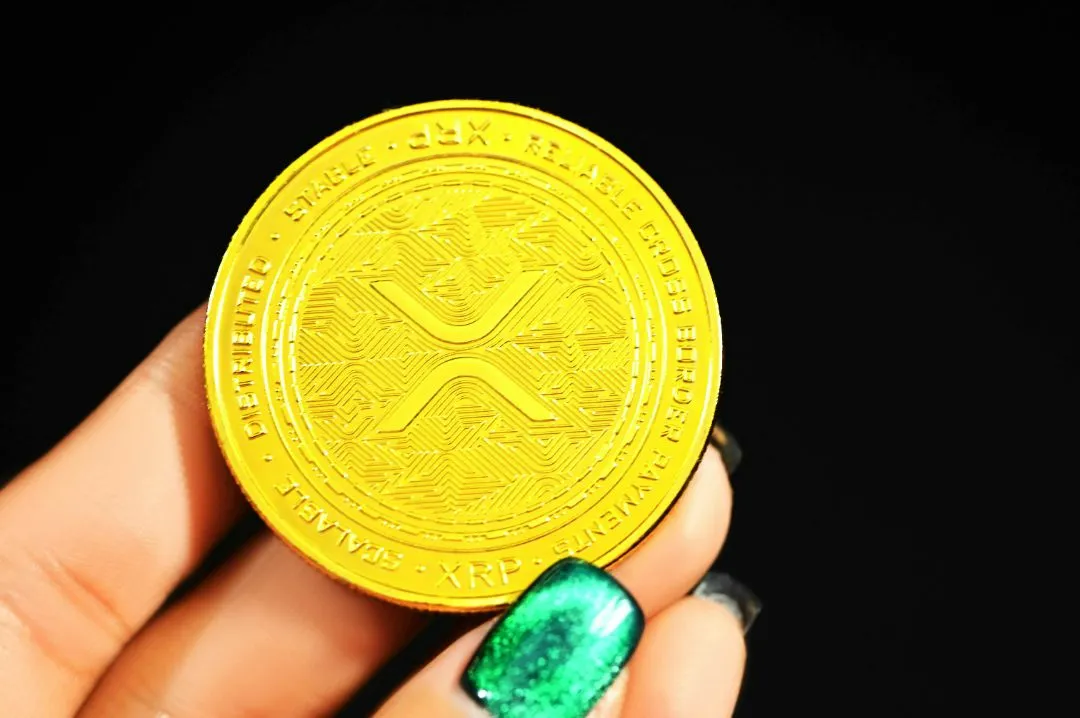
Upbit’s reach hits one in four South Koreans, XRP emerges as top traded token
Upbit, South Korea’s largest cryptocurrency exchange operated by Dunamu, announced on Jan. 2 that its user base surpassed 13 million by the end of last year. With South Korea’s population at 51.6 million, the data implies that roughly one in four Koreans now holds an account on the platform. Demographic breakdowns show that users in their 30s comprise the largest cohort at 28.7%, followed by those in their 40s at 24.1% and 20s at 23.2%. Users in their 50s accounted for 16.9%, while those in their 60s and 70s made up 6.0% and 1.1%, respectively. Adoption is particularly high among younger generations, with the combined total of users in their 20s and 30s reaching 5.48 million. Based on Ministry of the Interior and Safety data showing 12.37 million people aged 20 to 39 as of November, approximately 44% of Koreans in this age demographic use the platform. Upbit added 1.1 million new users last year, with men comprising 56.9% of new accounts and women 43.1%.Photo by Kanchanara on UnsplashXRP overtakes BTC and ETH in tradingIn terms of trading volume, Ripple’s XRP was the most traded cryptocurrency in 2025, outpacing both Bitcoin and Ethereum. Daily activity peaked in the morning, coinciding with the start of the typical business day. The highest volumes were recorded at 00:00 UTC, or 9 a.m. Korea Standard Time. Beyond standard trading, users are increasingly turning to Upbit’s asset management tools. Since its 2022 launch, the platform’s staking feature has attracted over 300,000 users, generating 257.3 billion won ($178.6 million) in total rewards. Furthermore, a dollar-cost averaging feature introduced in August 2024 has drawn about 220,000 users, with cumulative investments totaling 478.1 billion won ($331.9 million). Kbank eyes public listingIn the broader ecosystem, Upbit’s banking partner is preparing for an initial public offering (IPO) this year. Kbank, an internet-only lender that has partnered with Upbit since 2020, is closely linked to the exchange through shared customers. According to Hansbiz, crypto-related funds accounted for roughly 16% of Kbank’s total deposits as of the first half of 2025. Under South Korean law, fiat-to-crypto service providers must secure real-name accounts from a local bank, meaning Upbit users are required to deposit Korean won at Kbank before trading on the exchange. However, Kbank’s financial performance has softened following the 2024 implementation of the Virtual Asset User Protection Act, which compelled the bank to raise annual interest rates on deposits from Upbit users from 0.1% to 2.1%. On a consolidated basis, net interest income totaled 323.2 billion won ($224 million) in the third quarter of 2025, down 13% year over year. Net fee income remained in the red, posting a loss of 2.8 billion won ($1.94 million), widening from a 1.3 billion won loss in the same period a year earlier. This latest IPO push follows two failed attempts and carries contractual implications. When Kbank raised 725 billion won ($503 million) in 2021 from investors including Bain Capital and MBK Partners, it pledged to list its shares by July 2026. If the upcoming attempt fails, those backers could exercise drag-along rights and put options, potentially resulting in increased financial obligations for Kbank. Meanwhile, Upbit has seen other notable shifts in its business and governance. In November, Dunamu and Naver Financial, a subsidiary of internet giant Naver, approved a merger plan structured as a comprehensive share swap at a ratio of 1 to 2.54. At the time of the announcement, market observers estimated Dunamu’s valuation at 15 trillion won ($10.4 billion), compared with 5 trillion won ($3.5 billion) for Naver Financial.
Dec 31, 2025
Korean regulator targets concentrated control at crypto exchanges in phase 2 bill
South Korea’s financial regulator is preparing a second major cryptocurrency bill that would expand investor protections, strengthen stablecoin safeguards, and potentially impose governance changes at the country’s largest exchanges, as domestic token projects warn that regulatory uncertainty is curbing growth. The Financial Services Commission (FSC) is drafting the Digital Asset Basic Act, a so-called “phase two” bill that follows an earlier virtual asset user protection regime which took effect in July 2024. According to Yonhap News, the bill is expected to address stablecoin risks by requiring issuers to hold reserve assets in instruments such as bank deposits and government bonds, and to deposit or place in trust at least 100% of outstanding issuance with banks or other designated custodians. It would also extend existing financial-sector rules to crypto firms in areas including disclosures, terms and conditions, and advertising. In addition, the proposal could impose no-fault liability on virtual asset service providers for losses stemming from hacks or system failures, in line with standards under Korea’s Electronic Financial Transactions Act, which governs traditional financial institutions and payment services.Photo by Timothy Ries on UnsplashGovernance dominance at exchangesA separate report by KBS said the draft bill includes measures to overhaul governance at South Korea’s four major crypto exchanges—Upbit, Bithumb, Coinone, and Korbit—which together serve about 11 million users. The FSC has raised concerns about concentrated control by founders and major shareholders, and is considering a governance framework similar to that applied to alternative trading systems (ATS) under Korea’s Capital Markets Act. That could include limits designed to prevent any single shareholder from holding too much control, capping controlling stakes at around 15% to 20%. Under Korea’s current Capital Markets Act, an ATS is generally barred from holding more than 15% of voting shares, including those held by related parties, with limited exceptions allowing stakes of up to 30%. If similar limits were applied to crypto exchanges, the changes could affect Dunamu, the operator of Upbit. Dunamu Chairman Song Chi-hyung holds a stake in the mid-20% range and, under the proposal as described, could face pressure to sell roughly 10% of his holdings. The proposal could have implications for the deal, as Dunamu is pursuing a merger with Naver Financial through a comprehensive stock swap. While the bill’s broad outlines are taking shape, regulators are still working to narrow differences over stablecoin rules, and the final proposal is expected to be submitted to the National Assembly next year. Key unresolved issues include eligibility requirements for stablecoin issuers, whether to establish an interagency consultative body during the licensing process, initial capital thresholds, and whether a single entity should be allowed to both issue and distribute stablecoins. The core dispute centers on who should be allowed to issue stablecoins. The Bank of Korea is said to favor limiting issuance to consortia in which banks hold at least a 51% stake, while the FSC is believed to oppose writing a mandatory bank ownership threshold into law, arguing that such a requirement could limit broader participation by technology firms. ‘Kimchi coin’ listings stall amid cautionEven as policymakers push ahead, regulatory uncertainty is curbing growth among South Korean blockchain projects. News1 reported that Upbit listed only one token from a domestic project in 2025, out of 54 tokens added for trading since the start of the year—the native token of Story, a peer-to-peer intellectual property network powered by blockchain and co-founded by Korean entrepreneur Lee Seung-yoon. Upbit also removed 10 tokens during the period, seven of which were so-called “kimchi coins,” a colloquial term for tokens originating in South Korea or developed by Korean teams. Industry participants attribute the removals to increasingly risk-averse behavior by exchanges amid regulatory uncertainty, which can complicate promotional efforts and trust-building while constraining early-stage liquidity. TradFi players seek crypto integrationsWhile local token projects face headwinds, interest from traditional financial institutions appears to be picking up. Chosun Biz reported that Mirae Asset Financial Group is considering an acquisition of Korbit, with its non-financial affiliate Mirae Asset Consulting seen as a potential buyer of shares from major shareholders NXC and SK Planet. Industry analysts estimate the deal could be worth up to 140 billion won ($97 million). The group’s founder, Park Hyeon-joo, has said he is developing a strategy to bridge traditional and digital assets, arguing that it is time to prepare for the next wave of financial innovation. In payments, EBN Industrial News reported that BC Card has signed a memorandum of understanding (MOU) with U.S.-based crypto exchange Coinbase to test USDC payments in South Korea. The pilot would integrate BC Card’s QR payment system with wallets on Coinbase’s Base blockchain to assess whether USDC can function as a viable payment method at local merchants.

Dec 30, 2025
China’s digital yuan set for deposit-based role in banks next year
The People’s Bank of China (PBOC) plans to roll out a new structure for its central bank digital currency (CBDC) operations, moving the digital yuan into a deposit-based role within the commercial banking system beginning Jan. 1, 2026. Lu Lei, a deputy governor of the PBOC, announced the update, marking a new direction after nearly a decade of pilot programs. According to a report by FTChinese, the move fits into Beijing’s broader economic planning, as authorities seek to reinforce China’s role in global finance while containing risks tied to loosely regulated digital activity. The deputy governor said China will continue to run the digital yuan under a two-tier system, with the central bank responsible for rules and infrastructure, while commercial banks manage wallets, payments, and compliance. He added that the arrangement is designed to prevent banks from being sidelined and to limit shadow banking risks associated with digital payment platforms outside the regulated system.Photo by Eric Prouzet on UnsplashDigital yuan transactions top $2.3TThe announcement comes as use of the digital yuan, known as the e-CNY, continues to rise. By late November 2025, the system had handled 3.48 billion transactions with a total value of 16.7 trillion yuan ($2.3 trillion). There are about 230 million personal wallets and 18.84 million corporate wallets. Beyond domestic use, the e-CNY is being positioned for international trade. Lu pointed to progress on mBridge, a cross-border payments project involving multiple central banks. The platform has processed 4,047 transactions worth the equivalent of 387.2 billion yuan ($55.3 billion), with the digital yuan accounting for about 95.3% of the settlement value. The deputy governor also sounded a note of caution on private-sector innovation, saying the rapid growth of digital assets and stablecoins could complicate the conduct of monetary policy. He said central banks need to ensure that new payment tools do not undermine macroeconomic stability or allow money to circulate beyond regulated channels. Hong Kong to license crypto dealers, custodiansAs Beijing moves to strengthen its state-backed currency framework, Hong Kong is also tightening oversight of the crypto market. On Dec. 24, the city’s Financial Services and the Treasury Bureau (FSTB) and the Securities and Futures Commission (SFC) released their conclusions on proposed legislation to regulate virtual asset dealing and custodial services. Following the implementation of the Stablecoins Ordinance in August, regulators are now moving to require firms offering crypto dealing or custody services in Hong Kong to obtain licenses and operate under regulatory supervision. They also began seeking feedback on whether to extend oversight to virtual asset advisory and management providers, with the proposed framework modeled on existing securities market rules. In a separate development underscoring the contrast between state-backed and decentralized digital currencies in the region, reports this month pointed to a sharp drop in Bitcoin network activity linked to mainland China. BTC hashrate drop seen amid China mining changesKong Jianping, CEO of Nasdaq-listed Web3 infrastructure firm Nano Labs, said on the social media platform X that the global Bitcoin network’s hashrate fell by about 100 exahashes per second, or roughly 8%, around Dec. 15. He attributed the decline to the shutdown of an estimated 400,000 mining rigs, mainly in Xinjiang. A lower hashrate means less computing power is securing the network, reducing competition among miners that validate transactions. China has maintained a broad ban on crypto trading and mining since 2021. Industry outlet Wu Blockchain said the reasons for the latest shutdowns were unclear.
Dec 29, 2025
Japan plans separate tax treatment for crypto ETFs and derivatives
Japan’s Financial Services Agency (FSA) is advancing proposals to authorize exchange-traded funds (ETFs) backed by specific cryptocurrencies, a move that fleshes out previously reported plans to apply a flat 20% separate tax to crypto gains. According to agency materials released on Dec. 26 and reported by CoinPost, the regulator has now clarified that crypto-linked ETFs and derivatives will be integrated into this new tax framework.Photo by Jakub Żerdzicki on UnsplashThe materials, part of the tax reform framework for the fiscal year 2026, indicate that the regulator intends to align the tax treatment of crypto-linked ETFs with that of stocks and foreign exchange trading. Under the current system, cryptocurrency gains in Japan are classified as miscellaneous income, subjecting investors to progressive tax rates that can reach approximately 55% when local levies are included. The proposed reforms aim to integrate crypto assets into the Financial Instruments and Exchange Act (FIEA), a legislative package slated for debate during the 2026 Diet session. Derivatives also subject to separate taxBeyond ETFs, the regulator plans to adjust the taxation of derivative products based on certain crypto assets. While these derivatives would remain classified as miscellaneous income—similar to conventional futures—the method of taxation would shift from comprehensive taxation to a separate self-assessment model. Despite the outlined tax reductions, market observers anticipate that full implementation may be delayed until 2028 due to the time required to amend the relevant laws and government ordinances. FSA restructures to better oversee cryptoIn parallel with regulatory updates, the FSA is restructuring its internal operations to better address digital finance. Nikkei reported that the agency has decided to elevate its Crypto-Assets and Blockchain Innovation Office to the status of a division beginning in the administrative fiscal year starting July 2026. This restructuring follows an August proposal in which the FSA cited the need to bolster its capacity to handle financial services transformed by financial technology, crypto trading, and generative artificial intelligence (AI). The agency noted that it faces accumulating challenges, including fraud prevention and the government's broader goal of positioning Japan as a leading asset management nation. Additionally, the establishment of a new Asset Management and Insurance Supervision Bureau is expected as part of the reorganization. The regulatory shifts coincide with broader efforts to integrate blockchain technology into Japan's financial infrastructure. A separate Nikkei report last week stated that policymakers have agreed to prepare for the issuance of local government bonds as blockchain-based security tokens. The government plans to submit the necessary legislation during the next ordinary Diet session, aiming to streamline settlement processes and enable real-time monitoring of investor data. Corporate crypto strategies persist despite concernsIn the private sector, Tokyo Stock Exchange-listed Metaplanet is proceeding with a corporate strategy focused on Bitcoin accumulation. Dylan LeClair, the company's Director of Bitcoin Strategy, said on X that shareholders at an extraordinary meeting approved proposals to raise capital for additional Bitcoin purchases, including the issuance of Class B preferred shares to overseas institutional investors. Earlier this year, Metaplanet shareholders authorized a long-term plan to acquire more than 210,000 Bitcoin by 2027, representing roughly 1% of the total supply. However, analysts warn that corporate models based primarily on asset accumulation face structural risks. According to Cointelegraph, industry figures such as MoreMarkets CEO Altan Tutar and Solv Protocol co-founder Ryan Chow have cautioned that companies relying solely on digital asset holdings may struggle to maintain valuations without developing operational businesses that generate consistent returns.

Dec 26, 2025
Korea’s Upbit operator secures renewal amid influx of former regulatory officials
Dunamu, the operator of South Korea’s largest crypto exchange, Upbit, secured approval to renew its registration as a virtual asset service provider (VASP), ending 16 months of regulatory limbo that had clouded the domestic market.Photo by Daniel Bernard on UnsplashAccording to Newsis, the Financial Intelligence Unit (FIU) under the Financial Services Commission (FSC) granted the approval on Dec. 23. Industry participants view the decision as a stabilizing signal for the sector amid the country’s evolving crypto regulations. Under South Korean law, VASPs must renew their licenses every three years. Dunamu submitted its application by the statutory deadline of Aug. 21, 2024, but the review faced prolonged delays due to FIU staffing shortages and overlapping sanctions proceedings. Regulators had flagged Dunamu for alleged violations regarding customer due diligence and transaction restrictions, resulting in a 35.2 billion won ($24.4 million) fine. Prior to the fine, the FIU issued a disciplinary warning to Dunamu’s chief executive and ordered a three-month partial suspension of operations. Dunamu is currently contesting the suspension and warnings in court, with a fourth hearing scheduled for February 2026. Despite the ongoing litigation, the company stated it has addressed all regulatory issues and implemented measures to prevent recurrence. Market clarity fuels expansion, IPO ambitionsWith uncertainty surrounding the market leader resolved, observers expect other exchanges to feel emboldened to pursue expansion, including new business launches and potential initial public offerings (IPOs). Bithumb, the country’s second-largest exchange, is weighing a public listing as early as next year. Securing license renewal would bolster market confidence and expand the company’s strategic flexibility. Other major platforms, including Coinone, Korbit, and Gopax, filed renewal applications late last year. Each faces sanctions proceedings for alleged legal violations, leaving the market closely watching for FIU rulings. Exchanges recruit ex-regulatorsWith regulatory scrutiny remaining a constant challenge, South Korean exchanges are increasingly recruiting former senior financial regulators to navigate the legal landscape. Citing data from the FSC and the Financial Supervisory Service (FSS), Segye Ilbo reported that the flow of senior officials into the crypto sector has accelerated. Between January and November, eight former FSS officials at Grade 4 or above moved to crypto firms—well above the historical norm of one or two annually. Over the past two years, 16 former FSS officials have moved into the crypto industry, with nine joining Dunamu and seven moving to Bithumb. Industry insiders link the trend to the enforcement of the Virtual Asset User Protection Act in July 2024, which brought the sector under a formal regulatory framework. Exchanges are seeking the expertise of retired regulators to manage legal risk and strengthen government relations, particularly ahead of planned phase-two legislation focused on stablecoins. TradFi enters as systemic risks watchedAs digital assets move within official regulatory boundaries, traditional financial institutions are accelerating their entry into the sector. On Dec. 26, Korea Investment & Securities signed a memorandum of understanding (MOU) with Bithumb to collaborate on asset management services, Yonhap News reported. The partnership aims to combine the brokerage's equities expertise with the exchange's digital asset capabilities to offer tailored products. However, the deepening ties between crypto and traditional finance have drawn the central bank's attention. In a Financial Stability Report released Dec. 23, the Bank of Korea (BOK) noted that the correlation between Bitcoin and the S&P 500 has increased since 2020. The BOK attributed this to the introduction of crypto-related financial products, such as ETFs, and increased participation by institutional investors and publicly listed companies holding crypto. Spillover risks in South Korea remain contained given the limited level of corporate participation, despite the government’s move earlier this year to gradually permit corporate crypto holdings. However, the central bank warned that greater institutional participation enabled by regulatory easing could intensify risk transmission. The report underscored the need for safeguards to insulate Korean equities from crypto-market shocks.

Dec 24, 2025
Japan moves toward municipal blockchain bonds as crypto tax reforms face delays
The Japanese government is moving to modernize municipal finance through blockchain technology, though the timeline for much-anticipated cryptocurrency tax reforms appears to be drifting further into the future. Municipal bonds as security tokensAccording to a Dec. 23 Nikkei report cited by CoinDesk Japan, policymakers decided to begin preparing to issue local government bonds as security tokens. The government aims to submit the necessary legislation during the ordinary Diet session in 2026. Concrete measures, shaped by requests from local municipalities, are expected to be finalized ahead of next year. Advocates say that issuing bonds as blockchain-based security tokens would modernize local government finance by reducing friction in issuance and settlement and enabling real-time tracking of investor data.Photo by Luke Stackpoole on UnsplashCrypto tax reform seen as taking timeWhile the digitization of bonds progresses, the schedule for easing the tax burden on crypto investors is reportedly facing setbacks. CoinPost reported that, according to sources, the transition to a separate tax on crypto gains is now expected to take place in January 2028, a delay from the initially envisioned target of January 2027. The legislative groundwork is still slated for the 2026 Diet session, where amendments bringing crypto assets under the Financial Instruments and Exchange Act (FIEA) will be deliberated. However, the current cautious policy approach prioritizes investor protection and adjustments to the tax reporting framework, making a delay in implementation more likely. The proposed amendments address the steep tax liabilities currently faced by domestic investors. Under Japan’s current system, crypto gains are treated as miscellaneous income, taxed comprehensively with salary and other earnings at rates that can reach roughly 55% when including local taxes. The plan, which the ruling coalition has been coordinating, aims to align crypto taxation with that of stocks and forex trading. It would introduce a flat 20% separate tax rate and allow loss offsets and carryforwards of up to three years, bringing crypto closer to other financial assets. It would also ease tax filing by potentially adopting a framework similar to the designated accounts used in Japan’s securities market, reducing the reporting burden on digital asset investors. The slow pace of these regulatory changes has drawn criticism from the private sector. Tomoya Asakura, CEO of SBI Global Asset Management, a subsidiary of SBI Holdings, took to the social media platform X to voice concerns about the pace of reform. Asakura characterized the process as "extremely slow," warning that the lag places Japan behind jurisdictions such as the U.S., Asia, and the Middle East. He argued that continued delays would further impede domestic initiatives in Web3 and digital finance. Bybit to pull out next yearAmid this shifting regulatory landscape, foreign entities are adjusting their operations. Dubai-based crypto exchange Bybit, which is not registered with Japan’s Financial Services Agency, announced on Dec. 22 it will phase out services for Japanese users to remain compliant with local rules. The exchange has stopped onboarding Japanese residents or nationals since 12:00 p.m. UTC on Oct. 31, and accounts held by customers in Japan will be gradually restricted starting next year.

Dec 23, 2025
Hong Kong to bridge insurance and digital assets via new risk framework
Hong Kong’s insurance regulator is drafting rules that would bring insurers’ cryptocurrency exposure under a risk-based capital framework. According to Bloomberg, the Insurance Authority of Hong Kong is preparing a risk-based capital framework that would impose a 100% risk charge on insurers’ crypto holdings. The proposal distinguishes among crypto exposures, assigning stablecoin investments risk charges based on the fiat currency backing the Hong Kong-regulated token rather than applying a uniform treatment. The regulator is also considering capital incentives to channel insurers’ investment into infrastructure projects supporting Hong Kong or mainland China, including those listed or issued within the city. The Insurance Authority said the regime is designed to bolster the industry while promoting broader economic development. A public consultation on the rules is scheduled to run from February to April, ahead of any legislative submission.Photo by Vlad Deep on UnsplashStablecoin licensing focuses on robust reservesSeparately, the Financial Services and the Treasury Bureau is advancing other regulatory initiatives in the digital asset space. Secretary Christopher Hui indicated that the first batch of stablecoin licenses is expected to be issued early next year. According to the Hong Kong Economic Times, Hui noted that the government had received 36 stablecoin license applications by the end of September, following the implementation of the Stablecoins Ordinance in August. Regulators are prioritizing applicants that demonstrate strong reserve management, price stability, and robust anti–money laundering (AML) controls. Hui added that the government is currently collaborating with the Securities and Futures Commission (SFC) to finalize licensing rules for virtual asset trading platforms and custodial service providers, with proposals expected to reach the Legislative Council next year. StanChart and Ant’s tokenized depositsWhile regulators refine the rulebook, the traditional banking sector is moving forward with the technology underpinning the digital pivot. Standard Chartered has collaborated with Ant International to launch a tokenized deposit solution on Whale, Ant’s blockchain-powered treasury management platform. As reported by Tech in Asia, the solution enables real-time transfers in Hong Kong dollars, offshore yuan, and U.S. dollars. This initiative falls under the umbrella of Project Ensemble, a program launched by the Hong Kong Monetary Authority in March 2024 to shape the city’s tokenization ecosystem. Market headwindsThese developments follow the crypto sector’s entry into Hong Kong’s equity market. According to Bloomberg, HashKey Holdings, a licensed exchange operator, listed on the Hong Kong Stock Exchange on Dec. 17, raising HK$1.6 billion ($206 million). While shares initially debuted above the offer price, they had fallen approximately 15% to HK$5.69 by Dec. 22. The lackluster performance coincides with a broader pullback in the crypto market. Bitcoin is currently trading below $89,000, roughly 30% off its October peak. Institutional caution is also evident in global flows. According to CoinShares, crypto investment products recorded $952 million in net outflows for the week ending Dec. 20. Ethereum and Bitcoin products led the exit with outflows of $555 million and $460 million, respectively. Conversely, altcoins XRP and Solana bucked the trend, seeing inflows of $62.9 million and $48.5 million. James Butterfill, head of research at CoinShares, attributed the negative sentiment to delays regarding the CLARITY Act, a U.S. bill designed to clarify digital asset regulation, and continued selling by whale investors.

Dec 22, 2025
South Korea plans to revive crypto ICOs under stricter disclosure and oversight rules
South Korea is set to allow initial coin offerings (ICOs) next year, easing a ban on crypto fundraising that has been in place since 2017. A draft of the Digital Asset Basic Act, prepared by the Financial Services Commission, would allow domestic sales of digital assets if issuers meet disclosure requirements, the Maeil Business Newspaper reported. The measure is intended to address concerns about tokens that are initially listed on overseas exchanges before becoming available to South Korean investors. The legislation outlines tougher accountability standards for crypto issuers. Projects that provide false information or fail to disclose material details in their whitepapers ahead of an ICO could be held liable for investor losses. Liability would also extend to other parties substantially involved in an offering, including outsourced operators and market makers.Photo by Y K on UnsplashStablecoin issuers need Korean presenceSeparate provisions set out rules for stablecoins, barring tokens issued by entities without a physical presence in South Korea from domestic trading, a restriction that would apply to widely used stablecoins such as USDT and USDC. Issuers would be required to fully back stablecoins with reserves such as cash or government bonds held at banks or financial institutions and would be prohibited from paying interest to users. The proposal reflected the FSC’s position on the second phase of digital asset legislation focused on stablecoin issuers. The issue remains subject to inter-institutional debate, with the Bank of Korea pressing for a bank-led consortium model for stablecoin issuance. The ruling Democratic Party of Korea (DPK) is expected to review a consolidated bill combining proposals from the government and the National Assembly next month, with plans to advance the legislation during the regular parliamentary session in the first quarter of 2026. The FSC’s focus on consumer protection is also reflected in its plans to introduce a Digital Finance Security Act, detailed in a recent report to the presidential office. According to Digital Asset, the proposed legislation would establish rules for traditional financial institutions as well as electronic financial businesses and virtual asset service providers. The move came after a 44.5 billion won ($30 million) hacking incident last month at Upbit, the country’s largest crypto exchange. Existing regulations under the Virtual Asset User Protection Act do not contain provisions specifically covering such cases. Separately, the FSC is working to strengthen its response to emerging forms of financial crime, including transnational offenses and crypto-enabled money laundering. It said measures under consideration included adding state-level criminal organizations to the list of entities barred from financial transactions, improving anti-money-laundering (AML) rules to better align with international standards, and expanding the scope of the travel rule. On the supervisory side, the commission intends to make the Virtual Asset Division a permanent unit after initially establishing it as a temporary body, News1 reported. The Virtual Asset Inspection Division within the Financial Intelligence Unit is also set to become a standing unit. Price declines weigh on exchangesThe stepped-up regulatory focus has coincided with a broader downturn in the crypto market. Bitcoin is trading below $89,000, about 30% below its all-time high of $126,000 set earlier in October. CoinGecko data cited by IT Chosun showed average daily trading volume across South Korean exchanges falling to $2.95 billion in November from $4.41 billion in August, with trading fees accounting for about 98% of exchange revenue. The broader market weakness has also been accompanied by declines in altcoins. South Korean crypto investors attributed the recent drop in altcoin prices to capital flowing into major cryptocurrencies such as Bitcoin and Ethereum. A weekly survey conducted by CoinNess and Cratos showed that 41.7% of the 2,000 respondents cited capital concentration in leading tokens as the primary factor, followed by the growing number of altcoins at 31.6%, their limited practical value at 14.7%, and technical factors such as chart patterns at 12.1%.

Dec 19, 2025
Singapore takes gold on-chain as tokenized assets gain ground
Two Singaporean firms are tokenizing a physical gold fund, joining a broader push to digitize real-world assets (RWAs) ahead of projected growth in the sector. According to CoinDesk, Marketnode, a digital infrastructure operator founded in 2021 by SGX Group and Temasek, has partnered with asset manager Lion Global Investors to tokenize the LionGlobal Singapore Physical Gold Fund. The fund, launched in November as the country’s first insured physical gold fund, will issue tokens on the Solana blockchain. The setup allows investors to subscribe to and redeem fund units on-chain through Marketnode’s network. The structure keeps traditional custody and full insurance on allocated bars, while offering an option for in-kind redemption. LionGlobal’s Enhanced Liquidity funds, denominated in U.S. dollars and Singapore dollars, will also be available on the platform.Photo by Zlaťáky.cz on UnsplashBhutan launches sovereign-backed gold tokenSingapore is among several countries moving to digitize precious metals. A separate CoinDesk report said Bhutan is expanding its blockchain strategy through Gelephu Mindfulness City, a special administrative region aimed at attracting foreign investment. The region is issuing the TER token, a gold-backed digital asset supported by the kingdom’s sovereign framework. The tokens are issued on Solana, with custody and distribution handled by DK Bank, Bhutan’s first licensed digital bank. The shift toward tokenizing tangible assets comes as analysts predict substantial growth in the market. CoinMarketCap data places the current market value of tokenized gold at about $3.2 billion. RWA market projected at $2TData from RWA.xyz shows the broader RWA market cap, excluding stablecoins, stood at $18.7 billion as of Dec. 18. In an October report, Standard Chartered projected that figure would reach $2 trillion by 2028, two years earlier than McKinsey’s forecast last year. Geoffrey Kendrick, Standard Chartered’s head of digital assets research, said the revised timeline reflects rapid expansion in the stablecoin market. He added that growth has been reinforced by the GENIUS Act, passed in the U.S. in July 2025, which introduced clear rules for fiat-backed digital tokens. Singapore tops global crypto adoptionThe collaboration comes as Singapore strengthens its leadership in digital assets. The World Crypto Rankings 2025, released on Dec. 10 by Bybit and DL Research, named Singapore the top country for crypto adoption among 79 jurisdictions. The report cited regulatory clarity and institutional maturity as key drivers, noting that more than 11% of Singaporeans hold cryptocurrency.

Dec 17, 2025
Stablecoin initiatives expand across Asia and the Middle East as market grows
Several players across Asia and the Middle East have announced expansions into the stablecoin sector, aiming to capitalize on a market projected to double in size within the next two years. A notable example came from Hong Kong-listed OSL Group, which unveiled plans last week to introduce a new U.S. dollar-pegged stablecoin, USDGO. The token is scheduled to launch in the first quarter of next year with San Francisco-based Anchorage Digital serving as the issuer. According to OSL, the product is designed to comply with the recently passed U.S. GENIUS Act, a legislative framework establishing federal guidelines for stablecoins. The company stated that USDGO will be backed one-to-one by high-quality liquid assets, including U.S. Treasuries, and will undergo third-party audits to meet anti-money laundering (AML) and know-your-customer (KYC) standards. Anchorage Digital, notably the only digital asset company holding a U.S. national trust bank charter, will handle issuance, while OSL Group will manage branding and distribution. In Hong Kong, distribution is restricted exclusively to OSL Digital Securities Limited. The token will deploy first on the Solana blockchain, with expansion to other networks planned for the future.Photo by engin akyurt on UnsplashInfrastructure expansion in TaiwanTaiwan has also seen movement in the stablecoin space, with blockchain infrastructure firm OwlTing announcing its integration into the Circle Payments Network (CPN). The move allows the firm’s digital wallet, OwlPay Wallet Pro, to utilize stablecoin routing for cross-border transactions. OwlTing is currently targeting markets with high demand for cross-border payments, including Brazil, Nigeria, and the European Union. The company aims to secure a foothold in a global payments market that FXC Intelligence estimates is currently worth $194 trillion and could reach $320 trillion by 2032. As part of its regulatory footprint, OwlTing disclosed it holds Money Transmitter Licenses in 39 U.S. states, a Virtual Asset Service Provider (VASP) license in Europe, and a Bank API license in Japan. The firm is pursuing further regulatory approval in Hong Kong, Singapore, and Latin America. Adoption in the UAEIn the Middle East, state-owned telecommunications giant e& UAE signed a strategic memorandum of understanding (MoU) with Al Maryah Community Bank, according to Khaleej Times. The agreement focuses on enabling payments via AE Coin, the UAE’s first central bank-licensed, dirham-backed payment token. Ramez Rafeek, General Manager of AED Stablecoin LLC, stated that the initiative aims to create a "regulated, transparent, and instant stablecoin framework" for daily transactions. The collaboration supports the UAE’s broader Digital Economy Strategy, designed to transition the nation toward a cashless society. Stablecoins projected to reach $750BThese regional developments come as the global stablecoin market continues to expand. According to data from RWA.xyz, total stablecoin market capitalization, including major tokens such as USDT and USDC, stands at roughly $300 billion, reflecting a 1.17% increase over the past 30 days.Analysts anticipate continued expansion. In a September research note, Teresa Ho, Head of U.S. Short Duration Strategy at J.P. Morgan, projected the market could reach between $500 billion and $750 billion within the next two years. Other market reports offer more aggressive forecasts, suggesting valuations could top $2 trillion by the end of 2028.
Dec 16, 2025
Korea to seek central bank input only for major stablecoins
South Korean lawmakers are moving to seize control of the nation’s stalled second phase of digital asset legislation, aiming to bypass months of interagency gridlock and introduce a comprehensive regulatory framework by January. The legislative acceleration comes as Seoul races to align with global standards following the implementation of the U.S. GENIUS Act in July, a shift that has intensified pressure on local regulators to formalize oversight of the crypto sector. According to a report from the Maeil Business Newspaper, the ruling Democratic Party of Korea (DPK) plans to introduce the Digital Asset Basic Act as a lawmaker-sponsored bill rather than wait for a government submission. The procedural move is intended to ensure that formal deliberations can begin during the February provisional session. Lawmaker Kang Jun-hyeon, a DPK member of the National Policy Committee, told reporters on Dec. 11 that relying on the government’s timeline would jeopardize passage of the bill in the first half of next year. Kang cited points of disagreement among the parliament, the government, and industry stakeholders. Among the authorities, in particular, a standoff between the Bank of Korea (BOK) and the Financial Services Commission (FSC) over monetary policy and issuance authority has been a key source of delay.Photo by Lauren Seo on UnsplashDraft sets ‘major’ stablecoin requirementsAt the heart of the legislation is a new classification system for stablecoins. The government delivered its draft for the Digital Asset Basic Act to DPK’s Digital Asset Task Force, outlining its intention to classify won-denominated stablecoins exceeding a certain issuance threshold as “major digital payment tokens.” According to Blockmedia, citing sources familiar with the closed-door briefing to the task force, these assets would fall under a rigorous oversight framework developed in consultation with the central bank. Under the draft rules, issuers would be required to maintain 100% reserves, prohibited from making interest payments to holders, and obliged to submit detailed issuance plans to the FSC. Foreign-issued stablecoins would only be permitted to circulate domestically if the issuer establishes a local branch. Although the government ultimately submitted its draft to the DPK, the delivery was delayed by two days, missing the Dec. 10 deadline set by the party. Officials attributed the postponement to unresolved interagency disagreements. The central bank had argued that any issuance should require unanimous approval from all relevant agencies, including itself, but the government agreed to involve the bank only when a token is designated as “major.” The Bank of Korea continues to advocate for a bank-led consortium issuance model, highlighting the coordination challenges that have complicated the bill’s preparation. Supply thresholds emerge as fault lineCritics warn that the proposed regulations could inadvertently tilt the market against domestic innovation. Analysts argue that if the threshold for the "major" designation is set too low, new won-based issuers may face compliance costs that could undermine their business viability before they reach meaningful scale. They added that setting the bar for entrenched dollar-backed issuers such as USDT and USDC is also complex, given that their combined global issuance already exceeds $250 billion. Market participants said concerns about triggering the “major” designation could prompt Korean issuers to cap supply to avoid heightened scrutiny, effectively stifling growth from the outset. Despite these concerns, political will to close the policy vacuum is hardening. The DPK intends to move the legislation forward on its own timetable, incorporating the government’s input but steering the process through parliament. Lawmaker Kang emphasized that while numerous issues remain, the task force aims to narrow the debate to a few essential questions before the bill’s planned introduction in January. Industry representatives have largely welcomed the clearer timeline, viewing the move as a necessary step to reduce uncertainty as the global crypto sector comes under more formal regulatory oversight.

Dec 15, 2025
Japan’s rate hike looms over Bitcoin as institutional skepticism persists
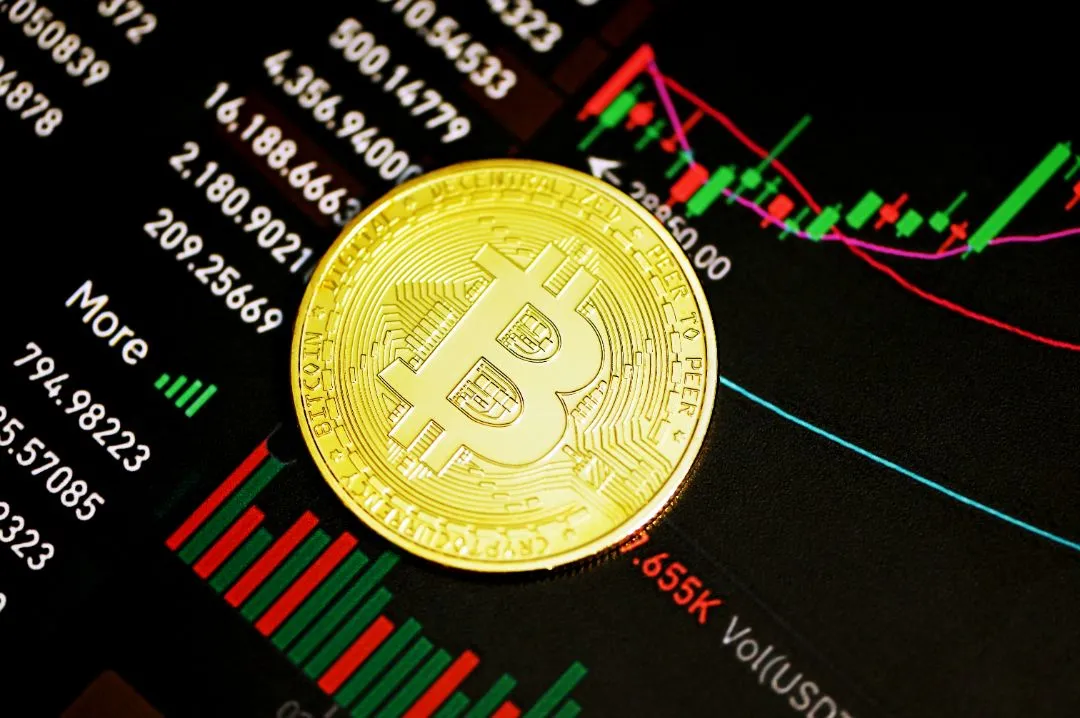
Bitcoin is facing growing uncertainty as it trades near $90,000, down nearly 30% from its October peak of $126,000. While the cryptocurrency remains under pressure, investors are increasingly focused on Tokyo, where a potential change in monetary policy could tighten global liquidity. According to CoinDesk, which cited a report from Nikkei, the Bank of Japan (BOJ) is expected to raise its policy rate by 25 basis points to 0.75%, a move that would push borrowing costs to their highest level in nearly three decades. Historically, a stronger yen has often been associated with weaker Bitcoin performance amid tighter global liquidity.Photo by Kanchanara on UnsplashYen carry trade in focusThe report suggested that higher rates could unwind the yen carry trade, a strategy in which investors borrow cheap yen to fund positions in higher-yielding assets such as stocks and U.S. Treasuries. A similar dynamic played out following the Japanese central bank’s July hike, which precipitated a market-wide selloff that dragged Bitcoin from roughly $65,000 down to $50,000. However, CoinDesk noted that a recurrence of such volatility cannot be assumed. It added that speculative positioning is already skewed toward yen strength, while steadily rising Japanese bond yields suggest monetary policy is adjusting to prevailing market realities. Institutional skepticism toward BitcoinBeyond the macroeconomic landscape, fundamental skepticism remains entrenched among traditional finance heavyweights. John Ameriks, Vanguard’s global head of quantitative equity, said at Bloomberg’s ETFs in Depth conference that the asset behaves more like a speculative digital collectible, comparable to a Labubu toy, than a conventional investment, citing its lack of income generation, compounding, and cash-flow characteristics. Ameriks’ comments follow Vanguard’s move earlier this month to permit trading of select third-party crypto ETFs. He said the decision was based in part on the funds’ ability to establish a track record since their January 2024 launch. While acknowledging that Bitcoin could theoretically offer value during periods of high inflation or political instability, he maintained that its history remains too short to draw conclusions. Bullish case for BitcoinA contrasting view was offered by Katherine Dowling, president of the Bitcoin Standard Treasury Company. Speaking with DL News, Dowling projected that Bitcoin would surge to $150,000 by the end of 2026. She pinned this bullish outlook on favorable U.S. regulatory shifts, increased liquidity from Federal Reserve rate cuts, and sustained institutional adoption via ETFs.The perceived influence of institutional flows was also underscored by a recent weekly survey of 2,000 South Korean investors conducted by CoinNess and Cratos. The data showed that 42.3% of respondents view flows into and out of spot Bitcoin ETFs as the primary price driver. Monetary policies in major economies like the U.S. and Japan ranked second at 26.7%, while 16.3% pointed to shifts in equity markets. Another 11.5% attributed price action to the halving cycle, and 3.4% said they could identify no specific catalyst.
Dec 14, 2025
Terraform Labs co-founder Do Kwon sentenced to 15 years for ‘generational’ fraud
Do Kwon, a South Korean national and the central figure in the 2022 collapse of the Terra blockchain ecosystem, was sentenced to 15 years in prison on Dec. 11, capping a federal case that exposed a multibillion-dollar scheme built on false promises and secret market manipulation. According to a U.S. Department of Justice press release, District Judge Paul A. Engelmayer handed down the sentence in Manhattan federal court, finding that the 34-year-old orchestrated a scheme that inflicted substantial losses on both retail and institutional investors.Photo by Tingey Injury Law Firm on Unsplash"This was a fraud on an epic, generational scale. In the history of federal prosecutions, there are few frauds that have caused as much harm as you have, Mr. Kwon," Engelmayer said, according to Reuters. Kwon, who was extradited to the U.S. in December 2024 following his arrest in Montenegro, pleaded guilty in August. Addressing the court, he acknowledged the devastation caused by the collapse. "All of their stories were harrowing and reminded me again of the great losses that I’ve caused. I want to tell these victims that I am sorry," Kwon said. A house of cardsAccording to court filings, Kwon’s deception ran from 2018 through 2022, misleading investors regarding the stability of the algorithmic stablecoin TerraUSD (UST), the LUNA token, and the independence of the Luna Foundation Guard. Prosecutors outlined a pattern of fabrication across Terraform’s products. When UST lost its $1 peg in May 2021, Kwon claimed an automated "Terra Protocol" restored balance. In reality, investigators found the company secretly utilized a high-frequency trading firm to prop up the price, creating a "false impression" of the system’s resilience. The fraud extended to Terraform’s partnerships and applications. Investigators said Kwon lied about the South Korean payments platform Chai, claiming its transactions were settled on the Terra blockchain. Instead, Chai used traditional payment networks, with Terraform simply copying data to the blockchain to feign integration. Similarly, Kwon allegedly manipulated the Mirror Protocol, a platform for synthetic stock trading. While touting it as decentralized, prosecutors said he used bots, funded by stablecoins he created, to inflate volume and manipulate asset prices. The collapse and captureBy spring 2022, the ecosystem’s value exceeded $50 billion. However, when UST broke its peg again in May 2022, Terraform could not artificially restore it. The resulting crash erased at least $40 billion in value and triggered a contagion across digital-asset markets. While Kwon publicly claimed cooperation with authorities during the fallout, prosecutors introduced recordings suggesting he privately explored seeking political protection to avoid accountability. He was eventually arrested in Montenegro in March 2023 for traveling on a fraudulent passport. In addition to the prison term, Judge Engelmayer ordered Kwon to forfeit over $19 million, including interests in Terraform and its digital assets. The case was investigated by the Federal Bureau of Investigation (FBI) with assistance from Montenegrin and South Korean authorities. The Securities and Exchange Commission (SEC) has filed a separate civil action. Global crackdown widensWhile the U.S. concludes the Kwon case, scrutiny of the crypto sector is intensifying abroad. DL News, citing the Belarusian outlet Onliner, reported that Belarusian authorities have blocked access to digital asset trading platforms Bybit, Bitget, and OKX. The Ministry of Information cited the Mass Media Act for the decision, though KuCoin and Binance remain accessible. The step contrasts with President Alexander Lukashenko’s earlier support for developing a national crypto reserve and mining sector. Meanwhile, the Belarusian arm of Russia’s Sputnik reported that State Control Committee chairman Vasily Gerasimov recently put in place a record system identifying wallets authorities suspect are used for criminal money laundering.

Dec 12, 2025
a16z establishes Seoul presence as Asia’s retail crypto market evolves
Andreessen Horowitz is deepening its bet on Asia’s retail crypto boom, even as trading on South Korea’s largest exchanges has cooled from last year’s peaks. The firm’s crypto arm, a16z crypto, said in a press release that it has opened its first Asia office in Seoul, citing South Korea’s high level of retail participation. Nearly one in three South Korean adults owns cryptocurrency, exceeding the share of stock investors, according to the firm. The move comes as the broader Asia-Pacific region cements its role as a hub of grassroots crypto activity, a trend highlighted in Chainalysis’ 2025 Global Crypto Adoption Index.Photo by Brady Bellini on UnsplashAltcoin-heavy retail marketSouth Korea has been a major contributor to that growth. Bloomberg reported in October that digital assets have increasingly become a long-term savings vehicle for many South Koreans, particularly those trying to purchase homes. Trading on local platforms remains heavily skewed toward higher-risk altcoins, which account for more than 80% of total volume across domestic exchanges. Still, overall activity has dropped sharply over the past year. A November report from Wu Blockchain said trading on Upbit, the country’s largest exchange, is down about 80% from a year earlier. The platform averaged $1.78 billion in daily volume in November 2025, compared with roughly $9 billion in December 2024. Bithumb, the second-largest exchange, saw a similar pullback, with average daily volume falling from $2.45 billion last December to about $890 million this November. Some of that retail liquidity appears to have rotated into equities, with the benchmark KOSPI index up more than 72% year-to-date. Asia’s wealthy to increase crypto exposureEven as spot volumes recede, higher–net–worth investors across the region are signaling longer-term interest. Sygnum’s APAC HNWI Report 2025, cited by Cointelegraph, found that 60% of surveyed high-net-worth individuals plan to increase their crypto exposure over the next two to five years. The report said 87% of respondents already hold digital assets; about half allocate more than 10% of their portfolios, and the average allocation is around 17%. The survey included 270 participants with more than $1 million in investable assets or extensive professional investing experience, drawn from ten Asia-Pacific markets led by Singapore and including Hong Kong, Indonesia, South Korea, and Thailand. Overall, 90% of respondents said they view digital assets as important for long-term wealth preservation and legacy planning, rather than primarily as a speculative trade. Anchored by the new Seoul office, a16z crypto said it plans to provide go-to-market support for portfolio companies seeking to expand in Asia, including help with distribution, partnerships and community building. The effort will be led by Park Sung-mo, whose previous roles include positions at Monad Foundation and Polygon Labs, as Head of APAC go-to-market. Pakistan looks to crypto for financial modernizationPolicy debates elsewhere in Asia also reflect growing interest in digital assets' economic role. At the Bitcoin MENA Conference on Dec. 9, Pakistan’s Virtual Asset Regulatory Authority chairman Bilal Bin Saqib said the country needs to move beyond conventional economic structures and leverage digital assets as a new source of momentum, according to Cointelegraph. He argued that digital assets and blockchain could form part of a new financial architecture for the Global South, not merely serve speculative use cases. The country’s youth-heavy population, about 70% under age 30, was central to his view that it could take a leading position in crypto adoption. Chainalysis’ 2025 index placed Pakistan third worldwide, pointing to how policymakers in emerging markets are increasingly factoring digital assets into long-term economic strategies.

Dec 11, 2025
Japan to bring crypto under securities oversight amid rising demand
Japan is preparing to shift oversight of crypto assets from its payments rulebook to its main securities law, a move that would treat digital tokens more squarely as investment products rather than payment tools, according to a new report from the country’s financial regulator. In a working-group paper on crypto asset regulation released Dec. 10, the Financial Services Agency (FSA) said it plans to bring “crypto assets” under the Financial Instruments and Exchange Act (FIEA) instead of the Payment Services Act (PSA), as reported by local outlet CoinPost. The agency framed the change as an effort to strengthen investor protection as more households buy digital assets for investment purposes.Photo by Alessio Ferretti on UnsplashCrypto distinct from traditional securitiesThe regulatory perimeter itself would not expand. The FSA intends to keep using the PSA’s existing definition of “crypto assets,” while leaving non-fungible tokens (NFTs) and stablecoins outside the scope of the new framework. Under FIEA, crypto assets would be carved out as a distinct class separate from traditional securities, reflecting the fact that they generally do not confer legal claims such as dividends or interest payments. That distinction is already shaping how firms attempt to expand the economic utility of crypto assets. The move toward a clearer rulebook also arrives as market participants look for ways to construct return-generating mechanisms for assets that do not produce steady income on their own. Hong Kong–based Animoca Brands has partnered with Solv Protocol to provide Japanese institutions access to a Bitcoin-backed wrapper, according to Cointelegraph. The product is structured to generate returns in the 4% to 12% range for large holders, effectively layering yield on top of a token that otherwise provides no ongoing income. Rising retail demandThe regulator's report also details how deeply crypto has penetrated Japan’s retail market. As of October 2025, accounts at domestically registered crypto-asset exchanges had climbed past 13 million, with user deposits topping 5 trillion yen (about $32 billion). Roughly 70% of account holders fell into annual income brackets below 7 million yen (around $45,000), and more than 80% of individual accounts held less than 100,000 yen (about $640). The FSA said 86.6% of trading was driven by expectations of long-term price gains, indicating that most users view crypto primarily as an investment vehicle rather than a means of payment. Against that backdrop, the working group concluded that FIEA is a better fit than the PSA, which is geared toward payment services and anti-money-laundering (AML) controls. Shifting to the securities law would give regulators clearer authority to impose disclosure standards, govern conduct in the market, and levy penalties for unfair trading practices, the report said. The proposed framework would place heavier disclosure obligations on token issuances and initial exchange offerings (IEOs). Issuers or the listing exchanges would be required to provide key information to investors, and, in cases where an issuer does not have audited financial statements, offerings would be subject to investment limits. Crypto exchanges would face stronger due diligence requirements, tighter cybersecurity expectations, and broader insider-trading restrictions. Those rules would not only apply to employees at trading platforms but also to issuers and other insiders around listing events. Rules split for CEXs and DEXsCentralized exchanges (CEXs) would be supervised largely in line with securities firms. That would include requirements to maintain reserves or insurance to protect customer assets and expanded oversight of wallet-service providers connected to those platforms. Decentralized exchanges (DEXs), which have no central operator, would not be brought under the same regime. Instead, the FSA is proposing lighter, perimeter-based rules focused on disclosures by wallet providers and interface operators, coupled with efforts to warn users about the specific risks of trading on DEXs. Industry participants, meanwhile, have raised concerns that licensed exchanges may face higher compliance costs in the near term as they adapt to the new regime. Moving forward, the FSA is expected to refine the framework with an eye toward submitting a bill to the ordinary Diet session in the new year.

Dec 10, 2025
New Kyrgyzstan, Malaysia initiatives reflect Asia’s shift to asset-backed stablecoins
Kyrgyzstan and Malaysia are advancing separate stablecoin initiatives, signaling a regional shift toward digital assets backed by tangible state reserves. While the projects differ in their underlying assets, gold in Kyrgyzstan and sovereign debt in Malaysia, both employ a hybrid model that combines public-sector oversight with private operational management.Photo by Zlaťáky.cz on UnsplashKyrgyzstan introduces gold-backed stablecoinOn Dec. 9, the Kyrgyz Republic’s state-owned OJSC Virtual Asset Issuer launched USDKG, a stablecoin pegged 1:1 to the U.S. dollar, according to a press release. The initial issuance comprises 50 million tokens, which the issuer says are fully backed by physical gold reserves. The project structure separates regulatory authority from asset management. While the issuer operates under the Ministry of Finance, management of the gold reserves has been contracted to a private company registered in the Central Asian nation. Officials say this arrangement distinguishes USDKG from a central bank digital currency (CBDC) and that the stablecoin is intended to operate alongside the national monetary system rather than compete with it. According to the statement, the token is currently issued on the Tron blockchain, with future support planned for Ethereum. The project cites an audit by ConsenSys Diligence and says it complies with Financial Action Task Force (FATF) standards, including identity verification for redemptions. The private operator aims to raise the reserves to $500 million in the next phase and later to $2 billion. Malaysia develops bond-backed tokenIn a parallel development, a Malaysian infrastructure firm with ties to the monarchy is preparing a ringgit-pegged stablecoin. According to Bloomberg, Bullish Aim is introducing the RMJDT token, which will be backed by Malaysian ringgit deposits and short-term government bonds. The company is owned by Ismail Ibrahim, son of Malaysia’s king. The token is designed to operate on Zetrix, a layer-1 blockchain developed by Malaysian firm Zetrix AI Bhd. The network currently supports the Malaysian Blockchain Infrastructure, a government-endorsed platform for digital public services and part of the country’s National Blockchain Roadmap. This places the stablecoin on the same technical foundation used for state-level digital identification and trade facilitation. Bullish Aim also intends to establish a digital-asset treasury (DAT), beginning with an investment of 500 million ringgit ($121 million) in Zetrix tokens. A DAT is a type of company that purchases and holds cryptocurrencies on its balance sheet. The initiatives in Kyrgyzstan and Malaysia suggest that stablecoin development in Asia may continue to evolve through state-anchored, asset-backed models. As each country tests its own approach to reserve management, issuance, and compliance, the next phases of both projects will offer early indications of how such frameworks perform in practice.

Dec 09, 2025
Abu Dhabi broadens crypto regime with new stablecoin approvals and Binance licensing
While global cryptocurrency sentiment remains subdued, authorities and state-linked investors in Abu Dhabi are deepening their engagement with digital assets through expanded regulation and increased capital allocation. On Dec. 8, stablecoin issuer Tether and cryptocurrency exchange Binance announced they had secured regulatory approvals from the Abu Dhabi Global Market (ADGM), the international financial center and free economic zone in the UAE capital. The moves signal a continued effort by the United Arab Emirates to integrate blockchain technology into its formal financial system, creating a contrast with the broader market’s current “extreme fear” rating of 22 on the Alternative Fear and Greed Index.Photo by DrawKit Illustrations on UnsplashTether, Ripple stablecoins approvedTether confirmed that its USDT stablecoin has been designated as an Accepted Fiat-Referenced Token within the ADGM. This status allows financial entities licensed by the Financial Services Regulatory Authority (FSRA) to conduct regulated activities involving USDT across a broader range of blockchain networks, including Aptos, Celo, Cosmos, Kaia, Near, Polkadot, Tezos, TON, and TRON. The approval builds on previous authorizations for USDT on Ethereum, Solana, and Avalanche, and follows the FSRA’s recognition of Ripple’s RLUSD stablecoin last month. Binance fully cleared for regulated launch Simultaneously, Binance announced it has secured full authorization from the FSRA to operate a regulated platform within the financial center. Pending final operational preparations, Binance is scheduled to commence regulated activities on Jan. 5, 2026. The exchange will operate in Abu Dhabi through a three-entity structure that separates key functions, mirroring traditional financial infrastructure. Nest Exchange Limited (currently Nest Services) will function as the regulated arm for spot and derivatives trading, while Nest Clearing and Custody Limited will manage clearing and settlement. Broker-dealer activities will be handled by a third entity, Nest Trading Limited (currently BCI Limited). Circle awarded FSP for paymentsMore recently, Circle, the issuer of the USDC stablecoin, announced the receipt of a Financial Services Permission (FSP) license from the FSRA. The license allows Circle to act as a Money Services Provider within Abu Dhabi’s International Financial Centre (IFC), enabling it to support regulated payment and settlement services for businesses, developers, and financial institutions across the UAE. Circle has been expanding its regulatory presence in the region throughout the year. In February, the Dubai International Financial Centre (DIFC) recognized the company’s USDC and EURC tokens as permitted crypto assets under its virtual asset framework. This regulatory expansion comes amid the UAE’s efforts to develop a comprehensive financial compliance framework. A recent report by the Global Finance & Technology Network identified the UAE as one of seven jurisdictions globally that meet three core standards for anti-money laundering and counter-terrorist financing compliance. Those standards include know-your-customer (KYC) and identity verification, suspicious transaction reporting, and implementation of the Financial Action Task Force (FATF) Travel Rule. Institutional capital inflows riseIn parallel with the regulatory push, investment vehicles linked to the Abu Dhabi government have increased their exposure to digital assets. Bloomberg reported that in the third quarter, the Abu Dhabi Investment Council, a Mubadala subsidiary, increased its position in BlackRock’s iShares Bitcoin Trust ETF more than threefold to nearly eight million shares. Separately, the Royal Group, an investment firm associated with the Abu Dhabi royal family, currently holds roughly 6,516 Bitcoin, according to Arkham data. An earlier Crypto Briefing report noted that this acquisition was carried out through its majority-owned subsidiary, Citadel Mining. These simultaneous developments in licensing and capital allocation suggest a coordinated strategy to establish Abu Dhabi as a hub for institutional digital assets, with a focus on long-term infrastructure despite current market fragility.
Dec 08, 2025
Chinese industry bodies issue joint warning on crypto fraud and RWA risks
Chinese financial industry groups have warned that illegal fundraising and fraud are increasingly emerging through stablecoins, airdrops, real-world asset (RWA) tokens, and crypto mining schemes, according to a Dec. 5 notice carried by the state-run Xinhua News Agency.Photo by Othman Alghanmi on UnsplashThe joint warning was issued by seven major bodies: the National Internet Finance Association of China, the China Banking Association, the Securities Association of China, the Asset Management Association of China, the China Futures Association, the China Association for Public Companies, and the Payment & Clearing Association of China. These groups stated that such products are being used to drive speculative trading, pyramid schemes, and other illicit activities that threaten financial stability. They stressed that cryptocurrencies are not legal tender in China and do not share the legal status of fiat currency, further noting that regulators have not approved any RWA tokenization activities. Crypto and RWA offerings prohibitedConsequently, the notice bars member institutions from directly or indirectly providing services related to the issuance or trading of cryptocurrencies or RWA tokens. The associations also urged members to intensify risk warnings and investor education, while encouraging the public to report suspected violations. This industry alert follows the central bank’s recent reiteration of its concerns regarding speculative crypto activity. According to Reuters, the People’s Bank of China (PBOC) last month restated its ban on crypto-related business, citing a resurgence in speculation and compliance gaps in stablecoins that complicate risk management. The central bank plans to tighten enforcement against unlawful operations, reinforcing the blanket ban on crypto transactions and mining imposed in September 2021. Old Bitcoin loan feud resurfacesDespite this restrictive framework, disputes tied to legacy crypto dealings continue to surface. Cryptopolitan reported that a long-running controversy has re-emerged surrounding Li Feng, a co-founder of Moore Threads, a Chinese GPU designer widely viewed as a homegrown rival to Nvidia. According to Cryptopolitan, the scrutiny follows the company's Dec. 5 debut on the Shanghai Stock Exchange, where it raised 8 billion yuan ($1.1 billion). Reportedly, Li faces accusations of failing to repay 1,500 Bitcoin allegedly borrowed from OKX founder Xu Mingxing. Citing a Foresight News post referenced by analyst AB Kuai.Dong on X, the report indicates that Li and angel investor Xue Manzi launched a cryptocurrency in 2017, raising 5,000 ETH. According to the outlet, Li has been accused of failing to repay 1,500 Bitcoin that he purportedly borrowed from OKX founder Xu Mingxing. Xu is said to have raised the issue publicly and sought resolution through legal proceedings in both China and the U.S. However, the legal ambiguity surrounding cryptocurrencies at the time was viewed as a major obstacle to settlement. Li, for his part, has characterized Xu’s contribution as a failed investment. The situation took a constructive turn when Xu reposted AB Kuai.Dong’s post, saying observers should look past old disputes. Xu encouraged a focus on constructive industry growth and stated that debt matters should be left to legal channels, offering goodwill toward fellow entrepreneurs. The timing of the renewed dispute alongside recent industry warnings highlights a consistent focus on risk control and legal clarity within China’s digital asset space. Authorities continue to emphasize investor protection and formal reporting channels to curb speculation, while market participants are increasingly turning to legal avenues to resolve legacy issues. These developments point to a sector still wrestling with unresolved disputes and regulatory gaps, underscoring the need for clearer rules for both regulators and entrepreneurs.