Top

Banking giants in Turkey embrace crypto ahead of legislative change

Policy & Regulation·December 15, 2023, 1:34 AM

It remains unclear what the underlying environment for the further development of the crypto sector in Turkey will be until such time as the country introduces a legislative framework to shape the industry’s development. However, that fact is not deterring a couple of Turkey’s leading banks, who have decided to embrace the digital asset realm.
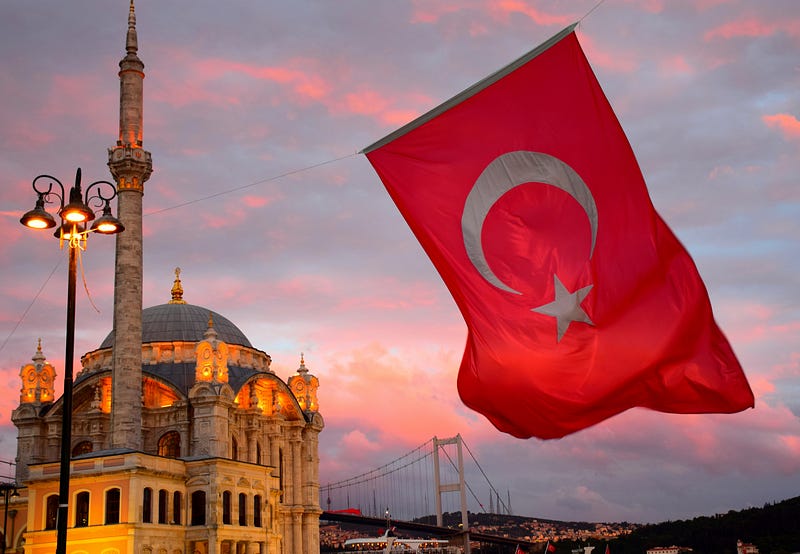
Photo by Michael Jerrard on Unsplash


Stablex acquisition

On Monday CoinDesk Turkiye reported that the investment arm of Turkish bank Akbank had acquired local crypto company Stablex. Stablex was founded in May 2020 by Jihad Shannak with the objective of providing professional services, including trading relative to cryptocurrencies in Turkey. Majority shareholding passed to Ak Investment in May of this year, with initial negotiations on the sale having commenced in August 2022.

A high-ranking official at Ak Investment expressed the group’s ambition to become a pivotal figure in the digital asset realm, signaling a proactive approach to the evolving financial landscape. Akbank also banks the majority of crypto start-ups based in Turkey.

Speaking about the acquisition recently, Akbank executive Mert Erdoğmuş stated:

“We have invested in Stablex to respond to the need for reliable and innovative service in the cryptocurrency market. Stablex reflects our values with its experience in the sector, pioneering achievements and professional service approach.”


BBVA crypto wallet

Alongside Akbank’s move into the digital assets arena, Garanti BBVA, Turkey’s second largest private bank, recently unveiled its crypto wallet app. The feature-rich application includes a cold wallet, empowering users to seamlessly send and receive assets such as bitcoin (BTC), USD Coin (USDC) and ether (ETH).

The pilot project for the app commenced in August, with the application currently available on iOS. In bringing the app to market, the bank created Garanti BBVA Digital Assets, a dedicated subsidiary firm. Commenting on that development back in August, the subsidiary’s Chairman of the Board, M. Çağrı Süzer, stated:

”Our research shows that customers significantly value trust in their crypto transactions and especially on its storage. Hence, we are happy to launch our Crypto Custody Wallet addressing these real needs.”

Despite uncertainties, Turkey has firmly established itself in the global crypto landscape, ranking among the top 20 countries in Chainalysis’ Global Crypto Adoption Index 2023. The instability of the Turkish lira in recent years has been a driver for crypto adoption in the country. In recent days, the bitcoin unit price has reached its highest exchange rate level against the local sovereign currency.

Earlier this week, it emerged that crypto platform Blockchain.com is adding headcount and has its sights set on expansion into Turkey as one of its growth opportunities.


FATF-compliant regulatory approach

Turkey’s regulatory stance has been to take a cautious approach. In 2021, the central bank restricted the use of crypto for payments, although a complete ban on digital assets was ruled out by officials.

Looking ahead, a government official revealed plans for crypto legislation to be presented to Parliament in November. While details remain scarce, this legislative move aligns with Turkey’s broader strategy to exit the Financial Action Task Force’s (FATF) “gray list.”

More to Read
View All
Policy & Regulation·

Oct 10, 2023

Malaysia Ushering in Fifth Digital Asset Exchange

Malaysia Ushering in Fifth Digital Asset ExchangeKuala Lumpur-headquartered crypto platform Hata has become the latest entrant in the local digital asset exchange (DAX) business, securing licensing and regulation from the Securities Commission Malaysia (SC).The brainchild of David Low, former Asia Pacific General Manager at Luno, Hata Digital Sdn Bhd, is now the recipient of conditional approval from the SC, enabling it to facilitate cryptocurrency trading once it fulfills the regulator’s stipulated requirements over the next six to nine months. The firm now joins Luno Malaysia, MX Global, Sinegy DAX, and Tokenize Technology to become the fifth regulated DAX to trade within the Southeast Asian country.Photo by Esmonde Yong on UnsplashFirst digital brokerOne interesting aspect of Hata’s approval is that it also marks the first DAX to receive digital broker status from the SC. This unique status allows Hata to display trade orders from other exchanges on its website or mobile application, giving users access to a broader spectrum of trading opportunities.Hata can match its users’ trades with those available on other exchanges or provide them with cryptocurrency prices from these exchanges. However, it is essential that the exchanges Hata collaborates with are licensed by authorities in “competent jurisdictions,” such as the Monetary Authority of Singapore (MAS), and gain approval from the SC.Low shared his vision, stating:“With the goal of challenging the existing norms, we plan to make digital assets investing easier for institutional investors, businesses, and high-net-worth individuals in Malaysia. And we look forward to launching the platform soon.”Luno competitorLow’s departure from Luno adds an intriguing dynamic to Malaysia’s digital asset industry, given his pivotal role in expanding Luno’s presence in Malaysia and Southeast Asia. At the time of his departure, Luno was widely acknowledged to have commanded over 90% of the local cryptocurrency trading market share, with some estimating it as high as 98%.Low is now stepping into the realm of competition with his former colleagues and company, where he had previously invested significant effort and resources to foster growth.Hata boasts two other Co-Founders, Darien Ng, Chief Revenue Officer, and Chong Kwai Kun, Chief Technology Officer, both with extensive expertise in blockchain technology and software development in Malaysia since 2018.Low stated that the “SC’s decision to grant us conditional approval to operate a DAX represents a vote of confidence in us and the digital asset industry. This is a significant milestone for my team and I at Hata, after months of extensive efforts.”One-stop crypto platformHe continued: “Hata wants to enable safe and effortless cryptocurrency access and we look forward to being a one-stop and reliable platform for our customers, with our suite of products and services.”Low emphasized their goal of challenging existing norms, making digital asset investing more accessible to institutional investors, businesses, and high-net-worth individuals in Malaysia.The exchange’s founder also commended the SC’s efforts in expanding the regulated market operator framework to allow DAXs to operate as digital brokers. In addition, Hata has obtained a money broker license from the Labuan Financial Services Authority, reinforcing its efforts to operate as a compliant and secure platform.

news
Web3 & Enterprise·

Oct 31, 2023

Thailand’s KBank Furthers Crypto Business Through Satang Acquisition

Thailand’s KBank Furthers Crypto Business Through Satang AcquisitionKasikornbank (KBank), Thailand’s second largest bank, is expanding its involvement in the digital assets sector through the acquisition of a majority stake in the local crypto exchange Satang.Photo by Lisheng Chang on UnsplashTradFi embracing cryptoThe acquisition, involving a purchase of 97% of Satang’s shares, is a significant move in the context of an ongoing trend of traditional financial institutions embracing digital assets. The deal was officially announced on Monday, as disclosed on KBank’s official website.KBank executed the acquisition through its newly established subsidiary, Unita Capital, whose registered capital is valued at 3.7 billion Thai baht (approximately $103 million). Unita Capital specializes in investments within the digital asset sector. This move underlines the bank’s commitment to stay ahead in the dynamic world of digital finance.Subsidiary formationIn light of the acquisition, Satang Corporation is set to undergo a name change and will soon be known as Orbix Trade Company Limited. Unita Capital has established a number of other subsidiary companies as a consequence of the buy-out.KBank’s cryptocurrency venture will be structured into three distinct divisions. Orbix Custodian has been formed, focusing on secure digital asset storage and management. There is a growing demand for reliable digital asset custody services. KBank will use Orbix Custodian as a vehicle to capitalize on that growth opportunity.Orbix Invest has been established to act as the venture arm of the business relative to the digital assets space. It will focus on fund management in meeting the needs of clients looking for exposure to the digital assets sector. Lastly, Orbix Technology has been established to concentrate on blockchain technology development.Satang, a prominent player in the Thai cryptocurrency scene, operates a cryptocurrency exchange alongside a range of digital asset services. Notably, Poramin Insom, the founder of Satang, is recognized for his role in launching Firo (formerly Zcoin), a privacy-centric cryptocurrency. Insom confirmed the acquisition via a Facebook post on Monday, acknowledging the evolution of Satang as it transitions under KBank’s ownership.Insom stated: “I’ve been at Satang since 2017 until now, six years have passed. Currently, Satang on the trading board has already exited according to the news. And there should be an official announcement soon.” He also highlighted Satang’s diversified ventures, including Satang Technology, a blockchain service platform, and Satang Space, focusing on space-related endeavors.This strategic move by KBank follows its recent launch of a $100 million fund, introduced in September, targeting investments in Web3, fintech, and artificial intelligence (AI). In 2022, KBank launched Bigfin, a digital asset investment analysis platform. Bigfin has since been integrated with the Binance platform.Last year the bank backed Thai digital asset and blockchain startup Forward, a project that is working on developing a decentralized derivative platform.KBank is recognized as the second largest lender in Thailand based on assets, trailing behind Bangkok Bank. Thai NVDR Company Limited is the largest shareholder of KBank, as per data from the Stock Exchange of Thailand (SET), with the SET itself owning 99.9% of NVDR’s shares.

news
Markets·

Nov 15, 2024

Sygnum survey reveals greater crypto allocation appetite in Singapore

Sygnum Bank, a digital asset bank based in Switzerland and Singapore, has conducted a survey which has identified that investors in Singapore are more interested in increasing their allocation to crypto than their international peers. The bank’s 2024 Future Finance survey states that while a global average of institutional investors of 47% plan to increase their exposure to crypto next year, in the case of Singapore-based institutional investors, 57% of them expressed the view that they would increase their crypto holdings in 2025.Photo by Precondo CA on UnsplashThe report states:  "Singapore investors exhibit a higher risk appetite and motivation to invest on average than respondents from other countries.” The annual survey, which was published on Nov. 14, collated insights garnered from more than 400 institutional and professional investors, distributed across 27 countries, with average investor experience of in excess of 10 years. 121 of the survey’s participants were based in Singapore, with the survey having been conducted during Q3 2024. Long-term confidenceSingaporean respondents suggested that they were confident in the long-term potential and outlook where cryptocurrencies are concerned. While the main reason for investing in crypto was to gain exposure to digital assets in line with a global trend (56%), 41% of respondents from the city-state cited portfolio diversification as their reason for investing in the emerging asset class.  75% of investors expressed the belief that regulatory clarity has improved recently. Growing confidence among institutional investors generally is likely to be developing due to increasing certainty relative to digital asset regulation. While Donald Trump had not been elected in the United States at the time that survey participants responded, it was looking increasingly likely that he would win the election.  That’s likely to have had a bearing on investor outlook, not just within the United States but internationally, given the implications in terms of positive regulation and an overall positive approach to crypto. 39% of Singaporean respondents cited yield-generation opportunities as their motivation in investing in digital assets. The recent advent of spot crypto exchange-traded funds (ETFs) stood out as another motivation for investors.  Breaking down specific areas of interest within the crypto sector, 71% of Singaporean respondents were interested in investment in layer-1 blockchain networks. Meanwhile, 56% expressed an interest in Web3 infrastructure investment options, with 41% showing an interest in layer-2 blockchain networks. Interest in asset tokenizationIn relation to tokenization, 47% of those surveyed in Singapore indicated an interest in tokenizing mutual funds and corporate bonds over and above other financial assets and products. When first proposed, real estate was considered the most obvious asset primed for tokenization but mutual funds and corporate bonds now appear to be gaining more traction. Asset tokenization has been garnering considerable attention in mainstream finance but especially so in Singapore. Local regulator, the Monetary Authority of Singapore, (MAS) has been running Project Guardian, a collaboration between MAS and the financial services industry with an emphasis on asset tokenization. The project recently brought in the German central bank, the World Bank, HSBC and markets infrastructure firm Euroclear as participants. 

news
Loading