Top

Philippines leading charge in Asia amid global bitcoin payment surge

Markets·January 09, 2024, 2:47 AM

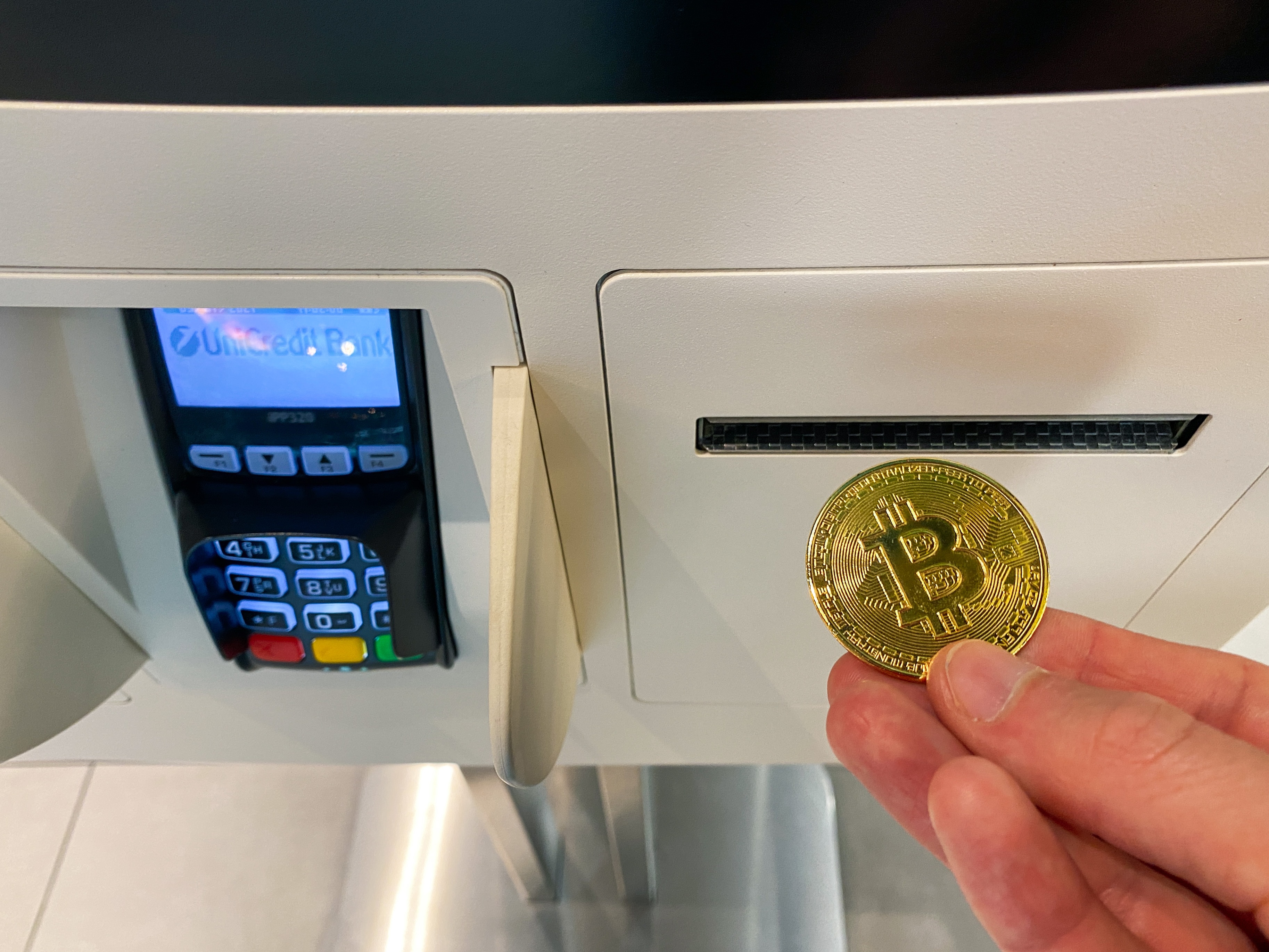
Bitcoin's global merchant acceptance witnessed a substantial surge, growing by 174% throughout 2023, with the Philippines proving itself in leading the way within the Asian region.
https://asset.coinness.com/en/news/062d28d85a56dde233f53ec1f8abcc99.jpg
Photo by rc.xyz NFT gallery on Unsplash

Region facing regulatory restrictions

That’s according to BTC Map, a provider of bitcoin merchant mapping services. The data, derived from BTC Map's open-source mapping data via OpenStreetMap, revealed that the number of venues accepting bitcoin payments surged from 2,207 at the beginning of the year to 6,126 by the year's end. This diverse array of businesses included restaurants, bars, shops and various services.


The expansion of bitcoin vendors is a global phenomenon, with concentrations notably observed in Europe, the United States and Latin America. The Philippines stands out in Asia with hundreds of vendors, while regulatory restrictions in East Asia, especially China, have limited adoption.


While it's great to see a high level of direct adoption among Filipino merchants, it's easy to understand why this level of adoption hasn’t been matched within Asia’s largest market. China has had a long-standing ban on cryptocurrency trading, mining or its use as a means of payment. Despite the ban, it appears that crypto trading is still alive and well in China, although beneath the surface.


With mining too, while the sector shrank considerably once a ban was imposed, there is believed to be a significant ongoing level of bitcoin mining occurring still within China’s borders. However, when it comes to vendors, this is likely to be an activity that is far too visible to the authorities and with that, China’s 1.4 billion citizens are not getting the opportunity to buy goods and services with the world’s leading cryptocurrency.


Compounding matters, the Chinese authorities have been working diligently on a myriad of projects to bring about day-to-day retail use of the country’s central bank digital currency, the digital yuan. Those efforts are not likely to be aligned with an accommodation of or tolerance of bitcoin payments.


The increase in merchant listings showcased a slight decline from the peak in September, which reached 6,590 merchants. BTC Map's platform allows businesses and users to tag locations accepting bitcoin payments, with the rise in numbers potentially attributed to increased user contributions to the database.


This surge in bitcoin adoption globally occurred against the backdrop of the cryptocurrency's price volatility throughout the year. Despite potential limitations in data collection due to its reliance on volunteer contributions, the overall trend indicates a growing acceptance of bitcoin.


Ongoing challenges to adoption

A panel of bitcoin leaders at the Plan B conference in October discussed the challenges and opportunities of global bitcoin adoption. Notably, they highlighted the difficulty of onboarding new users and merchants, particularly in diverse cultural contexts. In El Salvador, where bitcoin is legal tender, obstacles persist in convincing merchants to accept bitcoin payments.


Geographically, concentrations of bitcoin-accepting vendors were more prevalent in Central and South America, while Africa and Asia demonstrated fewer such establishments. The United States and Europe led in the global count of crypto-friendly merchants.


The panel stressed the importance of education in overcoming these challenges, emphasizing the need for user-friendly applications to facilitate mainstream adoption, moving away from complex technologies. As bitcoin continues its global expansion, the industry recognizes the vital role education and user-friendly solutions play in fostering broader acceptance.


 

More to Read
View All
Web3 & Enterprise·

Sep 01, 2023

Bitay Ventures into Expanding UAE Crypto Market

Bitay Ventures into Expanding UAE Crypto MarketTurkey’s Bitay, a cryptocurrency exchange headquartered in Istanbul, has taken the decision to enter the United Arab Emirates (UAE) market.The company announced the development via a press release published on Thursday.Bitay General Manager Niyazi Yilmaz expressed his satisfaction in having made the move, stating: “The UAE provides a stable regulatory environment for crypto exchanges. It will serve as more than just a market for Bitay, it will be our technology base, central to our global blockchain strategy.”Photo by Aldo Loya on UnsplashGovernment-aided kickstartBitay sprang to life in 2018 following the award of a research grant by the Turkish government. The business has been operational in Turkey over the course of the past five years, but took the decision to expand on a global basis in 2021. The upshot of that decision saw the company obtain a Money Services Business (MSB) license in 16 states in the United States. Beyond that, the firm has made efforts to extend its services to customers across Europe, Asia, Africa, and the Americas.Last year, Bitay entered the Indian market, and as part of that process, it established an office in Gurgaon. At that time, the company claimed that India, the Turkic countries, Eastern Europe, the Balkans, and selected countries in the Middle East and North Africa (MENA) were its priority markets.Stablecoin USPThe company feels that it has something additional to offer the UAE market by comparison with other platforms that will provide it with a unique selling proposition (USP). It will also offer AEDD, a stablecoin that is pegged to the UAE's local currency, the United Arab Emirates Dirham (AED). Yilmaz explained: “AEDD is not just a stable coin, but a testament to the investment and trust we place in the UAE’s digital future.”To further bootstrap the launch of the platform within the UAE, Bitay is offering some preliminary incentives to encourage UAE residents to use the service. To that end, it’s launching an “Advantageous 2nd Sales Period” campaign. The offering will incorporate 25% discounts on its native exchange token, accompanied by a yield bonus of up to 30% on USDT-based investments.Native token offeringThe company claims that its native token achieved a 330% surge in value within its first year. That said, exchange tokens have been the subject of controversy more recently. The reliance of failed cryptocurrency exchange FTX on its native FTT token was a key factor in the downfall of the platform in 2022. Similar concerns have been raised with regard to global crypto exchange Binance relative to its native BNB token, albeit that any such assertions remain a matter of speculation.A progressive regulatory approach to virtual assets over the course of the past 12 months in the UAE has seen proponents of digital currency heap praise on the country. It has also led to a number of sizable crypto platforms attaining licensing in Dubai and Abu Dhabi, while others have established offices or headquarters within the UAE.

news
Web3 & Enterprise·

Jan 18, 2024

Socket's Bungee resumes operations following exploit

Socket, a cross-chain infrastructure protocol, and its interoperability bridging platform, Bungee, have restarted operations following a temporary pause prompted by an exploit that led to the apparent theft of $3.3 million.Photo by Anna Tarazevich on PexelsSecurity incidentTaking to the company’s Discord, Socket team hospitality lead Taylor Melvin clarified that it had “experienced a security incident which affected wallets with infinite approvals to Socket contracts.” The incident, which occurred on Tuesday, involved an unknown attacker draining millions worth of stablecoins and other tokens from the Bungee bridging aggregator. The attackers targeted wallets with infinite approvals to Socket contracts, exploiting authorizations for blockchain-based tools that allow applications to access tokens in a user's wallet. Security researcher "@speekaway" was the first to flag the exploit on Tuesday. The attacker's wallet, connected to the exploit, held nearly $3 million in ether (ETH) and $300,000 worth of other tokens. By 2:47 p.m. ET, the attack seemed to have ceased, with the researcher recommending users to revoke approvals for Socket to safeguard their assets. Pausing contractsIn response to the security breach, Socket announced the pause of affected contracts on Tuesday at 3:15 p.m. ET. The project's team promptly identified and addressed the issue, taking swift action to mitigate the exploit's impact. @speekaway chimed back in once contracts had been paused, writing:”Think this pause fixed it, very likely no more attacks are possible. So if you are currently freaking out about revoking you can probably relax.” Normal service returnsAs Socket paused activity during the incident, preventing further propagation of the attack, developers worked to fix the issue. Early Wednesday, Socket developers announced that the problem had been resolved, and normal activities had resumed. The team also stated that plans for compensation were in progress. Cross-chain bridges, like Socket's Bungee, facilitate token transfers between different blockchains but remain susceptible to exploitation. Blockchain security and data analytics company PeckShield confirmed that at least $3.3 million had been lost, highlighting the need for enhanced security measures in the rapidly evolving blockchain ecosystem. The exploit involved the exploitation of a recently added route, which has since been disabled. The attacker targeted users who had over-approved Socket, draining funds up to the limit of their approval. This incident follows the $81 million hack of Orbit Chain, a cross-chain bridge connecting Ethereum to other networks, earlier in January. Cross-chain tools' complexity contributes to the frequency of such attacks, emphasizing the importance of understanding the security measures in place when utilizing these bridges. In a message to CoinDesk, Sergey Nazarov, co-founder of Chainlink, emphasized the need for users to scrutinize the security of their chosen bridge, considering the various levels of cross-chain security. With the complexities involved, users are encouraged to be vigilant and informed about the security spectrum of the bridges they employ. Socket was founded by Indian duo Rishabh Khurana and Vaibhav Chellani. In September, the company raised $5 million, with funding coming from Framework Ventures and Coinbase Ventures. 

news
Policy & Regulation·

Oct 04, 2023

Cryptocurrency Losses Surge to $686 Million in Q3

Cryptocurrency Losses Surge to $686 Million in Q3The cryptocurrency industry has witnessed a turbulent third quarter, with losses surging to $686 million. This unsettling development marks the worst quarter of the year, contributing to $1.4 billion in total losses year-to-date.Photo by GuerrillaBuzz on UnsplashImmunefi reportThese alarming statistics have been unveiled in a report by Singapore-headquartered blockchain security firm Immunefi. According to the report, the number of crypto hacking incidents skyrocketed by 153% year-over-year in the third quarter, with 76 separate incidents recorded.This stands in stark contrast to the same period in 2022, which saw a mere 30 hacking incidents. Furthermore, the losses resulting from these incidents witnessed a 60% increase, surging from approximately $429 million in Q3 2022 to the current level of $685 million. This marks the highest loss recorded for the year.Devastating hacksOf these incidents, two major hacks targeting Mixin Network and Multichain were particularly devastating, accounting for nearly half of the total losses in the quarter at $326 million. The Mixin Network hack, attributed to North Korean-sponsored hackers known as the Lazarus Group, underscores the involvement of state-backed actors in crypto-related cybercrimes.The Lazarus Group’s fingerprints were also found in major hacks of cryptocurrency exchanges, including CoinEx, Alphapo, and Stake, as well as digital payments firm CoinsPaid. Web3 projects based in Japan have been particularly hard hit by the hacker group’s activities. The group was responsible for losses exceeding $200 million.An overwhelming majority of the total Q3 losses, approximately 97%, were attributed to hacking incidents, while frauds and scams constituted a mere 3%. Decentralized finance (DeFi) protocols bore the brunt of the damage, with nearly $500 million lost, compared to over $185 million stolen from centralized exchanges and services. This highlights the vulnerability of DeFi platforms and the intricacies of smart contract code that underlie many of these applications.Among the targeted blockchains, Ethereum, BNB Chain, and Coinbase-incubated Base blockchain were the most prominent, with Ethereum being hit by 35 out of 82 chain losses. These platforms were singled out due to the substantial funds they held and the high level of activity on their networks.Greater recovery effortsThough the situation may appear bleak, there is a glimmer of hope in the form of recovery efforts. Immunefi reports an 8.9% recovery rate, with $61.2 million of stolen funds successfully reclaimed in six cases. Notably, Mixin Network recently introduced a $20 million “bug bounty” in a bid to incentivize the return of stolen funds, underscoring the cryptocurrency industry’s unwavering determination to combat these challenges.Immunefi itself has played a pivotal role in mitigating crypto-related risks, disbursing over $80 million in bounties and safeguarding more than $25 billion in user funds across various protocols. The company’s recent launch of on-chain vaults represents a significant step toward decentralizing its bug bounty platform, further fortifying security within the crypto ecosystem.

news
Loading