Top

Mt. Gox moves $9B in Bitcoin for first time in years

Markets·May 29, 2024, 8:24 AM

Wallets belonging to the defunct Japanese Bitcoin exchange Mt. Gox have transferred over 140,000 Bitcoin (BTC), valued at approximately $9 billion, to an unknown address. 


Sell-off fears

This significant movement began in the early hours of Tuesday morning in Asia, marking the first such transfer from Mt. Gox’s cold wallets in over five years. Julio Moreno, head of research at CryptoQuant, initially confirmed that 12,239 Bitcoin had been transferred from Mt. Gox over the course of an hour. A short time later, he provided an update on X, stating:

"All coins have been transferred to a new address."


Despite market disquiet, the prevailing view which subsequently emerged is that the transfer is believed to be part of a plan to distribute assets back to creditors before the October 31, 2024 deadline. Alex Thorn, head of research at Galaxy Digital, shared his perspective on X, suggesting that most of the transferred Bitcoin would likely be held by creditors rather than being sold on the open market.


Despite these reassurances, the market reacted negatively for a time. Bitcoin's price dropped by 1.4% since the start of Asian trading hours, falling to a low of $67,680 from a Monday high of over $70,000.
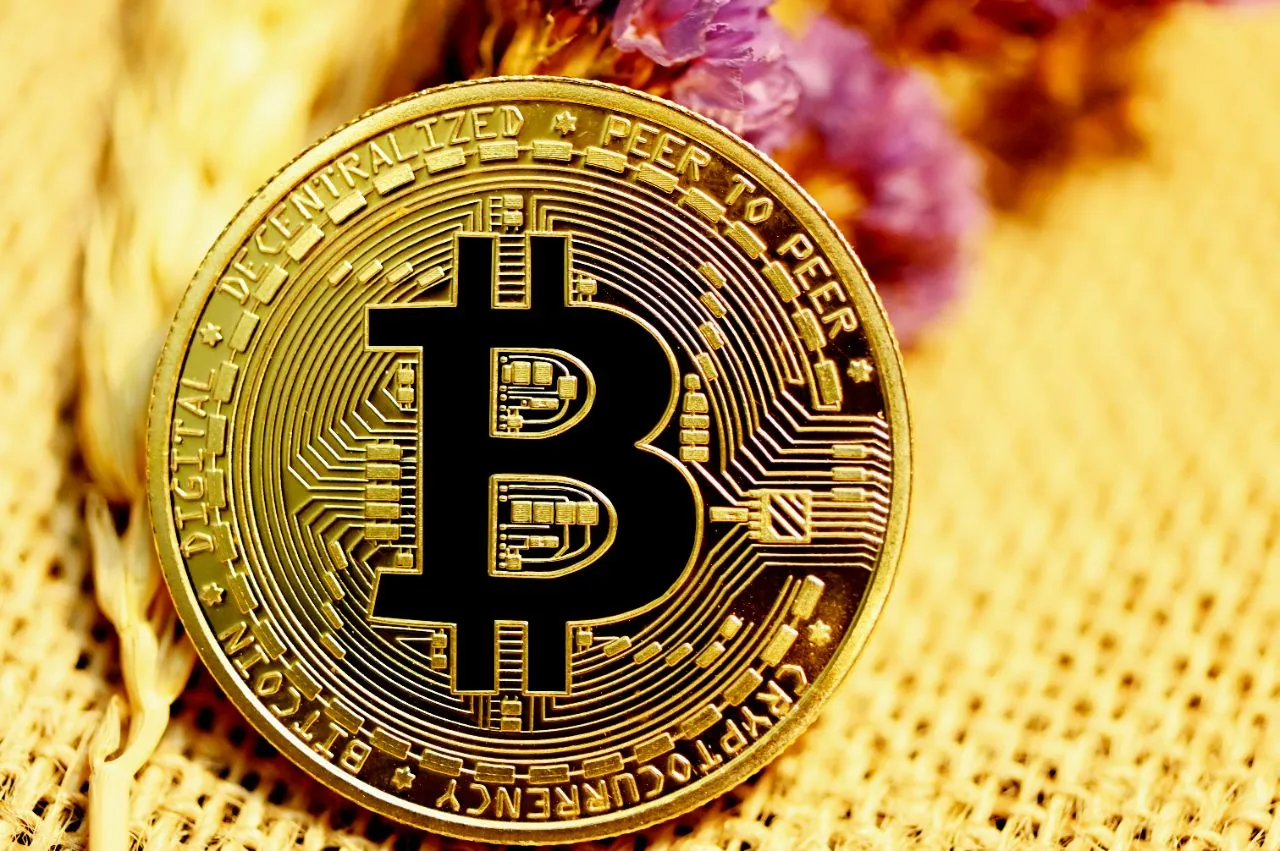
https://asset.coinness.com/en/news/1035212b80c4b1ac157dcf12797a0a1e.webp
Photo by Kanchanara on Unsplash

No Bitcoin Firesale

To quell fears of a massive Bitcoin sell-off, Mark Karpeles, the former CEO of Mt. Gox, addressed the situation on X. He stated:


“As far as I know, everything is fine with MtGox. The trustee is moving coins to a different wallet in preparation for the distribution that will likely happen this year. There is no imminent sale of bitcoins happening."


Rehabilitation trustee Nobuaki Kobayashi also issued a press release, clarifying that no sale of Bitcoin or Bitcoin Cash (BCH) had taken place. He assured that the group was "managing bitcoin and bitcoin cash in a secure manner."


Wallet activity reveals that these movements were executed through thirteen transactions. A test transaction worth $3 was made on May 20, followed by another smaller transaction of $160 early Tuesday. The remaining transactions varied from $1.2 million to $2.2 billion worth of Bitcoin. Bitinfocharts data shows that all of Mt. Gox's Bitcoin has now been consolidated into a single wallet.


A long road to repayment

In September 2023, Mt. Gox’s trustee announced that the repayment deadline had been extended by 12 months to October 31, 2024. It looked like repayments were imminent in November. However, those communications referenced cash repayments rather than the distribution of Bitcoin and Bitcoin Cash. Some cash repayments had started in December 2023. Speculation in January that the bankruptcy estate would begin the distribution of Bitcoin led to market fears of the impact that would have on the Bitcoin unit price. The extension provided a longer timeframe for preparing the distribution of assets to creditors.


Mt. Gox, launched in 2010, quickly rose to prominence, becoming the largest Bitcoin exchange by 2013, handling 70% of all Bitcoin trades worldwide. However, the exchange faced a dramatic downfall in early 2014. 


It suspended trading and stopped all withdrawals after losing hundreds of thousands of Bitcoin in a hack. Subsequently, the site went offline, and the company filed for bankruptcy protection after losing over 800,000 Bitcoins. Creditors have been waiting for repayment ever since.


More to Read
View All
Web3 & Enterprise·

Jul 04, 2023

Poly Network Exploit Results in Billions of Nonexistent Tokens

Poly Network Exploit Results in Billions of Nonexistent TokensPoly Network, the China-based interoperability platform, was targeted by hackers over the weekend in a major attack that resulted in the creation of billions of tokens out of thin air. It’s the second time in as many years that the cross-chain bridge has been exploited by hackers.The attacker exploited a vulnerability in Poly Network’s cross-chain bridge tool, allowing them to generate a substantial number of tokens that previously did not exist, as reported by Arhat, the Founder of 3z3 Labs, on Twitter.Photo by Shubham Dhage on UnsplashNetwork suspensionThe Shanghai-based project team behind Poly Network promptly informed its users on Sunday that its services were temporarily suspended due to the attack. The platform assured its users that it was diligently assessing the extent of the breach and the impact on assets. They emphasized their commitment to safeguarding users’ assets and urged everyone to remain calm.The hacker, at one point, held nearly $43 billion worth of cryptocurrency in their digital wallet, according to DeBank, a decentralized finance portfolio tracker. This staggering figure was corroborated by PeckShield, a blockchain data and security firm.Bridge vulnerabilitiesBridges play a crucial role in the Web3 ecosystem, enabling users to transfer assets across different networks. However, they have often been attractive targets for hackers. In this attack on Poly Network, the hackers issued themselves nearly 100 million BNB and $10 billion worth of BUSD, the Binance-branded stablecoin, on the layer-2 network Metis, revealed Colin Wu, a Chinese crypto journalist.Similarly, on the Heco network, approximately 100 trillion units of the dog-themed meme coin, Shiba Inu, were created. Additionally, a significant number of altcoins were generated on Polygon and Avalanche networks.Illiquid Metis tokensMetis clarified that the BNB and BUSD tokens issued on its network by the hackers are effectively worthless since there is no available sell liquidity. Poly Network also locked these tokens, ensuring they cannot be utilized. Arhat of 3z3 Labs acknowledged that the impact of the Poly Network attack was somewhat mitigated by the lack of liquidity, which prevented the hackers from realizing substantial gains on Metis.However, on other networks like Ethereum, the stolen tokens were exchanged on decentralized exchanges. Arhat estimated that the attacker managed to convert only a small portion of the tokens, amounting to approximately $400,000 worth of crypto, while the remaining tokens lacked liquidity and were essentially worthless.SlowMist, a blockchain security firm, suggested that the hacker’s total gains were higher. They reported that over $4 million worth of digital assets from the attack had been cashed in, including 1,500 Ethereum worth $3 million and 93 billion SHIB worth $700,000.Poly Network had previously made headlines in 2021 when it experienced a historic attack, considered the largest exploit in decentralized finance at the time. The project suffered a loss of $600 million as funds were siphoned away from Ethereum, Binance Smart Chain, and Polygon. However, the hacker eventually returned $342 million worth of stolen crypto, and Poly Network took steps to repay affected users.

news
Policy & Regulation·

Dec 09, 2023

Binance withdraws Abu Dhabi bid amid global licensing reevaluation

Binance withdraws Abu Dhabi bid amid global licensing reevaluationLeading global crypto exchange Binance has chosen to withdraw its bid for a trading license in Abu Dhabi, according to information gleaned from the Abu Dhabi Global Market (ADGM) register and a report published by Reuters on Thursday.Photo by Demid Druz on UnsplashChange of directionThe local subsidiary company responsible for the application, BV Investment Management Limited, initially submitted its licensing bid on Nov. 15, 2022. Much has changed in the crypto space and in the fortunes of Binance over the course of the past year, leading the firm to withdraw its application on Nov. 7.This proposed license would have granted Binance the authority to pool and invest funds from professional investors. The decision to retract the bid is part of Binance’s broader reevaluation of its overall strategy going forward. “When assessing our global licensing needs, we decided this application was not necessary,” a spokesperson from the company told Reuters.Adapting to new circumstancesMuch has changed for Binance in 2023. The company has been combating regulatory pushback in multiple jurisdictions worldwide, not least in the United States, where Binance founder Changpeng Zhao (CZ) recently reached a plea agreement with U.S. prosecutors and agreed to pay $4.3 billion for violations related to money laundering and sanctions laws.As part of that process, CZ stepped down as CEO, passing the leadership to Singaporean Richard Teng. Teng is a former regulatory executive who previously oversaw the exchange’s regional operations. A spokesperson for the company maintained that this recent decision relative to licensing in Abu Dhabi is entirely unrelated to the recently agreed-upon settlement in the United States.UAE tiesWhile Binance may be dropping its attempts to gain licensing in Abu Dhabi, in July the company acquired a Minimum Viable Product (MVP) license from the Virtual Assets Regulatory Authority in the United Arab Emirates’ (UAE) other major center, Dubai. The UAE is also the location where CZ has established his home.Some had speculated that the company had also established its headquarters within the UAE. However, CZ has always refused to disclose the firm’s global headquarters, instead suggesting that the firm has no global headquarters. Teng has taken a similar approach.Binance was originally founded in China in 2017. It then shifted its headquarters to Japan and later established a base in Malta to circumvent regulatory challenges in China. Similarly, it’s thought that regulatory scrutiny provides the rationale for the company’s ongoing stance in refusing to confirm the location of its corporate headquarters.Despite regulatory challenges, Binance had previously expressed a focus on expanding its operations in the Middle East, known for its crypto-friendly environment and specific regulatory frameworks. Binance holds various crypto licenses from regulators in the region. In May of last year, it acquired a Category 4 crypto-asset service provider (CASP) license from the Central Bank of Bahrain.The exchange maintains registrations and licenses across Europe, Asia and other regions. It’s had mixed fortunes in its endeavors over recent months, driven out of some markets while making in-roads in others. Earlier this week, its Binance Japan subsidiary became fully operational. Last week, regulators in the Philippines moved against the company due to regulatory irregularities.

news
Web3 & Enterprise·

Aug 31, 2025

Upbit’s banking partner Kbank, BPMG team up on overseas stablecoin pilots

South Korea’s neobank Kbank has partnered with BPMG, a domestic Web3 developer, to pursue stablecoin initiatives abroad, the Electronic Times reported. The companies are preparing proof-of-concept (POC) trials with firms in Thailand and Dubai as part of a broader push to participate in global financial infrastructure. Following a recent agreement with Kbank, BPMG has begun collaborating with a Thai company on a stablecoin project and is working with an investor in the United Arab Emirates (UAE) on the issuance and operation of stablecoins. Kbank plans to leverage BPMG’s blockchain technology to develop stablecoin business models for remittances, currency exchange and payments, and to support the build-out of related systems. The bank is focusing first on Asia and the Middle East.Photo by Shubham Dhage on UnsplashReducing intermediaries and automating regulatory complianceAnother priority is cutting intermediaries in cross-border transfers to speed up remittances and reduce costs via distributed ledger technology. Drawing on BPMG’s patents in AI and blockchain, Kbank is also developing a tool to automate regulatory analysis across jurisdictions so it can tailor services to local rules. As digital transformation accelerates, stablecoins are gaining traction as a payment method for their low volatility and ability to enable real-time cross-border transactions. In April, Kbank joined the Pax Project, a stablecoin initiative backed by Japan’s three major banks—Mitsubishi UFJ Financial Group (MUFG), Sumitomo Mitsui Banking Corporation (SMBC), and Mizuho. Through the project, Kbank is participating in trials for real-time transfers and settlement between South Korea and Japan. The bank has also formed a digital asset task force to advance the commercialization of stablecoin solutions. A Kbank official said combining blockchain with finance can deliver faster, more efficient global services and that the BPMG partnership is expected to demonstrate the practical utility of stablecoins, paving the way for integration into both domestic and international offerings. IPO timing hinges on Upbit renewalThe stablecoin push comes as Kbank is widely expected to submit a preliminary initial public offering (IPO) filing as early as this month, with a listing anticipated in October. A key variable, according to market watchers, is whether Kbank renews its contract with Upbit, South Korea’s largest cryptocurrency exchange, to provide real-name bank accounts—a regulatory requirement for fiat-to-crypto platforms. Kbank has been Upbit’s banking partner for five years, and deposits from the exchange account for roughly 20% of the bank’s total. Kbank is also seeing rising corporate activity around digital assets. As of Aug. 18, the bank had more than 100 corporate accounts dedicated to crypto trading—over double the 49 recorded at the end of last year—momentum widely attributed to its partnership with Upbit. Since launching corporate-focused services in late 2023, Kbank has provided real-name accounts to entities including government bodies, non-profits, and local municipalities. The uptick follows the financial regulator’s earlier decision to allow non-profits and trading platforms to sell crypto holdings, with implementation beginning in June.

news
Loading