Top

Korean crypto firms relocating for cheaper rent amid prolonged crypto winter

Web3 & Enterprise·November 08, 2023, 7:00 AM

As the prolonged crypto winter continues to affect the industry, blockchain and cryptocurrency firms in South Korea are under pressure to economize. Faced with a deteriorating business and investment climate, numerous companies are reducing their office space and relocating to areas with cheaper rent, according to a Wednesday (local time) report by local media outlet Bizwatch.

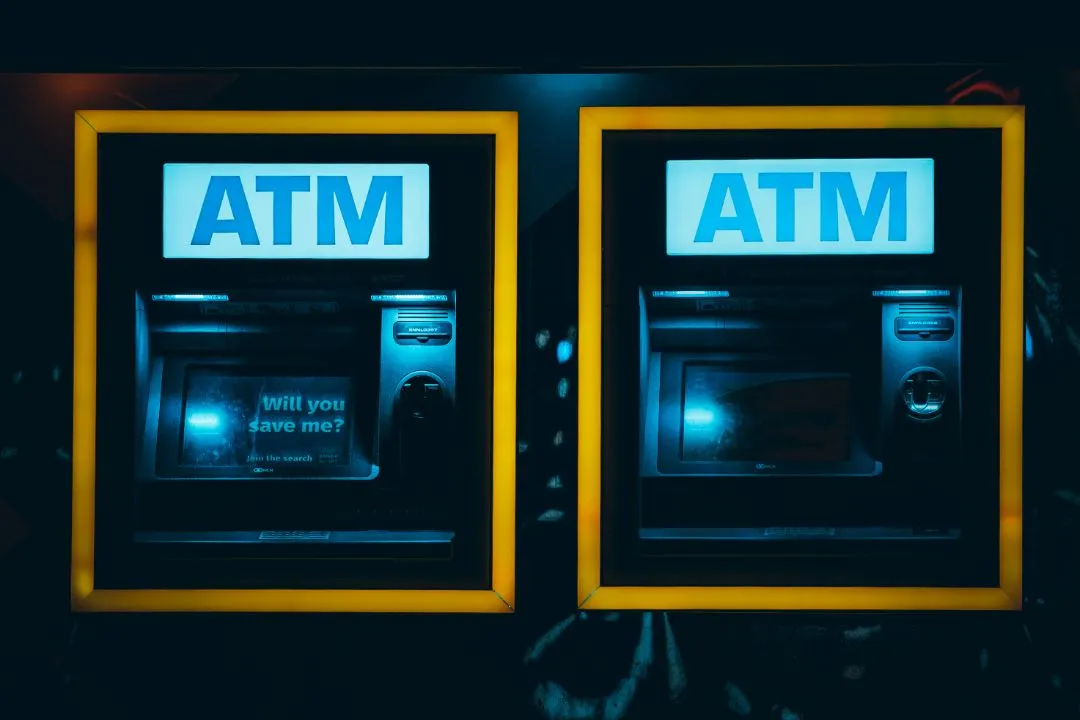
Photo by Nastuh Abootalebi on Unsplash


Reducing operating costs

Bizwatch reported, citing industry sources, that Parameta (previously Iconloop), a blockchain enterprise, has relocated its headquarters from Seoul’s upscale Signature Towers to a more economical shared office space this year. This strategic move is interpreted as an effort to slash operating costs by choosing a location with significantly lower rental expenses. A Parameta representative confirmed that the relocation was part of measures to reduce costs.

Binance-backed Streami, which runs the Gopax cryptocurrency exchange, is also reportedly contemplating an office relocation after downsizing its staff. The company’s workforce has dwindled from over 100 employees earlier in the year to approximately 60 by September. A Streami spokesperson has indicated that they have yet to reach a decision regarding the relocation. Streami’s situation is particularly significant due to its ongoing challenges in securing approval from financial regulators for changes to its executive representatives since Binance acquired a majority stake. Recently, Streami appointed a new CEO from the domestic tech firm CityLabs, which has also purchased an 8.55% stake in Streami and intends to further increase its investment in the exchange operator.

Similarly, Korea Digital Exchange, the operator of cryptocurrency-only exchange Flybit, has listed for sale one of its two floors of office space in Seoul’s Seocho district. This move comes nearly a year and eight months after the company expanded into the current premises.


Changes in workforce sizes

Before the crypto winter, when the Korean crypto market witnessed unprecedented growth, numerous companies expanded their offices to make room for the growing workforce, bolstered by rising revenues. For instance, Dunamu, which runs Upbit — Korea’s largest crypto exchange — garnered attention for acquiring pricey real estate in Gangnam to construct a new office.

However, the boom was short-lived. With the onset of the crypto downturn, numerous companies found themselves having to shut down. Blockchain technology firms are facing similar challenges, with many developers steering away from the sector due to persisting market instability. For many of these firms, the workforce has diminished as they’ve either undergone restructuring or struggled to recruit replacements for departing employees.

An industry insider remarked that reducing operating costs is a logical step for companies facing a lack of investment and revenue. They noted that this only applies to those resilient enough to weather the hardship, adding that many cryptocurrency-only exchanges are likely to shut down completely in these challenging conditions.

In fact, Cashierest, a crypto-only exchange, recently announced the cease of operations. Concerns about the company had been growing after staff layoffs and the departure of its CEO in July. A thorough analysis by the Financial Intelligence Unit (FIU) of the Financial Services Commission (FSC) found that, of the 21 Korean crypto-only exchanges, 18 are operating with negative shareholder equity as of the first half of this year. Moreover, 10 did not earn any revenue from transaction fees during the same period.

Crypto-only exchanges typically see lower trading volumes as they cannot facilitate trades in Korean won. In South Korea, only five trading platforms — Upbit, Bithumb, Coinone, Korbit and Gopax — are officially registered with the financial regulator to conduct fiat-to-crypto transactions.

More to Read
View All
Web3 & Enterprise·

Jan 06, 2024

Etherscan expands through Solscan acquisition

Expanding beyond the Ethereum Virtual Machine (EVM) domain, Malaysia-headquartered Etherscan has officially acquired Solscan, a prominent block explorer within the Solana ecosystem.Photo by Shubham’s Web3 on UnsplashEnhancing cross-chain analysisThe acquisition, announced earlier this week, signifies a noteworthy development within the blockchain industry and is poised to bring about a new interface aimed at enhancing cross-chain analysis. Solscan, based in Singapore with its primary team in Vietnam, was previously majority-owned by TomoChain Lab, a Singaporean blockchain software developer. The deal’s terms were not disclosed and the acquisition places Solscan in the same league as Polygonscan within the family of Etherscan block explorers. Diversifying product offeringEtherscan, established in 2015, stands as one of the earliest crypto projects, initially focusing on the EVM space. The platform offers an explorer-as-a-service product for blockchain explorers, with the acquisition of Solscan marking a significant step in diversifying its offerings. Since its inception in 2021, Solscan has risen as a leading explorer in the Solana ecosystem, catering to over three million monthly users. Providing services such as detailed address, token, transaction information, APIs, dashboards and NFT metadata, Solscan mirrors Etherscan’s services but is tailored for the Solana network. The merger between Etherscan and Solscan is anticipated to bring forth a series of enhancements and innovations, with both platforms benefiting from the integration of additional features. The roadmap for this collaboration outlines improvements in user interfaces, navigation and overall accessibility, promising an enriched user experience. Solscan, in its announcement, assured its commitment to the Solana community, vowing to maintain unparalleled blockchain exploration services. The shared vision of Etherscan and Solscan revolves around providing what Etherscan termed “credibly neutral and equitable access to blockchain data,” underlining their commitment to transparency and fairness in the blockchain space. Matthew Tan, CEO and founder of Etherscan, expressed excitement about the acquisition and highlighted the alignment of Solscan’s expertise in making blockchain data accessible and user-friendly with Etherscan’s mission. The acquisition is expected to contribute significantly to the broader blockchain ecosystem. Solscan serves as a crucial player in the Solana ecosystem, an Ethereum alternative. The platform assists users in viewing information within the Solana blockchain, managing accounts, tracking transactions and exploring investment opportunities across various crypto platforms. Solana resurgenceThis deal comes at a time when Solana’s momentum is evident, ending 2023 on a strong note. In December 2023, NFT sales on the Solana network surpassed those on Ethereum for the first time. Solana has experienced substantial growth in comparison to Ethereum, both in terms of its token’s value and against the U.S. Dollar. The fall of crypto exchange FTX had a large impact on Solana and its ecosystem as FTX had been heavily involved within that community and associated projects. The exchange still holds a sizable amount of locked SOL tokens. Following its collapse, the SOL unit price fell below $10. At the time of writing, it stands at $100. The acquisition of Solscan by Etherscan underscores the resurgence of the Solana ecosystem, with major players in the Web3 space recognizing the value of Solana-based technology. As both platforms collaborate, users can anticipate a more robust and interconnected blockchain exploration experience.  

news
Web3 & Enterprise·

Oct 18, 2024

Euroclear takes stake in Marketnode entering Asian market

Euroclear, a Belgium-based financial services company that specializes in post-trade services relative to the clearing and settlement of securities, has announced that it has invested in Singaporean digital market infrastructure firm Marketnode. The investment, which the firm announced via a press release published to its website on Oct. 17, is the company’s first in the Asian market. Established with a distributed ledger technology (DLT)-based financial infrastructure, Marketnode offers its services via two distinct platforms. The company claims that through its Gateway platform it offers a one-stop issuance, data, workflows and tokenization services.  Meanwhile, Fundnode streamlines fund transactions, processing and record-keeping, while using blockchain technology in doing so. Euroclear’s CEO for the Asia-Pacific (APAC) region, Philippe Laurensy, set out the company’s thinking in making this strategic investment, stating: “Partnering with Marketnode demonstrates our shared commitment to developing a new generation of funds market infrastructure by leveraging Euroclear’s global footprint, established fund infrastructure and digital capabilities. This first strategic investment in Asia also reinforces the region’s importance to Euroclear’s positioning and business growth. We are excited to join Marketnode’s pioneering journey in the rapidly growing area of digital assets and support the company’s international service expansion.”Photo by Thomas Somme on UnsplashProminent backersMarketnode is backed by Temasek and the Singapore Exchange Group (SGX), having been established in 2021 as a joint venture by the two firms. Notable financial firms such as Citi, HSBC, Deutsche Bank and State Street joined the pilot phase of Marketnode’s Fundnode platform in 2022.  Back in May, HSBC doubled down on its involvement, leading Marketnode’s Series A investment round. HSBC also partnered with Marketnode and Singaporean bank UOB in 2023, in the build-out of an end-to-end, issuance-to-distribution wealth management product infrastructure, run on blockchain rails. That project formed part of Project Guardian, a collaborative initiative led by the Monetary Authority of Singapore (MAS), designed to explore tokenization and network interoperability. Marketnode CEO Rehan Ahmed spoke about what this latest investment means for the company. He stated: “Euroclear’s global connectivity, operational expertise and market-leading position as a trusted financial market infrastructure will catalyse the growth of Marketnode’s platforms, especially Fundnode.” Ongoing blockchain interestWhile this may be Euroclear’s first foray into the Asian market, it’s not its first step into the world of blockchain and tokenization. The European clearinghouse launched a tokenized securities issuance service in 2023. The Digitally Native Notes (DNN) service enables the issuance, distribution and settlement of fully digital international securities, running on R3’s Corda blockchain. The first DNN was issued using the system by the World Bank, raising €100 million to finance its sustainable development activities. Earlier this month, it emerged that Euroclear, alongside the World Gold Council and international law firm Clifford Chance, had collaborated on a pilot project led by real-world asset (RWA) tokenization firm Digital Asset. The project concerned itself with the tokenization of UK bonds (gilts), Eurobonds and gold, using the Canton Network protocol.

news
Web3 & Enterprise·

Sep 05, 2023

Bybit Leans on Innovative Tech by Launching AI-Powered Trading Assistant

Bybit Leans on Innovative Tech by Launching AI-Powered Trading AssistantDubai-headquartered cryptocurrency exchange Bybit has introduced TradeGPT, an AI-powered educational tool aimed at changing the way in which traders interact with the cryptocurrency market.A ToolsGPT follow-upThe move follows on from the firm’s launch of ToolsGPT in June, an AI-based tool that aids platform users to generate technical analysis and takes a ChatGPT-like approach in providing responses to user queries. Vivien Fang, Head of Financial Products at Bybit, explained: “Our analysts and tech team created ToolsGPT to provide the financial education and mentorship that is sorely needed in our hyper-financialized world. Essentially, we built the tool that we all wished we had when we began our careers in financial engineering and trading.”Photo by Wance Paleri on UnsplashAI mentor and guideFor Bybit users, TradeGPT offers a multitude of benefits, including real-time market analysis, multilingual support, and personalized guidance. It functions as a mentor and guide, empowering users to comprehend market trends, formulate strategies, and select the most suitable investment products to achieve their financial goals.This offering addresses the limitations of traditional AI systems and provides real-time market data. TradeGPT leverages Bybit’s extensive market data, trading analytics, and technical analysis tools, making it a resource for traders navigating the complexities of the cryptocurrency landscape.Following industry trendBybit’s TradeGPT follows in the footsteps of Singapore-based platform Crypto.com, which unveiled its AI-enabled platform, Amy, in May. Amy leverages the technology of OpenAI’s ChatGPT to deliver real-time information about specific tokens, projects, price listings, and historical events to Crypto.com platform users.At the time Kris Marszalek, CEO of Crypto.com, highlighted the platform’s significance, stating: “Amy is the latest example of our incredible momentum.” The company added that it followed a series of notable product launches, including CFTC-regulated options trading, on-chain staking solutions, and the GEN 3.0 Crypto.com Exchange.Binance, the world’s largest cryptocurrency exchange by trading volume, introduced Binance Sensei in April. The company has integrated the AI-powered learning tool into Binance Academy and offers users of all skill levels an interactive chat window for guidance.As an increasing number of cryptocurrency companies launch AI-enabled platforms, the synergy between AI and the industry becomes more apparent. AI’s data processing capabilities could address scalability issues and expedite transaction processing for cryptocurrencies.Conversely, cryptocurrencies could incentivize research and development in the field of AI. Tokenized economies may reward contributors to AI projects, fostering collaboration and innovation. Furthermore, cryptocurrency-enabled decentralized networks could provide secure and transparent platforms for exchanging AI-generated insights without the need for intermediaries.Digital assets are developing in real-time alongside other technologies. The introduction of Bybit’s TradeGPT, alongside Crypto.com’s Amy and Binance’s Sensei, offers a step forward in harnessing the power of AI to empower cryptocurrency traders. As these AI-driven tools continue to evolve and gain traction, they’re likely to reshape how individuals and institutions engage with the cryptocurrency market.

news
Loading