Top

Cake DeFi Co-Founder Launches Ordzaar Ordinals Marketplace

Web3 & Enterprise·May 23, 2023, 12:47 AM

U-Zyn Chua, Singaporean Co-Founder and CTO of Singapore-based Cake DeFi, has launched Ordzaar, a Bitcoin Ordinals marketplace.

In a social media post on Friday, the marketplace described itself as “a decentralized & trustless marketplace for #Bitcoin Ordinals, bridging the gap between trustlessness and true decentralization.” The Ordinals protocol has been enabled due to the SegWit and Taproot upgrades to the bitcoin protocol. It’s a system for numbering satoshis, the smallest denomination of the Bitcoin cryptocurrency. The protocol assigns each satoshi with a serial number, using that number to track them across transactions.

By taking this approach, each individual satoshi becomes unique, allowing additional data to be attached to them in a process called inscription. The project has hit the ground running, with its website online and a step by step guide released, instructing new users in how to buy and sell Ordinals on the marketplace.

Releasing a press release to publicize the launch, the project pointed out that “the lack of a fully decentralized Ordinals marketplace [poses] a major challenge”, given a backdrop in which Bitcoin Ordinal inscriptions have surged in popularity over the course of recent weeks. Elaborating on that point, the team stated: “There is a growing need for a reliable and secure platform that allows buyers and sellers to transact in a decentralized manner, giving them complete control over their assets, this is where Ordzaar comes in.”


Asia Ordinals marketplace first

Ordzaar represents the first ever Bitcoin Ordinals marketplace based within the Asian region. Alongside U-Zyn Chua, the team behind the project implicates three other seasoned crypto-natives with a wealth of experience in crypto, bitcoin, and blockchain. Cake DeFi colleague Naqib Noor assumes the role of Co-Founder and Development Lead. As well as being Co-Founder, Chua is the project’s Lead Researcher.

In an effort to showcase the brand new marketplace, the Ordzaar team sponsored and participated in the Bitcoin Ordinals 2023 conference in Miami late last week, with Chua appearing as a speaker at the event. The Co-Founder told Blockhead that:

“Ordinals have proven that Bitcoin is more than just a peer-to-peer payment system and has demonstrated a new, high-value use case for the longest-running cryptocurrency. As the industry continues to build and innovate, Ordinals have the potential to unlock even more value on the Bitcoin blockchain, and will lift the entire crypto ecosystem as a whole.”

NFTs took on a life all of their own with a market surge, tripling in value to $250 million in 2020. While that largely Ethereum-based market has cooled somewhat since then, it nonetheless continues to broaden and establish itself. Chua believes that Bitcoin-centric Ordinals can take a large slice of that development. “Along with the explosive adoption seen in the traditional ETH NFT market, we expect to see a similar trajectory in the Ordinals space,” he explained.

In a tweet published on Saturday, Crypto journalist and investment team member at Seoul-based crypto venture capital firm #Hashed, Joseph Young, referred to changing dynamics within the NFT space, with relative newcomers Blur and Tensor taking on OpenSea and Magic Eden. Not short on confidence, the Ordinals team responded, stating: “And Ordzaar will be dominating decentralized Ordinals and BRC20 trading.” The overarching crypto space continues its progression at pace, and it will be intriguing to see how Ordinals, together with new marketplaces like Ordzaar, perform as the industry trundles forward.
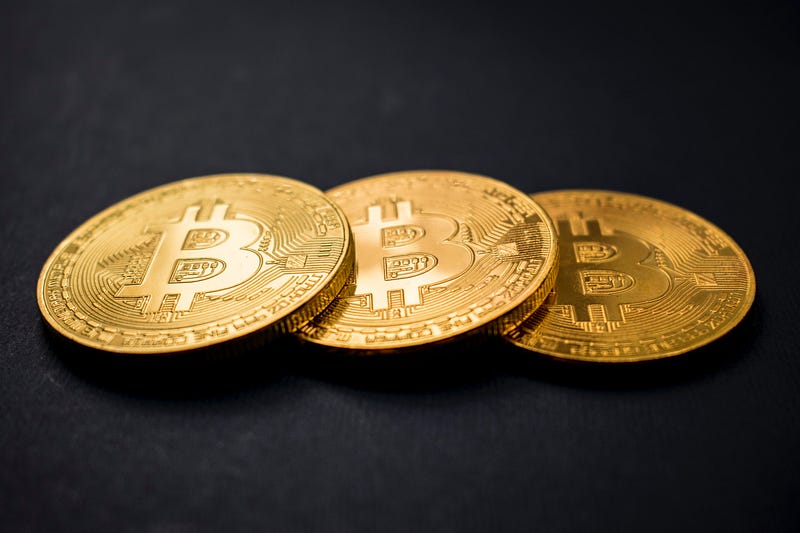

Photo by Dmitry Demidko on Unsplash
More to Read
View All
Web3 & Enterprise·

Feb 14, 2024

High-profile sports sponsorships driving Crypto.com user base expansion

Crypto.com, the Singapore-headquartered cryptocurrency exchange platform, has outlined that it has seen significant growth thanks to high-profile sports sponsorship and advertising. Reaping the rewardsThe company has established advertising partnerships with Formula 1 (F1) motor racing and the Ultimate Fighting Championship (UFC). These lucrative sponsorship deals have propelled the exchange into the spotlight of two massive fan bases, contributing to its expansion. In an interview with Cointelegraph last week, Eric Anziani, president and chief operating officer of Crypto.com, discussed the company's successful advertising campaigns with F1 and the UFC, as well as its naming rights deal for the Crypto.com Arena in downtown Los Angeles. In 2021, what was then the Staples Center was renamed to the Crypto.com Arena in a $700 million naming rights deal. Anziani expressed gratitude for these partnerships, emphasizing the importance of staying top of mind for users in the competitive cryptocurrency market.  That same year, the company signed a multi-year partnership deal with leading French football club Paris Saint-Germain (PSG), rolling out various PSG-related marketing activities since then.Photo by Austin Loveing on UnsplashBrand recognition benefitsMarket surveys conducted by Crypto.com indicate a high level of global awareness and brand recognition among retail cryptocurrency users. The exchange's logo prominently displayed during F1 races and UFC events has helped it reach millions of fans worldwide. ESPN reports an average of 1.11 million viewers per race for the 2023 F1 season in the United States alone, with global viewership exceeding one billion over the entire race calendar. Similarly, the UFC boasts a global audience, with some of its biggest fights attracting millions of pay-per-view viewers. Anziani highlighted the effectiveness of these partnerships in bringing people into the cryptocurrency space.  User base approaching 100 millionThese partnerships have significantly contributed to Crypto.com's growing user base, which is approaching 100 million users in 2024, up from an estimated 80 million in the previous year. Anziani discussed the factors that drive users' choice of exchange platforms, emphasizing the importance of compliance, security, convenient access to cryptocurrency and competitive fees. He noted that different users prioritize different aspects based on their trading preferences and requirements. The firm is not alone in pursuing high-profile sports sponsorship deals. Rival platform OKX has an ongoing sponsorship deal in place with Manchester City Football Club in the English Premier League (EPL). It also has doubled down recently on the sponsorship of F1 racing team McLaren. Other notable partnerships include crypto gambling platform Stake.com’s sponsorship of Sauber F1, crypto exchange platform Kraken’s deal with Williams F1 and BingX’s sleeve sponsorship agreement with Chelsea football club in the EPL. High-profile marketing initiatives are alive and well, although in a much more sober way than in 2022 when six crypto companies featured in Super Bowl advertising in the United States. Kraken’s chief marketing officer, Mayur Gupta, recently stated that the Super Bowl is no longer an effective means of promotion for crypto companies.  

news
Web3 & Enterprise·

Oct 27, 2023

Memeland Coin Launch Secures $10M for the Project

Memeland Coin Launch Secures $10M for the ProjectMemeland, a Web3 venture studio, made headlines on Thursday as its token sale for MEME tokens reached $10 million in commitments just after going live. The people behind the project are the Hong Kong-based team that is also associated with the popular meme-sharing site, 9GAG.Memeland represents a collection of 9,999 utility-enabled profile pictures (PFPs).9GAG is a meme-centric Hong Kong-based entertainment website that gained a significant following since its launch in 2008. With millions of followers across various social media platforms, 9GAG’s foray into the Web3 space through Memeland was eagerly awaited. Memeland had already introduced several NFT projects, including Captainz, Potatoez, and MVP, prior to launching its native token on Thursday.Photo by Nattanan Kanchanaprat on Pixabay42 minute sell-outSupporters of the project had joined a waitlist prior to them being granted access to the sale. Earlier in the week, the project had tweeted out that the MEME tokens that it was gearing up to sell had “No utility. No roadmap. No promises. No expectation of financial return. Just 100% memes.” In fact, this mantra has been etched into the project’s whitepaper from the outset. “$MEME is completely useless and for entertainment purposes only,” the whitepaper clarifies.Even though the sale had already sold out in record time, it was scheduled to continue until Friday morning. During this extended period, those who have previously joined the waitlist can gain access to the tokens.The team behind Memeland, having clocked up experience previously via 9GAG, has made them no strangers to the world of online humor and entertainment. The Memeland project introduces an array of non-fungible tokens (NFTs) and innovative applications that fuse elements from the metaverse, gaming, and NFTs.Project pipelineMemeland is gearing up to launch various additional platforms in the near future. These include Holders.com, a travel service; GMGM.com, a video-sharing platform; Stakeland, which will be a crypto staking application; and Petsland, a service centered around pets.MEME tokenomicsThe MEME token has a total supply of 69,000,000,000 MEME, with an initial price per token set at US$0.001. According to the Memecoin team, 2.75% of the total supply will be unlocked on the first day, with the remaining amount unlocked daily over the next 18 months.The token distribution breakdown is as follows:Private sale: 6,900,000,000 (10%) — Exclusively for Memeland Captainz holdersContributors: 13,800,000,000 (20%) — Partners and team members contributing to the Memeland projectFire sale: 8,280,000,000 (12%) — Reserved for the allowlist and certain waitlist participantsAirdrops: 17,250,000,000 (25%)Ecosystem fund: 22,770,000,000 (33%)Those who possess specific NFTs from the Memeland ecosystem have received varying allocations during the Fire Sale, depending on the type, rarity, and quantity of their holdings.With a strong foundation rooted in meme culture and a team experienced in delivering internet humor to millions, Memeland’s potential development going forward may be as exciting as the memes that inspired it.

news
Web3 & Enterprise·

Aug 12, 2025

Japan’s Soramitsu working on CBDC pilot in Pakistan

Japanese blockchain infrastructure firm Soramitsu has been contracted by the State Bank of Pakistan (SBP) to work on a pilot program for the digital Pakistani rupee. Pakistan originally announced its intention to pursue a central bank digital currency (CBDC) or digital rupee back in 2019. However, unlike other Asian nations such as China, Cambodia and Thailand, it has not taken much action to progress such a digital currency since then.SBP Governor Jameel Ahmad spoke at the Reuters NEXT Asia Summit in Singapore last month, outlining that the South Asian country was moving towards the establishment of a digital rupee and “building up [its] capacity” to launch it, and that a pilot project would be the next step. According to a report published by Nikkei Asia on Aug. 12, that pilot project is now underway.Photo by Hamid Roshaan on UnsplashCBDC specialistSoramitsu already has a wealth of experience in this field. In 2023, it signed a memorandum of understanding with the Laotian central bank to launch a proof-of-concept CBDC project, with the Tokyo-headquartered company going on to play a pivotal role in the issuance of Laos’ Digital Lao Kip.In Cambodia, it partnered with the National Bank of Cambodia to bring about the establishment of Bakong, Cambodia’s CBDC-like payment system. The company is also involved in CBDC projects in Papua New Guinea and the Solomon Islands, while spearheading a project aimed at enabling seamless cross-border payments among Asian countries. Japanese fundingIn the case of Pakistan’s pilot project, Soramitsu’s CBDC platform will facilitate the digital rupee while funding is being provided by the Global South Future-Oriented Co-Creation Project, an initiative from Japan’s Ministry of Economy that seeks to promote the formation of co-creation business models. Infrastructure, such as the internet and power, can be unstable in some parts of Pakistan. Consequently, the proposed CBDC will incorporate the ability for the user to transact with it using their smartphone, even if the phone doesn’t have an active internet connection. Digital transformationMasato Toriya, an associate professor at Tokyo University of Foreign Studies and an expert on Pakistan, outlined the behavioral change that would be required in getting Pakistanis in rural areas to use such a currency. He stated: “Many transactions in rural areas are cash-based, even for wage payments, and the rate of people with bank accounts is low."  However, cash-based systems have significant overheads, and it's thought that a CBDC could reduce such costs considerably. Last month, the Pakistan Institute of Development Economics published an article written by Dr. Ahmed Fraz, an assistant professor of finance with the organization, in which he claimed that the digital rupee pilot project is part of a “profound digital transformation” that Pakistan is moving towards.  Dr. Fraz asserted that a CBDC would enhance financial inclusion in Pakistan through the reduction of transaction fees, digitization of welfare payments and the financial inclusion of millions of unbanked citizens within the formal economy.He added that the digital rupee “is not intended to replace existing payment systems immediately but to complement platforms” and to modernize Pakistan’s financial architecture.

news
Loading