Top

Galaxia Moneytree partners with Charzin to integrate security tokens into EV charging systems

Web3 & Enterprise·November 07, 2023, 7:58 AM

Korean financial platform services provider Galaxia Moneytree announced on Tuesday (local time) that it has signed a memorandum of understanding (MOU) with Charzin, a company that specializes in developing infrastructure for charging electric vehicles (EVs), to design a security token offering (STO) platform that issues security tokens for optimizing the process of EV charging. This includes securing installation sites and facilities for EV charging stations.
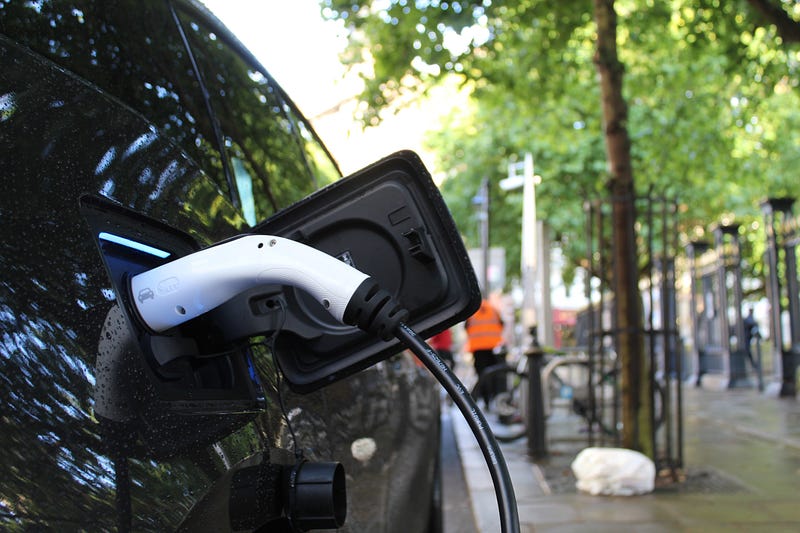
Photo by Andrew Roberts on Unsplash


Merging blockchain and transportation

Headquartered in Daegu, Charzin is notable for its app EVZ, which uses a blockchain-based sharing module to connect EV drivers and EV charger owners for faster charging and optimized revenue acquisition.

Galaxia Moneytree will be responsible for establishing and operating the STO platform, while Charzin will handle business development, support for the launch of security token products and construction of EV charging facilities.

The signing ceremony for the MOU took place at Galaxia Moneytree’s headquarters in Seoul on Monday with Galaxia Moneytree CEO Shin Dong-hoon and Charzin CEO Choi Young-seok in attendance. The two companies also discussed plans to launch other products that combine finance and EV charging infrastructure.

“In addition to our ongoing efforts, we plan to design STO products for various underlying assets, such as renewable energy and aviation assets,” Galaxia Moneytree said. The company recently formed an aviation asset tokenization consortium in September.


Ongoing partnerships

Meanwhile, Charzin recently announced its partnership with Hi Investment and Securities to venture into the security token business. The firms plan to raise funds for developing EV charging infrastructure by issuing security tokens and subsequently share the profits from running such projects.


More to Read
View All
Policy & Regulation·

Aug 29, 2023

Illicit Crypto Activities Estimated to Have Surpassed $100 Billion in S.E. Asia

Illicit Crypto Activities Estimated to Have Surpassed $100 Billion in S.E. AsiaA recent analysis by blockchain analytics firm Bitrace has found that over $100 billion worth of digital currency has been used in illicit crypto trading activities in Southeast Asia.Photo by Bermix Studio on UnsplashThe firm provided details of its analysis via X (formerly Twitter) on Monday. The data underscores the extensive scope of unlawful activities involving cryptocurrencies across Southeast Asia. The analysis further revealed that illicit activities involve fraudulent schemes, online gambling, and money laundering.Misuse of digital asset innovationSome of the key characteristics of digital assets include the ability to maintain anonymity, decentralization, and borderless transactions, which are generally considered positive attributes. However, the very nature of decentralized cryptocurrency means that nobody dictates who uses it or the purpose for which someone decides to use it. With that, these characteristics have rendered illegal undertakings not only more covert but also facilitated expedited transfers of pilfered resources.The silver lining, however, rests in the inherent transparency of blockchain ledgers. This quality has enabled Bitrace’s team of encryption analysts to trace funds implicated in illicit ventures through intensive on-chain analysis.Key insightsThe Bitrace research points towards the following key insights:Prevalence of Tether (USDT): The use of USDT has gained prominence in both illicit activities and gambling operations throughout Southeast Asia, with a staggering sum of over 115 billion USDT recorded in 2022 alone.Shift to Top Trading Platforms: USDT is observed to migrate from unlawful platforms within Southeast Asia towards top-tier trading platforms. Particularly favored by operators and gamblers, a significant proportion hails from the Chinese demographic, consistently gravitating towards specific exchanges.Inflow into Trading Platforms: A noteworthy development emerges as over 14.6 billion USDT prepares to traverse into trading platform accounts. The mounting risk factor diffuses across an expanding spectrum of addresses and platforms.Likely consequencesIf this blockchain analysis is found to be accurate, there are likely to be ramifications for all projects operating in the digital assets, DeFi and Web3 space. It comes at a time when the focus on the regulation of crypto-related businesses is more intense than ever before.Anti-Money Laundering (AML) and Know Your Transaction (KYT) legislation are cornerstone financial services regulations that have been established on a global basis. If these regulations are being flouted, and crypto is being used as a means to circumvent them, there’s a real risk that regulation could be applied heavy-handedly to counteract that threat of widespread illicit activity.Global crypto exchange Binance has faced criticism in this context, with a suggestion in March that its Turkey-based exchange service had been used by an organization connected with militant group Hamas for money laundering and terrorist financing.In a report last week, Binance claimed that it shared information with authorities that led to the capture of senior ISIS members. More such cooperation will likely be necessary to prevent the sector being subject to overzealous regulation.

news
Web3 & Enterprise·

Jul 29, 2023

Japan’s HashPort Group Raises $8.5M in Funding Round

Japan’s HashPort Group Raises $8.5M in Funding RoundHashPort, a leading blockchain developer based in Japan, has successfully raised 1.2 billion Japanese yen (approximately $8.5 million) in a Series C funding round.The funding was secured through key investors, including Sumitomo Mitsui Banking Corporation (SMBC), The University of Tokyo, Edge Capital Partners, and Japanese billionaire entrepreneur Yusaku Maezawa. With this latest infusion of capital, HashPort’s total funding has now reached an impressive 2 billion yen (about $14.2 million).Global expansion plansThe announcement, which was made on Friday, revealed that these fresh funds will be instrumental in driving HashPort’s global expansion plans, particularly in the face of complex regulatory environments. The company aims to fortify its business operations and establish a robust compliance management system, essential for navigating the intricate web of global regulations.At the core of HashPort’s ecosystem are two significant components. The first is its namesake blockchain-related consulting and system solution, which has gained substantial recognition in Japan. The second is HashPalette, a public chain specially designed for non-fungible tokens (NFTs), tapping into the booming NFT market. Additionally, HashPort is set to unveil an exciting metaverse game called The Land Elf Crossing in the upcoming fourth quarter.Coincheck collaborationHashPort’s previous collaboration with Japanese cryptocurrency exchange Coincheck garnered considerable attention. Together, they launched Japan’s first initial exchange offering (IEO), which raised an impressive 22.45 billion yen (approximately $160 million) in commitments for the Palette (PLT) token. As a testament to the success of this venture, PLT Place, the official NFT marketplace of Palette Chain, now boasts over 370,000 users.President Seihaku Yoshida expressed HashPort’s future ambitions, revealing plans to cooperate with Expo 2025, a highly anticipated event scheduled to take place in Osaka. HashPort aims to develop digital wallets and digital passports linked to soulbound tokens (SBTs) for Expo 2025. With an estimated 28 million visitors expected to attend the expo, the company sees this as a historic opportunity to introduce Web3 technology to a broader audience.Soulbound tokensIn December 2022, one of HashPort’s current investors, SMBC, joined forces with the company to explore the potential applications of SBTs. Proposed by Ethereum Co-Founder Vitalik Buterin, SBTs represent the characteristics or reputation of individuals or entities, much like the concept of soulbound items in the popular massively multiplayer online role-playing game (MMORPG), World of Warcraft.As part of that collaboration, SMBC and HashPort were discussing the possibility of creating a “safe and secure Web3 economic zone.” No further details were given beyond that, but the idea may have been along the lines of creating something like Cyberport, an innovative digital community which has been created in Hong Kong, featuring over 1,900 start-ups and technology companies.The successful funding round marks a significant milestone for HashPort, providing the necessary financial resources to accelerate its expansion plans and drive innovation in the Web3 space. As the company continues to pioneer advancements in the blockchain and NFT sectors, its collaboration with Expo 2025 and ongoing exploration of SBTs showcase the company’s efforts in attempting to contribute towards shaping the future of decentralized technologies.

news
Policy & Regulation·

Nov 29, 2023

Standard Chartered joins China’s CBDC pilot trials

Standard Chartered joins China’s CBDC pilot trialsStandard Chartered Bank has joined the advanced stages of China’s central bank digital currency (CBDC) pilot trials, making it one of the world’s largest multinational banks to partake in such an initiative.Photo by Eric Prouzet on UnsplashEnabling e-CNY exchangeChina initiated its CBDC pilot trials over a year ago, with it being much further ahead of other CBDC initiatives internationally in terms of development. It has now expanded its trials to include more lenders, with Standard Chartered China becoming the latest participant.This development means that Standard Chartered Bank’s users in the Asian nation will soon have access to the digital version of the Chinese yuan by seamlessly integrating its platform with China’s dedicated CBDC app. According to an announcement by Standard Chartered Bank (China) Ltd. on Monday, the bank will be enabled, through partner firm City Bank Clearing Services Co., to offer its clients the ability to purchase, exchange or redeem e-CNY.In its announcement, Standard Chartered China’s President, Zhang Xiaolei, stated:“As an international bank rooted in the Chinese market for 165 years, Standard Chartered is optimistic about the development prospects of digital renminbi.”Joining e-CNY testing programThe e-CNY pilot testing program in China has been extended to 26 cities and provinces. Standard Chartered’s Chinese subsidiary will involve itself with supply chain financing, trade financing and cross-border merchant payments as part of that pilot program.The adoption of CBDCs is anticipated to reduce reliance on physical currency notes while ensuring transparent and tamper-proof transaction histories. China’s CBDC, known as the digital yuan or e-CNY (digital renminbi), has garnered international attention for its progressive approach to digital currency.Broader digital assets sector involvementStandard Chartered’s involvement in China’s CBDC pilot marks a milestone, emphasizing the bank’s commitment to digital innovation. However, the British banking conglomerate has had a broader approach to digital assets beyond this CBDC collaboration. A report by Nikkei Asia last month suggested that the banking group was making a concerted effort to develop its digital assets-related business within the Asian region through its Singapore-based investment arm, SC Ventures.Earlier this month, SC Ventures unveiled Libeara, a platform which plans to offer the first-ever tokenized Singapore dollar government bond fund. Subsidiary companies include digital asset custodian Zodia Custody and institution-first digital asset marketplace Zodia Markets.China has been at the forefront of CBDC experimentation, with initiatives like testing offline payment systems integrated with SIM cards. This innovative approach allows users to initiate CBDC payments by simply bringing their phones close to sale terminals. The trials, initially launched in major cities such as Shanghai, Beijing and Shenzhen, have encouraged residents to embrace e-CNY for everyday transactions.While China’s advancements in CBDC trials are noteworthy, other nations, including India, Japan and the U.S., are also actively engaged in the advanced phases of CBDC-related research and development. These global efforts seek to diversify financial settlement options, providing individuals with a broader range of choices in the evolving landscape of digital currencies.

news
Loading