Top

Kloint and Korea University to develop on-chain data analysis solutions

Web3 & Enterprise·November 07, 2023, 7:16 AM

Kloint, a company specializing in the tracking of virtual asset transactions, revealed on Tuesday a partnership with the College of Informatics and the Center for Information System Security at Korea University. The collaboration is set to focus on the joint development of algorithms and platforms for on-chain data analysis.

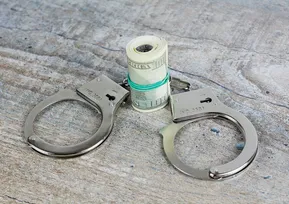
Photo by Shubham Dhage on Unsplash


Sharing insights on regulatory frameworks

As part of this initiative, Kloint and Korea University will cooperate to understand the domestic and international demand for on-chain data analysis. They will also exchange insights on the regulatory and policy frameworks that govern the technologies involved.


Growing crypto-related criminal activities

The collaborative effort between Kloint and Korea University is set against a backdrop where, with the expansion of the cryptocurrency market, there has been a corresponding uptick in its use for criminal activities like money laundering, drug trafficking, and embezzlement.

Traditional techniques used by government bodies, such as the public prosecutor’s office and financial regulators, have proven expensive and increasingly ineffective in tracking virtual assets as they struggle to keep pace with the sophisticated methods now used to circumvent detection.

Kloint was co-founded last September by three blockchain technology firms: Fair Square Lab, S2W and Ozys. With a vision set on the horizon, Kloint is gearing up to supply government entities and virtual asset service providers (VASPs) with analytical platforms and reporting services. In the more immediate term, the company is focusing its efforts on developing solutions for data collection and analysis tailored to the Korean cryptocurrency market.

More to Read
View All
Web3 & Enterprise·

Jun 21, 2023

Academia, Industry Collaborate on Crypto Accounting Research in Korea

Academia, Industry Collaborate on Crypto Accounting Research in KoreaThe Korean Accounting Association (KAA) and Samil PwC, the South Korean member firm of global accounting company PwC, have joined forces to conduct collaborative research on accounting for cryptocurrency assets, according to a report by local news outlet Maeil Business Newspaper.Photo by Pixabay on PexelsCollaborative effortsUnder this newly formed partnership, the KAA’s crypto asset committee will work closely with Samil PwC to explore a wide range of crypto assets, facilitate the development of financial statements pertaining to these assets for businesses, and implement accounting policies that align with the characteristics of cryptocurrencies.Leading the crypto asset committee is Roh Hee-chun from Soongsil University, while Partner Lee Jae-hyeok from Samil PwC will participate in the study. Until 2028, this collaboration is poised to yield insights and findings on crypto asset accounting.First seminarThe committee is set to hold its first seminar on June 27, serving as a platform for knowledge exchange and fostering deeper understanding among industry professionals. Furthermore, the accountants involved anticipate publishing a paper in an academic journal next year.PwC’s Assurance Leader Oh Kee-won emphasized the accounting firm’s commitment to leveraging its extensive resources in order to produce outcomes that positively impact society.Meanwhile, KAA President-elect Kim Gap-soon highlighted the relative novelty of crypto asset accounting, acknowledging that there is much ground to be covered. The association aims to establish a solid foundation that offers optimal guidance in the field of crypto asset accounting.

news
Policy & Regulation·

Aug 21, 2023

Korean Prosecutors Allocate $734K Budget for Crypto Crime Investigations

Korean Prosecutors Allocate $734K Budget for Crypto Crime InvestigationsThe South Korean Supreme Prosecutors’ Office has earmarked a budget of up to KRW 986 million (approximately $734,000) this year for investigations pertaining to virtual assets, according to data received by the local newspaper Law Times from the Ministry of Justice last Thursday. The significant size of the budget suggests that the prosecution is prioritizing efforts to combat the growing surge in virtual asset-related crimes.Photo by Tingey Injury Law Firm on UnsplashBudget divisionWithin this budget, KRW 778 million has been designated for the purchase of software licenses for virtual asset tracing and analysis equipment, while KRW 280 million has been allocated for an integrated strategic plan to establish a platform for analyzing and tracing unauthorized virtual asset transactions. The budget for this platform consists of preliminary planning costs. Related expenditures are expected to increase as the project is fully implemented.“It is true that our budgets are being concentrated on crimes related to virtual assets due to the fact that they have recently become a social issue,” said a prosecution official. “It may not be a lot compared to our overall budget, but assigning almost KRW 1 billion for one specific field of investigation is still a considerate amount.”Rising crypto crimesIn Korea, crimes associated with virtual assets have been increasing annually. This includes tax evasion, bribery, foreign exchange law violations, and money laundering, as well as cryptocurrency market issues including issuance, listing, and distribution. According to the Supreme Prosecutors’ Office, reported cases of suspicious virtual asset transactions received by the Korea Financial Intelligence Unit (KoFIU) surged from an average of 66 cases per month in 2021 to 900 cases in 2022, then 943 cases in 2023 — a fourteen-fold increase in just three years.Subsequently, the scale of the damages caused by cryptocurrency crimes has also seen a sharp rise. The total value of all reported damages skyrocketed from KRW 467.4 billion in 2017 to KRW 1.02 trillion last year, more than doubling in five years. The cumulative loss over this period exceeds KRW 5.3 trillion.Focused effortsThe prosecution has thus dispatched financial experts from organizations including KoFIU and Korea Exchange to create a joint virtual asset crime investigation unit under the Seoul Southern District Prosecutors’ Office dedicated to investigating cryptocurrency crimes.The prosecution’s Cybercrime Investigation Division has also begun developing a tracking system optimized for the Korean market to trace the flow of virtual assets. The foreign software that is currently being used for tracking comes with considerable expenses and limitations, particularly for tracking flows within the domestic market, where there are many transactions involving smaller, locally-issued cryptocurrencies called “kimchi coins.”“We are dedicating our manpower and technological development to virtual asset investigations,” said a high-ranking official from the prosecution. “We will also strive to secure the budget necessary for these efforts.”

news
Markets·

May 01, 2025

Crypto fraud hits 20% of Korean investors, global trend shows seniors most vulnerable

A recent survey in South Korea found that 20.3% of crypto investors have fallen victim to financial losses. Conducted by the Korea Financial Consumers Protection Foundation in late December, the survey polled 2,500 adults aged 19-69, with respondents able to select multiple loss categories. Investors in their 60s were most vulnerable, reporting a 25.3% loss rate. Exchange-related problems constituted the majority of incidents (72.8%), followed by online chat room scams (44.7%) and investment fraud (35.5%).Photo by Growtika on UnsplashExchange failures lead lossesAmong exchange-related losses, 40.6% of users couldn't sell assets due to system failures, while 11.5% lost digital assets through exchange hacking. Overall, exchange technical issues accounted for 52.1% of reported losses, with another 20.7% losing assets when exchanges closed completely. Chat group scam victims experienced various forms of fraud: 23.2% paid for worthless or false information, while 21.5% suffered financial losses through market manipulation or proxy trading schemes. Investment scams included fake crypto projects or fraudulent firms (18.0%), deceptive exchanges (10.3%), and other scams (7.2%). Most victims (75.1%) reported losses under 10 million won (approximately $6,945), with 34.6% losing less than 1 million won. Due to these relatively small amounts, 67.7% took no action following their losses. Of the 32.3% who sought help through various channels, 73.9% were unable to fully recover their funds. Problem worsening across Asia and beyondThis problem extends beyond South Korea. In neighboring Japan, police reported 19,038 crypto fraud cases in 2023, with damages totaling 45.26 billion yen (about $300 million), according to Chainalysis, citing Japanese National Police Agency data. These figures surpass 2022 numbers, indicating continued growth in fraudulent activities. A recent case highlighted by the Fukushima Minyu Shimbun involved a Soma City woman in her 50s who lost approximately 116.6 million yen ($780,000) to scammers impersonating police officers. The fraud began with a fake customer service call, followed by deceptive claims about fraudulent accounts and threats of arrest, which led her to create cryptocurrency accounts and transfer funds before eventually reporting the scam. Elderly at highest risk as fraud surgesThe FBI's Internet Crime Complaint Center's 2024 report further confirms this trend, documenting 149,686 crypto fraud complaints in the U.S. with $9.3 billion in reported losses—66% higher than in 2023. Notably, people over 60 were the most affected demographic, consistent with the Korean study's findings.

news
Loading