Top

Dubai’s VARA grants WadzPay ‘initial approval’ of trading license

Web3 & Enterprise·November 03, 2023, 1:58 AM

In the latest demonstration of the emirate’s crypto-friendly credentials, Dubai regulator, the Virtual Assets Regulatory Authority (VARA), has granted an “Initial Approval” license to WadzPay.

WadzPay was founded in 2018 in Singapore as a business-to-business (B2B) technology firm that concentrates its efforts on enabling digital asset-based transaction processing and settlement. This licensing approval is a significant step forward for the startup, as it inches closer to obtaining a full-fledged Virtual Asset Service Provider (VASP) license.

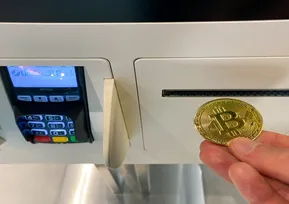
Photo by Paul MARSAN on Unsplash


Gearing up for service roll-out

With this approval in hand, WadzPay is gearing up to offer a range of virtual asset services, specifically under the forthcoming VASP License for Transfer and Settlement, as well as Broker-Dealer trading activities.

That said, the current VARA license places certain restrictions on WadzPay’s offerings. While WadzPay is known for providing a wide array of services to businesses (B2B) and individual users through its B2B2C platform, the “Initial Approval” license limits its scope to only a subset of its virtual asset products and services.


Flurry of approvals

Dubai has taken center stage in the realm of crypto-friendly jurisdictions, granting a flurry of operational licenses to numerous crypto firms and exchanges in recent months. The regulatory framework in Dubai is underpinned by robust guidelines for VASPs. To operate fully within this framework, crypto firms must navigate a meticulous three-tier licensing process, starting with provisional approval, followed by a minimal viable product (MVP) license, culminating in a total market product license.

One of the recent beneficiaries of VARA’s approvals is Backpack, a virtual currency wallet provider. Last month, Backpack received its VASP license, allowing the introduction of the Backpack Exchange to the market. However, similar to WadzPay’s situation, Backpack’s license comes with certain limitations.

It permits the offering of crypto exchange services within Dubai but restricts the rollout of other virtual asset services. The Backpack Exchange sets itself apart with advanced features, including zero-knowledge (ZK) proof-of-reserves, multi-party computation (MPC) for secure custody and lightning-fast order execution capabilities.


Nomura portfolio company approvals

Komainu, a collaborative venture involving financial heavyweights like Nomura, CoinShares and Ledger, is another notable success story. After a diligent licensing journey, Komainu secured its full operating license from VARA, approximately 10 months after obtaining its MVP license in November 2022.

Laser Digital, a crypto division under the vast umbrella of financial giant Nomura, also earned its operational license from VARA in August. Through its dedicated subsidiary, Laser Digital Middle East FZE, based conveniently in Dubai, Nomura has showcased its VASP license. The permit enables the firm to offer a suite of services, including brokerage, virtual asset management and investment offerings within the emirate.

Notably, Laser Digital’s licensure followed closely on the heels of Binance, the global crypto exchange. Binance secured its operational minimum viable product (MVP) license from VARA, paving the way for providing crypto exchange and virtual asset broker-dealer services within the region.

This flurry of licensing activities and approvals in Dubai is suggestive of the emirate’s commitment to fostering a progressive and regulated crypto environment.

More to Read
View All
Web3 & Enterprise·

Aug 09, 2023

Galaxia Metaverse Joins Hands with MVL Foundation to Expand Blockchain Ecosystems

Galaxia Metaverse Joins Hands with MVL Foundation to Expand Blockchain EcosystemsSouth Korean blockchain company Galaxia Metaverse said Wednesday it will collaborate with MVL Foundation, a blockchain-based mobility enterprise in Singapore, to advance their respective blockchain ecosystems by enabling the use of their tokens, Galaxia (GXA) and MVL, within them.Photo by Shubham Dhage on UnsplashPromoting token utilizationAs of now, MVL tokens can be used for purchasing discount coupons for TADA, MVL Foundation’s ride-hailing service. Through the partnership, GXA tokens will also be able to purchase TADA discount coupons through MVL’s cryptocurrency wallet, Clutch Wallet. Discussions are currently underway regarding more joint ventures, such as integrating the MVL token with staking products offered by Galaxia’s own digital wallet.“The MVL token is already being used by millions of mobility service users with Southeast Asia as its base. Through this partnership, we expect that our global expansion will be accelerated as we bring more users to our ecosystem,” Galaxia emphasized.Expanding the Southeast Asian user baseMVL Foundation operates its mobility services mainly in Southeast Asian countries including Singapore, Cambodia, and Vietnam. Its ride-hailing service TADA is the second-largest of its kind in Singapore. This ecosystem is connected via blockchain, enabling participants to receive rewards in accordance with their activities and ultimately forging a Web3 mobility system.Subsequently, Galaxia intends to take advantage of MVL’s solid footing in Singapore to push joint localized marketing within the country.“We are planning to develop various solutions, rewards, and service integrations with MVL by leveraging our strengths, expertise, and networks,” Galaxia said.Meanwhile, throughout this year, Galaxia has been expanding its blockchain ecosystem in other ways. Notably, it has collaborated with industry leaders such as Korean NFT exchange Pala and karaoke app Somesing.

news
Web3 & Enterprise·

Jan 18, 2024

Bitget pledges $10 million to empower women in Web3

In a bid to foster gender diversity and inclusivity within the blockchain industry, cryptocurrency exchange Bitget has committed $10 million to invest in women-led startups in the Web3 and blockchain sector. Blockchain4HerThe announcement, made at the Web3 Hub Davos event on Tuesday, a part of the World Economic Forum 2024, highlights Bitget's initiative in promoting equality in a rapidly advancing sector. Bitget's research reveals a stark gender bias within the blockchain sector, with only 6% of startup funding directed towards female-led projects. Bitget’s Blockchain4Her project has been established as a direct consequence, in order to address this imbalance. Blockchain4Her has been designed to provide crucial support, mentorship and recognition to women in the industry. The initiative will include tailored incubation programs, pitch competitions exclusively for women-founded startups and the Women in Blockchain Summit & Awards, aimed at acknowledging outstanding achievements by women in the blockchain space. Recognizing the need for comprehensive measures, Bitget aims to confront the gender disparity by creating a nurturing environment through these multifaceted efforts. By offering specialized support for female entrepreneurs, the initiative aims to encourage greater involvement and leadership roles for women in the blockchain space.Photo by Shubham Dhage on UnsplashIndustry ambassadorsAs part of the Blockchain4Her program, Bitget plans to invite industry leaders to serve as ambassadors, supporting gender diversity in the blockchain industry. These ambassadors will play a crucial role in advocating, engaging and driving positive changes, fostering an inclusive environment for women in the blockchain sector. Bitget's commitment to addressing gender disparity in the blockchain industry is further underscored by its recent report on Web3 venture capital funding by gender. The report, published on Jan. 11, revealed that less than 7% of VC funding in the industry went to female-led startups, emphasizing the need for comprehensive measures to increase inclusiveness and accessibility for women in the blockchain sphere. The company is itself leading from the front on the issue, with Gracy Chen as managing director, one of the few crypto exchange platforms headed up by a female executive. Blockchain4YouthIt’s not the first time that the company has embarked upon a corporate social responsibility-themed project. It follows Bitget's earlier commitment to nurturing talent through the “Blockchain4Youth” initiative, which was announced in May of last year. The $10 million initiative set out to serve the objective of “empowering and inspiring younger generations to use Web3 and crypto tools to create and engage in a decentralized space.” It focuses on providing courses through Bitget Academy, hosting university lectures on Web3, incubating innovative projects by young entrepreneurs and organizing hackathons for individuals under 30 to identify promising leaders. A by-product of Blockchain4Youth also involved the company commencing to invest in Indian blockchain startups in November. Bitget's Blockchain4Her initiative represents a significant step towards fostering a more equitable blockchain space. By championing inclusion and diversity, Bitget not only contributes to a fairer industry but also supports the sustainability and growth of the broader technology sector. 

news
Policy & Regulation·

Jul 27, 2023

Ripple and the Republic of Palau Collaborate to Mint First PSC Stablecoin

Ripple and the Republic of Palau Collaborate to Mint First PSC StablecoinIn a groundbreaking partnership, the Republic of Palau has teamed up with Ripple Labs to introduce its inaugural stablecoin, the Palau Stablecoin (PSC).This occasion was shared by Jay Hunter Anson, the Director of Palau’s Digital Residency Program and a member of Palau’s Ministry of Finance, who took to Twitter on Wednesday to shed light on the collaboration between the Palau National Treasury and Ripple Labs.The event unfolded at the National Capitol in Ngerulmud, Palau, where representatives from both the Palau National Treasury and Ripple gathered to celebrate the successful launch of the Palau Stablecoin. Anson emphasized that this marks a significant step in their joint exploration of the stablecoin’s potential use cases within the Micronesian island nation.Photo by Kanchanara on UnsplashReducing payment costsPalau’s Ministry of Finance initiated the Stablecoin project to address specific needs within the nation’s financial landscape. By sponsoring this project, the ministry aims to reduce payment costs within the Republic of Palau and enhance access to financial services, especially for underserved communities and various socio-economic groups, utilizing digital solutions.Notably, the Palau Stablecoin operates on the XRP Ledger (XRPL), demonstrating Ripple’s technology as the backbone of this financial initiative.Anson’s tweets also shed light on the meticulous approach taken in developing the Palau Stablecoin. Controlled and limited PSC pilot tests have been conducted to assess the effectiveness and efficiency of the solution co-designed with Ripple. These pilot experiments provide valuable insights into the stability and usability of the Palau Stablecoin before its potential public release.Extensive testingAlready, the Palau Stablecoin pilot program has seen volunteer users actively participating in the testing phase. Videos shared by Anson on Twitter showcased smooth transactions at partner vendors in Palau, promptly confirming the transaction receipts.The successful implementation of the Palau Stablecoin pilot program has drawn attention from the XRP community, and anticipation is building for the official joint press release scheduled for July 27, Thursday morning in Ngerulmud, Palau, as Anson revealed.The collaboration between Ripple and the Republic of Palau was initiated at the end of 2021, with launch originally scheduled to take place in 2022. Ripple has claimed to be in dialogue with in excess of twenty governments relative to enabling central bank digital currency (CBDC) issuance.Given that the island state lacks a functioning central bank and the US dollar is recognized as the primary medium of exchange throughout the country, the creation of a USD-backed stablecoin is a significant achievement resulting from the national stablecoin initiative. The president described this as a “step towards our own central bank digital currency.”There has been plenty of activity in Micronesian nations relative to cryptocurrency in recent times. Tonga is understood to be considering introducing bitcoin as legal tender. The Marshall Islands is considering issuing a CBDC although it is being discouraged by the International Monetary Fund (IMF) in that endeavor. Meanwhile, the government of Vanuatu announced its support for the Satoshi Island project.With a strategic focus on addressing financial needs and enhancing accessibility within Palau, this partnership sets the stage for a new era of digital financial solutions for the Micronesian nation.

news
Loading