Top

Japanese Games Publisher Suspends Metaverse Downloads

Web3 & Enterprise·October 21, 2023, 3:39 AM

Japanese video game publisher Bandai Namco has taken the step of temporarily suspending downloads of its recently unveiled Gundam Metaverse, raising questions and concerns about a potential major leak within the project.

In an official announcement on Thursday (local time), the company expressed regret over the temporary suspension of client file downloads, stating that the firm is sorry that downloading the client files for the Gundam Metaverse has been temporarily suspended.
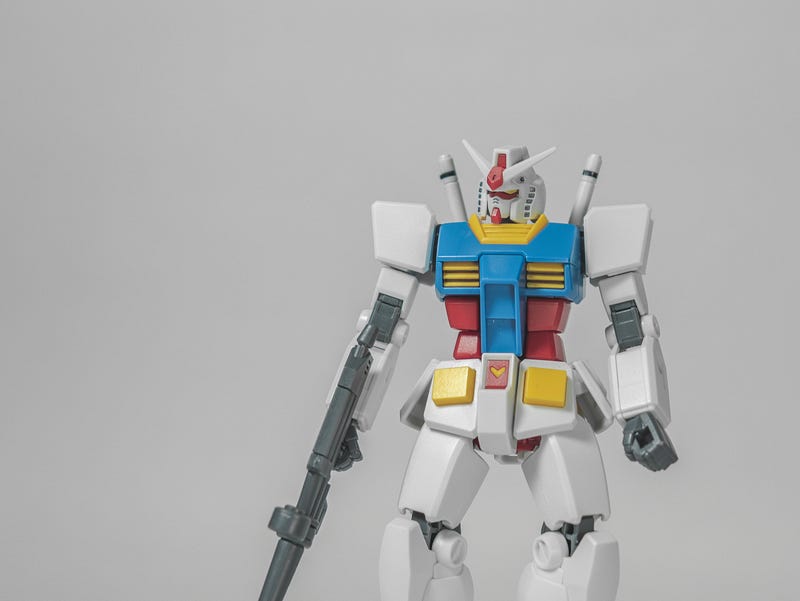
Photo by Jason Ng on Unsplash


Recent game release

Gundam Metaverse was launched with the collaborative intention of Bandai Namco and Gundam fans, aimed at creating a community that contributes to future Gundam projects. The sudden halt to downloads came as a surprise, given that the game was released just this month.

The Gundam Metaverse was initially slated to be open for a limited time in Japan and the US. It featured an “Early Access” phase for a select number of users, which commenced on October 6, followed by the “General Access” phase available to the public starting on October 12.

During this time, visitors had the opportunity to immerse themselves in a 3D world inspired by the iconic Gundam anime. The virtual world included a store offering six distinct Gundam Plastic models, commonly known as Gunpla, and a space for digital live performances by artists affiliated with the Gundam series.


Suspected design file flaws

Bandai Namco has remained tight-lipped about the reasons behind the decision to cease downloads, leaving fans and observers speculating about potential issues with the project. Speculation was further fueled by rumors that circulated online, suggesting that the game’s downloads contained unencrypted design files related to specific models from “Gundam SEED Freedom.”

These rumors began circulating as early as mid-September when a Weibo user claimed to have shared images of the “Freedom Gundam” and “Justice Gundam” designs, scheduled to make their debut in “Gundam SEED Freedom.” This upcoming animated film is produced by Bandai Namco Filmworks and directed by Mitsuo Fukuda, with a release date set for January 26 next year, marking the 20th anniversary of the Gundam SEED franchise.

Given that Gunpla models were set to be released in tandem with the film’s screening in January, the alleged leak of design files would be a substantial concern for Bandai Namco.

Hong Kong news outlet HK01 reported:

“There were a large number of 3D model CAD [computer-aided design] files of Gundam models hidden inside [a download], including 2024-only 3D model CAD files.”


Metaverse vision

Bandai Namco set out its metaverse vision in March 2022 when it provided initial details on what it termed back then as its “Gundam Metaverse Project.” The project involved an outlay of $130 million for the company to get it off the ground.

At the time, Bandai Namco saw its entry into the world of the metaverse as an opportunity for it to be “connected with fans,” becoming a hub so that those connections could run more deeply and broadly and result in greater enjoyment for IP fans, partners, group employees, and society worldwide.

Bandai Namco’s decision to halt downloads remains a topic of intrigue that has left Gundam fans and industry observers eagerly awaiting further developments and clarifications from the gaming giant.

More to Read
View All
Markets·

Apr 13, 2023

Shapella Upgrade to Have limited Impact on ETH’s Selling Pressure

Shapella Upgrade to Have limited Impact on ETH’s Selling PressureThe Shapella upgrade on the Ethereum network scheduled to take place on Wednesday will only have a limited impact on the selling pressure on ETH, according to a report by the research center at Korean cryptocurrency exchange Korbit.©Pexels/JievaniShapella upgradeOne of the key features of the Shapella upgrade is to allow withdrawal of staked ETH. This upgrade follows September’s Merge upgrade that switched the Ethereum network’s consensus algorithm from Proof of Work to Proof of Stake, significantly reducing electricity consumption.Impact on selling pressureTo predict the impact of the Shapella upgrade on the selling pressure on ETH, the analysts at Korbit Research calculated the amount of time it takes for all the ETH staked as of March 22 to be withdrawn. They believe this calculation is relevant because withdrawals of staked ETH could trigger bulk sales, potentially imposing a greater selling pressure on ETH.According to the findings, the daily sell volume for the first three days is expected to be 300,700 ETH, 0.254% of the circulating supply. This volume will gradually decrease to 43,000 ETH for the next six months and to 29,000 ETH for the following six months, each corresponding to 0.035% and 0.024% of the circulating supply, respectively.All in all, bulk selling of ETH is not likely, considering it will take about a year and five months for all the staked ETH to be withdrawn and that the amount of withdrawable ETH will stay relatively low for each period. Furthermore, since this analysis assumes an extreme case, the market will be able to effectively handle the volume over the six month to 18 month period.4 other reasonsIn addition, Korbit Research outlined four other aspects that limit the selling pressure on ETH.Firstly, there is some concern that the selling volume of ETH may increase due to unstaking resulting from the cessation of staking services at American crypto exchange Kraken. However, a decrease in the number of validators on the Ethereum network will raise the base reward. This may prompt those who unstaked ETH to stake them on other platforms, rather than selling them.Second, ETH locked up at liquidity staking protocols such as Lido Finance and Rocket Pool provide liquidity for representations of staked ETH. These platforms allow users to stake fewer than 32 ETH for rewards. According to a February Binance Research report, 57.7% of ETH stakers enjoy liquidity and rewards. Therefore, there may be a limited impetus to divest of staked ETH.Third, since only 41.1% of ETH stakers are seeing profits as of the time of writing the report, the remaining stakers would have to risk losses when withdrawing ETH. This suggests that those not yet seeing profits are more likely to keep ETH staked. Furthermore, Dune Analytics data shows that most of the ETH stakers with gains staked ETH when its price was relatively low, which indicates that they participated in staking in early days. Shivam Sharma, the author of the aforementioned Binance report, states that these ETH stakers are likely “some of the strongest Ethereum believers.”Lastly, despite the Shapella upgrade, ETH withdrawals at different staking pools may not be initiated immediately. This could limit the circulation of withdrawable ETH, which in turn would hinder the selling pressure on ETH.Macroeconomic factorsThe Korbit researchers concluded their paper with a note that the selling pressure on ETH will be more influenced by macroeconomic factors than technical factors. They added that a possible downturn in the overall economy and corrections in risky asset markets might lead investors to sell ETH.

news
Policy & Regulation·

Jun 21, 2023

Singapore Regulator Awards CMS License to AsiaNext

Singapore Regulator Awards CMS License to AsiaNextAsiaNext, a joint venture between Tokyo-based financial services company SBI Digital Asset Holdings and Switzerland’s SIX Group AG, has received regulatory approval for its institutional-grade digital asset exchange in Singapore. The Monetary Authority of Singapore (MAS) granted AsiaNext an in-principle approval for a Capital Markets Services (CMS) license, marking a significant milestone for the company.Photo by Davis Sánchez on PexelsTaking to LinkedIn last week, the firm said that the achievement is a testament to the efforts it has made in terms of rigorous regulatory compliance. With this CMS license, AsiaNext is poised to become a trusted digital asset exchange catering specifically to institutional investors in Asia and globally. The joint venture, which was finalized in September 2021, brings together the expertise and networks of SBI Digital Asset Holdings and SIX Group AG to meet the growing demand for trading public and private digital assets.Singapore-based joint ventureChong Kok Kee, appointed as the CEO of AsiaNext in March 2022, and Neil Thomas, serving as the Chief Commercial Officer, lead the team. Their combined experience in the financial industry positions AsiaNext to deliver a comprehensive suite of services that meet the rigorous standards of institutional investors.The primary goal of AsiaNext is to bridge the gap between traditional finance and the digital asset space. Chong emphasized the importance of a secure, transparent, and compliant platform that instills confidence in market participants during an interview with Hubbis in 2022. The exchange aims to provide integrated listing, trading, and post-trade services for various digital assets, including digital payment tokens.AsiaNext recognizes the increasing demand for trading digital assets among institutional investors. To address this demand, the joint venture will leverage the extensive networks and expertise of SBI Digital Asset Holdings in Asia and SIX Digital Exchange in Switzerland and Europe. Both partners have already demonstrated their leadership in global digital asset markets through investments, issuances, and initiatives.By securing the CMS license, AsiaNext, which is based in Singapore, has taken a crucial step towards becoming a trusted platform for institutional investors in Singapore and beyond.SBI partnershipsFor its part, SBI has favored joint ventures and partnerships when it comes to its increasing involvement in the digital assets space. It has entered into a joint venture with Zodia Custody, a digital assets custodian which has been spun up by UK-based financial services giant Standard Chartered, to take on the Japanese market. Additionally, it has increased its shareholding in the custodian in recent months.Its crypto exchange subsidiary, SBI VC Trade, recently formed a partnership with the project team behind the XDC Network blockchain with a view towards making inroads into the Japanese market.AsiaNext is now focused on preparing for the launch of its digital asset exchange, which is scheduled to commence later in 2023. Having now established itself on a firm regulatory footing, and the support of its strategic partners, AsiaNext appears to be well-positioned in meeting the evolving needs of institutional investors in the Asian region.

news
Web3 & Enterprise·

Oct 07, 2024

Zetrix launches product to simplify KYC for Chinese nationals

Zetrix, a layer-1 blockchain project for real-world applications, has launched an electronic Know Your Customer (KYC) verification product for Chinese nationals. The Malaysian enterprise, which is a subsidiary of digital services company My E.G. Services Berhad (MYEG), has launched ZCert. The offering is available to Chinese nationals who opt to have their digital identities published to the Xinghuo BF network, a Chinese national blockchain infrastructure network developed under the guidance of China’s Ministry of Industry and Information Technology and managed by the China Academy of Information and Communications Technology.Photo by Diego Jimenez on UnsplashFirst-of-its-kind applicationZetrix acts as an international super-node relative to the Xinghuo blockchain. In a press release published by PR Newswire on Oct. 3, the company outlined that ZCert had been launched as a first-of-its-kind application, enabling Chinese nationals “to be authenticated and verified digitally overseas, paving the way for a seamless, efficient, and secure verification process for verifiers and identity holders. ” The service simplifies the issue of identity verification for verifiers located outside of China, as a consequence of Zetrix’s integration with the Xinghuo BIF network.  Connecting to ‘China Web3’Xinghuo signed a memorandum of understanding (MoU) with Zetrix’s parent company, MYEG, to establish the international super-node back in November 2022. The tie-up was seen as an opportunity to provide access to Chinese government agencies and businesses internationally.  At the time, MYEG Managing Director and Zetrix Co-Founder Wong Thean Soon said that “with the commencement of the Xinghuo International Supernode, the rest of the world can connect and be part of the China Web 3 evolution that will promote the establishment of international communities and facilitate global trade and finance.”  On this occasion, Wong said that the new product “enables a new wave of services powered by smart contracts.” He added that KYC processes can be simplified and automated, while “user data is retained by users at all times and only critical information is shared in an encrypted manner." The company has already digitized Chinese driving licenses for the purpose of overseas verification. Furthermore, it has plans to expand its offering beyond ID verification soon. In April of this year, Zetrix and MYEG signed an MOU with MaiCapital, a Hong Kong-based virtual assets manager, with a view towards collaborating on the launch of a digital asset fund or digital asset-based exchange-traded fund (ETF). Last year Zetrix engaged in a pilot project with the Bank of China with the aim of offering supply chain financing products. On a similar theme, its parent company entered into a partnership with the Philippines Bureau of Customs (BOC) and Cargo Data Exchange Center Inc. (CDEC), also in 2023. The collaboration involved the use of Zetrix’s ZTrade product, a Web3 platform that enables digitized trade document verification. Zetrix launched its ZETRIX token in October 2023 through an initial exchange offering (IEO) facilitated by the Coinstore exchange.

news
Loading