Top

Korean Crypto Exchanges Struggle Despite Market Recovery

Markets·October 10, 2023, 9:32 AM

The results of a recent study by the South Korean Financial Intelligence Unit (FIU) released on Monday revealed that ten domestic cryptocurrency exchanges have reported zero revenue from transaction fees, with half of them struggling to achieve a daily average trading volume of KRW 1 million ($740).
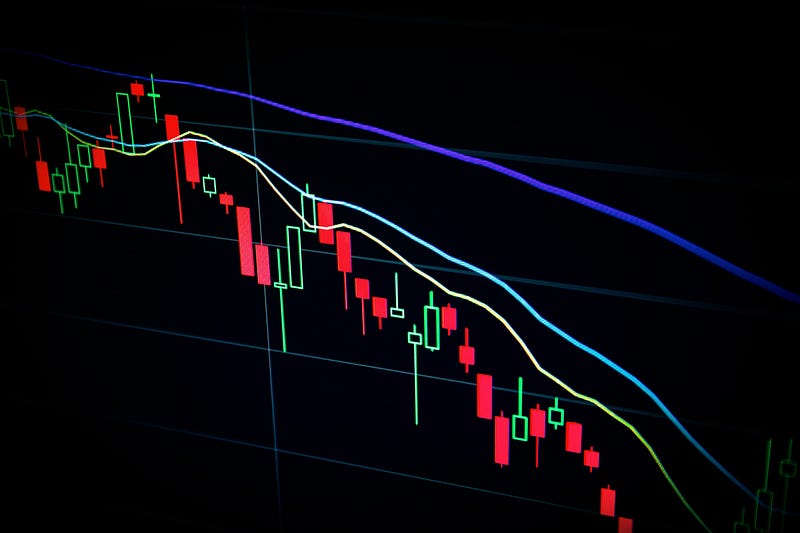
Photo by Maxim Hopman on Unsplash


Trends of growth and decline

The study looked into data from 35 registered virtual asset service providers (VASPs) for the first half of this year. The findings showed that compared to the second half of last year, the crypto market capitalization and Korean won deposits increased, but exchanges faced growing challenges, illustrated by a widening gap between leading fiat-to-crypto exchanges and smaller crypto-only exchanges.

In the first half of this year, the operating profit of won-based exchanges reached KRW 259.8 billion (approximately $193 million), a 46% increase compared to the second half of last year, which recorded KRW 177.9 billion. In contrast, crypto exchanges recorded an operating loss of KRW 32.5 billion. Notably, out of 21 crypto-only exchanges, 10 of them reported no revenue at all from transaction fees, and 18 were in a state of complete capital impairment. Meanwhile, the operating profit of won-based exchanges was concentrated among the country’s top two exchanges, Upbit and Bithumb.

But from a broader perspective, as of the end of June, this year’s total capitalization of the crypto market reached KRW 28.4 trillion — a 46% increase compared to the end of the second half of last year. Korean won deposits also increased by KRW 400 billion, or 11%, compared to the previous half. The overall operating profit was KRW 227.3 billion, up 82% from KRW 124.9 billion at the end of the second half of last year.

“The first half of this year saw a rise in prices of virtual assets and investor sentiment, leading to an increase in Korean won deposits, overall market capitalization, and operating profits for exchanges, compared to the second half of 2022,” the FIU remarked.

The number of new listings and delistings on virtual asset exchanges also surged with 169 new listings and 115 new delistings. These represented a more than double increase and a 47% increase, respectively, compared to the second half of last year. 66% of the delisted crypto assets were coins that had been exclusively listed on a given exchange.

Despite the market’s recovery, trading volume and the number of users have slightly decreased. The daily average trading volume in the domestic crypto market for the first half of this year was KRW 2.9 trillion, down 1.3% compared to the second half of 2022. In addition, the number of registered accounts with VASPs also dropped by 19% to 9.5 million compared to the end of last year. This can be attributed to a growing number of dormant accounts and the removal of duplicate accounts.

The quantity of verified users has also declined. The number of individuals and corporations that had completed the mandatory Know Your Customer (KYC) procedures needed to engage in trading decreased by 210,000 to 6.06 million (including duplicates) compared to the end of 2022. The majority of users, or those who own less than KRW 1 million in virtual assets, dropped by 7%.

On the other hand, the amount of virtual assets leaving the country increased. In the first half of this year, a total of KRW 22.1 trillion was transferred to whitelisted overseas operators or individual wallet addresses, marking a KRW 500 billion increase compared to the second half of last year. This trend could be accredited to futures trading and arbitrage trading influenced by the so-called “kimchi premium” — a term used to describe the difference between trading prices of cryptocurrencies in Korea and in other foreign exchanges.


Age demographics

Other findings showed that the age group that traded the most virtual assets is in their 30s, accounting for 30% of all users. Within this group, men make up 70%, with 1.27 million men recorded as engaging in crypto trading. Following closely with 1.2 million, men in their 40s were the second-largest demographic.

More to Read
View All
Policy & Regulation·

Aug 26, 2025

Filipino legislator proposes bill to establish Bitcoin reserve

A legislator in the Philippines has put forward a bill that, if passed and enacted, would see the Southeast Asian country establish a Bitcoin reserve consisting of 10,000 BTC. The proposed bill was filed with the House of Representatives as House Bill 421. Its proposer is Congressman Miguel Luis Villafuerte, a representative of Camarines Sur’s 5th district since 2022. Villafuerte also served as governor of the same province on two occasions, gaining recognition for becoming the youngest individual to assume the governorship in the Philippines.Photo by Michael Förtsch on UnsplashDrawing on developments overseasPrefacing the bill with an explanatory note, Villafuerte draws on developments related to Bitcoin in the United States. He drew attention to U.S. Federal Reserve Chairman Jerome Powell having referred to Bitcoin as “digital gold,” while pointing to a bill in the U.S. proposed by Wyoming Senator Cynthia Lummis to create a strategic Bitcoin reserve in the U.S., with the support of U.S. President Donald Trump. The bill itself, if passed and enacted, would provide a mandate to Banko Sentral ng Pilipinas (BSP), the country’s central bank, to acquire 2,000 BTC on an annual basis over a period of five years. According to Villafuerte’s proposal, that would result in the Philippines amassing a reserve of 10,000 BTC. 20-year minimum holding periodFollowing the achievement of this accumulation, the bill sets out that the leading digital asset would be locked in trust for a period of 20 years for the benefit of the country. A provision is included to establish a procedure that would enable the purchase schedule to be adjusted if a need arose to do so due to prevailing market conditions. Upon completion of the 20-year holding period, the proposed legislation calls on the central bank to present a report to Congress with recommendations as to whether Bitcoin should continue to be held or if some of the holdings should be sold off on a gradual basis. Following the expiration of that initial 20-year period, the governor of the central bank cannot recommend the selloff of more than 10% of the holding over any two-year period. Proof of reservesIn terms of sovereign nations, an early mover with regard to Bitcoin has been El Salvador. It became the first nation to establish Bitcoin as legal tender, while also establishing a Bitcoin reserve. However, the Central American nation has been criticized with regard to a lack of transparency surrounding that reserve. In the case of Villafuerte’s bill, the proposed legislation includes a requirement for the central bank governor to establish a system of quarterly proof of reserve attestations. It calls for attestations to be performed by an independent third-party auditor with expertise in auditing digital assets.The proposal comes as a number of nations are understood to be exploring the establishment of a strategic Bitcoin reserve. In April, a parliamentarian in Sweden proposed adding Bitcoin to the Nordic nation’s foreign exchange reserves. The Swedish parliament is set to debate the notion of a Bitcoin reserve next month. Meanwhile, Switzerland’s central bank has reportedly gained exposure to Bitcoin through a $253 million shareholding in Bitcoin treasury firm Strategy.

news
Web3 & Enterprise·

Nov 10, 2023

Bitget enhances crypto exchange app with Web3 wallet and swap service

Bitget enhances crypto exchange app with Web3 wallet and swap serviceSeychelles-incorporated crypto derivatives and copy trading platform Bitget has advanced its DeFi capabilities by integrating a Web3 wallet and swap service into its crypto exchange application.Photo by Shubham’s Web3 on UnsplashEnhancing platform app featuresThis new feature empowers users to seamlessly swap their tokens and access DeFi services through the platform’s Web3 wallet, according to a press release the company published concerning the development earlier this week. Bitget outlined that the primary goal of the integration is to offer users diverse options for trading their crypto assets within the exchange ecosystem.Bitget Managing Director Gracy Chen set out the significance of the recently ushered in changes. Chen stated:“Integrating Web3 services into our CEX platform marks a significant milestone for Bitget. By offering users the freedom to access various DeFi services alongside the convenience and security of our CeFi platform, we are empowering them with a unique experience. Bitget aims to provide a comprehensive ecosystem that caters to the evolving needs of our users, all while maintaining the highest standards of security and reliability.”Service offering expansionFurthermore, the app is set to expand its services, gradually incorporating a non-custody wallet, an NFT marketplace and decentralized applications (dApps), Chen confirmed. Bitget users can now experience enhanced flexibility in their trading activities, as the exchange plans to make most listed currencies available in the Web3 wallet for DeFi trading. The swap feature, a core element of this integration, aggregates liquidity from 10 decentralized exchanges (DEXs), including popular platforms like Uniswap, PancakeSwap and Curve Finance. Chen confirmed further details to Cointelegraph, stating:“At the core of the recent integration is our Web3 Wallet, which facilitates the secure storage, management, and control of their digital assets. Alongside the wallet, we’ve launched a Swap service, which is an advanced DeFi aggregator.”The firm acquired the BitKeep crypto wallet earlier this year, with the product subsequently having been officially rebranded to the Bitget Wallet in August. The move has worked out well for the firm, with it confirming at the end of July that it had achieved 20 million users as a consequence. The more recent integration not only facilitates asset management services but also provides native storage solutions for users.$100 million fundThis initiative aligns with Bitget’s ongoing efforts to establish a strong foothold in the crypto space. The exchange has consistently pursued expansion, launching multimillion-dollar funds to support the growth of the Web3 ecosystem. At an event in Singapore recently, Bitget introduced a $100 million fund dedicated to supporting venture firms and investing in the next generation of Web3 projects.Earlier this week, the company committed a $10 million fund towards the objective of nurturing high-potential crypto startup projects in India.

news
Web3 & Enterprise·

Jul 15, 2023

Dtcpay Looks to Extend Crypto Payment Services to Hong Kong

Dtcpay Looks to Extend Crypto Payment Services to Hong KongDtcpay, a Singapore-based payment processor catering to both fiat and cryptocurrencies, has set its sights on expanding into Hong Kong by the end of this year. The company also has plans to establish an office in Dubai, another prominent crypto hub, by 2024.Photo by Jonas Leupe on UnsplashNorth Asia potentialIn an interview with Tech in Asia, Kanny Lee, the group CEO of Dtcpay, expressed optimism about the North Asia market, citing clear regulations and rules for digital assets and the recent opening up to retail participants. Lee believes that the region holds significant potential for growth over the course of the coming years.Dtcpay generates revenue through crypto conversion rates on transactions and has already acquired approximately 12 merchants. The company aims to onboard up to 100 merchants by the end of 2023. Since the beginning of this year, the firm has experienced a fourfold increase in transaction volume.Seamless regional paymentsLee acknowledged that most consumers view tokens primarily as investments. Dtcpay’s objective is to unify various payment methods across different countries, including Indonesia, Malaysia, India, Vietnam, and Singapore, providing a seamless experience for both merchants and consumers.As an example, Dtcpay enables users to purchase cars using cryptocurrencies, significantly reducing transaction fees from approximately 4% to just 0.5% compared to cash payments. Notable partnerships in Singapore include Cars and Coffee and DM Autohaus.In June, Dtcpay secured a pre-series A funding round, raising $16.5 million from Kwee Liong Tek. Tek, the chairperson of the Pontiac Land Group, which owns renowned hotels such as the Ritz-Carlton and Conrad Hotels in Singapore, has enabled Dtcpay to target the hospitality sector. At the time Lee said that there are an increasing number of businesses expressing interest in collaborating with regulated entities in the digital assets space and combined with an increase in the adoption of digital payments, that’s turbocharging DTCpay’s business.RebrandThat focus on digital payments led to the company rebranding back in April from Digital Treasures Center to Dtcpay. It appears that Hong Kong was already on the company’s radar back then as Lee stated at the time that “in Asia, particularly the key tier 1 financial capitals such as Singapore, Hong Kong and Tokyo, [they] have experienced a rapid rate of digital adoption primarily due to transparent regulatory frameworks for digital financial inclusion.”Additionally, Dtcpay obtained a major payment institution license from the Monetary Authority of Singapore in August 2022. The company plans to launch a debit card in Q4 2023. That product will allow cardholders to convert their cryptocurrencies into multiple currencies without incurring foreign exchange fees.The company was co-founded in 2019 by Sam Lin, Band Zhao, and Alice Liu, with Lee joining the company earlier this year with a view towards expanding its area of operations beyond Singapore.With its expansion plans into Hong Kong and its focus on innovation, Dtcpay is certainly aiming to establish itself as a leading player in the crypto payment services industry, catering to the evolving needs of merchants and consumers alike.

news
Loading