Top

Crypto Exchange Korbit Raises Daily KRW Deposit Limits From 300K to 5M

Web3 & Enterprise·September 26, 2023, 5:15 AM

Korbit, one of the leading cryptocurrency exchanges in South Korea, raised the daily deposit limit for its customers as of 16:00 KST on September 25. This move aligns with the early implementation of the operation guidelines of real-name bank accounts for cryptocurrencies, which is scheduled to be introduced in January next year. Korbit collaborates with Shinhan Bank, utilizing its real-name accounts to facilitate Korean won transactions.

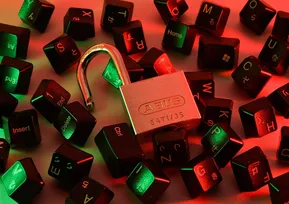
Photo by manseok Kim on Pixabay


User protection and AML

The operation guidelines have been established to fortify the protection of virtual asset users and to bolster efforts against money laundering. Financial authorities, the Korea Federation of Banks, and cryptocurrency exchanges have collaborated to initiate these measures at every local exchange starting next January. Meanwhile, exchanges are obliged to maintain reserves in their banks beginning this month, ensuring they are poised to provide compensation for involuntary losses in the event of hacking incidents or system failures.


Investor inconvenience and market confusion

Since the introduction of the real-name bank account system in 2018, banks and crypto exchanges have had different terms of use and user protection measures, leading to varied deposit and withdrawal limits as well as reserve levels across different exchanges. These inconsistencies have resulted in inconvenience to customers and have sown confusion in the market. In response, the entities in question have agreed to implement a shared set of guidelines for real-name bank accounts from January next year.


Daily limit of KRW 300K to KRW 5M

With the implementation of these guidelines, Korbit has elevated the current daily deposit limits from KRW 300,000 (approximately $222) and KRW 1.5 million to KRW 5 million. Moreover, once the bank authenticates the user’s transaction purpose — for instance, purchases of KRW 5 million or more in virtual assets in a month following the initial KRW deposit — and verifies the source of the funds, the constrained account can transition to a standard account. This adjustment allows the daily deposit and withdrawal limit of up to KRW 500 million.

The limitations associated with constrained and standard accounts apply solely to fund transfers between the crypto exchange and the bank. When holders of Shinhan accounts initiate fund transfers to accounts in other banks, the limitations imposed by Shinhan continue to apply.

Oh Sejin, CEO of Korbit, expressed enthusiasm that the higher deposit limit enabled by the new guidelines would improve investor convenience and draw in new customers. He added that the crypto exchange is committed to collaboration with Shinhan Bank, aiming to enhance user protection and anti-money laundering (AML) measures.

More to Read
View All
Policy & Regulation·

Aug 21, 2023

Korean Prosecutors Allocate $734K Budget for Crypto Crime Investigations

Korean Prosecutors Allocate $734K Budget for Crypto Crime InvestigationsThe South Korean Supreme Prosecutors’ Office has earmarked a budget of up to KRW 986 million (approximately $734,000) this year for investigations pertaining to virtual assets, according to data received by the local newspaper Law Times from the Ministry of Justice last Thursday. The significant size of the budget suggests that the prosecution is prioritizing efforts to combat the growing surge in virtual asset-related crimes.Photo by Tingey Injury Law Firm on UnsplashBudget divisionWithin this budget, KRW 778 million has been designated for the purchase of software licenses for virtual asset tracing and analysis equipment, while KRW 280 million has been allocated for an integrated strategic plan to establish a platform for analyzing and tracing unauthorized virtual asset transactions. The budget for this platform consists of preliminary planning costs. Related expenditures are expected to increase as the project is fully implemented.“It is true that our budgets are being concentrated on crimes related to virtual assets due to the fact that they have recently become a social issue,” said a prosecution official. “It may not be a lot compared to our overall budget, but assigning almost KRW 1 billion for one specific field of investigation is still a considerate amount.”Rising crypto crimesIn Korea, crimes associated with virtual assets have been increasing annually. This includes tax evasion, bribery, foreign exchange law violations, and money laundering, as well as cryptocurrency market issues including issuance, listing, and distribution. According to the Supreme Prosecutors’ Office, reported cases of suspicious virtual asset transactions received by the Korea Financial Intelligence Unit (KoFIU) surged from an average of 66 cases per month in 2021 to 900 cases in 2022, then 943 cases in 2023 — a fourteen-fold increase in just three years.Subsequently, the scale of the damages caused by cryptocurrency crimes has also seen a sharp rise. The total value of all reported damages skyrocketed from KRW 467.4 billion in 2017 to KRW 1.02 trillion last year, more than doubling in five years. The cumulative loss over this period exceeds KRW 5.3 trillion.Focused effortsThe prosecution has thus dispatched financial experts from organizations including KoFIU and Korea Exchange to create a joint virtual asset crime investigation unit under the Seoul Southern District Prosecutors’ Office dedicated to investigating cryptocurrency crimes.The prosecution’s Cybercrime Investigation Division has also begun developing a tracking system optimized for the Korean market to trace the flow of virtual assets. The foreign software that is currently being used for tracking comes with considerable expenses and limitations, particularly for tracking flows within the domestic market, where there are many transactions involving smaller, locally-issued cryptocurrencies called “kimchi coins.”“We are dedicating our manpower and technological development to virtual asset investigations,” said a high-ranking official from the prosecution. “We will also strive to secure the budget necessary for these efforts.”

news
Web3 & Enterprise·

Nov 17, 2023

Korbit hosts its first cryptocurrency investment league

Korbit hosts its first cryptocurrency investment leagueKorean cryptocurrency exchange Korbit announced yesterday (local time) its inaugural virtual asset investment league, set to begin at midnight between Nov. 26 and 27. This event, a first since Korbit’s establishment, invites any investor with a Korbit account to participate. Interested individuals can join the league by using the mobile app to click on the “Join League” button and consenting to the collection and disclosure of their personal information.Photo by Florian Schmetz on UnsplashRealized returns in Korean wonKorbit’s investment league ranks participants every week, from the start of Monday (00:00) to the end of Sunday (24:00). The ranking is based on the “realized return” in Korean won (KRW), which reflects the profits earned by investors from their cryptocurrency investments. To qualify for the ranking, participants must have made cryptocurrency sales totaling at least KRW 100,000 (approximately $77.4).The exchange will reward the top 100 performers each week in the investment league with KRW points, which can be used for investing in crypto assets on their platform. The first, second and third-place winners will receive KRW 200,000, KRW 100,000 and KRW 50,000, respectively. Additionally, all participants who rank in the top 100 will be awarded KRW 5,000 each.Social trading opportunityThe league offers a great opportunity for social trading, allowing investors to study and emulate the tactics of the market’s top traders. Users can click on the profiles of the top 100 traders to view the three cryptocurrencies those traders engaged with over the week.Moreover, each investor on Korbit will have the ability to monitor their cryptocurrency holdings in real-time. They can also view their total realized return, calculated from the beginning of their trading journey on Korbit up to the present moment, irrespective of the league.Pre-event bonusesTo encourage active participation in the upcoming competition, Korbit launched a pre-event yesterday, scheduled to run until Nov. 26. During this period, the first 10,000 investors who agree to the collection and disclosure of their personal information will instantly receive KRW 1,000. Additionally, the first 1,000 investors who sell crypto assets worth KRW 100,000 or more within the first four weeks following the league’s commencement will be rewarded with an extra KRW 5,000.Commenting on the event, Oh Se-jin, the CEO of Korbit, emphasized that unlike a simulation, this competition involves real investments, offering customers a more authentic and immersive experience. Oh expressed his hope to regularly host such events, aiming to foster a community where investors not only compete for returns but also share information. This approach, he believes, will contribute to cultivating a healthy culture of cryptocurrency investment.

news
Policy & Regulation·

Jul 06, 2023

Korea’s Virtual Asset User Protection Act to Take Effect in July Next Year

Korea’s Virtual Asset User Protection Act to Take Effect in July Next YearThe Virtual Asset User Protection Bill was passed during the South Korean National Assembly’s plenary session last Friday, according to a report by news agency Newsis. The legislation aims to safeguard customer assets, establish regulations against unfair trading practices, and enforce penalties. The act is scheduled to take effect one year after its passage.Photo by KS KYUNG on UnsplashDefinition of virtual assetsUnder the act, a virtual asset is defined as a digital representation of economic value that can be digitally traded or transferred. It’s important to note that central bank digital currencies (CBDCs) are not considered virtual assets. Virtual assets with characteristics of securities will initially fall under the jurisdiction of the Capital Market Act.Roles of Korea’s central bankThe act grants the Bank of Korea (BOK) the authority to request data and information from virtual asset service providers (VASPs). This provision is deemed necessary for the Korean central bank to formulate monetary and financial policies, despite virtual assets not being equivalent to traditional currencies.Responsibilities of VASPsMoreover, VASPs are obligated to segregate users’ virtual assets from their own holdings. VASPs are also required to reserve the same type and quantity of virtual assets entrusted by users and maintain a certain proportion of these assets in a cold wallet, which is an offline storage solution.Unfair trading practices will be regulated in a similar manner as outlined in the Capital Market Act. The act specifically prohibits the use of undisclosed information, price manipulation, fraudulent transactions, and trading of self-issued virtual assets. VASPs are barred from suspending deposits and withdrawals without legitimate reasons. They are also mandated to monitor suspicious transactions and take appropriate measures to safeguard users. Any suspected unfair trading practices must be promptly reported to financial authorities. Violators of these rules may face criminal penalties, liability for damages, and potential class action lawsuits.Powers of financial authoritiesThe act also clarifies the powers of financial authorities in supervising, inspecting, and taking action against virtual asset operators. Unfair trade practices can result in imprisonment for more than one year (up to 10 years for violations related to self-issued virtual assets) or fines ranging from three to five times the illicit gains. Assets acquired through unfair trade practices will be confiscated, or an equivalent value will be charged if confiscation is not feasible.Impact on crypto investigationsThe absence of legislation directly addressing unfair trading practices in the virtual asset market has posed challenges for prosecutors. They had to rely on existing statutes related to fraud, the capital market, and financial investments. Once the new act takes effect, prosecutors will no longer need to determine whether a virtual asset qualifies as a security or not.Regarding this development, a prosecutor told local legal news outlet Law Times that the implementation of the new act will escalate prosecutorial investigations into cryptocurrency incidents.Meanwhile, the individuals behind the crash of Terraform Labs’ stablecoin TerraUSD and its sister coin Luna will not be subject to this act due to the legal principle of nulla poena sine lege, which prevents the retrospective enforcement of criminal laws. Do Kwon, co-founder of Terraform Labs, was recently sentenced to four months in prison by a Montenegrin court for passport forgery after being arrested in March. The other co-founder, Daniel Shin, has been indicted by prosecutors in Korea.

news
Loading