Top

Tether Alters ToS in Singapore Restricting USDT Redemption

Policy & Regulation·September 26, 2023, 1:19 AM

Tether, the issuer of the world’s largest stablecoin, USDT, has made substantial revisions to its Terms of Service (ToS), which may have a significant impact on its user base in Singapore.

News of the change emerged on Monday, with Dr. Julian Hosp, CEO of Cake Group, the project team behind Singapore-based Cake DeFi, taking to social media and providing a copy of an email from Tether’s Compliance Department, confirming the change. That notification read:

”Tether has changed its terms of service to, among other things, restrict its onboarding standards. Corporates controlled by; another entities, directors, shareholders residing in Singapore are no longer permitted to be Tether customers.”

In his commentary, Hosp stated that he wouldn’t be in a position to confirm “if redeeming $USDT into $USD is actually possible, due to being in #Singapore.”
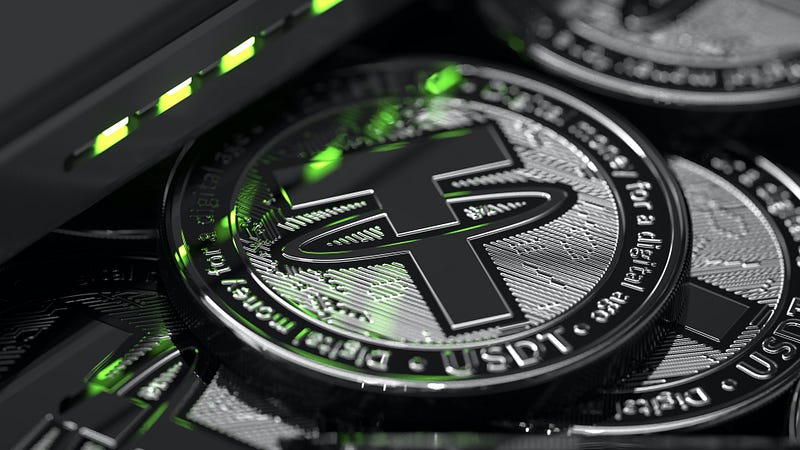
Photo by DrawKit Illustrations on Unsplash


ToS Change in Context

Within the cryptocurrency ecosystem, eyebrows have been raised regarding the timing of Tether’s ToS change, as it has coincided with a major instance of crypto-related money laundering. Conversely, some argue that the issue could be specific to Cake DeFi. The DeFi protocol had been flagged for enhanced due diligence (EDD), suggesting that the modification in Tether’s ToS might potentially be a result of a partnership issue between the two entities.

Stablecoins like USDT play a pivotal role in the digital asset ecosystem, serving as a bridge between the volatile world of cryptocurrencies and the stability of traditional fiat currencies like the US dollar. Any disruption in their usage can trigger a domino effect in the crypto markets.

The cryptocurrency sector is grappling with regulatory uncertainties worldwide, and Singapore is no exception. The Monetary Authority of Singapore (MAS) has been actively reviewing and updating its crypto-related regulations to align with international standards and mitigate risks to financial stability.

The precise motive behind Tether’s decision to restrict USDT redemption for specific customers in Singapore remains unclear. Notwithstanding that, Tether’s Chief Technology Officer (CTO) Paolo Ardoino expressed the view that the matter is being misunderstood. He tweeted:


Spreading FUD

”Before spreading FUD [fear, uncertainty and doubt] it would be great if you guys did take a look at webarchive… This is Jan 2022…. And if you open the link below: Last updated: May 12, 2020… Again, take a moment to search and verify information before YOLO [you only live once] posting.”

Clearly Ardoino is making the point that the ToS change is consistent with existing compliance policy which has been in place since 2020. Notwithstanding that, in reviewing related records, media outlet Protos found that USDT issuance and redemption after May 2020 demonstrate that the firm continued to do business with Singapore-based entities. The publication cited UQPAY specifically, a Singapore-based payments processor. It was found to have issued USDT between May 14 and May 18 in 2020.


More to Read
View All
Policy & Regulation·

Feb 20, 2024

Japan progresses bill to enable VCs to hold crypto assets

Japan’s Ministry of Economy, Trade and Industry announced on Friday that it has approved a revision to the Industrial Competitiveness Enhancement Act, with the aim of broadening strategic investment opportunities. According to a local report from crypto publication Coinpost, this move would open avenues for venture capital (VC) firms to invest in projects exclusively issuing cryptocurrencies. Pending parliamentary deliberationWith cabinet approval secured, the revised bill will now undergo introduction and deliberation in the current session of the Diet, Japan's parliament. If passed, the amendment could pave the way for VC funding of Web3 startups in exchange for crypto assets. The Ministry highlighted that the amendment aligns with objectives to foster new businesses and industrial investment, with a particular focus on empowering Japan's economy through support for medium-sized companies and startups. Reports of Japan's intention to ease regulations for VC firms investing in crypto startups first emerged in September.Photo by Manuel Cosentino on UnsplashStablecoin frameworkJapan has further work to do to implement a comprehensive overall framework for digital assets. A move by the Japanese Financial Services Agency (FSA) earlier this month to implement measures designed to guard against unlawful crypto transfers is a case in point. The measure doesn’t appear to account for knock-on effects on the peer-to-peer (P2P) transactions market. However, its stance on crypto regulation is best characterized by efforts to establish a robust legal framework for stablecoins and digital assets. The nation has positioned itself as a global leader in stablecoin regulation, signaling plans to embrace Web3 technologies while maintaining stringent measures to protect users. Japan's stablecoin regulations, while providing clarity, present challenges for issuers, especially regarding profitability in a low-interest rate environment. Compliance with requirements such as maintaining 100% of assets within Japan's trust accounts poses operational hurdles for yen-based stablecoins. Recent developments indicate industry players' efforts to navigate regulatory requirements. Mitsubishi UFJ Financial Group, Japan's premier banking conglomerate, has engaged with stablecoin issuers to explore leveraging its blockchain platform. Web3 hope amid economic difficultiesJapan’s economy has seen better days. Last week, the bitcoin-yen trading pair saw bitcoin reach a record high valuation against the yen. New technologies like Web3 are seen as a potential mechanism for the East Asian country to improve its economic performance. In July of last year, Japanese Prime Minister Fumio Kishida emphasized the country’s commitment to nurturing the Web3 sector within Japan. Last year, Yudai Suzuki, the founder of a Tokyo-based Web3 incubator, suggested that the country could rediscover its past prowess at the forefront of innovation and technology by embracing blockchain and Web3. Japan's regulatory approach appears to be shifting to accommodate such sectoral growth and development. Last July, the Japan Blockchain Association (JBA) called on the government to address an issue within the Japanese tax code that was hampering the industry. That tax reform was subsequently implemented in December. This latest initiative, too, appears to underscore Japan's commitment to fostering innovation and economic growth through enabling further investment into emerging Web3 enterprises. 

news
Web3 & Enterprise·

Nov 25, 2023

Victory Securities granted approval for retail crypto trading in Hong Kong

Victory Securities granted approval for retail crypto trading in Hong KongHong Kong’s Securities and Futures Commission (SFC) has given the green light to Victory Securities, a well established investment firm headquartered in the Chinese autonomous territory, for retail virtual asset trading.Photo by Carlos Alberto Gómez Iñiguez on UnsplashFirst licensed corporationThe license will allow the investment firm to expand its crypto trading and advisory services to retail investors. The publicly traded company announced its crypto licensing achievement via a press release published to its website on Friday. In that statement, the company expressed the hope that “by connecting traditional finance with virtual assets, customers can configure assets in a flexible and convenient way, and [we] can provide general investors with investment advice on virtual assets and publish relevant research reports.”This approval marks Victory Securities as the first licensed corporation in Hong Kong to offer such services to the retail market, joining the ranks of already approved firms like HashKey Exchange and OSL Digital Securities. It builds upon previous licensing approval that the company received from the SFC to offer a full range of trading and advisory services in respect of virtual assets to institutional clients in November 2022.The move reflects Hong Kong’s commitment to crypto regulation, as earlier this year, the region established a framework enabling the provision of crypto services to retail clients. This development positions Hong Kong as a key player in the Asian crypto market, where firms seem to be receiving more regulatory clarity compared to their counterparts in the United States. The regulatory initiative gains significance in light of the recent JPEX scandal, involving an alleged HK$1.6 billion ($204 million) fraud.Bringing retail into cryptoVictory Securities, currently listed as an applicant on the SFC’s recently published roster of virtual asset trading firms, is navigating this regulatory landscape to bring retail investors into the crypto market. In parallel, HashKey Group, another Hong Kong-based cryptocurrency firm, has launched the city’s first SFC-approved trading app since the JPEX incident. HashKey Exchange’s app, boasting “full mobile trading capabilities,” became operational this month, a notable progression given its prior limitation to professional investors.Through HashKey’s app, local traders can now engage in bitcoin and ether transactions using funds from their Hong Kong or U.S. dollar bank accounts. In addition to pioneering retail crypto trading, HashKey has introduced its crypto over-the-counter (OTC) trading service, HashKey Brokerage, aligning with local securities regulations and the recently implemented cryptocurrency regulatory framework by the SFC.The Hong Kong regulator is also believed to be currently weighing up whether to allow retail investors the ability to access spot crypto exchange-traded funds (ETFs). Despite these advancements, the SFC maintains restrictions on retail traders engaging in stablecoin transactions until new regulatory arrangements are established. This decision follows the SFC’s consultation paper on regulating crypto activities, emphasizing the need to address risks associated with stablecoins and their regulation.The regulator aims to ensure appropriate management of stablecoin reserves to maintain price stability and safeguard investors’ redemption rights, underscoring the potential significant implications for stablecoin stability if these risks are not effectively managed.As Hong Kong solidifies its position in the evolving crypto landscape, Victory Securities’ approval signifies yet another milestone in the region’s journey toward fostering a regulated and inclusive crypto market for retail investors.

news
Web3 & Enterprise·

Oct 19, 2023

GDAC Joins Hands with Bitgo to Fortify Crypto Wallet Security

GDAC Joins Hands with Bitgo to Fortify Crypto Wallet SecurityCryptocurrency trading platform GDAC, which is operated by South Korean blockchain fintech company Peertec, revealed on October 19 (local time) a partnership with crypto wallet provider Bitgo. This collaboration aims to bolster the security measures for the exchange’s wallets.Bitgo, headquartered in Palo Alto, California, and backed by investment bank Goldman Sachs, is renowned for its secure wallet solutions. As a qualified custodian for digital assets across various jurisdictions such as the United States, Switzerland, and Germany, Bitgo has been serving more than 1,500 institutional clients in over 50 countries since 2013. The company also touts that it processes about 20% of all on-chain Bitcoin transactions by value.Photo by Shubham’s Web3 on UnsplashBitgo’s growing presence in KoreaBitgo’s latest partnership with GDAC isn’t its first venture in the Korean market. Just last month, the company entered into a strategic partnership with Hana Bank, one of Korea’s leading banking institutions. This collaboration aims to drive the development of security solutions, foster technical cooperation, and even explore a potential joint venture in the future.With this collaborative initiative, GDAC is now a partner of two major digital asset custodians: Bitgo and Fireblocks. Through this cooperative network, the Korean exchange seeks to take a leading role in enhancing security as a virtual asset service provider (VASP). In May, GDAC launched a mobile application where users can seamlessly enjoy all of its crypto services, including exchange, custody, and staking.Han Seung-hwan, CEO of GDAC, said that the company places the utmost priority on bolstering its security technology and ensuring the secure storage of customer assets. He added that having solidified its position as an exchange dedicated to institutional clients, GDAC will focus on delivering customer-centric, high-quality services.

news
Loading