Top

Japan’s GMO Coin Announces Special SGB Airdrop for XRP Holders

Web3 & Enterprise·September 23, 2023, 12:05 AM

GMO Coin, a prominent cryptocurrency exchange operating as part of the Japanese IT conglomerate GMO Internet Group, has unveiled a unique opportunity for XRP holders. Eligible GMO Coin clients who have previously invested in XRP will receive an exclusive airdrop of Songbird (SGB) tokens.
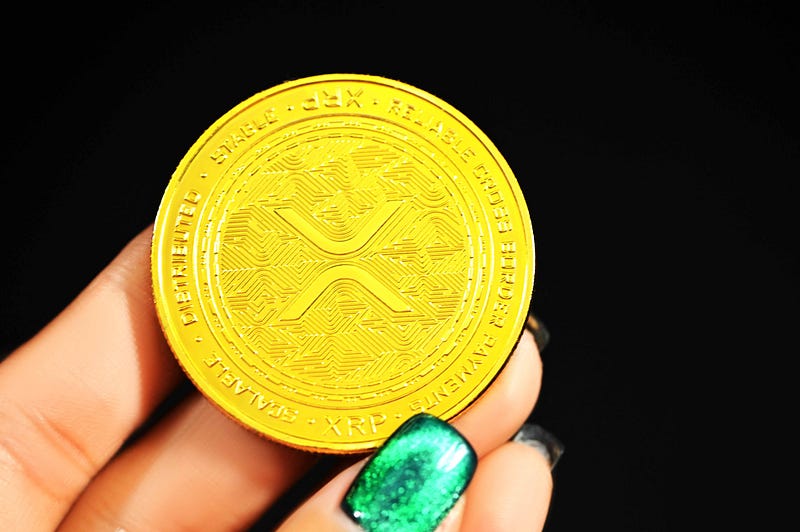
Photo by Kanchanara on Unsplash


SGB token distribution

The distribution of these SGB tokens is slated for completion by September 29, offering a promising opportunity for XRP enthusiasts. To qualify for this airdrop, customers must have held XRP in their GMO Coin accounts at 09:00 on December 12, 2020. The airdrop is also being extended to those utilizing crypto asset lending services on the platform.

To take advantage of the opportunity, eligible clients will need to provide a snapshot of their XRP holdings. While the exact pricing mechanism for the distribution remains undisclosed, it will be revealed at a later date. Presently, SGB is trading at approximately $0.0045, according to Malaysian cryptocurrency data aggregator CoinGecko.

GMO Coin has assured its clients that they are free to manage their XRP holdings as they see fit after submitting the necessary proof. The distributions will ultimately be converted into Japanese yen and made available to clients by the end of the month.


Ripple’s mixed fortunes

This development comes in the wake of a roller-coaster year for XRP holders. Ripple’s native token experienced substantial price fluctuations in response to various developments and events.

One noteworthy instance occurred in mid-July when XRP surged by more than 70%. This surge followed a favorable ruling in a legal dispute between Ripple and the United States Securities and Exchange Commission (SEC).

While regulatory pushback has featured strongly in the US, Ripple has sought to expand its business elsewhere with the Asian region featuring within that strategy. In June, the blockchain-based payments firm obtained in-principle approval from the Monetary Authority of Singapore (MAS) to offer its services within the city-state.

Earlier this month, Ripple struck a deal with SBI Remit Co., a subsidiary of Japanese financial services conglomerate SBI Group, to enable the remittance company to utilize Ripple’s XRP cryptocurrency as a bridge currency, connecting bank accounts in the Philippines, Vietnam, and Indonesia.


Songbird network

The Songbird network serves as a canary blockchain on the Flare layer one network. Essentially, the blockchain plays a crucial role in allowing the facility to enable network architecture testing on the Flare network, including the Flare Time Series Oracle, F-Asset systems, and StateConnector.

GMO Financial Holdings, the parent company behind GMO Coin, bought a 10% stake in AWR Capital, a multi-strategy crypto hedge fund, in April. Following that investment, AWR became a market maker at GMO Coin. The Japanese exchange business is ranked ninth on Forbes Digital Assets’ list of the world’s largest crypto exchanges.

As GMO Coin prepares to distribute SGB tokens to eligible XRP holders, this airdrop marks a great opportunity for relevant stakeholders. It showcases the platform’s willingness to reward its customers and foster engagement within the crypto community.

More to Read
View All
Policy & Regulation·

Jul 27, 2023

Korean Banks Impose Crypto Exchanges to Maintain a Reserve of at Least 3B KRW

Korean Banks Impose Crypto Exchanges to Maintain a Reserve of at Least 3B KRWIn a significant step towards regulating the cryptocurrency market and ensuring the safety of virtual asset users, South Korea’s Federation of Banks (KFB) has collaborated with financial authorities and virtual asset exchanges to establish the “Guidelines for the Operation of Real Name Accounts for Virtual Assets.” The KFB, as a group of banks and financial institutions, facilitates cooperation between its members and promotes the development of the financial industry.Photo by rc.xyz NFT gallery on UnsplashThe guidelines come as a response to the increasing need for stronger money laundering prevention measures and standardization in the crypto industry. The first step towards this was taken in 2018 when crypto exchanges became obliged to establish a real name account at a bank in order to provide Korean Won (KRW) deposit and withdrawal services to their customers. Currently, the exchanges that won such bank accounts are Upbit, Bithumb, Coinone, Korbit, and Gopax.However, this policy brought with it a set of challenges, including differing practices among various cryptocurrency exchanges, leading to inconveniences for users. Additionally, varying user protection measures, such as reserve requirements, caused confusion in the market.3 billion KRW in reservesTo address these issues, the new guidelines aim to clarify how banks operate cryptocurrency real-name accounts and bolster overall security. One of the key changes is the requirement for crypto exchanges to maintain a reserve of at least 3 billion KRW ($2.36 million). This reserve fund serves as a precautionary measure to address potential financial losses resulting from hacking incidents or system failures at crypto exchanges.Furthermore, the guidelines mandate banks to manage deposit and withdrawal limits by categorizing user accounts into limited and normal accounts. A limited account will not be converted to a normal account, which grants higher deposit and withdrawal limits, until the user’s transaction purpose and the source of funds are verified.Enhanced due diligenceIn addition, banks will perform annual enhanced due diligence (EDD) for individual account holders. This thorough review will encompass users’ identification, transaction purposes, and the origin of funds.User asset segregationTo safeguard users’ funds, crypto exchanges will be required to ensure that customer deposits are held separately or placed in trust. Regular due diligence at crypto exchanges will also be conducted by banks, with mandatory visits occurring at least once a month. Moreover, third-party services will be engaged to perform independent due diligence every quarter on crypto exchanges, providing an additional assessment of their operations.The official launch of these new guidelines is scheduled for January of next year. However, the requirement of depositing at least 3 billion KRW will come into effect earlier, starting in September of this year. Additionally, the implementation of guidelines for expanding deposit and withdrawal limits is anticipated in March of next year.

news
Web3 & Enterprise·

Nov 07, 2025

Hana Financial Group bets on stablecoins and AI as crypto adoption surges in South Korea

Hana Financial Group, one of South Korea’s largest financial institutions, plans to establish a new task force focused on digital assets, according to a report by News1. The move comes as the cryptocurrency market continues to expand and institutional adoption grows worldwide.Photo by POURIA 🦋 on UnsplashGroupwide crypto task forceThe company intends to use the task force to develop a coordinated response system linking its banking, card, and securities subsidiaries. It also plans to introduce crypto-related products, services, and infrastructure in line with forthcoming legislation on digital assets. As its first initiative, the task force will focus on stablecoin-related projects, including issuance and reserve management. Another key objective is to build a merchant network that enables customers to make payments using stablecoins. Beyond its crypto initiatives, Hana Financial Group also aims to expand the use of artificial intelligence (AI) to advance its digital finance capabilities. Ongoing AI research at the Hana Institute of Technology will serve as the foundation for integrating AI across the group’s subsidiaries, with a particular focus on enhancing sales divisions. Commenting on the initiative, Chairman Ham Young-joo said the group will strengthen its capabilities in both crypto and AI, underlining the transformative potential of digital assets in capital markets and payment networks. Paycoin expands retail acceptanceThe rising adoption of cryptocurrencies in South Korea is reflected in Paycoin’s (PCI) recent expansion into the convenience store chain Emart24. Operated by Danal Fintech, the blockchain affiliate of Danal, Paycoin now allows customers to make purchases with its PCI tokens at Emart24 locations, according to a report by Etoday. With 7-Eleven scheduled to start accepting PCI later this month, the digital asset will soon be usable across all four major convenience store chains in the country, joining CU and GS25, which already support it. Building on this momentum, Paycoin aims to expand its utility across a wider range of sectors, including restaurants, sports facilities, shopping malls, and accommodations. The platform has already established a presence at well-known eateries such as Domino’s and Pizza Hut, as well as at Dal.Komm, Danal’s coffee chain. Market manipulation probesHowever, the growing acceptance of digital assets has also brought side effects—specifically, a rise in crypto-related crimes. Amid stricter oversight, South Korea’s Financial Supervisory Service (FSS) has voted to refer alleged cryptocurrency market manipulators to law enforcement. The decision concerns two separate cases, Edaily reported. In the first case, a suspect is accused of generating illicit profits by artificially inflating the price of a particular cryptocurrency. The individual reportedly accumulated tokens worth billions of Korean won before placing a series of sell orders at higher prices. Using an application programming interface (API), the suspect repeatedly executed these orders, prompting ordinary investors to buy in and drive prices even higher—ultimately securing profits for the manipulator. The second case involves multiple individuals accused of employing similar methods across various tokens. They allegedly used APIs to automate trades, creating false impressions of high trading volumes and inflated prices to reap unlawful gains. These developments offer a broader view of how South Korea’s nascent digital asset industry is taking shape. The growing presence of cryptocurrencies in everyday life reflects Seoul’s push to align with the global trend of embracing crypto as both a new payment method and an emerging asset class. While crime prevention and investor protection remain key concerns, forthcoming legislation is expected to give regulators clearer guidelines. Ranked 15th worldwide in crypto adoption in this year’s Chainalysis study, South Korea continues to stand out as a market that merits close attention from investors and industry observers alike. 

news
Web3 & Enterprise·

Oct 14, 2025

Circle sticks with dollar, euro stablecoins as Hong Kong’s crypto scene matures

Financial technology firm Circle is taking a measured approach in Hong Kong, favoring focus over expansion. In an interview with the Hong Kong Economic Journal, cited by local financial content provider AAStocks, Yam Ki Chan, the company’s vice president for Asia Pacific, said there are no current plans to issue a stablecoin pegged to the Hong Kong dollar. Still, he noted the company’s openness to partnering with local initiatives, adding that Circle has been in discussions with several firms to share its expertise and insights. The firm hopes the Chinese special administrative region will evolve into a launchpad for stablecoins tied to the local currency alongside other major currencies. Chan said Circle is doubling down on its two core products, the U.S. dollar stablecoin USDC and the euro stablecoin EURC. He pointed out that USDC has been catching on across the region, with more local corporations and professional investors starting to use it. His comments come after the Stablecoins Ordinance came into force on Aug. 1 in the city, setting up a mandatory licensing system for issuers under the Hong Kong Monetary Authority (HKMA). The regulator has said it does not plan to hand out the first licenses until early next year.Photo by tommao wang on UnsplashMoving assets on-chainWhile Circle continues to focus on stablecoins, other firms are finding new ways to bring traditional assets on-chain. DL Holdings, a Hong Kong-headquartered one-stop financial services group, is moving ahead with plans to tokenize about $40 million worth of its non-voting Class B membership interest in ONE Carmel, its luxury real estate investment project in California’s San Francisco Bay Area. The initiative, the firm’s first step into real-world asset (RWA) tokenization, will use blockchain-based smart contracts to automate distributions, transfers, and investor rights, allowing the company to pay out dividends to shareholders and give on-chain investors a chance to participate in ONE Carmel. Insurance is another testbed for blockchain. Anthea Holding Limited, a crypto-fintech licensed by the Bermuda Monetary Authority, raised $22 million in a Series A led by Yunfeng Financial. The proceeds will fund what Anthea says is the world’s first life insurance policy denominated in Ethereum (ETH). Yunfeng Financial, listed in Hong Kong, has close ties to Alibaba founder Jack Ma. Mainland firms deepen crypto exposureMainland companies are stepping into crypto investments. Hangzhou-based Jiuzi Holdings, a Nasdaq-listed operator of new energy vehicle stores, said it completed a private placement transaction settled in 100 Bitcoin. The company plans to allocate the proceeds to building a digital-asset custody platform and developing encrypted storage systems. Separately, China Renaissance is seeking to raise around $600 million for a publicly listed vehicle designed to invest in BNB, the cryptocurrency tied to Binance, according to Bloomberg. Venture firm YZi Labs, formerly Binance Labs, is expected to join the effort. In an August filing, the Beijing-based investment bank said it would commit about $100 million of its own capital to BNB. If completed, the proceeds would establish a U.S.-based crypto treasury company to hold and manage BNB reserves. Back in Hong Kong, momentum in the digital asset sector is now reaching the capital markets. HashKey Group, the financial services firm behind a licensed crypto exchange, has confidentially filed for an initial public offering in the city. Bloomberg reported the plan, citing a source familiar with the matter. The listing could take place as early as this year and raise up to $500 million. Market bounces back on softer trade rhetoricAmid these developments, crypto prices have rebounded from sharp losses linked to trade tensions between Washington and Beijing. The market had tumbled after U.S. President Donald Trump threatened to impose additional 100% tariffs on China. Sentiment shifted when Trump softened his stance on Truth Social, writing, “Don’t worry about China, it will all be fine!” and “The U.S.A. wants to help China, not hurt it!!!” Bitcoin reflected that whiplash. The token dropped to $103,893.3 on Oct. 10 during what Investing.com described as the largest single-day liquidation in crypto history at nearly $19 billion in positions. It has since recovered to $112,608.31 as of publication time. 

news
Loading