Top

Galaxia Moneytree Forms Aviation Asset Tokenization Consortium

Web3 & Enterprise·September 15, 2023, 9:40 AM

Korean financial platform services provider Galaxia Moneytree announced that it has signed a memorandum of understanding (MOU) to establish a consortium for the development of a security token offering (STO) platform that issues tokenized aviation assets — the first of its kind in the country. Shinhan Securities, Eugene Investment and Securities, VMIC Aviation, and Cirium have signed on as members.

Photo by John McArthur on Unsplash

“This consortium will be a significant step in our endeavors to become a leading entity for innovation in the field of the tokenization of aviation assets. Our agreement will promote the advancement of the Korean aviation industry and enhance global competitiveness, providing investors with new opportunities through alternative investments,” said Shin Dong-hoon, CEO of Galaxia Moneytree.


Shaping the future of aviation

The consortium aims to issue security tokens for leasing core aviation equipment such as aircraft engines, which would secure private funding and ease the burden that is imparted by leasing fees. Also, given that the most important aspect of STOs is asset valuation, the consortium has committed to issuing reliable aviation token securities to investors based on the accurate valuation of aircraft engines as determined by Cirium. Cirium is a global aviation data analytics company with 114 years of experience that provides solutions such as the valuation of aircrafts and engines, risk analytics for carbon emission reduction, and flight schedule changes.

Galaxia Moneytree said that the consortium recently applied for a financial regulatory sandbox — a program introduced by the Korean government that offers special and provisional regulatory exemptions for financial services that have been recognized for their innovativeness.


Partners with varying attributes

Galaxia Moneytree will be responsible for overseeing the consortium as well as developing and operating the STO platform, which Shinhan Securities and Eugene Investment and Securities have agreed to provide funding for. The two securities firms will also provide management services for related trusts and accounts.

Meanwhile, VMIC will take over asset management for aircraft engines and contribute various insights based on its expertise in aviation finance. VMIC Aviation is a Korean startup that specializes in innovative aircraft engine technologies by leveraging its technical and financial expertise.

Discussions are also underway for cooperation with relevant government agencies such as the Ministry of Land, Infrastructure and Transport and the Korea Civil Aviation Association.

The company has been working with its partner companies and communicating with government entities to tokenize a wide range of assets, from certified emissions reductions to renewable energy and horse racing. It is also taking the initiative to position itself as an industry leader by investing in joint ventures.

More to Read
View All
Web3 & Enterprise·

Feb 17, 2025

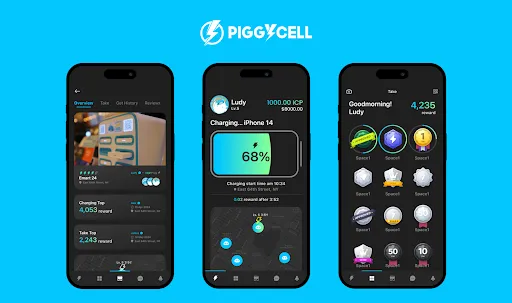
Piggycell raises $10M from Animoca Brands, ICP and others to expand its decentralized infrastructure and ecosystem

Piggycell, a blockchain decentralized physical infrastructure network (DePIN) startup, recently announced that it has successfully closed its seed investment round for $10 million. Piggycell will mainly use the funds raised from the investment round to expand its charging infrastructure and ecosystem further.Piggycell is improving the ownership and management of charging infrastructures through DePINs and real-world assets (RWAs). By integrating blockchain technology with physical assets, Piggycell aims to empower users through decentralized ownership, transparent profit-sharing models and enhanced community engagement. Since its establishment in 2020, Piggycell has made advancements in developing its infrastructure. It currently has over 13,000 charging hubs with over 100,000 batteries across all cities in South Korea. As a key player in the country's portable battery rental industry, Piggycell boasts nearly four million users and commands over 90% of the market share. One of the notable investors in the round is Animoca Brands, a Web3 company that uses blockchain technology to provide digital property rights to consumers worldwide, supporting the development of the open metaverse. Animoca Brands is one of the most active investors in Web3, with a portfolio of over 540 investments. Another key investor in this round is Internet Computer (ICP), a third-generation blockchain developed by the DFINITY Foundation that enables full end-to-end decentralization without the use of cloud computing. With its cryptographic methods, ICP supports fully on-chain applications, including complex web services.The investment from Animoca Brands, ICP and other investors further endorses Piggycell as a DePIN platform that bridges traditional Web2 services with the Web3 ecosystem. Having received backing from Web3 investors, Piggycell is now working to accelerate its decentralized infrastructure network with next-generation blockchain capabilities. Piggycell plans to launch its DePIN platform in the first half of 2025.  About PiggycellPiggycell is an RWA and DeFIN project that merges blockchain with real-world utility, offering a Charge-to-Earn experience. Its power bank-sharing infrastructure rewards users for charging their devices, bridging digital incentives with real-world convenience. By combining hub-based charging stations with blockchain technology, the project seeks to enhance transparency and efficiency through a digital twin strategy. Beyond charging, Piggycell integrates a social app-tech gaming platform, fostering interaction, gamification and community-driven growth.

news
Policy & Regulation·

Jun 20, 2023

Korean Travel Rule Solution Provider CODE to Start Charging Monthly Fees Next Month

Korean Travel Rule Solution Provider CODE to Start Charging Monthly Fees Next MonthSouth Korean Travel Rule solution provider CODE, established in collaboration between local cryptocurrency exchanges Bithumb, Coinone, and Korbit, has announced the implementation of service fees starting next month. Up until this point, CODE has been offering its services free of charge. The notification regarding this change was issued to CODE’s clientele, which includes various crypto exchanges, as reported by local tech news outlet Digital Daily.Photo by Kenny Eliason on UnsplashTravel RuleThe Travel Rule regulations, set by the Financial Action Task Force (FATF) and Korean legislation, require Korean trading platforms to maintain records of both the sender and recipient’s information for virtual asset transactions exceeding 1 million KRW ($780). The FATF, founded in 1989 and headquartered in Paris, is an international financial watchdog dedicated to combating global money laundering and terrorist financing.More competitive priceCODE is anticipated to offer its services at a more competitive price of 1 million KRW ($780), in contrast to its rival VerifyVASP (VV), which introduced a monthly fee of $1,800 earlier this year. VV is a product developed by Lambda 256, a subsidiary of Dunamu, the parent company of Upbit, the largest cryptocurrency exchange in Korea.CODE launched its services in March last year. Among its crypto exchange members are Gopax, Cashierest, and Coredax. In December, the Travel Rule solution provider appointed Lee Sung-mi, the former compliance officer of Bithumb, as its new CEO, and since then, it has accelerated its monetization plan. Prior to Lee’s appointment, Coinone CEO Cha Myung-hun had been at the helm of CODE.

news
Web3 & Enterprise·

Oct 06, 2023

Architecture Metaverse Platform STELSI Attracts Strategic Investment from Nexus One

Architecture Metaverse Platform STELSI Attracts Strategic Investment from Nexus OneSTELSI, a blockchain-based metaverse construction project, has announced that it has secured a strategic investment from global crypto asset venture capital firm Nexus One.Bridging architecture and the metaverseSTELSI is a Build-to-Earn (B2E) decentralized metaverse island that provides a realistic and intuitive extended reality (XR) experience where users can design, construct, and manage their own buildings. Built with the 3D creation tool Unreal Engine, it aims to support the seamless application of blockchain technology across various fields of the construction industry, including architectural planning and design, construction, and real estate. The platform also has its own token, STELSI, which users can earn by staking building NFTs.Photo by C Dustin on Unsplash“At STELSI, we are building a metaverse platform that converts the works of architects and artists into digital assets, providing new economic value and creative opportunities that have not been experienced before,” said the platform’s CEO Ryan Shim. “I believe that our efforts to make the traditionally conservative construction industry more flexible appealed to Nexus One as an attractive investment point.”Nexus One professionally invests in blockchain and crypto projects such as Klaytn, PlayDapp, and ProBit. Through its latest investment in STELSI, Nexus One aims to contribute to the development of more diverse content related to architecture, producing economic benefits and creative value within the realms of Web3, construction, and lifestyle.On the other hand, STELSI plans to use this opportunity to expand its services to produce various copyrighted content and foster its ecosystem.Promoting the world of digital artSTELSI had previously hosted the first STELSI Media Art Biennale on its metaverse platform back in June, where the company highlighted the potential of metaverse media art, a budding artistic field. Furthermore, it is consistently striving to promote the value of art through technology, as seen in “One Earth: Art Pia,” a digital art survival show currently streaming on the Korean OTT platform Wavve.The platform is also preparing for a token airdrop event ahead of the launch of its decentralized application (dApp) on October 16.

news
Loading