Top

Piggycell raises $10M from Animoca Brands, ICP and others to expand its decentralized infrastructure and ecosystem

Web3 & Enterprise·February 17, 2025, 2:40 AM

Piggycell, a blockchain decentralized physical infrastructure network (DePIN) startup, recently announced that it has successfully closed its seed investment round for $10 million. Piggycell will mainly use the funds raised from the investment round to expand its charging infrastructure and ecosystem further.
https://asset.coinness.com/en/news/c36c3e0959ba2c318dcc25eb97d70b1b.webp

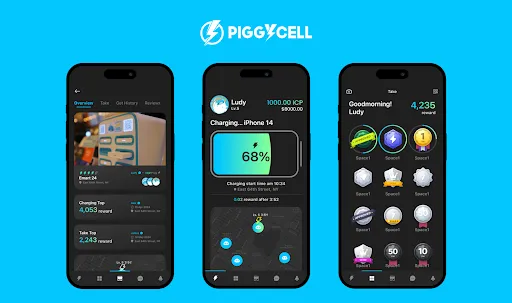
Piggycell is improving the ownership and management of charging infrastructures through DePINs and real-world assets (RWAs). By integrating blockchain technology with physical assets, Piggycell aims to empower users through decentralized ownership, transparent profit-sharing models and enhanced community engagement.


Since its establishment in 2020, Piggycell has made advancements in developing its infrastructure. It currently has over 13,000 charging hubs with over 100,000 batteries across all cities in South Korea. As a key player in the country's portable battery rental industry, Piggycell boasts nearly four million users and commands over 90% of the market share.


One of the notable investors in the round is Animoca Brands, a Web3 company that uses blockchain technology to provide digital property rights to consumers worldwide, supporting the development of the open metaverse. Animoca Brands is one of the most active investors in Web3, with a portfolio of over 540 investments.


Another key investor in this round is Internet Computer (ICP), a third-generation blockchain developed by the DFINITY Foundation that enables full end-to-end decentralization without the use of cloud computing. With its cryptographic methods, ICP supports fully on-chain applications, including complex web services.


The investment from Animoca Brands, ICP and other investors further endorses Piggycell as a DePIN platform that bridges traditional Web2 services with the Web3 ecosystem.


Having received backing from Web3 investors, Piggycell is now working to accelerate its decentralized infrastructure network with next-generation blockchain capabilities. Piggycell plans to launch its DePIN platform in the first half of 2025. 


About Piggycell

Piggycell is an RWA and DeFIN project that merges blockchain with real-world utility, offering a Charge-to-Earn experience. Its power bank-sharing infrastructure rewards users for charging their devices, bridging digital incentives with real-world convenience.


By combining hub-based charging stations with blockchain technology, the project seeks to enhance transparency and efficiency through a digital twin strategy. Beyond charging, Piggycell integrates a social app-tech gaming platform, fostering interaction, gamification and community-driven growth.


More to Read
View All
Web3 & Enterprise·

Dec 21, 2023

Starbucks Korea implements NFT initiative to boost sustainability efforts

Starbucks Korea implements NFT initiative to boost sustainability effortsStarbucks Korea is set to take on several eco-friendly initiatives in the new year to promote the use of personal reusable cups, including an NFT wallet and a new tumbler coupon policy, according to local news outlet Newsis on Thursday (KST).Photo by Battlecreek Coffee Roasters on UnsplashNFTs and eco-friendly effortsIn a newfound development, the brand also said that it would start issuing NFTs through a new NFT wallet on its mobile app next month as part of its eco-friendly consumption campaign. Until now, NFTs have been widely utilized in fields like art, music and entertainment due to their ability to prove individual ownership of digital assets. Starbucks’ adoption of the technology is a significant step in its implementation into daily life, which will lead to an increase in the number of real-world use cases and an acceleration in the transition to the era of Web3.To celebrate the launch of the NFT wallet, Starbucks plans to hold a promotional event where customers who use a reusable cup for one beverage ordered via the Siren Order function will receive one Eco Stamp. Up to three stamps can be collected per day. These can be exchanged for various types of NFTs, which are categorized as Basic, Creative and Artist, and each customer can only own one.Starbucks’ NFTs will be minted in collaboration with Seoul-based art platform and gallery Print Bakery (PBG) and PBG exclusive artist DADAZ, featuring images of unique cups, tumblers and more.The franchise plans to hold an offline exhibition to showcase images of the NFTs as well as its achievements in corporate sustainability at the Starbucks Jongno R store located in Jongno-gu, central Seoul, early next month.Sustainable sipsThe coffee franchise is also known for offering a complimentary beverage voucher to customers who purchase a reusable cup or tumbler. Next month, this voucher will be renamed the Eco Tumbler Beverage Coupon, which customers can exchange for a tall-sized beverage of their choice. This policy is aimed at encouraging the use of personal cups and providing tailored benefits to customers who embrace sustainable options.This new introduction was partially driven by the steady increase in the number of personal cups used at Starbucks stores around the country over the past three years. The annual number of cases has risen from 17.39 million in 2020 to 21.9 million in 2021, then 25.3 million last year.This figure has spiked significantly this year in particular, with the cumulative yearly number reaching 26.7 million last month, surpassing last year’s total. If this trend continues until the end of the year, the estimated figure is expected to be around 29.6 million, representing a 17% increase compared to 2022.This upward trend is attributed to the immediate KRW 400 discount offered to customers who participate, as well as an alternative benefit where customers can earn one “Star”, or reward point, for each purchase that they make. Until last month, the total value of benefits that were distributed via these two systems — with one Star valued at KRW 500 — exceeded KRW 12 billion. The ratio of immediate discount and Star rewards in this value stands at 30% and 70%, respectively.Green commitmentStarbucks also plans to continue its No Single-Use Cup Day campaign, a collaboration with the Korea Zero Waste Movement Network that has been ongoing for the past five years. The brand dedicates the tenth of every month as a day without single-use disposable cups, giving out merchandise like mugs, tumblers, coffee ground planting kits and stickers. Since last year, various events have been organized to celebrate the day, such as coupons gifted to customers who use reusable cups the most. Approximately one million people have participated in these promotions since the campaign’s inception in 2018.Starbucks expressed its hopes that these initiatives would act as a catalyst for positive changes in local communities by encouraging the reduction of waste.

news
Web3 & Enterprise·

Jan 11, 2024

AsiaPay and BLOX explore crypto payments within Malaysian market

BLOX, the Malaysian Web3 firm, has forged a strategic partnership with AsiaPay, a payment processor and gateway solution provider in Asia, focused on crypto payments. Memorandum of understanding (MOU)According to a recently published press release, the collaboration has been formalized through a memorandum of understanding (MOU) and aims to collectively explore and develop cryptocurrency digital payment solutions tailored for the Malaysian market. As global consumers increasingly gravitate towards the most frictionless payment methods, cryptocurrencies are gaining significant traction. However, the seamless integration of cryptocurrencies into day-to-day transactions requires the support of adept payment service providers.Photo by Esmonde Yong on UnsplashStablecoin potentialDespite the burgeoning popularity of cryptocurrencies, the inherent volatility in their prices poses a considerable challenge. To address this challenge, stablecoins have emerged as a viable solution. The adoption of stablecoins has gained momentum, particularly in the business-to-business (B2B) segment, where the efficiency of blockchain-based payments and instant settlement can be harnessed without being hampered by the uncertainties of price fluctuations. It is within the area of stablecoins that BLOX can lend support, given that the entity is responsible for the first Malaysian ringgit-denominated stablecoin (MYRC). Ethan Chung, CEO and Co-Founder of BLOX, expressed enthusiasm about the partnership, stating:“I’m excited to announce our partnership with AsiaPay, enabling Malaysian merchants to effortlessly accept crypto payments without the need for technical expertise. Empowering businesses, simplifying transactions.” Regulatory sandboxThe crypto payment exploration, which will be undertaken by the two companies, is being enabled under the auspices of a regulatory sandbox environment provided by Malaysian central bank Bank Negara Malaysia. Loo Tak Kheong, Country Head and Director at AsiaPay Malaysia, emphasized the added value this collaboration brings to their payment solutions. He said:“At AsiaPay, we provide payment acceptance solutions with multi-currency, multi-lingual, multi-card, and multi-channeled payment capabilities, which we believe by adding an additional payment method via crypto, will further enhance the value-add service to our Merchants and Partners in the payments ecosystem.” AsiaPay operates throughout the Asian region, headquartered in Hong Kong but with a local corporate entity also established to serve the Malaysian market. Malaysia has shown interest in harnessing blockchain for the purposes of international trade and payments. Last year the Southeast Asian country’s Prime Minister had expressed interest in decreasing its dependency on use of the U.S. dollar. Under the guidance of the country’s central bank, Malaysian banks have explored the use of blockchain for the purpose of trade finance. The country had expressed interest in a central bank digital currency (CBDC) in a financial sector blueprint it had previously published, mapping a way forward from 2022 to 2026. The same document deems decentralized cryptocurrencies like bitcoin to be “non-backed digital assets.” Previously the country’s deputy finance minister had said, “cryptocurrencies like Bitcoin are not suitable for use as a payment instrument due to various limitations.” This strategic alliance between BLOX and AsiaPay reflects the ongoing evolution of payment systems, positioning both companies at the forefront of the exploration of crypto-as-a-payment means in Malaysia.

news
Policy & Regulation·

Jan 24, 2025

Hong Kong regulator extends swift licensing process to new applicants

Having introduced its swift licensing process late last year, Hong Kong's Securities and Futures Commission (SFC) has extended access to the process to all new virtual asset trading platform (VATP) applicants. In a statement published on its website on Jan. 16, the regulator outlined that it is extending the swift licensing process to new applicants. Back in December, the SFC approved licensing relative to four exchanges under the expedited process. Those additions included Accumulus GBA Technology Co., DFX Labs Company, Hong Kong Digital Asset EX and Thousand Whales Technology (BVI).Photo by Ruslan Bardash on UnsplashSeven licensed VATPsThat has brought the total number of licensed exchanges to seven, as HashKey, OSL and HKVAX were the first exchanges to be approved. In November, fifteen licensing applications relative to virtual asset platforms, had been pending. According to SFC CEO Julia Leung, the regulator had hoped to issue licenses to eleven VATPs by the end of 2024.  The new expedited process requires applicants to “implement their policies, procedures, systems and controls before conducting an external assessment on these measures.” The regulator decided to extend the swift licensing process due to the effectiveness of the SFC’s engagement with other applicants, relative to the regulatory standards being put in place, implemented through on-site inspections being carried out. Fostering a healthy ecosystem Commenting on the development, Dr. Eric Yip, the SFC’s Executive Director of Intermediaries, stated:“The SFC is committed to fostering a healthy ecosystem and a robust regulatory framework for the development of virtual assets in Hong Kong. With the new approach, we will enhance our collaboration with VATP applicants, providing them with constructive and timely feedback, thereby enabling fully compliant VATPs to bring their services to investors more swiftly.” While the regulator is awarding licensing on an expedited basis through the swift licensing process, licensing is conditional. The VATP can operate on a restricted scope of business once it has completed rectification actions following feedback provided by SFC inspectors.  In October Yip outlined the SFC’s plans to create a consultative panel consisting of senior management executives from licensed VATPs. The objective of the panel is to gather feedback and concerns from licensees, adjusting the regulatory framework where deemed appropriate, relative to that feedback. Commenting on the initial introduction of the expedited approval system last December, Yip stated: “We have been proactively engaging with VATPs’ senior management and ultimate controllers, which helps drive home our expected regulatory standards and expedite our licensing process for VATPs. We aim to strike a balance between safeguarding the interests of investors and facilitating continuous development for the virtual asset ecosystem in Hong Kong.” The Hong Kong government has also been working towards incorporating a stablecoin bill, which will establish a regulatory framework with regard to fiat-referenced stablecoins. The SFC also intends to introduce licensing for crypto custodians in 2025.

news
Loading