Top

Viver Boosts Business Expansion with Blockchain Integration

Web3 & Enterprise·September 15, 2023, 8:02 AM

Viver, a luxury watch trading platform and subsidiary of Dunamu, which operates the Upbit cryptocurrency exchange in South Korea, is gearing up to expand its business by securing operating funds and implementing blockchain technology to enhance the transparency and security of trades.
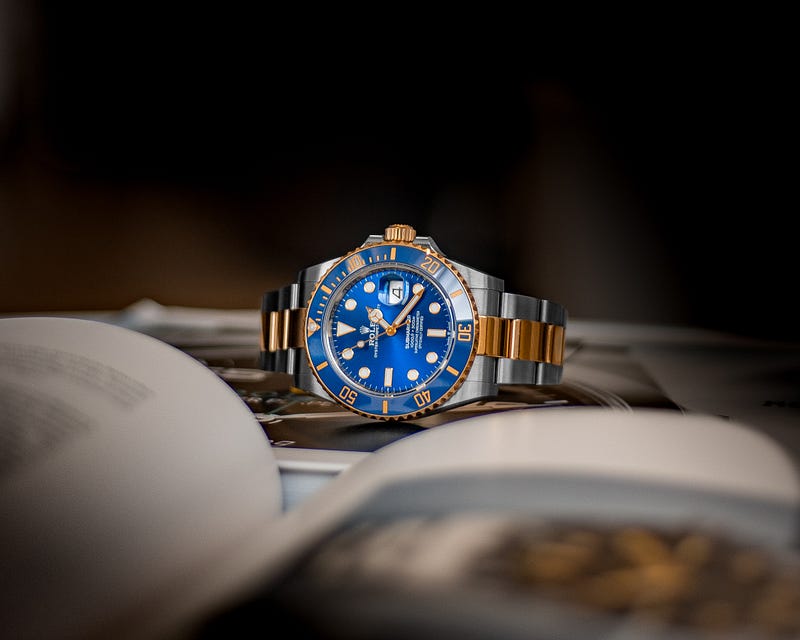
Photo by Caramel on Unsplash

In particular, designated services in which Viver plans to incorporate blockchain technology include the management of transaction history and the authentication of buyers and sellers, which can be used for watch appraisals and guarantees.

“We do not plan to introduce services incorporating blockchain right away this year, but we are exploring ways to bring Dunamu’s strengths in blockchain to Viver,” the platform explained.


From acquisition to nurturing growth

After its establishment in February 2021, Viver was soon acquired by Dunamu, which injected KRW 9.5 billion (approximately $7.2 million) into the company on June 30 of that same year.

Since then, the platform has been receiving continued financial support from Dunamu. It received KRW 2 billion in operating funds last year and an additional KRW 5 billion last Wednesday through board approval. In total, Viver has received approximately KRW 16.5 billion in funding from Dunamu over the past two years. “We decided to inject these operating funds to facilitate business growth,” Dunamu explained. The company also filed for trademark rights to Viver in July.

This move contrasts with Dunamu’s actions in the first half of the year, where it divested its entertainment subsidiary, rrr Entertainment, for KRW 3 billion and its video production subsidiary, Knowmerce, for KRW 2.7 billion.

In its first year of establishment, Viver recorded a net loss of approximately KRW 433 million, followed by a net loss of KRW 3.8 billion in 2022. While it has not yet achieved a turnaround in financial performance, the platform is facing promising outlooks as it has witnessed a substantial tenfold increase in its user base over the past year. Furthermore, since the launch of the service in August last year, the number of products directly listed by sellers as of July this year spiked nearly thirty times, with monthly trade count and transaction volume increasing almost fifteen times.


Solid leadership and the beginnings of monetization

Viver’s efforts to grow as a commerce service have been led by CEO Moon Jae-yeon and Chief Operating Officer Seo Hee-seon. Moon is known for his expertise in the management of commerce platforms through his experience working at eBay Korea and Coupang. Seo has similarly worked at notable companies such as BGF Retail, Interpark, eBay Korea, and 11th Street.

Since Tuesday, Viver has started implementing service fees, signaling its move toward monetization. While transaction fees are still free due to an ongoing promotional event, order management fees are set at 2%, and sellers are now responsible for shipping costs.

“Since our platform facilitates brokered trades, there are costs involved in order management, shipping, and our own evaluation and diagnostics processes. We have started charging fees for some of these costs so we could provide an improved trade experience,” Viver explained in regard to these changes.

Viver also has its own magazine section, where it recently unveiled a special article for its 100th issue outlining its most popular and expensive high-end timepieces.

More to Read
View All
Web3 & Enterprise·

Nov 08, 2023

OKX announces delisting of 26 trading pairs

OKX announces delisting of 26 trading pairsCryptocurrency exchange OKX has made a significant announcement regarding the delisting of more than 20 trading pairs, with a view towards its ongoing maintenance of strict listing criteria and performance monitoring. This decision will impact a considerable number of trading pairs across various cryptocurrencies, with the process scheduled to commence later this week.OKX outlined details of this recent trading pair purge in a statement published to its website on Monday. Among the trading pairs set for removal are CELO-USDC, AXS-USDC, APE-BTC and the HNT-USDT trading pair, which will be delisted on Nov. 10. Notably, Bytom (BTM), a Chinese crypto project, which has experienced a substantial 46% drop in value since Monday, is also among the tokens to be delisted.The exchange is advising users to manage their assets accordingly in preparation for the changes. Withdrawals for these tokens will cease on Jan. 10, 2024. During this transitional period, OKX recommends that users cancel any open orders linked to the impacted trading pairs to avoid automatic cancellations, which could result in processing delays.Photo by Maxim Hopman on UnsplashSAITAMA delistingDeposits for the affected tokens, including HNT, BTM, and SAITAMA, were halted by OKX on Nov. 3. SAITAMA, an Ethereum-centric ERC20 token, is the primary payment medium on the Saitama platform. There were mixed reactions to the delisting of the coin. One community member took to X, stating:“I will say I do think it isn’t cool for OKX to delist #Saitama considering we didn’t get on there for the reasons specified of delisting. The listing was won through hours of Spaces and helping people get VPNs to win a contest. Regardless of what the market is doing we won fairly.”Another Saitama project supporter took a more pragmatic view, stating:“Delisting Is a tragedy? I don’t think so. What did the OKX listing for the token price? What is the difference between holding or selling with or without okx? Volume was too low, and this isn’t a news, so they will delist. They will relist again….#SAITAMA”OKX has embarked upon several initiatives over the course of 2023 in an effort to further the user proposition offered by the platform. From a marketing perspective, the company took the decision in October to retire the Okcoin brand, rebranding its various sub-platforms instead to OKX.The Seychelles-incorporated company indicated in September that it expects to have secured a virtual asset service provider (VASP) license in Hong Kong by June of next year.Delisting banksTokens are not the only items to be delisted by the exchange recently. Alongside competitor Bybit, the company decided to delist sanctioned Russian banks Tinkoff Bank and Sberbank from its peer-to-peer exchange platform.This move by OKX reflects the exchange’s efforts towards maintaining a high level of integrity and performance. Listing coins that fall below a minimum acceptable level of liquidity and trading volume can leave them much more exposed to the risk of manipulation. By adhering to stringent listing criteria and promptly addressing issues, the company is making a greater effort towards maintaining a position as a trusted and secure trading platform for cryptocurrency enthusiasts and investors.

news
Policy & Regulation·

Feb 01, 2024

Floki Inu acts in response to Hong Kong SFC's warning

Meme coin project Floki Inu has implemented restrictions on users in Hong Kong from accessing its staking programs following a warning from the Hong Kong Securities and Futures Commission (SFC). Last week, the regulatory body labeled Floki's staking initiatives as "suspicious investment products'' and urged caution among investors. On Jan. 26, it specifically cautioned Hong Kong users about the Floki and TokenFi staking programs, emphasizing the promised annualized returns ranging from 30% to over 100%. The Commission expressed concern over investment products that make claims of returns deemed "too good to be true."Photo by Jie Yeu Teoh on UnsplashStaking program access block in Hong KongResponding to the SFC's warning, Floki Inu took proactive steps to prevent users in Hong Kong from participating in its staking programs. In an official blog post which was published on Tuesday, the project's team announced the implementation of "practical measures" to block Hong Kong-based users from joining the staking programs. Additionally, prominent warnings have been placed on the Floki and TokenFi staking websites, clearly stating the ineligibility of Hong Kong users to participate. The SFC emphasized that neither of the mentioned investment products holds authorization in Hong Kong, warning that unauthorized schemes provide limited to no protection under its Securities and Futures Ordinance (SFO). Investors engaging in such unauthorized schemes may face the risk of losing their entire investments. Addressing regulatory concernsFloki Inu's team has responded to the regulatory concerns by actively collaborating with legal advisers to address potential regulatory issues associated with the staking project. The team committed to responsible community practices, while affirming its dedication to implementing measures to prevent Hong Kong users from participating in the staking program until regulatory concerns are resolved. As of Jan. 29, there is no record of Hong Kong users joining the staking programs, according to the Floki team. Furthermore, the team revealed that offline marketing activities in Hong Kong had already been halted before the project's launch in December 2023. Clarifying high yieldAddressing the SFC's primary concern regarding the high annual percentage yield (APY), the Floki team provided explanations. They clarified that the rewards are subject to volatility influenced by market dynamics and the value of staking rewards may fluctuate based on the market valuation of the token rewards. The team attributed the high APY for its staking programs to the allocation of the majority of TokenFi's token supply to token stakers, highlighting that the project had not raised venture capital funds or conducted a presale. They noted that market forces beyond their control had significantly increased the TokenFi price from its initial market cap at launch. In response to potential user confusion, the Floki team emphasized the complete decentralization of the staking programs for Floki and TokenFi, assuring users of a clear understanding of how the programs operate. They concluded by expressing their commitment to ongoing collaboration with regulatory bodies to ensure compliance and foster a responsible and transparent environment for users. Community response has been largely positive with one crypto influencer claiming: “You will not find a more legit team in #Crypto than $FLOKI. I’ve known about them for years and everyday they continue to handle themselves in the most informative, structured, and professional way.”   

news
Web3 & Enterprise·

Oct 27, 2023

Bithumb and Korbit Struggle to Gain Traction Despite Zero Trading Fees

Bithumb and Korbit Struggle to Gain Traction Despite Zero Trading FeesSouth Korean cryptocurrency exchanges Bithumb and Korbit have recently eliminated trading fees, but their bold decision hasn’t yielded much results. Bithumb was the first to implement this change and attracted users for about a week, but it is now seeing a loss in market share. Korbit, following Bithumb’s example, is also struggling to achieve meaningful outcomes.Photo by Alexander Grey on UnsplashLimited impactLocal media outlet Chosun Biz used data from crypto data platform CoinGecko to draw this conclusion. On October 26, Korbit’s daily trading volume represented 0.19% of the total trading volume among South Korea’s top five crypto exchanges (Upbit, Bithumb, Coinone, Korbit, and Gopax). This figure marked a 0.14 percentage point increase compared to the 0.05% recorded on October 19. Korbit had implemented a zero trading fee policy at 9 a.m. (KST) on October 20. Additionally, they launched a promotion offering KRW 5,000 ($3.69) worth of bitcoin to users who transferred virtual assets totaling KRW 1 million or more from Travel Rule-compliant exchanges to Korbit. While the promotion did contribute to Korbit’s market share, it still remains below 1%.Bithumb’s performance showed some improvement, albeit briefly. As of October 26, Bithumb’s market share stood at 18%, marking a 4.7 percentage point increase from its 13.3% share on October 3, the day before it eliminated trading fees. However, it’s worth noting that its market share had reached almost 30% shortly after the promotion’s launch. This indicates that its strategy is losing efficacy over time.The less-than-enthusiastic results from their daring marketing endeavors can be attributed to their inability to draw in retail investors. To begin with, Upbit, the leading player in the market, had already been providing a relatively low fee of 0.05%. Furthermore, adapting to new user interfaces on these exchanges posed a challenge. Zero trading fees weren’t attractive enough for crypto investors to leave their current platforms.Trading volume mattersIn the case of Korbit, its lower trading volume was a disadvantage when it came to attracting users. On crypto exchanges, a higher trading volume typically translates to faster trade executions. As a result, users of Korbit might experience delays in executing trades at their preferred price.Jeong Hye-won, a research associate at crypto data analytics platform Xangle, told Chosun Biz that users on exchanges with lower trading volumes tend to experience slippages due to slower transaction speeds and sparsely populated order books. A slippage means the difference between the initially placed order price and the executed order price. Jeong further explained that Korbit’s zero trading fee policy didn’t have a significant impact because it offers fewer listed tokens compared to Upbit and Bithumb.There is speculation that the free-trading fee promotions introduced by Bithumb and Korbit, despite their revenue sacrifices, might conclude sooner than initially anticipated due to their perceived ineffectiveness. Bithumb derives 99.95% of its revenue from trading fees, while Korbit relies on trading fees for 99.79% of its income. An industry insider has commented that trading fees play a vital role in an exchange’s revenue, and given Bithumb’s reported loss in earnings during the second quarter, there are concerns about their capacity to sustain this strategy.

news
Loading