Top

Zodia Custody Expands Its Custodial Services to Singapore

Web3 & Enterprise·September 13, 2023, 2:33 AM

Developing crypto business hub Singapore has added another player to its list of local crypto sector participants with the arrival of digital asset custodial services provider Zodia Custody.

The London-headquartered institution-first digital asset custodian is setting up shop in Singapore. Zodia Custody is backed by Japan’s SBI Holdings, alongside prominent financial services firms Standard Chartered and Northern Trust. Through this move, outlined in an article published by CNBC on Monday, it’s now targeting financial institutions in Singapore for the digital asset custody services it offers to that cohort.

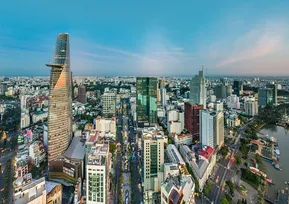
Photo by Kin Pastor on Pexels


Well-timed expansion

It’s understood that Zodia has ambitious growth plans relative to the Asia-Pacific (APAC) region. In May, the firm entered the Middle Eastern market, establishing a presence in Dubai. The firm’s timing is prescient relative to Singapore, as the custodian is responding via its Singapore expansion to an increasing demand coming from institutions seeking robust digital asset custodianship services.

The expansion also coincides with the Monetary Authority of Singapore’s (MAS) recent efforts to foster a well-defined digital asset ecosystem. Of late, the MAS introduced a comprehensive framework that encompasses the use of digital currencies, including central bank digital currencies and stablecoins. Moreover, MAS has proposed draft legislation that outlines the safeguarding of digital assets, signaling the pivotal role custodial services are set to play in Singapore’s evolving digital asset landscape.

The firm has established a specific local entity, Zodia Custody (Singapore) Pvt. Limited, appointing Kai Kano, the former Managing Director of rival digital assets custodian Bitgo, as the new company’s CEO.

Speaking on the subject of the firm’s Singapore market entry, Julian Sawyer, the CEO of Zodia Custody, stated:

“Singapore is no stranger to digital assets, having long been a hub for financial technology innovation. But even in a mature market, challenges remain. Having been created by Standard Chartered Ventures, we have a deep understanding of institutional needs and requirements not just to enter the space but thrive within it. As we engage with the local ecosystem, we’ll be providing market participants with cutting-edge technology, bank-level compliance, and governance to accelerate their digital asset adoption journeys.”


Strategic partnerships

In the past year, Zodia Custody has established strategic partnerships with industry leaders such as LMAX Digital, Hidden Road, BlockFills, and Blockdaemon. These collaborations are driven by Zodia’s market-leading Interchange offering, which equips institutions with enhanced risk management, secure custody, and solvency protection.

The expansion into Singapore marks the latest milestone in Zodia Custody’s global growth strategy. Over the past year, the custodian has expanded into Japan through a joint venture with SBI Digital Asset Holdings and into Luxembourg, where it operates as a registered virtual asset service provider (VASP). This move into Singapore follows a successful US$36 million Series A fundraising round.

Meanwhile, its sister company Zodia Markets, which is totally segregated from Zodia Custody, made the news in crypto circles earlier this month when it achieved in-principle approval in Abu Dhabi for a broker-dealer license.

More to Read
View All
Web3 & Enterprise·

Nov 09, 2023

Korean and Indonesian firms join forces to tokenize shipping assets

Korean and Indonesian firms join forces to tokenize shipping assetsCentralized decentralized finance (CeDeFi) platform NEOPIN said Wednesday that it has signed a business agreement with the Klaytn Foundation, South Korean juggernaut Kakao’s Layer 1 public blockchain, and Pelayaran Korindo, the shipping arm of Southeast Asian conglomerate Korindo, to tokenize real-world assets (RWAs).Photo by Andy Li on UnsplashRevolutionizing shipping financeThe three companies will first tokenize shipping-related assets owned by Pelayaran Korindo. This integration of digital assets into the maritime industry — which up until now has been under the umbrella of traditional finance — is expected to increase accessibility to shipping investments not only for institutional investors but also for individual investors.Pelayaran Korindo specializes in comprehensive shipping logistics mainly in Indonesia. Under the newest collaboration, the company plans to enhance the accessibility of its RWAs to Web3 companies as well as share its knowledge on localization and partner networks. It aims to play an essential role in the joint venture by leading the decentralization of traditional finance and promoting the widespread adoption of RWA tokenization.On the other hand, NEOPIN, along with the Klaytn Foundation, plans to leverage its expertise in CeDeFi to help Pelayaran Korindo digitize and liquify their assets while optimizing the plaform’s user inferface.Ushering in an era of RWA tokensThe partnership is also a part of the Klaytn Foundation’s efforts to expand its ecosystem through RWA-related endeavors. By tokenizing RWAs and producing certifications of digital ownership, the enterprise hopes to popularize blockchain and create value through real-world use cases. To achieve this, the foundation will work with RWA tokenization experts both in Korea and overseas to build a business model that is profitable, technologically feasible and regulatory compliant.“The Klaytn blockchain enables the construction of a digital asset trading platform with fast processing speed and low fees that can satisfy both token issuers and also regular users,” explained Seo Sang-min, Representative Director at the Klaytn Foundation. “The foundation has accumulated practical experience in the entire service construction process, from discovering promising RWA tokenization projects to launching real services. Moving forward, we will collaborate with Pelayaran Korindo and NEOPIN to actualize various global RWA tokenization initiatives, starting with maritime finance.”NEOPIN’s CEO Ethan Kim also mentioned the company’s intent to work with Pelayaran Korindo and the Klaytn Foundation to introduce attractive RWA investment products that are easy to navigate and have strong factors of appeal, thus leading the global RWA market in maritime finance.

news
Web3 & Enterprise·

Aug 28, 2023

BC Card Accelerates Launch of NFT Guarantees for Secondhand Luxury Goods Trades

BC Card Accelerates Launch of NFT Guarantees for Secondhand Luxury Goods TradesSouth Korean credit card issuer BC Card announced on Sunday that it has applied for two domestic patents for blockchain technology that will be used to issue digital guarantees for purchases of luxury goods, such as bags, watches, and more. These guarantees will be minted as non-fungible tokens (NFTs) that can later be accessed by buyers or sellers during secondhand trades, which often pose risks and uncertainty regarding product quality or authenticity.Enhancing trust and securityThese NFTs will be based on paper or digital payment receipts — which contain detailed information on purchase receipts, such as product names, payment amounts, purchase dates, and shop information — that a customer receives after purchasing goods at stores that accept BC cards.Photo by Towfiqu barbhuiya on UnsplashBecause the guarantees are stored on a blockchain, they are almost impossible to tamper with. BC Card anticipates that this service will offer advantages like boosted safety, convenience, and security for both buyers and sellers who wish to partake in transactions of secondhand luxury goods.In addition, the data distributed across servers eliminates concerns about data loss. To achieve this, BC Card plans to collaborate with telecommunications provider KT and BC’s subsidiary, VP, which specializes in electronic payment services.“Through this patent application, we expect to significantly enhance the trustworthiness of secondhand luxury goods transactions in Korea,” said Kwon Sun-moo, Director of the New Financial Research division at BC Card. “After the patents are registered, we plan to collaborate with companies under KT Group like KT Alpha as well as other distribution companies in a business-to-business-to-consumer (B2B2C) system.”Access through a digital walletCustomers can take a photo of a receipt with their phones or download it, then upload it to BC Card’s financial platform, Paybook. The photo is then converted into an image that is automatically stored as an NFT on the blockchain network.Once a seller registers a payment receipt for a product that they bought, then the subsequent NFT guarantee can be accessed or sent through their BC Card digital wallet — a feature that the company plans to launch soon — at any time during future transactions. This offers a convenient solution to the possibility of losing receipts, which traditionally requires manually downloading them again from the card company’s website or app.Revolutionizing secondhand tradeThis new technology could play a significant role in the booming resell and secondhand goods trading market, the company said. According to data from the Korea Internet & Security Agency last year, the domestic secondhand market has grown from a scale of KRW 4 trillion in 2008 to KRW 24 trillion in 2021 and is projected to exceed KRW 30 trillion this year.“Through the registration of payment receipts, we can analyze consumption patterns and even suggest improvements in spending habits to our customers,” Director Kwon highlighted.BC Card is also considering offering luxury appraisal and authentication services along with the future launch of the NFT service.

news
Markets·

Jan 12, 2024

Animoca Brands Co-Founder: U.S. ETF approval positive for Asia

The long-awaited approval of spot bitcoin exchange-traded funds (ETFs) in the U.S. on Tuesday is anticipated to have a more substantial impact on the development of cryptocurrencies in Asia. That’s the view of Yat Siu, the co-founder of Animoca Brands, a Hong Kong-based crypto venture capital and game software firm. The U.S. Securities and Exchange Commission's (SEC) approval is expected to attract new capital to the crypto industry, providing a safer avenue for the crypto-curious.Photo by André François McKenzie on UnsplashPotential for surge of interest in AsiaIn an interview with The Block, Siu emphasized the positive effect on Asia, attributing it to the region's regulatory clarity and the willingness of governments and regulators to build a crypto ecosystem. Strengthening regulatory oversight was a finding of a recent report relative to a number of Asian hubs. Industry leaders believe that the approval of spot bitcoin ETFs in the U.S. could lead to a surge of interest in Asia, where crypto adoption is already higher than in other continents. The perception of cryptocurrencies as investment assets, rather than just for transactions, might shift in the Asian market, with the ETF offering a regulated and lower-risk avenue for investment exposure. Additionally, Yat Siu noted that Asian investors, particularly the younger generation, have a more open view towards capitalism compared to their U.S. counterparts. In a recent interview with CNBC, Australian venture capitalist and founder of MHC Digital Group, Mark Carnegie, also expressed the opinion that the digital asset markets in Asia would flourish once the hype of the U.S. ETF approval has subsided. ETF focus on Singapore and Hong KongPost the U.S. approval, attention turns to Asia, with Hong Kong and Singapore emerging as potential candidates for introducing spot crypto ETFs. Hong Kong, in particular, has undergone regulatory renewal, positioning itself as a crypto hub, with it reportedly already attracting interest from fund managers, including those backed by Chinese capital, looking into launching spot crypto ETFs. Yat Siu alongside Glenn Woo, Head of Sales of APAC at Web3 infrastructure company Blockdaemon, were both positive in their assessment of Hong Kong as a worthy location for the offering of spot bitcoin ETFs in comments made last month. In November, the CEO of Hong Kong’s Securities and Futures Commission (SFC) indicated an openness to considering proposals for spot crypto ETF products aimed at retail investors. Singapore, known for its mature regulatory environment, is also considered a strong contender. Meanwhile, Japan may witness significant regulatory movement following the U.S. ETF approval. However, challenges and variables remain for Asia. The scale of capital inflows in Asia, compared to the U.S., and the caution of regulators in the face of crypto industry volatility and trust issues are cited as potential hurdles. Some experts suggest that Hong Kong and Singapore may initially be cautious in encouraging retail participation in virtual asset investments due to previous losses experienced by residents. Still, in the medium to longer term, increased interest and appetite for virtual assets are expected.  

news
Loading