Top

Saudi Arabia Looks to Diversify Through Web3

Web3 & Enterprise·September 08, 2023, 11:47 PM

Saudi Arabia is intensifying its efforts to diversify its economy as part of its ambitious Vision 2030 initiative. In a move away from its traditional reliance on oil, the kingdom is embracing cutting-edge technologies like blockchain and artificial intelligence (AI) and is delving into the burgeoning gaming industry.

That’s the view of Animoca Brands Co-Founder Yat Siu, who, in a recent interview with Cointelegraph, highlighted Saudi Arabia’s keen interest in Web3, emphasizing the country’s partnerships with entities like The Sandbox and Animoca itself.

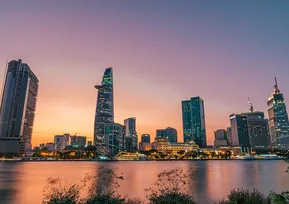
Photo by Hala AlGhanim on Unsplash


Driving gaming growth

Siu believes that Saudi Arabia is making a concerted effort to explore the possibilities of the new iteration of the internet, particularly in the realm of Web3 gaming and blockchain gaming, where asset ownership is verified on the blockchain. He stated:

“I think Saudi [Arabia] understands the principle that Web3 gaming or blockchain gaming — the one that we actually prove the owner assets — is going to be the future of gaming.”

While Saudi Arabia has yet to make a significant global impact in game and AI development, experts in the emerging field of Web3 believe that the kingdom’s investments in gaming could have far-reaching implications.

The Boston Consulting Group reported that Saudi Arabia accounts for 45% of the region’s gaming sector, with a total value exceeding $1.8 billion. It also boasts one of the highest game revenues in the area, according to Ireland-based gaming content creator, Allcorrect.


$38 billion gaming fund

Siu is not the only one to believe in the efficacy of Saudi’s Web3 efforts. Poland-based Web3 gaming platform GameSwift also articulated a similar view recently. In a tweet thread published last month, the firm acknowledged the $38 billion gaming fund launched by the Saudi royal family.

That initiative involves a Gaming Hub, the first incubator for esports in the world. The objective of the hub is to empower early-stage studios and provide an accelerator program for their growth, with direct investment going to top ten studios.


Cryptocurrency uncertainty

Despite its understanding of the high-level concept of Web3, Saudi Arabia faces uncertainties regarding the integration of cryptocurrencies and virtual assets into gaming due to the absence of clear regulations. Siu explained that while Saudi Arabia is proactive in investigating cryptocurrencies, other regions like Hong Kong, Japan, and the United Arab Emirates (UAE) offer more clarity on what can be done with crypto and Web3.

Siu noted that Saudi Arabia is actively seeking information on best practices and strategies from experts like Animoca. To encourage Web3 adoption, financial literacy is key, according to Siu.

He emphasized that users must have a certain level of financial literacy to fully embrace Web3, as it goes beyond traditional banking. Understanding the potential value of digital assets and their network effects is crucial for Web3 users.

Saudi Arabia is not the only Gulf nation to pivot to Web3. Oman is looking to do likewise based on similar rationale — to diversify away from an oil-based economy. The UAE is also actively working towards creating the right conditions to nurture Web3 startup businesses.


More to Read
View All
Web3 & Enterprise·

Oct 02, 2024

Matrixport expands into Europe via CFAM acquisition

Matrixport, a Singapore-headquartered digital assets financial services firm, announced the acquisition of Switzerland-based Crypto Finance Asset Management (CFAM), a regulated crypto fund management firm. The acquisition, completed by way of an all-cash deal, signifies Matrixport’s expansion into the European market. The company announced the deal via a blog post published on the Matrixport website on Sept. 30. Photo by Lin Mei on UnsplashCFAM rebrandAs part of the acquisition, CFAM will be rebranded to Matrixport Asset Management AG (MAM), providing institutional-grade crypto investment solutions, while continuing to act as a crypto market infrastructure provider.  CFAM CEO Stijn Vander Straeten stated that the company’s strategy focused on “trading, custody and staking as well as other post-trade services.” He added, “This move allows us to put all our focus on expanding our core services within the digital asset ecosystem in Switzerland, Germany and across the European markets.” CFAM had formed part of the Crypto Finance Group, an entity part-owned by the Deutsche Börse Group. Regulatory complaint acquisitionIn its press release, Matrixport outlined that the acquisition has been completed with regulatory approval having been granted by the Swiss Financial Market Supervisory Authority (FINMA), the Swiss independent financial markets regulator, which supervises banks, insurance companies and financial institutions in Switzerland. CFAM became the first FINMA-approved manager of a crypto fund in Switzerland. Commenting on the acquisition, Matrixport Co-Founder and CEO John Ge, stated: “We are delighted with the establishment of MAM and warmly welcome the team to the Matrixport family. The acquisition enables clients access to the most innovative, compliant crypto asset management products, and aligns with our strategy to further expand services in Europe.” Personnel changesA number of personnel changes have been made as part of the acquisition. Stefan Schwitter has been appointed as CEO of MAM. Schwitter previously held the role of head of asset management at CFAM. The executive claimed that the complementary strengths of Matrixport and CFAM “will add value to the existing and future client base of Matrixport Group on a global level.” Matrixport was established in 2019 and currently holds over $6 billion in assets under management (AUM). Its founders include Jihan Wu, the co-founder of Chinese crypto miner manufacturer Bitmain and Singapore-based crypto cloud mining company Bitdeer. The firm is licensed as a money services business (MSB) in the United States, while also being licensed to trade in Hong Kong as a trust or company service provider (TCSP) and as a money lender. Matrixport offers its accredited investor and institutional clients over-the-counter (OTC) services, prime brokerage services, digital asset custody through qualified custodian Cactus Custody, asset management and access to real-world asset (RWA) tokenization. In September, the company offered tokenized RWA access in the form of XAUm, a gold-backed token, via its subsidiary company, Matrixdock. It emerged earlier this year that Matrixport had been listed on the Global Unicorn Index, a list of companies compiled by the Huron Research Institute, believed to have a valuation in excess of $1 billion while not yet listed on a public exchange.

news
Web3 & Enterprise·

Aug 07, 2023

Klip Wallet’s WalletConnect Integration Includes Access to OpenSea NFTs

Klip Wallet’s WalletConnect Integration Includes Access to OpenSea NFTsGroundX, a blockchain subsidiary of the South Korean messaging app behemoth Kakao, has announced that its digital asset wallet, Klip, now supports WalletConnect, a protocol that enables seamless connections between mobile cryptocurrency wallets and decentralized applications (dApps).Photo by Mariia Shalabaieva on UnsplashAccess to OpenSea and beyondThis integration brings new benefits to Klip users, as they can now easily access various platforms, including the popular non-fungible token (NFT) marketplace, OpenSea. With WalletConnect, users can efficiently manage a wider range of digital assets, making their experience more comprehensive and convenient.PC and mobile compatibilityAnother advantage of Klip’s adoption of WalletConnect is that both PC and mobile users can now access Klip and other blockchain services through this protocol. This ensures a smooth user experience across different devices, allowing for greater accessibility and flexibility.GroundX’s expansion effortsGroundX has been working on improving Klip’s functionality and services. Recently, it forged a partnership with the 1inch Network, a decentralized finance (DeFi) aggregator that offers competitive token swap rates on various decentralized exchanges, enhancing Klip’s token exchange capabilities. Thanks to this collaboration, Klip users can not only exchange Klaytn-based tokens but also tokens based on the Ethereum and Polygon blockchains. This expanded compatibility adds further value to the Klip wallet, empowering users with more options and opportunities for managing their digital assets efficiently.A spokesperson from GroundX emphasized that these recent enhancements in the Klip wallet will enhance its usability and convenience for users. The spokesperson added that the inclusion of various NFTs and DeFi assets within Klip through WalletConnect will lead to the expansion of the Klip wallet’s ecosystem.

news
Web3 & Enterprise·

Jul 11, 2023

Crypto Exchange Loss Deters Temasek from Investing in Crypto Firms

Crypto Exchange Loss Deters Temasek from Investing in Crypto FirmsSingapore’s state-owned investor Temasek has ruled out investing in crypto companies for now, following a $275 million loss in the bankrupt US crypto exchange FTX.Photo by Plato Terentev on PexelsRegulatory uncertainty concernsTemasek’s Chief Investment Officer Rohit Sipahimalani said in a CNBC interview on Tuesday that the regulatory uncertainty in the crypto sector made it very difficult for the fund to make another investment in an exchange.“There’s a lot of regulatory uncertainty in this environment. And I do think that it will be very difficult for us to make another investment and exchange in the middle of all this regulatory uncertainty,” Sipahimalani said.He added that Temasek was not interested in investing in cryptocurrencies, but rather in exchanges that could generate fee-based revenue without taking balance sheet or trading risks. In May, it was reported that Temasek had invested in algorithmic currency system, Array. However, the global investment company was quick to deny those reports.“We’ve never been looking to invest in cryptocurrencies. Even the investment in FTX, we’ll be talking about investing in an exchange, which allowed us to get fee-based revenue without thinking [of] balance sheet risk or any trading risks,” he said. However, he said that Temasek would not be comfortable investing in exchanges given the way things are right now, and that it would depend on the right regulatory framework and investment opportunity.“If you have the right regulatory framework, and we are comfortable with it, and you have the right investment opportunity, there’s no reason for us to not to look at it,” he said. Temasek’s FTX investment was part of its early-stage investment strategy, where it invests in new disruptive technologies and tries to find the next winners, Sipahimalani said.But the strategy backfired when FTX filed for bankruptcy in November, with more than 1.4 million creditors and billions of dollars in liabilities, according to bankruptcy filings.Reputational damageTemasek wrote down its $275 million investment in FTX to zero soon after the collapse of the exchange. However, the bigger concern for the company is the posting of its worst returns since 2016 amid macroeconomic and geopolitical challenges. In the financial year ending in March 2023, the investing behemoth posted a $7.3 billion loss.The FTX loss sparked criticism from Singapore’s Deputy Prime Minister and Finance Minister Lawrence Wong, who called it “disappointing” and damaging for Singapore’s reputation. And that is the greater issue for Temasek relative to FTX.The amount of that particular loss is not that significant, given the size of the company and the scale of losses incurred elsewhere. The issue has been the reputational damage that the company has experienced as a direct consequence. Temasek maintains that it carried out competent due diligence, as have all of the venture capital investors who have all had their FTX investments wiped out.Further details on that due diligence are likely to emerge as Temasek, alongside many other leading investors in FTX, is being sued by creditors on the basis that they gave credence to what transpired to be a fraud. Temasek announced in May that it would cut the salaries of the staff responsible for the FTX investment, after conducting an internal review of the deal.

news
Loading