Top

Crypto Exchange Bithumb Holds Free Trading Event To Boost User Base and Liquidity

Web3 & Enterprise·August 01, 2023, 6:34 AM

Bithumb, South Korea’s second-largest cryptocurrency exchange, has announced a major “no trading fee” event in an attempt to narrow the gap with its competitor Upbit, the leading exchange in the market.

The event started on August 1, with select listed virtual assets available for trading without having to pay a fee on the exchange’s Korean won market.
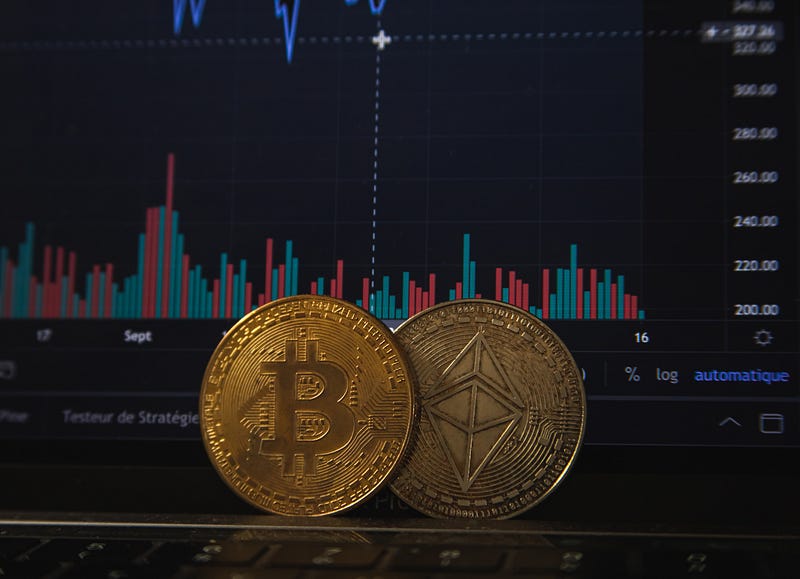
Photo by Pierre Borthiry — Peiobty on Unsplash


Assets with no trading fees

Aptos (APT), Stacks (STX), Flow (FLOW), Sui (SUI), Bitcoin Gold (BTG), FirmaChain (FCT2), Blur (BLUR), Waves (WAVES), Metal (MTL), and Loom Network (LOOM) will be the first assets to have no fees during the event.

The cryptocurrencies eligible for free trading can easily be distinguished by the blue “Free” badge displayed next to their names. Users can also check the full list through the “Fee-Free” category displayed at the top of the exchange chart.

The event is scheduled to continue until further notice and an additional ten assets eligible for free trading will be added every week as well.


Boosting liquidity

According to a Bithumb official, the virtual assets to be unveiled later on will be “subject to active domestic and international investment,” and the exchange will strategically select those that have the highest potential to expand liquidity.

Through this event, Bithumb aims to support the diversification of cryptocurrency investors’ portfolios and increase its user base, thereby enhancing trading liquidity.


More to Read
View All
Policy & Regulation·

Mar 07, 2025

Ongoing access to crypto market in Russia despite sanctions

Russians will continue to have access to crypto markets despite the application of sanctions, according to a senior Russian official. Impossible to completely block marketThat’s the view of Anton Gorelkin, the deputy head of the State Duma committee on information policy. In a report published by Russian state-owned news agency TASS on March 6, Gorelkin is quoted as stating: "It should be recognized that it is impossible to completely block this market for Russia." Gorelkin added that crypto remains one of the mechanisms through which international sanctions being applied to Russia can be circumvented. Russian firms have increasingly been using Bitcoin and crypto in international trade to circumvent sanctions. The Russian official’s comments come as Russian crypto exchange Garantex has been forced to suspend its services. Last month, the Council of the European Union (EU) had added the exchange to its latest Russian sanctions package. This was part of the EU’s sixteenth sanctions package against Russia since the conflict in Ukraine began. It’s the first time that a crypto exchange has been included within any such sanctions. The EU did so on the assertion that Garantex is “closely associated with EU-sanctioned Russian banks.” Photo by Michael Parulava on UnsplashTether ‘enters war’ against Russian crypto marketThe crypto exchange took the decision to suspend its services following an action taken by leading stablecoin issuer, Tether. Taking to Telegram, the exchange stated: “We have bad news, Tether has entered the war against the Russian crypto market and blocked our wallets worth more than 2.5 billion rubles [$27 million].” The exchange took the opportunity to warn its users that “all USDT in Russian wallets is currently under threat.” Garantex added that it has been the first to be hit with such a measure, but that it won’t be the last. The firm said that it “will fight, and [it] will not give up.”  Tether has been under the spotlight of regulators and governments globally in recent years. In response, it appears to have incorporated the freezing of funds subject to sanctions more recently, with closer cooperation with law enforcement and government agencies. Last year, the company outlined that it planned to freeze funds held in addresses related to countries or companies subject to sanctions. Last September, Tether claimed to have played a role in an operation carried out by the Dutch authorities and U.S. Secret Service that led to the takedown of two crypto exchanges, Cryptex and PM2BTC, who were alleged to have been involved in money laundering. Garantex had already been subject to U.S. sanctions since April 2022. At the time, the U.S. authorities described the exchange as a "ransomware-enabling virtual currency exchange." The firm was originally established in Estonia in 2019. Commenting on the development, Gorelkin stated:  "To the investors who underestimated this risk, my condolences."  He also asserted that the latest round of sanctions will not be the last in attempts to apply pressure on Russian cryptocurrency firms and crypto sector infrastructure within Russia. While he believes that crypto remains a tool to get around sanctions, he stated that “USDT can be safely deleted from this list.”

news
Web3 & Enterprise·

Nov 08, 2023

Korean crypto firms relocating for cheaper rent amid prolonged crypto winter

Korean crypto firms relocating for cheaper rent amid prolonged crypto winterAs the prolonged crypto winter continues to affect the industry, blockchain and cryptocurrency firms in South Korea are under pressure to economize. Faced with a deteriorating business and investment climate, numerous companies are reducing their office space and relocating to areas with cheaper rent, according to a Wednesday (local time) report by local media outlet Bizwatch.Photo by Nastuh Abootalebi on UnsplashReducing operating costsBizwatch reported, citing industry sources, that Parameta (previously Iconloop), a blockchain enterprise, has relocated its headquarters from Seoul’s upscale Signature Towers to a more economical shared office space this year. This strategic move is interpreted as an effort to slash operating costs by choosing a location with significantly lower rental expenses. A Parameta representative confirmed that the relocation was part of measures to reduce costs.Binance-backed Streami, which runs the Gopax cryptocurrency exchange, is also reportedly contemplating an office relocation after downsizing its staff. The company’s workforce has dwindled from over 100 employees earlier in the year to approximately 60 by September. A Streami spokesperson has indicated that they have yet to reach a decision regarding the relocation. Streami’s situation is particularly significant due to its ongoing challenges in securing approval from financial regulators for changes to its executive representatives since Binance acquired a majority stake. Recently, Streami appointed a new CEO from the domestic tech firm CityLabs, which has also purchased an 8.55% stake in Streami and intends to further increase its investment in the exchange operator.Similarly, Korea Digital Exchange, the operator of cryptocurrency-only exchange Flybit, has listed for sale one of its two floors of office space in Seoul’s Seocho district. This move comes nearly a year and eight months after the company expanded into the current premises.Changes in workforce sizesBefore the crypto winter, when the Korean crypto market witnessed unprecedented growth, numerous companies expanded their offices to make room for the growing workforce, bolstered by rising revenues. For instance, Dunamu, which runs Upbit — Korea’s largest crypto exchange — garnered attention for acquiring pricey real estate in Gangnam to construct a new office.However, the boom was short-lived. With the onset of the crypto downturn, numerous companies found themselves having to shut down. Blockchain technology firms are facing similar challenges, with many developers steering away from the sector due to persisting market instability. For many of these firms, the workforce has diminished as they’ve either undergone restructuring or struggled to recruit replacements for departing employees.An industry insider remarked that reducing operating costs is a logical step for companies facing a lack of investment and revenue. They noted that this only applies to those resilient enough to weather the hardship, adding that many cryptocurrency-only exchanges are likely to shut down completely in these challenging conditions.In fact, Cashierest, a crypto-only exchange, recently announced the cease of operations. Concerns about the company had been growing after staff layoffs and the departure of its CEO in July. A thorough analysis by the Financial Intelligence Unit (FIU) of the Financial Services Commission (FSC) found that, of the 21 Korean crypto-only exchanges, 18 are operating with negative shareholder equity as of the first half of this year. Moreover, 10 did not earn any revenue from transaction fees during the same period.Crypto-only exchanges typically see lower trading volumes as they cannot facilitate trades in Korean won. In South Korea, only five trading platforms — Upbit, Bithumb, Coinone, Korbit and Gopax — are officially registered with the financial regulator to conduct fiat-to-crypto transactions.

news
Policy & Regulation·

Oct 07, 2023

Taiwan Crypto Trader Strikes it Lucky in Tax Receipt Lottery

Taiwan Crypto Trader Strikes it Lucky in Tax Receipt LotteryA trader on Taiwan’s MaiCoin Max crypto exchange has struck it rich in an unexpected way, winning a grand prize of 10 million NTD (approximately $310,000) in the country’s monthly national tax receipt lottery.Photo by Nick Fewings on UnsplashFrom 6 cents to $300KWhat makes this story, which was reported by CoinDesk on Friday, even more surprising is that the trader had paid a mere 2 NTD (equivalent to $0.06) in fees on the exchange as they engaged in relatively small trades.The lucky individual, who chose to remain anonymous, didn’t earn this windfall through traditional trading profits or by accumulating tokens. Instead, their fortune came from Taiwan’s unique approach to tax compliance.For crypto exchanges like MaiCoin, every trade conducted on their platform technically counts as a taxable event. This means that active traders can amass numerous virtual “lottery tickets” each month through their trading activities and transaction fees.Uniform invoice lotteryTaiwan introduced its tax receipt lottery system, known as the uniform invoice lottery, back in the 1950s as an innovative method to encourage tax compliance among consumers. While tax authorities worldwide struggle to capture revenue from cryptocurrency holders, Taiwan’s approach allows them to indirectly benefit from the earnings generated on crypto exchanges.For every transaction made by an individual, whether that should occur on a crypto exchange or elsewhere, the individual is issued with a tax receipt. An electronic copy is also registered with Taiwan’s tax authority. Essentially, every receipt then becomes a lottery ticket as the tax authority then runs a draw on an ongoing basis where taxpayers can earn cash prizes.This particular win involving a Taiwanese crypto trader has drawn attention from the broader public. Paul Huang, a Research Fellow at the Taiwanese Public Opinion Foundation, took to X (formerly Twitter) on the subject, stating:”Who says retail users can’t profit from trading cryptos? Taiwan’s largest crypto exchange @MAX_exch announced some user made a tiny trade that paid $2 NTD ($0.06 USD) in fee on platform, the tax receipt ended up winning 10mil ($310k USD) in Taiwan govt’s invoice lottery!”The recent $310,000 jackpot represents the largest prize ever won by a crypto trader through this lottery. Nevertheless, Taiwan’s tax receipt lottery typically produces smaller windfalls, with the country collecting over $7 billion in sales tax revenue in 2021, and a significant proportion paid out in lottery winnings.Critics argue that this system may not be the most efficient way to boost tax compliance, but Taiwan maintains one of the world’s most effective tax regimes, consistently generating impressive revenue relative to its GDP. Additionally, stories of remarkable lottery jackpots serve as excellent public relations for the scheme.There’s little doubt that cryptocurrencies have brought about significant challenges for tax authorities worldwide. In this particular instance, Taiwan’s tax receipt lottery stands as a unique and intriguing approach to fostering compliance while occasionally making crypto traders unexpectedly wealthy.

news
Loading