Top

Singapore Elects Crypto Skeptic as President

Policy & Regulation·September 05, 2023, 12:40 AM

Garnering 70.4% of all votes cast on Saturday, Singaporeans chose to elect Tharman Shanmugaratnam as their next president, a move that may have implications for Singapore’s outlook when it comes to digital assets.

While many had hoped that he would be the nation’s first non-Chinese prime minister, the crypto industry has greeted his rise to this largely ceremonial role with mixed feelings. Shanmugaratnam’s previous stances on cryptocurrency and digital assets have been predominantly critical.
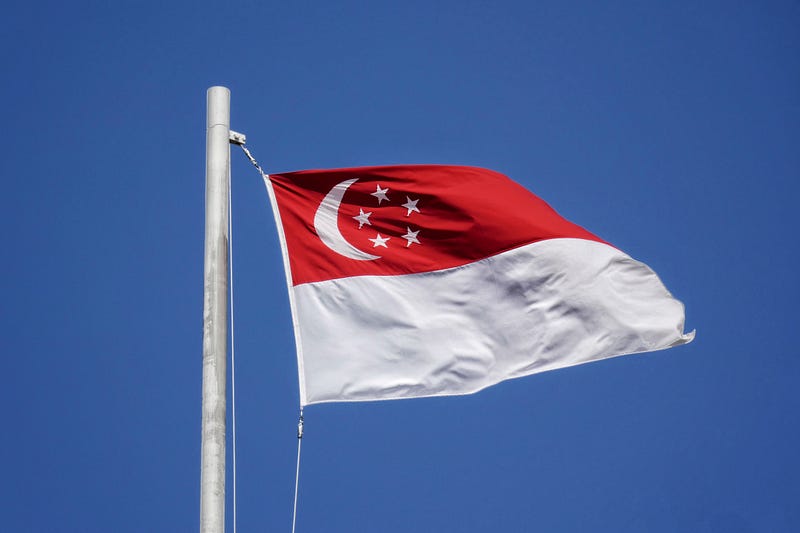
Photo by Justin Lim on Unsplash


Former MAS Chairman

In the past, the president-elect has referred to cryptocurrency as “slightly crazy” and “purely speculative.” His ascent to the presidency comes after a distinguished career that includes serving as the former finance minister, deputy prime minister, and chairman of the Monetary Authority of Singapore (MAS), the country’s central bank, from 2011 to 2023.


Crypto platform collapses

It was during his tenure at MAS that two prominent crypto companies, Three Arrows Capital (3AC) and Terraform Labs, faced catastrophic collapses.

The demise of Terraform Labs, along with its TerraUSD (UST) stablecoin, triggered a severe “crypto winter” in May 2022, from which the industry is still struggling to recover. This downfall wiped out a staggering $500 billion in value over just two weeks, devastating the portfolios of numerous retail investors.

The ripple effect of TerraUSD’s fall also engulfed 3AC, a significant cryptocurrency hedge fund headquartered in Singapore. The contagion spread across the cryptocurrency market, leading to the downfall of other major entities like crypto lending platforms Celsius Network and Voyager Digital, alongside Singapore-based Hodlnaut.

Given that these catastrophic events unfolded during Shanmugaratnam’s tenure at MAS, it’s plausible that he bore the brunt of the consequences. That might explain why in speaking on the subject in 2021, he appeared to be more accommodative, suggesting that there may be a useful role that crypto could play and highlighting that Singapore had allowed crypto businesses to develop within the city-state.

In June of last year, MAS reprimanded 3AC for providing misleading information and exceeding the allowed assets under management (AUM) threshold, thereby breaching its status as a registered fund management company.

In January, Shanmugaratnam said that regulating the crypto sector would give credibility to speculation and on that basis, it would be best to leave it unregulated. He went on to suggest that crypto should be subject to existing regulation as laid down for traditional finance.


Early stage concerns

Back in 2018, when he was Singapore’s finance minister, Shanmugaratnam questioned the wisdom of broad regulation potentially legitimizing a speculative and “slightly crazy” market. During the 2018 World Economic Forum, he emphasized the importance of anti-money laundering measures and advocated for educating consumers about the risks inherent in the unregulated crypto sector.

Although he acknowledged blockchain’s potential to enhance global payment systems, Shanmugaratnam favored integrating existing traditional payment mechanisms as an alternative to blockchain innovations.

Singapore’s new president brings with him a history of skepticism towards cryptocurrency and digital assets. However, with a largely ceremonial role relative to day-to-day governance, he’s not in a position to take direct action that could hold the sector back although he will have the power to initiate corruption investigations upon the advice of the Singaporean cabinet.


More to Read
View All
Policy & Regulation·

Aug 24, 2023

Fake Security Tokens Linked to HD Hyundai Oilbank in Circulation

Fake Security Tokens Linked to HD Hyundai Oilbank in CirculationHD Hyundai Oilbank, one of South Korea’s leading refiners, said Wednesday that a counterfeit security token dubbed “HOBT” claiming affiliation to the company has been circulating online. The token is allegedly based on old stock certificates under the company’s former name, Hyundai Oil Refinery, as the underlying assets, though the company had changed its name to HD Hyundai Oilbank back in 2002. Both the token and the underlying asset are invalid and have no relation at all to HD Hyundai Oilbank, the company emphasized, so investors must exercise caution.Fraudulent promotionEntities that are giving away or selling HBOT tokens are attracting investors by promoting a one-on-one exchange of the tokens for old Hyundai Oil Refinery stock certificates. They are also promising to grant shareholder rights through blockchain technology as well as interest payments of 4% every month for a total of 24% over six months.Fraudulent activities like these have recently been on the rise following the legalization of security tokens and the formal issuance of a select few tokens.Investigative measuresThe Incheon Metropolitan Police is currently conducting an investigation into the case. Notably, the old Hyundai Oil Refinery stock certificates that the involved entities are claiming to be underlying assets have been proven to be fake in over ten court rulings. Although owners of these old stock certificates had filed lawsuits against the company related to shareholder registration renewals since the late 2000s, all of them had lost their cases.Photo by Tingey Injury Law Firm on UnsplashPast events resurfacingThis recent circulation of the forged HOBT tokens is attributed to employees of a disposal company who pocketed the invalid stock certificates and certificate papers, rather than disposing of them as they were required to do.In January 2002, HD Hyundai Oilbank had hired a company to dispose of documents — including those related to the old stock certificates — that had lost their validity during the process of attracting and increasing foreign capital.“In May of that year, we started receiving frequent inquiries about the stock certificates. We filed a legal complaint against the employees and conspirators of the disposal company for illegally distributing the certificates (including the stock certificate papers), and they were subsequently punished for theft and fraud,” the company explained.

news
Policy & Regulation·

Oct 22, 2025

Singapore launches BLOOM initiative to advance digital finance infrastructure

The Monetary Authority of Singapore (MAS) has unveiled a new initiative aimed at enhancing the nation’s financial infrastructure through the use of stablecoins and tokenized commercial bank money. Announced on Oct. 16, the project, known as BLOOM, short for Borderless, Liquid, Open, Online, Multi-currency, brings together 16 financial sector participants, including Anchorage Digital, Ant International, Circle, Coinbase, and DBS Bank. According to MAS, BLOOM is open to additional participants through a registration form available on its official website.Photo by Jason Leung on UnsplashBuilding on Project OrchidBLOOM operates under Project Orchid, a digital Singapore dollar initiative launched in 2021 to explore potential applications of central bank digital currency (CBDC) in strengthening Singapore’s financial ecosystem. Through BLOOM, it will examine use cases involving G10 and Asian currencies, covering both domestic and cross-border payments, as well as wholesale financial transactions. The project’s focus includes coordinating interoperability between different networks to enable the distribution and clearing of settlement assets. It will also explore automated compliance checks and study methods to make wholesale settlements more efficient and cost-effective. Artificial intelligence (AI) agents are expected to play a supporting role, executing transactions automatically within predefined limits and regulatory parameters. Expanding stablecoin usage in SingaporeThe MAS initiative comes shortly after the listing of XSGD, a Singapore dollar–backed stablecoin, on the U.S.-based crypto exchange Coinbase on Oct. 1. XSGD is issued by StraitsX, a digital payments provider, and is fully backed by reserve assets held with DBS Bank and Standard Chartered. Stablecoin payments have gained traction in Singapore’s retail sector as well. StraitsX recently began supporting settlements in USDT and USDC through OKX Pay. Consumers can use SGQR codes at participating GrabPay merchants to make everyday purchases, such as coffee, with transactions settled directly in Singapore dollars into merchant accounts. Rising local interest in digital assetsSingapore’s growing engagement with digital assets reflects a broader trend of public interest. A report from ApeX Protocol, cited by Cointelegraph, ranked Singapore as the world’s most “crypto-obsessed” nation, awarding it a composite score of 100. The ranking considered ownership rates, adoption growth, search activity, and ATM availability. The study found that 24.4% of Singapore’s population holds cryptocurrency, ahead of the United Arab Emirates (UAE), which scored 99.7 despite a 25.3% ownership rate. In a separate development, Channel News Asia reported that three Singaporeans have been implicated in a large-scale fraud scheme linked to Cambodia’s Prince Group. The U.S. Department of Justice recently confiscated 127,271 Bitcoin tied to the operation—the largest seizure in its history. Following the investigation, the U.S. Department of the Treasury’s Office of Foreign Assets Control imposed sanctions on the three individuals as well as 17 Singapore-registered entities. The sanctions block access to any property in their possession and prohibit U.S. persons from engaging in transactions with them, citing risks to U.S. national security and foreign policy interests. 

news
Web3 & Enterprise·

Apr 26, 2023

Singapore’s Cosmose AI Jilts Stripe in Favor of Near

Cosmose AI, an artificial intelligence-driven retail analytics firm headquartered in Singapore, has opted to collaborate with the Near Foundation with the aspiration of building a blockchain-based payments system centered on low transaction fees as a more cost-efficient alternative to more conventional payments processors like Stripe and PayPal. Payment platform disruptionThe Near Foundation is a non-profit organization responsible for guiding governance, contracting protocol maintainers and funding ecosystem development relative to the proof-of-stake (PoS)-based Near blockchain protocol. In a blog post published to the Cosmose AI website on Sunday, the company set out the extent of its new partnership with the Near Foundation.Cosmose AI uses AI-powered analytics to track in-store foot traffic as a basis to engage with shoppers online. Both companies will work towards building a payment system that facilitates shoppers to purchase goods and services at low transaction fees through cryptocurrency. As part of the deal, Near has made a strategic investment in Cosmose AI, reflecting a Cosmose company valuation of $500 million.In its press release, Cosmose stated that the investment from the Near Foundation means that the Cosmose “is set to apply Web3 principles and further advance the AI-driven retail ecosystem. Cosmose believes that it can leverage Web3 such that users maintain complete control over their data while benefiting from the ecosystem they help to create.The AI-driven company has a suite of retail solutions, including the KaiKai app, which enables retail customers to discover retail stores in their local vicinity. The app also includes an online targeting platform. Both elements are being overhauled with a Web3 facelift, with the Near collaboration enabling the integration of blockchain into the app.KaiKai already settles payments by leveraging Near Protocol with the creation of its own native stablecoin, Kai-Ching. Near Foundation CEO Marieke Flament said that Near will give Cosmose “the means to leverage the full potential of Web3 in a way that is sustainable, transparent, and infinitely scalable.” Moving away from Stripe, PayPalIn an interview with TechCrunch, Cosmose Founder and CEO Miron Mironiuk stated: “ I’m not sure if you know how expensive and slow it is to process online payments. It’s absolutely crazy.” The Near protocol leads with an ability to achieve inexpensive, scalable blockchain transactions. If successful in building this blockchain-based payments system, Cosmose would be in a better position to replace the use of payments service providers like Stripe and PayPal.Mironiuk gave the example of a simple coffee purchase. Small transactions like that can involve transaction fees in excess of 10%. This overhead is reflected in the overall price of the cup of coffee, with the seller passing on the cost to the buyer. In that one isolated example, Mironiuk makes the point that a regular coffee drinker could be spending an additional $200 per year to cover the costs of payments intermediaries.Over the course of nine years, Cosmose has grown to a point where it extends its service to 20 million stores. The firm operates on a global basis, with its team of eighty staff distributed across centers such as Hong Kong, Tokyo, Paris, Shanghai and Warsaw, as well as at its Singapore headquarters.

news
Loading