Top

Acquisition by SBI Subsidiary Part of European Expansion

Web3 & Enterprise·August 25, 2023, 12:36 AM

B2C2, a cryptocurrency liquidity provider catering to institutional clients and a subsidiary company of Japanese financial services conglomerate SBI Holdings, has solidified its foothold in the digital assets market by completing the acquisition of Woorton, a prominent European market maker and over-the-counter (OTC) transaction specialist.
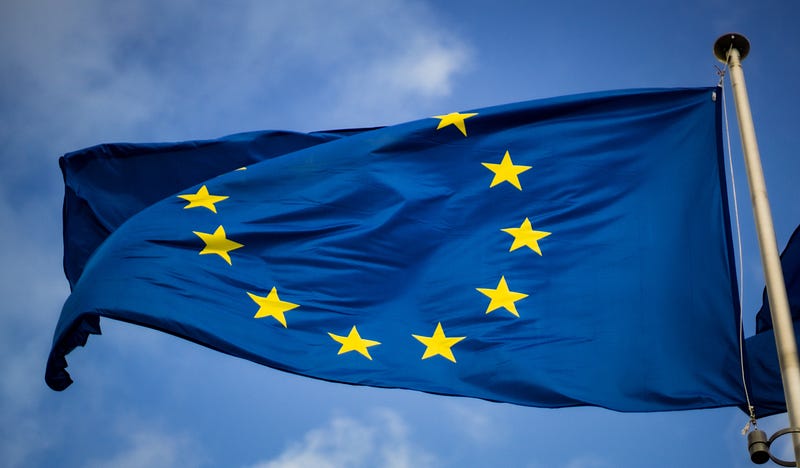
Photo by Christian Lue on Unsplash


Market expansion

In a press release published to its website on Thursday, UK-based B2C2 outlined further details relative to the acquisition. The move represents an effort by B2C2 to broaden its client base and expand within the European market, ahead of the forthcoming regulations under the Markets in Crypto-Assets Regulation (MiCA).

The acquisition opens doors for B2C2 to extend its services within the European Union (EU) jurisdiction. Additionally, it allows B2C2 to tap into growth opportunities beyond its existing strongholds in the United Kingdom, Asia-Pacific (APAC), and the United States.


Licensing access

One of the prime advantages of this acquisition is B2C2’s access to Woorton’s prestataires de services sur actifs numériques (PSAN) license, which is regulated by the Autorité des Marchés Financiers (AMF), the French financial regulatory authority. This license empowers B2C2 to operate seamlessly within the EU, positioning the company for a strategic advantage in the evolving regulatory landscape.

As the UK is no longer part of the EU, this acquisition makes for a much easier entry point for the company into the broader European market.

Founded in 2017, Woorton boasts an active clientele of nearly 250 entities engaged in trading 96 different cryptocurrencies. The company distinguishes itself by offering round-the-clock liquidity provision, ensuring uninterrupted trading opportunities for its clients.

Woorton’s engagement with regulatory bodies is a key highlight, and the firm is a co-founding member of the Association for the Development of Crypto-Assets (ADAN). Through ADAN, Woorton actively contributes to shaping regulatory frameworks governing digital assets in France, bridging the gap between the industry and policymakers.

Additionally, the company played a crucial role in establishing Paris Blockchain Week, an internationally recognized event that brings together thousands of attendees and speakers to discuss blockchain and digital asset trends.

Charlie Meraud, CEO of Woorton, expressed excitement about the acquisition, emphasizing the complementary strengths of the two firms. Meraud highlighted the enhanced liquidity pool and improved market presence that the combined platform would offer to customers, ultimately leading to a superior liquidity and trading experience.

B2C2’s CEO, Nicola White, described the acquisition as a significant milestone in the company’s growth journey. White expressed enthusiasm about the potential the acquisition unlocks for B2C2 and its EU-based clients, reaffirming the importance of regulatory standing and a robust client base.


London base

Established in 2015 and primarily owned by SBI, B2C2 operates from its main headquarters in the UK, with operational offices in the US and Japan. Its UK-registered company B2C2 Ltd serves as the parent entity within the B2C2 group of companies.

B2C2’s acquisition of Woorton not only enhances its presence within the European Union but also serves to demonstrate its intent in terms of regulatory compliance and industry leadership. This strategic move positions the company to navigate the evolving crypto market, likely leading to greater opportunities for its clients.

More to Read
View All
Policy & Regulation·

Dec 16, 2025

Korea to seek central bank input only for major stablecoins

South Korean lawmakers are moving to seize control of the nation’s stalled second phase of digital asset legislation, aiming to bypass months of interagency gridlock and introduce a comprehensive regulatory framework by January. The legislative acceleration comes as Seoul races to align with global standards following the implementation of the U.S. GENIUS Act in July, a shift that has intensified pressure on local regulators to formalize oversight of the crypto sector. According to a report from the Maeil Business Newspaper, the ruling Democratic Party of Korea (DPK) plans to introduce the Digital Asset Basic Act as a lawmaker-sponsored bill rather than wait for a government submission. The procedural move is intended to ensure that formal deliberations can begin during the February provisional session. Lawmaker Kang Jun-hyeon, a DPK member of the National Policy Committee, told reporters on Dec. 11 that relying on the government’s timeline would jeopardize passage of the bill in the first half of next year. Kang cited points of disagreement among the parliament, the government, and industry stakeholders. Among the authorities, in particular, a standoff between the Bank of Korea (BOK) and the Financial Services Commission (FSC) over monetary policy and issuance authority has been a key source of delay.Photo by Lauren Seo on UnsplashDraft sets ‘major’ stablecoin requirementsAt the heart of the legislation is a new classification system for stablecoins. The government delivered its draft for the Digital Asset Basic Act to DPK’s Digital Asset Task Force, outlining its intention to classify won-denominated stablecoins exceeding a certain issuance threshold as “major digital payment tokens.” According to Blockmedia, citing sources familiar with the closed-door briefing to the task force, these assets would fall under a rigorous oversight framework developed in consultation with the central bank. Under the draft rules, issuers would be required to maintain 100% reserves, prohibited from making interest payments to holders, and obliged to submit detailed issuance plans to the FSC. Foreign-issued stablecoins would only be permitted to circulate domestically if the issuer establishes a local branch. Although the government ultimately submitted its draft to the DPK, the delivery was delayed by two days, missing the Dec. 10 deadline set by the party. Officials attributed the postponement to unresolved interagency disagreements. The central bank had argued that any issuance should require unanimous approval from all relevant agencies, including itself, but the government agreed to involve the bank only when a token is designated as “major.” The Bank of Korea continues to advocate for a bank-led consortium issuance model, highlighting the coordination challenges that have complicated the bill’s preparation. Supply thresholds emerge as fault lineCritics warn that the proposed regulations could inadvertently tilt the market against domestic innovation. Analysts argue that if the threshold for the "major" designation is set too low, new won-based issuers may face compliance costs that could undermine their business viability before they reach meaningful scale. They added that setting the bar for entrenched dollar-backed issuers such as USDT and USDC is also complex, given that their combined global issuance already exceeds $250 billion. Market participants said concerns about triggering the “major” designation could prompt Korean issuers to cap supply to avoid heightened scrutiny, effectively stifling growth from the outset. Despite these concerns, political will to close the policy vacuum is hardening. The DPK intends to move the legislation forward on its own timetable, incorporating the government’s input but steering the process through parliament. Lawmaker Kang emphasized that while numerous issues remain, the task force aims to narrow the debate to a few essential questions before the bill’s planned introduction in January. Industry representatives have largely welcomed the clearer timeline, viewing the move as a necessary step to reduce uncertainty as the global crypto sector comes under more formal regulatory oversight. 

news
Web3 & Enterprise·

Nov 25, 2023

Harvest Global to establish fixed income tokenized fund

Harvest Global to establish fixed income tokenized fundHong Kong investment firm Harvest Global Investments, in partnership with Meta Lab HK, is set to offer a tokenized U.S. dollar bond fund.The collaboration between Harvest Global Investments (HGI), an affiliate of Harvest Fund Management, and Meta Lab HK, backed by Harvest Digital Assets, marks a significant development in the crypto investment landscape within Hong Kong and the broader Asian region.Photo by Giorgio Trovato on UnsplashFirst fixed-income tokenized fund from Chinese institutionMeta Lab HK announced details of the new offering, detailed in a Nov. 22 post on X (formerly Twitter). The fund targets professional investors and will concentrate on U.S. dollar bonds with an investment-grade rating. Meta Lab wrote:”We have learned that this will be the first fixed-income tokenized fund introduced by a Chinese financial institution in Asia with a tokenization arrangement. The fund is exclusively available to professional investors and primarily invests in investment grade U.S. dollar bonds.”Meta Lab added, “The offering is set to be managed by HGI, a subsidiary of Harvest Fund in Hong Kong, with Meta Lab HK providing the tokenization solution.”The tokenization of the fund, a process transforming traditional financial assets into digital tokens, is expected to enhance accessibility and efficiency for investors. The notification to Hong Kong’s securities regulator has been duly completed, underscoring the compliance and regulatory adherence of the initiative.The move comes amidst a series of noteworthy developments emerging from Asia, occurring against the backdrop of persistent regulatory challenges facing the cryptocurrency industry in the United States.CoinFund market entryThis announcement follows closely on the heels of CoinFund, a New York-based investment firm, which revealed its plans to expand services into Asia earlier this week. Choosing Hong Kong as the inaugural location for this expansion, CoinFund cited the city’s appeal to crypto talents as a key factor. As Asia takes strides in pioneering tokenized funds, it suggests a competitive landscape in digital asset development that could rival the United States.It’s likely that Hong Kong is providing a workable environment for Harvest Global to take this tokenized product to market. In August, the local regulator, the Hong Kong Monetary Authority (HKMA), published a report where it indicated an interest in pursuing tokenization as a means to improve aspects of the bond market. The report presented outcomes of Project Evergreen, an initiative the HKMA had been running to examine the potential of tokenization, which also incorporated the launch of a first-of-its-kind tokenized green bond.Regional tokenization interestRecent weeks have also seen further efforts being made within the Asian region in terms of bond tokenization. Last week, SC Ventures, the Singaporean investment subsidiary of British banking group Standard Chartered, unveiled a new platform called Libeara. That platform is working towards the launch of the first-ever tokenized Singapore dollar government bond fund.In the same week, the Bureau of the Treasury in the Philippines announced that it is issuing $179 million in one-year tokenized bonds, with the bonds being facilitated by the Development Bank of the Philippines and the Land Bank of the Philippines.

news
Web3 & Enterprise·

Jul 29, 2023

Japan’s HashPort Group Raises $8.5M in Funding Round

Japan’s HashPort Group Raises $8.5M in Funding RoundHashPort, a leading blockchain developer based in Japan, has successfully raised 1.2 billion Japanese yen (approximately $8.5 million) in a Series C funding round.The funding was secured through key investors, including Sumitomo Mitsui Banking Corporation (SMBC), The University of Tokyo, Edge Capital Partners, and Japanese billionaire entrepreneur Yusaku Maezawa. With this latest infusion of capital, HashPort’s total funding has now reached an impressive 2 billion yen (about $14.2 million).Global expansion plansThe announcement, which was made on Friday, revealed that these fresh funds will be instrumental in driving HashPort’s global expansion plans, particularly in the face of complex regulatory environments. The company aims to fortify its business operations and establish a robust compliance management system, essential for navigating the intricate web of global regulations.At the core of HashPort’s ecosystem are two significant components. The first is its namesake blockchain-related consulting and system solution, which has gained substantial recognition in Japan. The second is HashPalette, a public chain specially designed for non-fungible tokens (NFTs), tapping into the booming NFT market. Additionally, HashPort is set to unveil an exciting metaverse game called The Land Elf Crossing in the upcoming fourth quarter.Coincheck collaborationHashPort’s previous collaboration with Japanese cryptocurrency exchange Coincheck garnered considerable attention. Together, they launched Japan’s first initial exchange offering (IEO), which raised an impressive 22.45 billion yen (approximately $160 million) in commitments for the Palette (PLT) token. As a testament to the success of this venture, PLT Place, the official NFT marketplace of Palette Chain, now boasts over 370,000 users.President Seihaku Yoshida expressed HashPort’s future ambitions, revealing plans to cooperate with Expo 2025, a highly anticipated event scheduled to take place in Osaka. HashPort aims to develop digital wallets and digital passports linked to soulbound tokens (SBTs) for Expo 2025. With an estimated 28 million visitors expected to attend the expo, the company sees this as a historic opportunity to introduce Web3 technology to a broader audience.Soulbound tokensIn December 2022, one of HashPort’s current investors, SMBC, joined forces with the company to explore the potential applications of SBTs. Proposed by Ethereum Co-Founder Vitalik Buterin, SBTs represent the characteristics or reputation of individuals or entities, much like the concept of soulbound items in the popular massively multiplayer online role-playing game (MMORPG), World of Warcraft.As part of that collaboration, SMBC and HashPort were discussing the possibility of creating a “safe and secure Web3 economic zone.” No further details were given beyond that, but the idea may have been along the lines of creating something like Cyberport, an innovative digital community which has been created in Hong Kong, featuring over 1,900 start-ups and technology companies.The successful funding round marks a significant milestone for HashPort, providing the necessary financial resources to accelerate its expansion plans and drive innovation in the Web3 space. As the company continues to pioneer advancements in the blockchain and NFT sectors, its collaboration with Expo 2025 and ongoing exploration of SBTs showcase the company’s efforts in attempting to contribute towards shaping the future of decentralized technologies.

news
Loading