Top

Japanese e-commerce giant Mercari planning bitcoin payments

Web3 & Enterprise·January 09, 2024, 1:51 AM

Mercari, one of Japan's leading e-commerce platforms, has declared its intention to accept bitcoin payments starting from June of this year.


The decision, which was reported by Japanese financial media outlet Nikkei on Friday, outlines that the processing of bitcoin payments will be managed through Mercari's Tokyo-based crypto subsidiary, Melcoin.
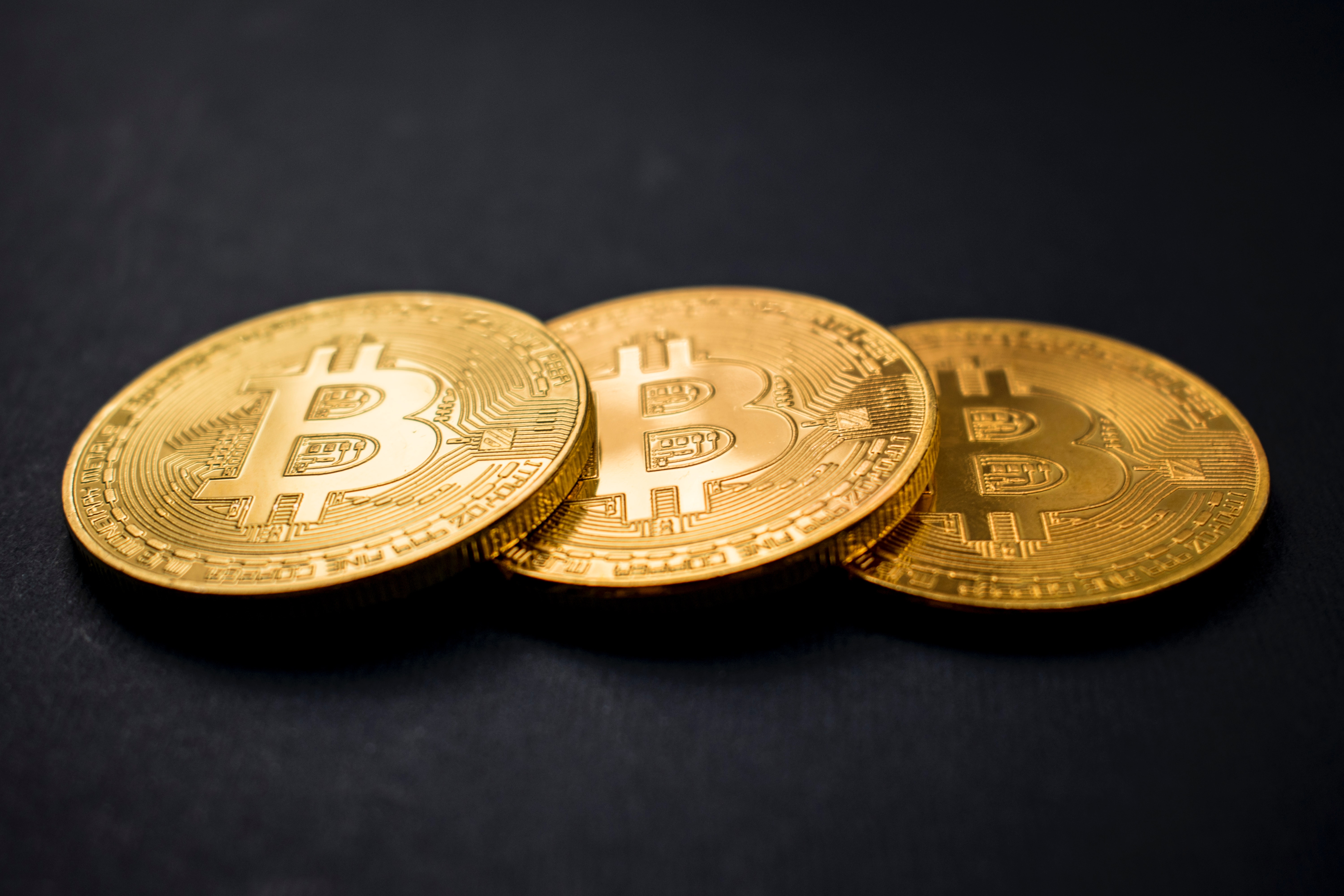
https://asset.coinness.com/en/news/126a5f899f63dd7e988f3803dbdfbf59.jpg
Photo by Dmytro Demidko on Unsplash

Seamless BTC conversion

It's noteworthy that Melcoin will convert all BTC payments into yen, ensuring vendors receive fiat currency despite the buyer's choice of bitcoin for payment. While the company won't display prices in bitcoin, listing items for sale in fiat yen, customers will have the option to select BTC as a payment method during the purchase process on the platform.


In recent months, Mercari has introduced various crypto-related products, including the Mercari bitcoin crypto trading service. This service allows users to buy and sell bitcoin using the proceeds from their sales on the platform. The integration of a loyalty points system further enhances the crypto trading experience, enabling Mercari users to exchange their points for bitcoin.


Remarkably, Mercari announced that its bitcoin trading service surpassed the 1 million user milestone in October, just seven months after its launch. At the time of the launch of the trading service, the company outlined that it would “make bitcoin more accessible to people who have never tried crypto trading before.”


Notably, around 80% of the crypto users on Mercari had no prior experience with crypto-asset trading in June of the previous year. Expanding its crypto-related offering to include bitcoin payments unleashes much more potential relative to crypto adoption.


22 million monthly users

Established in 2013, Mercari has evolved into Japan's largest community marketplace platform, boasting 22 million monthly users as of July 2023. It’s a flea market application, making it a consumer-to-consumer platform that could play a significant role in bringing about bitcoin adoption in Japan among ordinary people. The company has also expanded its footprint internationally, with a particular focus on Europe.


Market observers have labeled Mercari's crypto service, along with a competitor operated by Rakuten, as a potential "gateway" for bitcoin and crypto investors and traders. Rakuten, another major Japanese e-commerce platform deeply involved in the crypto space for an extended period, operates the Rakuten Wallet crypto trading service. Like Mercari, Rakuten has integrated its loyalty points program with its crypto arm, allowing users to trade their points for crypto-assets. Rakuten had also emerged last year among a shortlist of Asian companies expressing an interest in purchasing failed crypto exchange FTX.


A recent survey highlighted the growing influence of these e-commerce giants in the crypto space. Japanese individuals who entered the coin trading scene towards the end of 2022 overwhelmingly favored either Mercari's bitcoin trading app (24.7%) or Rakuten's Rakuten Wallet platform (24.2%). This revelation dealt a blow to traditional crypto exchanges, with bitFlyer, the long-standing market leader, securing the third position with a share of 11.3%.


This move contributes towards a more progressive crypto environment in Japan, where lawmakers recently indicated a willingness to consider making tax rules more accommodative of the crypto sector.

More to Read
View All
Web3 & Enterprise·

May 22, 2023

Wemade Partners with Etherscan to Enhance Transparency in WEMIX 3.0 Ecosystem

Wemade Partners with Etherscan to Enhance Transparency in WEMIX 3.0 EcosystemWemade, a leading company in the South Korean blockchain gaming industry, announced on Monday a partnership with Etherscan, a renowned block explorer and analytics platform. The objective of this collaboration is to enhance transparency within the WEMIX 3.0 ecosystem.Photo by Shubham Dhage on UnsplashNew block explorerAs part of this partnership, both companies will work together to develop a dedicated block explorer for the WEMIX 3.0 mainnet and Kroma, an Ethereum Layer 2 project developed by Lightscale, a subsidiary of Wemade. The new block explorer will provide advanced functionality, enabling users to access a more transparent transaction history. The explorer is expected to be launched in the first half of this year.InteroperabilityKroma is Lightscale’s Ethereum Layer 2 project whose goal is to establish a layer 2 blockchain based on zero-knowledge rollups. Thanks to Kroma’s interoperability, the WEMIX ecosystem is anticipated to extend beyond the WEMIX blockchain, linking to external blockchains.Etherscan, one of major block explorers for Ethereum, is an established platform offering extensive analytics capabilities. It has previously developed and operated various block explorers, including BscScan for Binance Blockchain, PolygonScan for Polygon Blockchain, and Arbiscan for Arbitrum Blockchain.Through this partnership, Wemade continues its commitment to decentralizing the WEMIX 3.0 mainnet and driving innovative advancements of a transparent mega-ecosystem.

news
Markets·

May 29, 2024

Mt. Gox moves $9B in Bitcoin for first time in years

Wallets belonging to the defunct Japanese Bitcoin exchange Mt. Gox have transferred over 140,000 Bitcoin (BTC), valued at approximately $9 billion, to an unknown address.  Sell-off fearsThis significant movement began in the early hours of Tuesday morning in Asia, marking the first such transfer from Mt. Gox’s cold wallets in over five years. Julio Moreno, head of research at CryptoQuant, initially confirmed that 12,239 Bitcoin had been transferred from Mt. Gox over the course of an hour. A short time later, he provided an update on X, stating:"All coins have been transferred to a new address." Despite market disquiet, the prevailing view which subsequently emerged is that the transfer is believed to be part of a plan to distribute assets back to creditors before the October 31, 2024 deadline. Alex Thorn, head of research at Galaxy Digital, shared his perspective on X, suggesting that most of the transferred Bitcoin would likely be held by creditors rather than being sold on the open market. Despite these reassurances, the market reacted negatively for a time. Bitcoin's price dropped by 1.4% since the start of Asian trading hours, falling to a low of $67,680 from a Monday high of over $70,000.Photo by Kanchanara on UnsplashNo Bitcoin FiresaleTo quell fears of a massive Bitcoin sell-off, Mark Karpeles, the former CEO of Mt. Gox, addressed the situation on X. He stated: “As far as I know, everything is fine with MtGox. The trustee is moving coins to a different wallet in preparation for the distribution that will likely happen this year. There is no imminent sale of bitcoins happening." Rehabilitation trustee Nobuaki Kobayashi also issued a press release, clarifying that no sale of Bitcoin or Bitcoin Cash (BCH) had taken place. He assured that the group was "managing bitcoin and bitcoin cash in a secure manner." Wallet activity reveals that these movements were executed through thirteen transactions. A test transaction worth $3 was made on May 20, followed by another smaller transaction of $160 early Tuesday. The remaining transactions varied from $1.2 million to $2.2 billion worth of Bitcoin. Bitinfocharts data shows that all of Mt. Gox's Bitcoin has now been consolidated into a single wallet. A long road to repaymentIn September 2023, Mt. Gox’s trustee announced that the repayment deadline had been extended by 12 months to October 31, 2024. It looked like repayments were imminent in November. However, those communications referenced cash repayments rather than the distribution of Bitcoin and Bitcoin Cash. Some cash repayments had started in December 2023. Speculation in January that the bankruptcy estate would begin the distribution of Bitcoin led to market fears of the impact that would have on the Bitcoin unit price. The extension provided a longer timeframe for preparing the distribution of assets to creditors. Mt. Gox, launched in 2010, quickly rose to prominence, becoming the largest Bitcoin exchange by 2013, handling 70% of all Bitcoin trades worldwide. However, the exchange faced a dramatic downfall in early 2014.  It suspended trading and stopped all withdrawals after losing hundreds of thousands of Bitcoin in a hack. Subsequently, the site went offline, and the company filed for bankruptcy protection after losing over 800,000 Bitcoins. Creditors have been waiting for repayment ever since.

news
Web3 & Enterprise·

May 17, 2023

Animoca Indicates Fund Interest From Console Makers

Animoca Indicates Fund Interest From Console MakersThe head of Animoca Ventures has said that Web3 gaming is attracting the interest of veterans of the gaming world as well as that of “key Japanese console makers.”Animoca Ventures is a subsidiary company of Hong Kong-headquartered Web3 gaming and NFT firm, Animoca Brands. In a conversation with The Block recently, James Ho explained that although Web3 gaming has seen a short to medium-term downtrend when using the pricing of gaming-related tokens as the metric, the Animoca Ventures lead is seeing interest coming from “some of the best, most profound veterans in gaming.”Photo by Albie Patacsil on UnsplashProof of interestHo elaborated that there are a host of examples that back up his claim. He referred to FunPlus’s investment in global cross-platform play-and-earn games developer and publisher, Xterio. FunPlus itself is a Switzerland-headquartered independent games developer and publisher with offices and operations in China, Singapore, Canada, Spain, and the United States. Xterio raised $40 million in a funding round led by FunPlus in August of last year, with funding going towards building out its platform alongside further game development.Ho also cited Square Enix, a Japanese gaming conglomerate that has shown an interest in blockchain-based gaming in recent years. In April, it announced that it was tripling down on blockchain by partnering with Web3 platform Elixir. The objective of the collaboration is to generate visibility and adoption of Web3 gaming among traditional gamers.It’s also understood that Chinese tech giant Tencent has had a games studio under its group of companies which is believed to be building a blockchain-based first-person shooter game. Meanwhile, French video game publishing behemoth Ubisoft is an investor in Animoca Brands while also participating in a crypto-focused fund run by multi-stage technology investment platform, White Star Capital.Console-maker intentMost notable from Ho’s interview, though, is his claim that “key Japanese console makers” have an interest right now in pursuing Web3 gaming. That’s incredibly significant because if Web3 can conquer the consoles, it will truly be a mass-market affair at that point.Ho elaborated: “Console makers never cared about free-to-play until it grew into multi-million users, what we’re seeing here now is some of the console makers with their deep pockets want to get involved in potentially a fund to stay on top of innovation… And that to me is a signal that they want to build something in this space in the near future, or not too distant future.”The Animoca Ventures lead talked about “key Japanese console makers,” specifically in the context of interest expressed by them in investing in a second early-stage venture fund that Animoca is considering. The expression of interest has become evident to the company as it’s a response it received having touted the prospect of establishing the fund.It’s interesting to hear that Animoca is actively pitching the notion of raising another fund, as it had been speculated that the firm has scaled down some of its existing funds. It’s understood that the firm was working on the new fund in November of last year, initially proposing a target of $2 billion. Once January came around, Animoca took the decision to scale that target back by half to $1 billion.The company denies that reporting on the subject, suggesting instead that the original target of the fund was $1 billion from the outset.

news
Loading