Top

Bitget Launches Crypto Loans Product

Web3 & Enterprise·July 05, 2023, 12:26 AM

Bitget, the Seychelles-based platform known for its crypto derivatives and copy trading services, is venturing into the cryptocurrency loan market with the introduction of its Crypto Loans product.

The move, which the company announced via a press release published on Tuesday, is aimed at attracting users who are seeking alternative funding solutions backed by digital assets, as an option beyond traditional credit institutions.
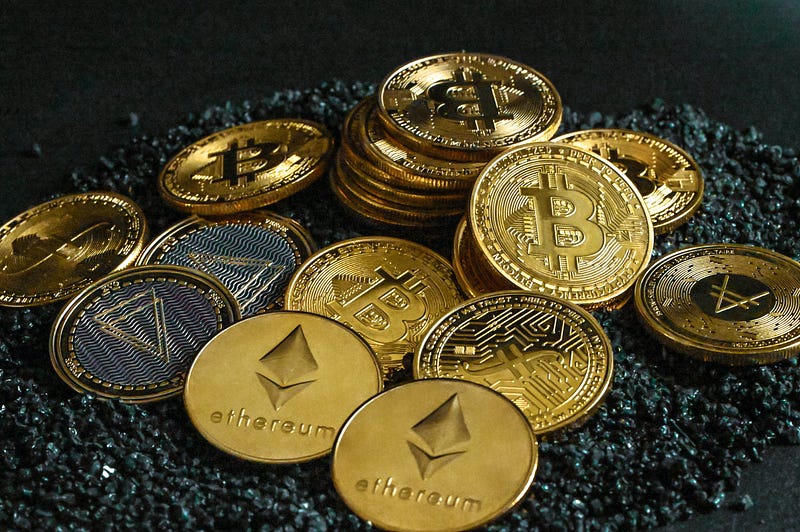
Photo by Traxer on Unsplash


Dual coin approach

The Crypto Loans product employs a dual-coin approach, allowing users to stake one digital asset as collateral and borrow an equivalent amount in another asset. Bitget believes that crypto loans have been gaining popularity in recent years, with the overall digital lending sector surpassing $8.5 billion in 2022 and experiencing a compound annual growth rate of 20.5%, as reported by Global Market Insights.

Despite the overall growth in the digital lending area, the crypto loan sector faced significant setbacks in 2022, particularly with the troubles surrounding centralized crypto lending services. Major firms like Celsius, BlockFi, and Voyager Digital suffered collapses and bankruptcy, raising concerns about the trustworthiness of such services in the future.

Bitget, however, is confident in its Crypto Loans product, emphasizing that it has streamlined the loan process to ease user onboarding. The amount users can borrow is determined by the market value of the collateral staked, and the loan is automatically disbursed with a specific interest rate. Borrowers have the flexibility to utilize the funds as needed and adjust the collateral based on their requirements.


Swift loans process

It also has the option to repay the loan before or at the predetermined deadline. To further encourage user adoption, Bitget promises support for withdrawals and a swift review process for loan applications. The feature is expected to provide added convenience and ease of use for users.

Bitget’s Managing Director, Gracy Chen, highlighted the advantages of the Crypto Loans product, noting that users can now stake less-demanded coins and obtain loans in more liquid assets for investment purposes. The platform’s flexible borrowing and repayment mechanism is designed to accommodate the needs of all users, ensuring convenience and accessibility.

Notably, Bitget has been expanding its presence in the crypto market. In March, the platform acquired a controlling stake in BitKeep, a crypto wallet that has been rebranded as Bitget Wallet. Additionally, Bitget unveiled a $100 million venture fund in April, following a $10 million investment from Dragonfly Capital. In May, it announced the launch of its Blockchain4Youth program, recognizing the importance of the younger demographic in achieving crypto mass adoption.

As Bitget ventures into the crypto loan market, it’s aiming to go one further than previous crypto lending providers who have largely failed, to provide a secure and user-friendly platform for borrowing and lending digital assets. The success of the product will depend on user trust and confidence, especially given the setbacks experienced by those other players in the sector in the past. Nonetheless, with its growing user base and strategic investments, Bitget is certainly showing some potential relative to making a mark in the cryptocurrency loan market.


More to Read
View All
Policy & Regulation·

Nov 04, 2023

SEC seeks summary judgment against Terraform Labs

SEC seeks summary judgment against Terraform LabsThe U.S. Securities and Exchange Commission (SEC) is making a strong push for a summary judgment in its ongoing legal battle against Singapore’s Terraform Labs and its co-founder Do Kwon. Such an outcome would spare the need for a protracted trial.According to a motion filed by the SEC on Thursday, the record shows that there is “no genuine dispute as to any material fact and that the moving party is entitled to judgment as a matter of law.”Photo by Caleb Fisher on UnsplashRelying on the Howey TestThe SEC’s filing underscores its central argument that Kwon and Terraform Labs were involved in the sale of securities. The document categorically states:“There is no dispute that purchasers made an investment of money, either through fiat currency or crypto assets, for each crypto asset — LUNA, wLUNA, MIR, and UST, thereby satisfying the first prong of Howey.” The Howey Test refers back to a U.S. Supreme Court case — SEC v. Howey — which took place in 1946. The case set a precedent and has subsequently become the cornerstone of determining what is or is not a security in the United States.This argument hinges on the idea that funds were pooled in a common enterprise with the expectation of profits primarily derived from the efforts of the promoters.Citing fraud as well as unregistered securitiesThe SEC’s assertion is two-fold, contending that not only did Terraform and Kwon engage in selling securities, but they also engaged in fraudulent activities and disseminated misleading information. The SEC reiterates these claims in its filing, emphasizing that the defendants committed fraud by duping investors about the stability of UST.They allegedly falsely attributed the algorithm for price stabilization while orchestrating clandestine third-party interventions. This purported deception made their claims regarding the algorithm’s effectiveness deceptive and involved the omission of crucial information. The fallout from Terra’s collapse in May of the previous year resulted in the destruction of substantial investor wealth, totaling billions of dollars.Similar defense team filingThe SEC’s move to seek summary judgment comes in the wake of a similar filing by Kwon’s defense team last Friday. Kwon is currently serving a sentence for document forgery in Montenegro, a situation stemming from his arrest at an airport with forged passports.Notably, Terraform’s co-founder, Daniel Shin, who is currently on trial in South Korea, has attributed the collapse of Terraform Labs to Kwon’s mismanagement. Shin has claimed his separation from the company and its activities occurred two years before its eventual collapse.In this legal battle that holds significant implications for the cryptocurrency and blockchain space, the SEC continues to emphasize its position, asserting that Kwon and Terraform Labs engaged in the sale of securities through deceptive means. The outcome of this case could have far-reaching consequences, setting precedents for future regulatory actions in the industry.

news
Policy & Regulation·

Oct 29, 2025

EU bans Ruble-backed stablecoin A7A5 in latest round of Russia sanctions

The European Council has banned all transactions within the European Union (EU) involving the Russian Ruble-backed stablecoin A7A5, according to a press release published Oct. 23. The prohibition targets the stablecoin itself, its developer, its Kyrgyzstan-based issuer, and the operator of a platform that facilitates major A7A5 trades. The package also takes aim at Russian crypto exchanges.Photo by Christian Lue on UnsplashAdditional banking restrictionsThis measure is part of a broader set of economic sanctions against sectors the EU stated assist the Russian invasion of Ukraine, including energy, finance, and defense industries. As part of this financial clampdown, the EU will also impose a ban on five additional Russian lenders starting Nov. 12. One of those lenders, Alfa-Bank, recently began offering Bitcoin buying and selling services, according to an X post by journalist Pete Rizzo. The European body said the new crypto measures address Russia’s increasing use of digital assets to circumvent existing sanctions. Russian banks were cut off from the SWIFT international payment system in early 2022, following the onset of the Russo-Ukrainian war. Reports of Russia using cryptocurrency to finance malign activities have surfaced previously. Earlier this month, Sławomir Cenckiewicz, the head of the Polish National Security Bureau (BBN), told the Financial Times that Russia has employed crypto to finance attacks on EU countries. Cenckiewicz said that a network of agents recruited by Russia’s GRU military intelligence agency and uncovered in Poland in 2023 had been substantially funded with cryptocurrency. Reflecting this concern, lawmakers in Poland’s lower house approved a bill in September to strengthen national crypto oversight, a move also expected to help curb Russian funding channels. Cenckiewicz noted that Polish intelligence agencies are closely monitoring the legislation to prevent loopholes that allow foreign actors to support agents using digital assets. Russia’s evolving crypto policyThe EU’s action comes as Russia itself is attempting to refine its own cryptocurrency rules. According to the Moscow Times, Russia's central bank wants to limit cryptocurrency use strictly to cross-border payments within an experimental legal regime (ELR). The institution continues to reject recognition of cryptocurrency as a legal means of payment and has advocated banning its use for domestic payments and retail investment, while permitting trading only for high-net-worth individuals through licensed platforms. Russia’s finance ministry has expressed a more flexible view, pointing to the scale of crypto adoption among the public. Earlier this year, the central bank estimated that domestic crypto transactions exceeded 1 trillion rubles (about $12.4 billion) per month, and that as of March, wallets linked to Russian users held roughly 827 billion rubles (about $10.2 billion). The finance ministry and the central bank have agreed to tighten supervision of the crypto market, with officials expecting to finalize the new framework before the end of the year. 

news
Policy & Regulation·

Nov 10, 2023

Korea Joins OECD’s CARF initiative to enhance crypto tax compliance

Korea Joins OECD’s CARF initiative to enhance crypto tax complianceThe South Korean Ministry of Economy and Finance issued a press release to declare the country’s involvement in the Crypto-Asset Reporting Framework (CARF). This program, developed by the Organization for Economic Co-operation and Development (OECD), is designed to promote tax compliance and combat tax evasion in the realm of cryptocurrency. The initiative brings together 48 countries and jurisdictions, such as France, Germany, Japan, the United Kingdom and the United States.Photo by Nataliya Vaitkevich on PexelsTarget year of 2027In the joint statement released on Nov. 10, the participants of the CARF expressed their commitment to its widespread and timely implementation, aiming to enhance the effectiveness of the regime. They plan to align their domestic laws and enforce agreements by 2027, the year targeted by the OECD for exchanging relevant information. The statement also encouraged other jurisdictions to participate in this global effort.Updating laws and activating agreementsKorea’s commitment to international cooperation, as indicated in the joint statement, shows its intention to update domestic laws and activate exchange agreements. This preparation will pave the way for the exchange of crypto-asset transaction information to commence in 2027, adhering to the OECD’s proposed timeline. Such a step is anticipated to significantly contribute to the broad implementation of the CARF. The Economy Ministry stated that Korea is committed to ongoing participation in international efforts aimed at preventing tax evasion and enhancing tax transparency.In September, during a tax administration forum in Seoul, experts suggested that Korea’s potential participation in the OECD’s CARF would require more than just legislative amendments. They highlighted the necessity for Korea to develop a cooperative system involving both virtual asset service providers (VASPs) and regulatory authorities, explaining that this approach would ensure a smooth and effective implementation of the CARF in Korea.

news
Loading