Top

Aevo Launches Novel Index Perpetual Contract

Web3 & Enterprise·August 22, 2023, 1:58 AM

Aevo, the layer-2 derivatives platform launched by Singapore’s Ribbon Finance earlier this year, has introduced a new index perpetual contract.

The contract allows traders to engage in long or short positions based on the market capitalization of accounts within the social application Friend.tech.

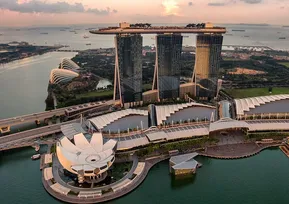
Photo by Compare Fibre on Unsplash


FRIEND-PERP

The FRIEND-PERP market is now live according to The Block, and it has gained significant traction, boasting a daily trading volume of $501,824 and a current trading price of $7.14. This market operates on a unique premise — a perpetual contract, which, unlike conventional futures contracts, does not adhere to an expiration date. This feature is particularly appealing to the crypto trading community, enabling them to seize opportunities without the constraints of time-bound contracts.


Surge in interest

Friend.tech, the social app at the center of this Aevo product offering, has integrated with Ethereum layer-2 network Base, a blockchain incubated by Coinbase earlier this year. This network, which officially welcomed the public on August 9, has been the center of attention within the crypto sector over the past couple of weeks.

The social app enables market participants to buy shares of individuals who hold accounts on X (formerly Twitter). Since its launch earlier this month, the Friend.tech app has grown rapidly. It attracted over 100,000 daily users within 24 hours of its launch.

Each user stands to benefit financially from the purchase and sale of their shares, a pioneering approach that has lured prominent figures, including venture capitalist Garry Tan, NBA star Grayson Allen, and celebrated YouTuber FaZe Banks, to the platform.


Boost for Base

US crypto platform Coinbase has embraced Friend.tech as it marks the first major breakthrough use case for its Base blockchain network. This collaborative effort has propelled the Base network to new heights, positioning it among the top cryptocurrency projects by user fee revenue. With $1.4 million in fees generated over the last 24 hours alone, Friend.tech ranks among industry giants, trailing only Ethereum and Lido Finance in this metric, according to data from DeFiLlama.

While the app has risen at a phenomenal pace, there are concerns relative to the degree of privacy it affords its users. The public availability of the Friend.tech API used to convert X usernames into wallet addresses has raised the alarm for potential data exposure.

A Yearn Finance developer, known by the pseudonym Banteg, used this API to compile a list of Ethereum addresses linked to X accounts. While the community has reassured users that access can be revoked, the implications of this exposure for privacy and security cannot be understated.

The Aevo project was first announced by Ribbon Finance in September 2022 and subsequently launched in June. The goal of the project is to convert users from centralized exchanges, bringing them over to the decentralized exchange (DEX) platform.

More to Read
View All
Web3 & Enterprise·

Nov 07, 2023

Roger Ver sues Matrixport over frozen crypto funds

Roger Ver sues Matrixport over frozen crypto fundsRoger Ver, often referred to as “Bitcoin Jesus,” finds himself embroiled in a legal dispute with Jihan Wu, the co-founder and chairman of Matrixport, a Singapore-based digital assets financial services platform.Photo by Tingey Injury Law Firm on Unsplash$8 million disputeThe crux of the matter is a contentious $8 million that Ver claims Wu withheld from him in connection with the fallout of the unrelated failure of the CoinFLEX crypto platform. This conflict has led to a lawsuit filed by Ver’s counsel in the Seychelles.The legal complaint, which originated last year, revolves around bit.com, a crypto exchange owned by Matrixport, refusing to allow Ver to withdraw his $8 million. Wu, a creditor of CoinFLEX, contends that he incurred financial losses due to the exchange’s restructuring.However, Ver asserts that the insolvency of CoinFLEX, an unrelated entity, should not be tied to the funds owed to him by Matrixport. Off the back of that assertion, Ver confirmed to The Block that in August 2022, he sued Smart Vega Holding Limited, a Seychelles-incorporated subsidiary company of Matrixport, for $8 million.Ver asserts CoinFLEX collapse innocenceRoger Ver maintains that he is not to blame for CoinFLEX’s collapse. He states that the narrative emerged due to breaches of confidentiality regarding the arbitration between CoinFLEX and himself. It emerged last month that creditors of CoinFLEX had taken legal action against its CEO, Mark Lamb, as well as Ver. It’s understood that Ver had benefited from a settlement negotiated with Lamb. Creditors are seeking to recover any benefit realized by Ver as a consequence of this settlement.Ver told Coindesk in an email that he initiated arbitration proceedings against CoinFLEX in June 2022, seeking $200 million in damages. He maintains he was the plaintiff in this case, not CoinFLEX, which later filed a counterclaim for $84 million.Confidentiality is a key aspect of arbitration proceedings, especially in Hong Kong where the arbitration took place. Despite this, it is alleged that Lamb broke this confidentiality, which led to the misrepresentation that CoinFLEX was the plaintiff in the case. Ver firmly believes that CoinFLEX’s insolvency was primarily due to market turmoil in May 2022 and poor risk management on the part of its co-founders.Matrixport standing firmWhile Matrixport does not deny withholding the cryptocurrency from Ver, it argues that Ver should repay his debt to CoinFLEX, which is a creditor of Ver. Once this is done, CoinFLEX will release monies owed to Wu.The dispute also touches on the terms of service. Matrixport maintains that it has the right to withhold funds for penalties related to defaulted margin calls and legal fees and it is committing significant legal resources to defend its position. Ver’s attorney counters this argument, stating that Matrixport’s terms of service do not permit such penalties and that there is no legal justification for withholding the funds.Matrixport claims that the funds are being held because of an investigation into Ver’s “margin trading irregularities.” The company’s Head of Public Relations and Brand, Ross Gan, said that Ver “continues to make unreasonable demands.” Gan added:“We will respect the legal process and the ultimate Court ruling on this case and reserve all our rights to take further legal action in this ongoing dispute with Mr. Ver.”

news
Policy & Regulation·

Jul 04, 2023

Singapore Looks to Prohibit Crypto Lending and Staking

Singapore Looks to Prohibit Crypto Lending and StakingIn a move to bolster investor protection and maintain financial stability, the Monetary Authority of Singapore (MAS) is introducing new guidelines for cryptocurrency platforms operating in the country.Details of the measures were published by MAS on Monday. According to its statement, the measures “will mitigate the risk of loss or misuse of customers’ assets, and facilitate the recovery of customers’ assets in the event of a DPT [Digital Payment Token] service provider’s insolvency.”The proposed guidelines outline several key measures. One such measure is the daily reconciliation of customer assets, which will help prevent discrepancies and safeguard against potential losses.Photo by Hu Chen on UnsplashHolding assets in trustAdditionally, the custody function, responsible for holding and safeguarding client assets, will be operationally separated from other business divisions to minimize the risk of mismanagement or unauthorized use. By the end of this year, it’s understood that crypto platforms will be required to store client assets in trust accounts, ensuring enhanced security and accountability.DisclosuresFurthermore, licensed cryptocurrency service providers will be mandated to provide explicit disclosures to customers, clearly outlining the risks associated with holding and trading digital payment tokens (DPTs). Recognizing the speculative nature of digital token trading, the MAS acknowledges that regulations alone cannot fully protect consumers from potential losses.To further protect retail investors, the MAS intends to prohibit cryptocurrency service providers from facilitating lending or staking activities. Lending and staking, where digital tokens are loaned or pledged to earn profits, are considered unsuitable for the general public due to their complex and high-risk nature.These measures come as part of Singapore’s efforts to strengthen its regulatory environment for digital assets. The consultation process began last year, following the collapse of FTX, a cryptocurrency exchange.Singaporeans suffered disproportionately with the collapse of FTX as previously, MAS had banned global crypto exchange Binance from operating within the city-state. That led to Singapore having more FTX customers than many other world regions. To compound matters, state-owned global investment firm Temasek, was an investor in the fraudulent crypto exchange.MAS had called for feedback and proposals, with a focus on enhancing investor safeguards and promoting responsible trading practices. While the regulations aim to provide a safer environment for investors, the MAS also emphasizes the importance of individuals exercising caution when engaging in digital token trading.Contrasting approachesWhile Singapore is taking steps to tighten regulations, other cities like Hong Kong are adopting a more inclusive approach to the crypto industry. Hong Kong Legislative Council member Johnny Ng has voiced support for the local crypto business and has encouraged prominent exchanges like Coinbase to establish operations in the territory, aiming to foster greater engagement and growth within the sector.As the crypto industry continues to evolve, regulatory frameworks play a crucial role in ensuring investor protection and maintaining market integrity. Singapore’s proactive approach to strengthening its regulatory environment reflects its commitment to striking a balance between fostering innovation and safeguarding the interests of investors.

news
Policy & Regulation·

Sep 19, 2023

JPEX Exchange Scandal Sees Crypto Regulation Under Scrutiny in Hong Kong

JPEX Exchange Scandal Sees Crypto Regulation Under Scrutiny in Hong KongWhile Hong Kong has been developing steadily as a crypto sector hub, the focus in the Chinese autonomous territory has turned towards regulation after a recent scandal involving an unlicensed cryptocurrency exchange.Photo by Ihor Saveliev on UnsplashOngoing investigationYesterday we reported on some arrests relative to problems experienced at crypto exchange JPEX. The fallout continues on Tuesday, with the Hong Kong police now understood to have arrested eight individuals, including social media influencers who promoted the exchange and JPEX employees, on allegations of fraud. This illicit activity in and around the JPEX exchange has affected over 1,600 investors, implicating more than $150 million in assets.JPEX, in response to mounting pressure, announced the suspension of trading on its platform. In a statement, the exchange mentioned ongoing negotiations with third-party market makers to address liquidity shortages. However, JPEX also accused an unidentified third-party market maker of maliciously freezing funds, further complicating the situation.Politicians and regulators speak outResponding to the incident via a press conference on Tuesday, Hong Kong’s Chief Executive, John Lee, emphasized the significance of investing in virtual assets through licensed platforms. Lee stated:“This incident highlights the importance that when investors want to invest in virtual assets, then they must invest on platforms that are licensed.” He also pledged that the Securities and Futures Commission (SFC) would closely monitor the situation to ensure investor protection.Elizabeth Wong, the Head of the SFC’s fintech unit, revealed that an investigation was underway to determine whether JPEX had violated anti-money laundering laws. The SFC had already declared JPEX unlicensed, prompting numerous complaints from investors who were unable to withdraw their virtual assets or experienced unexplained reductions in their balances.Assets frozenHong Kong authorities have taken decisive action against those involved in the scandal. They have frozen bank accounts valued at 15 million Hong Kong dollars ($1 million) and seized three properties valued at 44 million Hong Kong dollars. The police have reported receiving 1,641 complaints related to JPEX, involving a staggering $1.2 billion Hong Kong dollars. By last Wednesday, the SFC had received in excess of 1,000 complaints and at that point, they notified the general public.The JPEX scandal has drawn attention to the need for stronger cryptocurrency regulations in Hong Kong, a region that has become attractive to cryptocurrency firms since mainland China banned cryptocurrency transactions in 2021. In mainland China, trading cryptocurrencies on foreign exchanges from within the country remains illegal.Hong Kong’s response to cryptocurrency regulation has evolved. Beginning on June 1, the SFC started accepting applications from cryptocurrency exchanges, allowing licensed operators to serve retail investors, provided they understand the associated risks. Previously, only professional investors had access to such exchanges. Currently, only two exchanges in Hong Kong, OSL Exchange and Hashkey Exchange, have received approval to operate.As Hong Kong reevaluates its approach to cryptocurrency regulation, the crypto sector will hope that it strikes a balance between fostering innovation and protecting investors from fraud and market manipulation.

news
Loading