Top

Singapore Looks to Prohibit Crypto Lending and Staking

Policy & Regulation·July 04, 2023, 12:30 AM

In a move to bolster investor protection and maintain financial stability, the Monetary Authority of Singapore (MAS) is introducing new guidelines for cryptocurrency platforms operating in the country.

Details of the measures were published by MAS on Monday. According to its statement, the measures “will mitigate the risk of loss or misuse of customers’ assets, and facilitate the recovery of customers’ assets in the event of a DPT [Digital Payment Token] service provider’s insolvency.”

The proposed guidelines outline several key measures. One such measure is the daily reconciliation of customer assets, which will help prevent discrepancies and safeguard against potential losses.
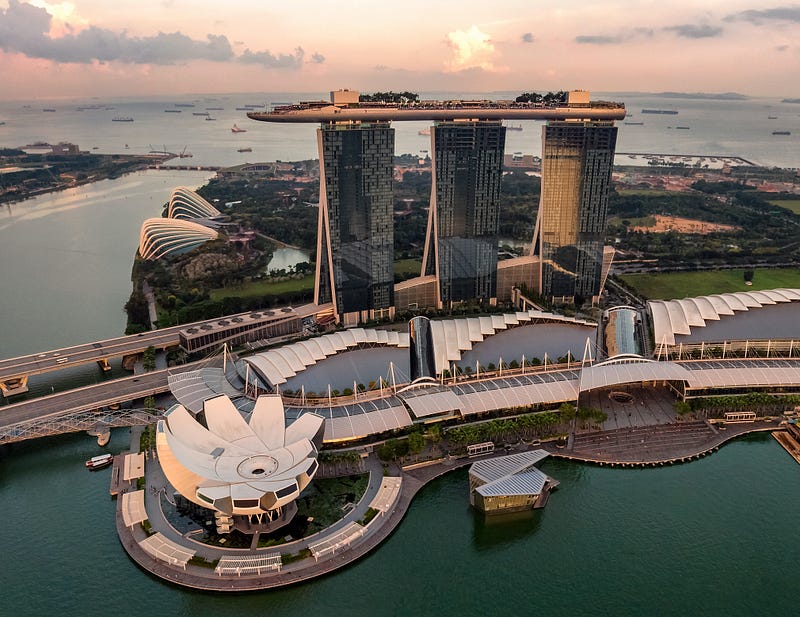
Photo by Hu Chen on Unsplash


Holding assets in trust

Additionally, the custody function, responsible for holding and safeguarding client assets, will be operationally separated from other business divisions to minimize the risk of mismanagement or unauthorized use. By the end of this year, it’s understood that crypto platforms will be required to store client assets in trust accounts, ensuring enhanced security and accountability.


Disclosures

Furthermore, licensed cryptocurrency service providers will be mandated to provide explicit disclosures to customers, clearly outlining the risks associated with holding and trading digital payment tokens (DPTs). Recognizing the speculative nature of digital token trading, the MAS acknowledges that regulations alone cannot fully protect consumers from potential losses.

To further protect retail investors, the MAS intends to prohibit cryptocurrency service providers from facilitating lending or staking activities. Lending and staking, where digital tokens are loaned or pledged to earn profits, are considered unsuitable for the general public due to their complex and high-risk nature.

These measures come as part of Singapore’s efforts to strengthen its regulatory environment for digital assets. The consultation process began last year, following the collapse of FTX, a cryptocurrency exchange.

Singaporeans suffered disproportionately with the collapse of FTX as previously, MAS had banned global crypto exchange Binance from operating within the city-state. That led to Singapore having more FTX customers than many other world regions. To compound matters, state-owned global investment firm Temasek, was an investor in the fraudulent crypto exchange.

MAS had called for feedback and proposals, with a focus on enhancing investor safeguards and promoting responsible trading practices. While the regulations aim to provide a safer environment for investors, the MAS also emphasizes the importance of individuals exercising caution when engaging in digital token trading.


Contrasting approaches

While Singapore is taking steps to tighten regulations, other cities like Hong Kong are adopting a more inclusive approach to the crypto industry. Hong Kong Legislative Council member Johnny Ng has voiced support for the local crypto business and has encouraged prominent exchanges like Coinbase to establish operations in the territory, aiming to foster greater engagement and growth within the sector.

As the crypto industry continues to evolve, regulatory frameworks play a crucial role in ensuring investor protection and maintaining market integrity. Singapore’s proactive approach to strengthening its regulatory environment reflects its commitment to striking a balance between fostering innovation and safeguarding the interests of investors.


More to Read
View All
Web3 & Enterprise·

Sep 06, 2023

Cronos Labs $100 Million Accelerator Program Enters Hiring Phase

Cronos Labs $100 Million Accelerator Program Enters Hiring PhaseCronos Labs, a Web3 startup accelerator, is embarking on the hiring phase of its accelerator program with the objective of nurturing early-stage projects through financial support and mentorship. The endeavor has been bolstered by a substantial $100 million investment commitment aimed at fostering the growth of crypto startups.In an official announcement published to its website on Tuesday, Cronos Labs underscored the accelerator’s primary mission: to cultivate startups poised to “shape the future of Web3.” Moreover, the program seeks projects with a pragmatic focus on creating use cases that can drive the adoption of decentralized applications (DApps) genuinely, with a preference for authentic user engagement over bot-driven interactions.Photo by Shubham Dhage on UnsplashStartup selectionThe recruitment phase for the program officially kicked off on Monday, coinciding with the commencement of Korea Blockchain Week, scheduled to run until September 10. Cronos Labs will select eight startups to partake in a 12-week remote program laden with mentorship, master classes, marketing and financial support, and introductions to strategic partners. This rigorous journey culminates in a demo day designed to initiate discussions around fundraising opportunities.Charlotte Kapoor, the Head of Innovation Programs at Cronos, remarked on the immense interest previous accelerator iterations garnered, describing the number and quality of applicants as “overwhelming.” Kapoor emphasized the hunt for groundbreaking proposals capable of tackling real-world challenges while showcasing innovative applications of AI, blockchain, and decentralized technologies.Kapoor stated: “The number and quality of applicants to our previous accelerator program was overwhelming, and it’s going to be tough whittling the entrants for cohort three down to a final shortlist. With the Cronos Accelerator Program poised to open to applicants, we extend an open invitation to builders with original concepts and the willingness to turn them into a working product. We’re looking for novel proposals that solve real problems while demonstrating ingenious uses for AI, blockchain, and decentralized technology.”Heavyweight mentorsCronos has enlisted the expertise of a diverse array of industry leaders to serve as mentors and partners within the program. Among the notable contributors are technology titans like Google Cloud and Amazon Web Services (AWS), as well as blockchain security experts CertiK and PeckShield. Additionally, companies such as Protocol Labs, Hacken, and Covalent have also thrown their weight behind the accelerator program.Cronos, which was originally established by Singaporean crypto platform Crypto.com, recently received a further boost when world-renowned video game publisher Ubisoft became a Cronos network validator. Ubisoft has also been involved with the Cronos Accelerator project as a venture mentor.State funding for Web3In parallel, funding support for Web3 technology has been gaining steady momentum. Just last month the Monetary Authority of Singapore (MAS), the city-state’s central bank and financial regulator, committed a significant $150 million Singapore dollars ($112 million) to support various financial technology solutions, including Web3. This initiative aims to nurture innovation by providing backing to projects harnessing cutting-edge technology.The development of the crypto and blockchain ecosystem has been non-linear and imperfect, but accelerator programs like this one are likely to result in the emergence of pioneering startups that will shape the future of Web3 while fostering genuine adoption and practical use cases.

news
Web3 & Enterprise·

Apr 10, 2023

Alchemy Pay Gearing Up for Expansion into South Korea

Singapore-based payments provider Alchemy Pay has secured $10 million in investment from market maker DWF Labs at a valuation of $400 million, as the company looks to expand its business in South Korea.©Pexels/Ivan Samkov Korean expansionTaking to Twitter, Alchemy Pay stated that it “will continue to enhance [its] global market presence by bringing forward [its] payment solutions and services to the Korean market, providing an easy onboard from fiat to cryptocurrencies for more Korean companies.” It’s understood that the high level of acceptance of digital assets in Korea is attractive to Alchemy as something it can capitalize on.Alchemy’s Ecosystem Lead, Robert McCracken, stated in a Medium blog article that while this investment was pursued relative to a specific and strategic decision to enter the Korean market, the company is otherwise well funded. DWF funding spreeDWF Labs’ investment of $10 million in Alchemy Pay marks its eighth investment or funding round of at least $10 million into Web3 and crypto projects in the past six weeks, with a combined total of $165 million.According to DWF’s managing partner Andrei Grachev, the current bearish market is an opportune time to enter the investment space. Grachev stated to CoinDesk that the company has accumulated enough profits to invest in projects at present.With offices in Singapore, Switzerland, Hong Kong, the United Arab Emirates, South Korea and the British Virgin Islands (BVI), DWF Labs fits the role of a global multi-stage Web3 investment firm. It collaborates and partners with portfolio companies with regard to activities such as market making, token listing and Over The Counter (OTC) trading solutions. $ACH boostAlchemy Pay’s native token, $ACH, has a market capitalization of around $188 million. Buoyed by today’s announcement, the token was trading at $0.03885 at the time of publication. That’s a surge in value in dollar terms of around 16%, although it’s still quite a ways off its all time high of $0.18468, achieved on August 6, 2021, at the height of the last crypto bull run.In a press release published on Monday, Alchemy Pay described itself as “a payment gateway that seamlessly connects crypto and global fiat currencies for businesses, developers, and users.”Founded in 2018, the company has previously collaborated with Visa, Mastercard, Google Pay, and Apple Pay for this purpose. Cryptocurrency and derivatives exchange OKX recently integrated Alchemy Pay into its platform, in order to simplify the process of purchasing cryptocurrency using local currencies for its customers. NFT CheckoutApart from its payment services, Alchemy Pay has also launched its innovative NFT Checkout service. The service allows customers to purchase NFTs using fiat payment options, making it as easy as any other standard online payment method. This function enables users to acquire NFTs with their local domestic currencies, providing a seamless purchasing experience.The platform offers over 300 local alternative payment channels, enabling it to extend its reach beyond traditional credit cards into local mobile wallet options. The footprint of the business now extends across Northern and Latin America, Europe and Southeast Asia.

news
Policy & Regulation·

May 17, 2023

Chinese Prosecutors Issue Warning on NFTs

Chinese Prosecutors Issue Warning on NFTsIn recent days, China’s top procuratorial agency, the Supreme People’s Procuratorate of China, issued a warning alongside some guidelines on non-fungible tokens (NFTs).The Supreme People’s Procuratorate is the highest office in China charged with the mandate of upholding legal integrity, safeguarding citizens’ rights, and where necessary, conducting criminal investigations. In a statement published on Monday, the agency set out an advisory, together with additional recommendations, pertaining to NFTs.Photo by Markus Winkler on PexelsNFT status in ChinaWhile all and sundry are aware of a multi-year crack-down by the Chinese authorities on crypto in recent times, exemplified by a ban on crypto trading and the operation of crypto mining facilities within the country’s borders, the status of NFTs has been discussed to a much lesser degree.NFTs remain legal within the country. When the crypto trading ban came into play in 2021, much of the local industry connected with that trading activity disappeared. However, in its place, a newly emergent trend came to the fore in the form of NFTs. With cryptocurrencies perceived as being high risk and sanctioned by the authorities, attention turned to NFTs and there has been a surge of adoption of the digital collectibles within China as a consequence.NFT risksThe procuratorial agency highlighted a number of attributes as well as risks in relation to NFTs in the report that it published. The agency finds the issue of ownership of NFTs as a troublesome one. It cites the fact that NFTs can be replicated and distributed at will on this basis as being particularly problematic. The legitimacy of the right source of the work itself is the decisive factor for the healthy and orderly development of digital works NFT transactions,” it states.It appears that the agency, like many in traditional professional circles before them, have a difficulty recognizing the model of asset ownership that NFTs incorporate. That ownership is not defined by civil law or in accordance with centralized systems but by simply the possession of the requisite private key pertaining to a given NFT within a decentralized system.Blockchain, not cryptoThe agency acknowledged that NFTs do present a novel application of blockchain technology. This is not surprising as while there might be an ongoing clampdown on decentralized cryptocurrencies in China, officials at a national level and in numerous instances within regional administrations, are demonstrating a strategy of leveraging blockchain technology for the betterment of the Chinese economy in the future.Public prosecutor Wang Xia-fen, one of the authors of the report, stated: “It’s widely recognized that digital collectibles have the potential to protect intellectual property rights, boost content creation and enrich the digital economy.” Wang encouraged public prosecutors to “find the distinction between real innovation and criminal activities” where NFTs are concerned.The upshot of its report though, is that the procuratorial agency is uncomfortable with the similarity of many of the attributes of NFTs when compared with decentralized cryptocurrencies. It issued a warning on that basis, emphasizing a need for risk assessment to be carried out and further consideration of the legal risks that are implicated.

news
Loading