Top

BIT Exchange Unveils XRP Options Trading

Web3 & Enterprise·August 18, 2023, 2:16 AM

BIT Exchange, a cryptocurrency derivatives platform, has announced the introduction of XRP options trading in a move that provides for more advanced trading dynamics within the digital assets space.

The development, disclosed via a blog post published to the company’s website on Thursday, offers users the unprecedented opportunity to engage in XRP options trading without the need to possess the actual cryptocurrency.
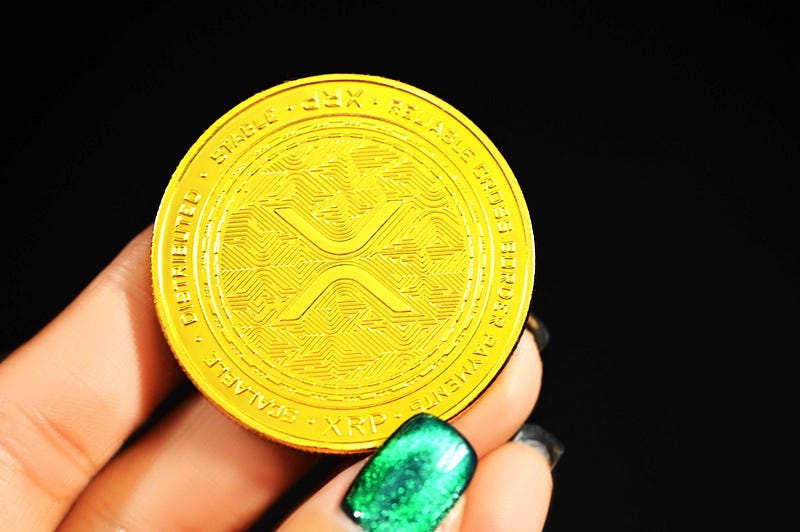
Photo by Kanchanara on Unsplash


US dollar settlement

A distinguishing feature of this initiative is that profit and loss settlements will be conducted in US dollars. To ensure a seamless experience, BIT Exchange has partnered with OrBit Markets to maintain robust order book liquidity. This expansion of offerings complements the exchange’s existing suite, which already includes stalwarts like Bitcoin (BTC), Ether (ETH), Cardano (ADA), Toncoin (TON), and Milady (LADYS).


Facilitating hedging

For the uninitiated, options are derivative contracts that empower the holder with the right to buy or sell the underlying asset at a predetermined price before a specified date. Call options grant the holder the buying privilege, while put options provide the selling prerogative. Typically deployed for hedging purposes, options play a pivotal role in mitigating bullish or bearish risks, and they can also act as a supplementary revenue source when traders “write” options alongside their spot market holdings.

Justin Buitendam, BIT Exchange’s Global Head of Institutional Sales, remarked on the milestone, stating: “We’re excited to be among the early platforms offering XRP options trading to institutional and retail traders, providing both long and short options trading opportunities.”


XRP boost

As of now, XRP boasts a market capitalization of $26.5 billion, positioning it as the world’s fifth-largest cryptocurrency. Notably, XRP, akin to several other alternative cryptocurrencies, exhibits greater volatility compared to the more established Bitcoin and Ether.

The native token of the Ripple global payments network has experienced a market resurgence in recent weeks, following a positive outcome to a lawsuit taken by the Securities and Exchange Commission (SEC) against Ripple Labs in the United States. In the wake of that decision, many cryptocurrency exchanges that had delisted the token immediately reinstated it. BIT Exchange’s strategic move to introduce XRP options aligns with those recent legal developments.

Ripple, as the issuer of the XRP token, garnered a partial victory in its ongoing legal battle against the SEC. The court ruled that XRP is not classified as a security when traded on centralized exchanges. However, a different classification may apply when XRP is directly sold to institutions.

The matter is far from settled, however. More recently, the SEC has sought permission to challenge the court’s verdict, underscoring the dynamic and evolving landscape of cryptocurrency regulations.

BIT Exchange was spun out of Singapore-based crypto financial services platform, Matrixport. Both have been co-founded by Jihan Wu, better known for having founded leading Chinese crypto mining outfit Bitmain.


More to Read
View All
Web3 & Enterprise·

Apr 11, 2023

Chinese Insurer Founds 2 Crypto Funds in Hong Kong

Chinese Insurer Founds 2 Crypto Funds in Hong KongChina has been in the headlines lately as the country continues to take a growing interest in cryptocurrencies in spite of a previous clampdown. According to a blog post published last Thursday, a Chinese state-owned insurance company launched two crypto funds, further solidifying the country’s stance on digital assets.©Pexels/Charlie JinChinese crypto resurgenceChinese insurance behemoth, the China Pacific Insurance Company (CPIC) has launched the two cryptocurrency funds in Hong Kong. The funds will be managed by the firm’s asset management unit, CPIC Investment Management, and have been established in conjunction with venture capital and blockchain start-up investment firm, Waterdrip Capital. Furthermore, they will focus on investments in cryptocurrencies and related assets, with a particular emphasis on Bitcoin and Ethereum.Waterdrip was originally founded in Shanghai in 2017, and has previously invested in the Chinese crypto mining sector, together with other blockchain-related projects. The move comes as China continues to make strides towards becoming a leader in the digital currency space. Last year, the country’s central bank announced plans to create its own digital currency, which is currently in the testing phase. The move is seen as a way for China to gain more control over its financial system and reduce its reliance on the US dollar.Hong Kong crypto hubChina’s growing interest in cryptocurrencies has been driven in part by the country’s rapidly growing tech industry. Companies like Tencent and Alibaba are leading the way in digital payments and e-commerce, and many believe that cryptocurrencies will play a key role in the future of online transactions.The launch of these two crypto funds by a state-owned insurance company is just the latest indication of the formative development of Hong Kong as a crypto hub. Its believed that China is treating crypto development in Hong Kong as a manner in which it can determine how digital assets can be utilized subsequently on mainland China.It’s not the first time a state-owned entity has gotten involved in cryptocurrency. Earlier this year, a state-owned company launched two crypto funds in Hong Kong, with a focus on investing in Bitcoin and other digital assets.Previous crypto crackdownDespite China’s growing interest in cryptocurrencies, the country has also taken a tough stance on the industry in the past. In 2017, the Chinese government banned initial coin offerings (ICOs) and shut down local cryptocurrency exchanges. However, it appears that the country’s stance is shifting, with the launch of these two crypto funds serving as a clear indication of China’s growing interest in digital assets.While China’s embrace of cryptocurrencies is seen by many as a positive development for the industry, there are also concerns about the country’s growing influence in the space. With China’s central bank developing its own digital currency, some worry that the country could use it to further extend its financial reach and influence around the world.Despite these concerns, it’s clear that China’s interest in cryptocurrencies is only growing. As the country continues to make strides in the digital currency space, it will be interesting to see how it impacts the global economy and the future of finance.

news
Web3 & Enterprise·

Nov 08, 2023

Lotte’s NFT marketplace partners with upcycling brand NiUl for membership NFTs

Lotte’s NFT marketplace partners with upcycling brand NiUl for membership NFTsLotte Data Communication, an affiliate of South Korean retail conglomerate Lotte Group, issued a press release on Wednesday (local time) to reveal that its NFT marketplace, Kottonseed, has issued new non-fungible tokens (NFTs) in partnership with upcycling brand NiUl whose name stands for “Nothing is Useless.”Photo by MSA-90 on PixabayPlastic lids to stylish keychainsNiUl recycles discarded plastic lids, transforming them into vibrant, stylish key ring pendants known as NiUl rings. NiUl has successfully sold over 2,000 pendants across a mix of online and offline platforms, with 300 kilograms of plastic lids donated by supporters. In a strategic move to broaden its reach, the company has been partnering with diverse firms and ramping up its donation initiatives, targeting environment and fashion-conscious millennials and Generation Z consumers.In their latest venture with Kottonseed, these pendants have been digitized into membership NFTs, which come with a suite of benefits like a special edition rope strap and discounts on products. Some lucky members may even get the opportunity to be involved in creating a NiUl ring. These membership NFTs are being released in limited numbers and are up for grabs starting today on NiUl’s page on Smart Store, an e-commerce platform of popular search engine Naver.NFTs in five colorsThe NFTs are offered in five distinct colors, each named after the sky’s varying appearances: “Post-rain Clear,” “Blue Sky,” “Sunset,” “Aurora” and “Night Sky.”A spokesperson for Lotte Data Communication expressed that the company sees great value in participating in upcycling initiatives with NiUl through their NFT marketplace, Kottonseed. They are keen on pursuing enjoyable and varied collaborations to support NiUl’s socially beneficial endeavors. Moreover, Lotte is actively exploring ways in which NFTs can contribute to environmental, social and governance (ESG) objectives.

news
Policy & Regulation·

Oct 04, 2023

Hong Kong’s Development as Crypto Hub May Soften Chinese Stance on Crypto

Hong Kong’s Development as Crypto Hub May Soften Chinese Stance on CryptoHong Kong is making waves in the crypto sector that could potentially signal a shift in China’s attitude toward digital assets. That’s a theory that has been given consideration by crypto analytics firm Chainalysis in a recently released report highlighting Hong Kong’s crypto transformation and suggesting a growing tolerance for crypto within China’s corridors of power.Photo by farfar on UnsplashOTC trade showing resilienceDespite China’s stringent regulations and the ongoing crypto market downturn, Hong Kong’s over-the-counter (OTC) crypto market has demonstrated remarkable resilience, with a transaction volume of $64 billion in the past year. While this is slightly less than China’s $86.4 billion, it’s a noteworthy achievement considering Hong Kong’s smaller population and the challenges facing the crypto industry.The close relationship between China and Hong Kong has led some industry commentators to speculate that Hong Kong’s rise as a crypto hub could indicate a shift in China’s stance on digital assets.The crypto-friendly environment in Hong Kong has not gone unnoticed. Merton Lam of Crypto HK, an OTC digital asset trading center in the city, notes that cryptocurrencies have become an integral part of investment portfolios for banks, private equity firms, and high-net-worth individuals in the region. Even Chinese state-owned businesses are launching cryptocurrency-focused investment funds.Hong Kong cornering institutional tradeWhat sets Hong Kong apart in the crypto landscape is its proficiency in large institutional crypto transactions, with 46.8% of its annual crypto trades exceeding $10 million. In contrast, retail trades under $10,000 accounted for just 4% of the city’s crypto volume, slightly below the global average of 4.7%. This institutional dominance distinguishes Hong Kong from other Asian regions.For comparison, South Korea heavily relies on retail trading on centralized exchanges, while Japan maintains a transaction breakdown that aligns closely with global trends, balancing centralized exchanges with DeFi protocols.A cautionary noteHowever, Dave Chapman of OSL Digital Securities offers a note of caution, suggesting that Hong Kong’s promotion as a crypto hub might be more exploratory, aimed at gaining a better understanding of digital assets without significantly loosening mainland policies.Despite the uncertainties, Markus Thielen, Head of Research and Strategy at Singapore’s Matrixport, believes that Hong Kong is acting as a “testing ground” for broader cryptocurrency adoption in China. The city’s unique position makes it an attractive destination for the crypto asset management industry, setting it apart from other jurisdictions that often view crypto firms as service providers rather than end-users.Hong Kong’s progress is particularly noteworthy when considering the broader context of East Asia’s crypto market. Chainalysis analysis reveals that East Asia’s share of crypto transaction value dropped from around 30% in 2019 to less than 10% by the second quarter of 2022 due to China’s crypto bans. Hong Kong’s recent surge could potentially act as a “tailwind” to reignite crypto activity in the region.The evolving relationship between the mainland and the autonomous territory of Hong Kong may hold the key to understanding the future of cryptocurrency in the region.

news
Loading
