Top

Colt Technology Partners With Singapore’s AsiaNext

Web3 & Enterprise·August 18, 2023, 1:17 AM

Colt Technology Services, an established player in the digital infrastructure sector, has unveiled a strategic partnership with AsiaNext, an emerging name in the crypto exchange domain.

News of the collaboration emerged on Thursday, with the partnership designed to harness the strengths of Colt’s secure and high-performance digital infrastructure solutions to foster high-frequency trading of various digital securities and crypto derivatives on the AsiaNext platform.

AsiaNext is a joint venture between Japan’s SBI Digital Asset Holdings and Swiss digital infrastructure firm, SIX Group. The entities behind the venture identified similarities in the regulatory approach taken in Switzerland and Singapore, and for that reason, AsiaNext was developed to grow the business in the city-state.
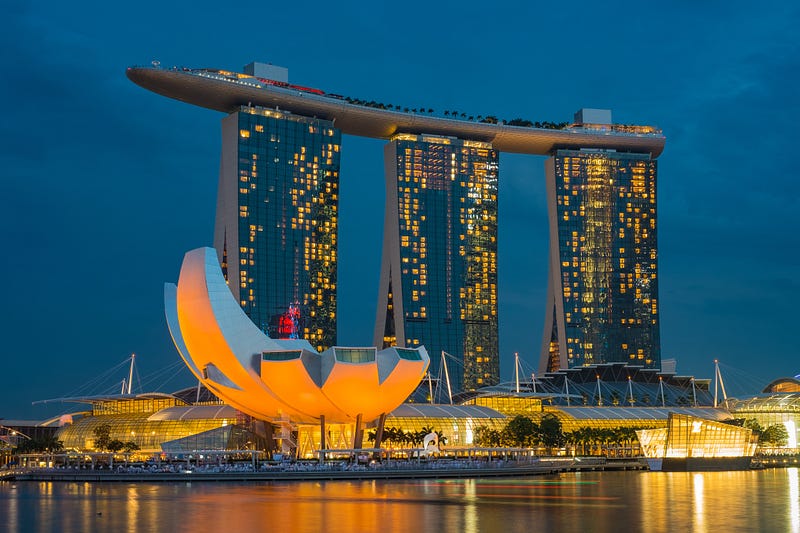
Photo by Julien de Salaberry on Unsplash


Accessing Multicast Market Data

The partnership will see AsiaNext leverage Colt’s Multicast Market Data in the Cloud. This service facilitates seamless connectivity between buyers and sellers, bridging the divide between mainstream finance and the secure realm of digital assets trading. The move takes on greater significance against the backdrop of Asia’s rapid ascent in digital asset trading and its central role in shaping global cryptocurrency regulations.

AsiaNext has been targeting institutional investors and aims to offer a comprehensive suite of services encompassing listing, trading, and post-trade functions for digital assets. The exchange is attempting to provide institutional investors with a secure platform for trading digital assets, bolstering the crypto derivatives market in the region.

Alongside Colt’s Multicast Market Data product, AsiaNext will also benefit from access to Colt’s PrizmNet, which enables low latencies for global delivery of data, software, content, and financial services.

Commenting on the deal, Russell Toop, Colt’s Team Lead, Capital Markets Asia, remarked: “Our partnership with AsiaNext demonstrates our firm commitment to capital markets in Asia and across the world, and we’re excited to be part of its journey at the earliest stages as it sets out to bring digital assets to the mainstream.”

Yuen Keng Yin, Chief Technology Officer of AsiaNext, echoed the sentiment by highlighting the transformative potential of Colt’s solutions for institutional investors, stating:

“Their solutions support our investors in securing their position in this rapidly-growing market, so they can optimize their digital assets trading strategies and open up exciting new opportunities for their clients.”


Working towards a full CMS license

AsiaNext has been making progress within the Singaporean market. In June, the local regulator and central bank, the Monetary Authority of Singapore (MAS), granted the institutional grade exchange regulatory approval in principle.

That Capital Markets Services (CMS) license is now on the cusp of full license approval from MAS. Furthermore, the firm is also working towards obtaining a Recognised Market Operator license.

These regulatory milestones all feed into AsiaNext’s overall goal, which is to offer a service which can bridge the gap between traditional finance and the digital assets space. In building out that offering, Marek Socha, Head of Corporate Development at SIX Group, said in an interview last year that important partnerships would be established by AsiaNext. No doubt accessing Colt’s service offering with this latest partnership is another step for the firm in reaching its objective.

More to Read
View All
Web3 & Enterprise·

Sep 23, 2025

First Toyota vehicle in Bolivia purchased with USDT as inflation bites

In a first for Bolivia, Japanese automaker Toyota saw one of its vehicles purchased with the stablecoin USDT, according to a recent X post by digital asset trust company BitGo. The transaction underscores growing cryptocurrency adoption in the Latin American country, which is grappling with soaring inflation and a shortage of U.S. dollars. The transaction was facilitated by a partnership between Toyosa (the official Toyota distributor in Bolivia), BitGo, and Tether, the issuer of the USDT stablecoin. The sale highlights the increasing use of digital assets for commercial and retail payments, as the global stablecoin market cap recently reached an all-time high of $293 billion at the time of publication. Confirming the milestone, Tether CEO Paolo Ardoino stated on the social media platform X that, in addition to Toyota, the USDT stablecoin is now also accepted by distributors of BYD and Yamaha vehicles in Bolivia.Photo by Christina Telep on UnsplashCrypto use surges amid inflation and dollar shortage The development comes as Bolivia faces 25% inflation, the highest in 34 years. With the local economy under pressure, many Bolivians are moving their money into cryptocurrencies in an effort to protect their savings, according to Bloomberg. U.S. dollars have become increasingly scarce. Unofficial exchange rates have jumped to 14 bolivianos per dollar, nearly twice the government's rate. That gap is pushing people toward stablecoins like USDT, which are easier to access and hold their value. The shift is already showing up in payment trends. Digital transactions surged more than fivefold in the first half of 2025, reaching nearly $300 million. Regional adoption and Toyota’s blockchain pushThe rise in crypto use in Bolivia is part of a broader shift across Latin America. According to a recent report from analytics firm Chainalysis, crypto adoption in the region jumped from 53% to 63% in the 12 months ending June 2025. The only region to outpace this growth was Asia-Pacific, which saw a 69% year-over-year increase. El Salvador stands as another prominent example in the region, having adopted Bitcoin (BTC) as legal tender in September 2021 and currently holding over 6,300 BTC in its treasury. Separately, Toyota Motor Corporation has been actively exploring applications for blockchain technology. In March, its subsidiary Toyota Financial Services, in collaboration with Daiwa Securities and MUFG Bank, launched its first security token bonds on Progmat, a platform founded by MUFG with backing from other big banks like Sumitomo Mitsui Banking Corporation (SMBC) and Mizuho. The initiative is aimed at strengthening the Toyota Group’s ties with individual investors and supporting the growth of the digital bond market. 

news
Web3 & Enterprise·

Nov 03, 2023

Dubai’s VARA grants WadzPay ‘initial approval’ of trading license

Dubai’s VARA grants WadzPay ‘initial approval’ of trading licenseIn the latest demonstration of the emirate’s crypto-friendly credentials, Dubai regulator, the Virtual Assets Regulatory Authority (VARA), has granted an “Initial Approval” license to WadzPay.WadzPay was founded in 2018 in Singapore as a business-to-business (B2B) technology firm that concentrates its efforts on enabling digital asset-based transaction processing and settlement. This licensing approval is a significant step forward for the startup, as it inches closer to obtaining a full-fledged Virtual Asset Service Provider (VASP) license.Photo by Paul MARSAN on UnsplashGearing up for service roll-outWith this approval in hand, WadzPay is gearing up to offer a range of virtual asset services, specifically under the forthcoming VASP License for Transfer and Settlement, as well as Broker-Dealer trading activities.That said, the current VARA license places certain restrictions on WadzPay’s offerings. While WadzPay is known for providing a wide array of services to businesses (B2B) and individual users through its B2B2C platform, the “Initial Approval” license limits its scope to only a subset of its virtual asset products and services.Flurry of approvalsDubai has taken center stage in the realm of crypto-friendly jurisdictions, granting a flurry of operational licenses to numerous crypto firms and exchanges in recent months. The regulatory framework in Dubai is underpinned by robust guidelines for VASPs. To operate fully within this framework, crypto firms must navigate a meticulous three-tier licensing process, starting with provisional approval, followed by a minimal viable product (MVP) license, culminating in a total market product license.One of the recent beneficiaries of VARA’s approvals is Backpack, a virtual currency wallet provider. Last month, Backpack received its VASP license, allowing the introduction of the Backpack Exchange to the market. However, similar to WadzPay’s situation, Backpack’s license comes with certain limitations.It permits the offering of crypto exchange services within Dubai but restricts the rollout of other virtual asset services. The Backpack Exchange sets itself apart with advanced features, including zero-knowledge (ZK) proof-of-reserves, multi-party computation (MPC) for secure custody and lightning-fast order execution capabilities.Nomura portfolio company approvalsKomainu, a collaborative venture involving financial heavyweights like Nomura, CoinShares and Ledger, is another notable success story. After a diligent licensing journey, Komainu secured its full operating license from VARA, approximately 10 months after obtaining its MVP license in November 2022.Laser Digital, a crypto division under the vast umbrella of financial giant Nomura, also earned its operational license from VARA in August. Through its dedicated subsidiary, Laser Digital Middle East FZE, based conveniently in Dubai, Nomura has showcased its VASP license. The permit enables the firm to offer a suite of services, including brokerage, virtual asset management and investment offerings within the emirate.Notably, Laser Digital’s licensure followed closely on the heels of Binance, the global crypto exchange. Binance secured its operational minimum viable product (MVP) license from VARA, paving the way for providing crypto exchange and virtual asset broker-dealer services within the region.This flurry of licensing activities and approvals in Dubai is suggestive of the emirate’s commitment to fostering a progressive and regulated crypto environment.

news
Web3 & Enterprise·

Oct 05, 2023

Bithumb Eliminates Trading Fees to Attract Investors and Gain Greater Market Share

Bithumb Eliminates Trading Fees to Attract Investors and Gain Greater Market ShareSouth Korean cryptocurrency exchange Bithumb has waived trading fees for all cryptocurrencies available on its platform. Before this change, users were charged trading fees ranging from 0.04% to 0.25%.Photo by Nicholas Cappello on UnsplashKorean won and BTC marketsThe platform’s Korean won market offers trade for 241 cryptocurrencies, whereas its BTC market caters to 24. The no-fee policy will remain in effect until a further announcement is made.Many suggest this move by Bithumb aims to expand its domestic market share. According to local media outlet ZDNet Korea, Upbit dominates with 86% of the Korean crypto market, leaving Bithumb trailing with 11%.Revenue impact and long-term strategyWith its 10th anniversary approaching in January, Bithumb has made this decision, potentially to attract more investors. An official from the exchange highlighted the importance of attracting investors to secure liquidity. While the absence of trading fees, Bithumb’s main revenue channel, may result in a revenue dip, the official believes that a larger user base secured by this move will be beneficial in the long run.

news
Loading